Small kitchens can pose challenges for both storage and functionality, but with thoughtful design, they do not have to feel cramped or cluttered. By focusing on efficient use of space and smart solutions, even limited square footage can accommodate essential appliances and work areas effectively.
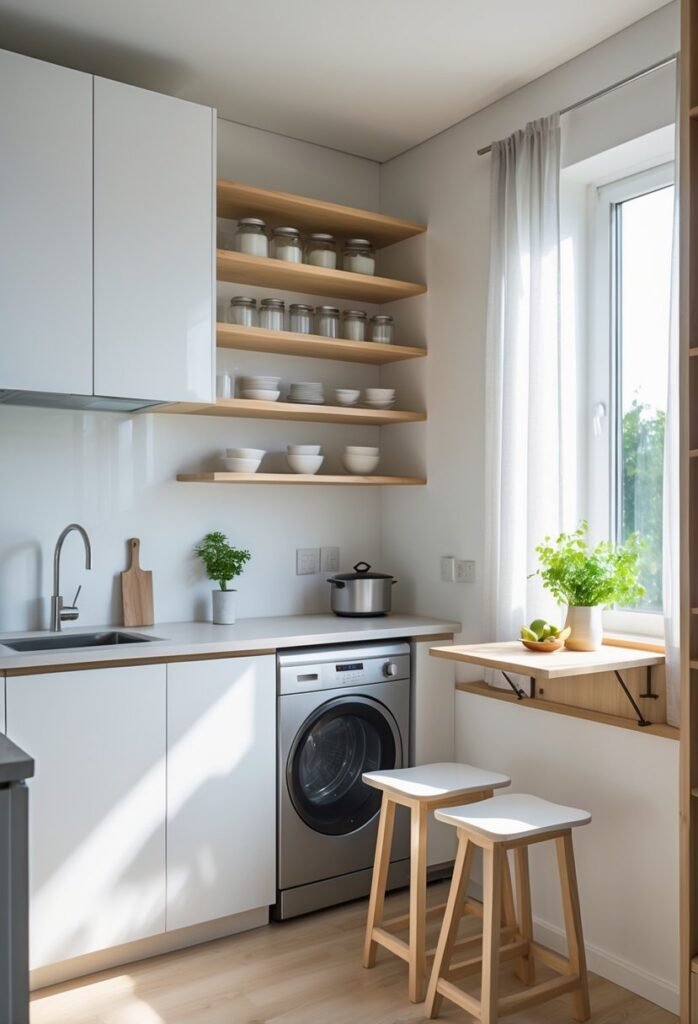
This article presents 20 practical ideas that save space while maintaining a stylish and organized kitchen environment. These approaches emphasize maximizing storage, enhancing functionality, and creating a comfortable space without sacrificing aesthetic appeal.
1) Install pull-out pantry shelves for easy access and space-saving storage
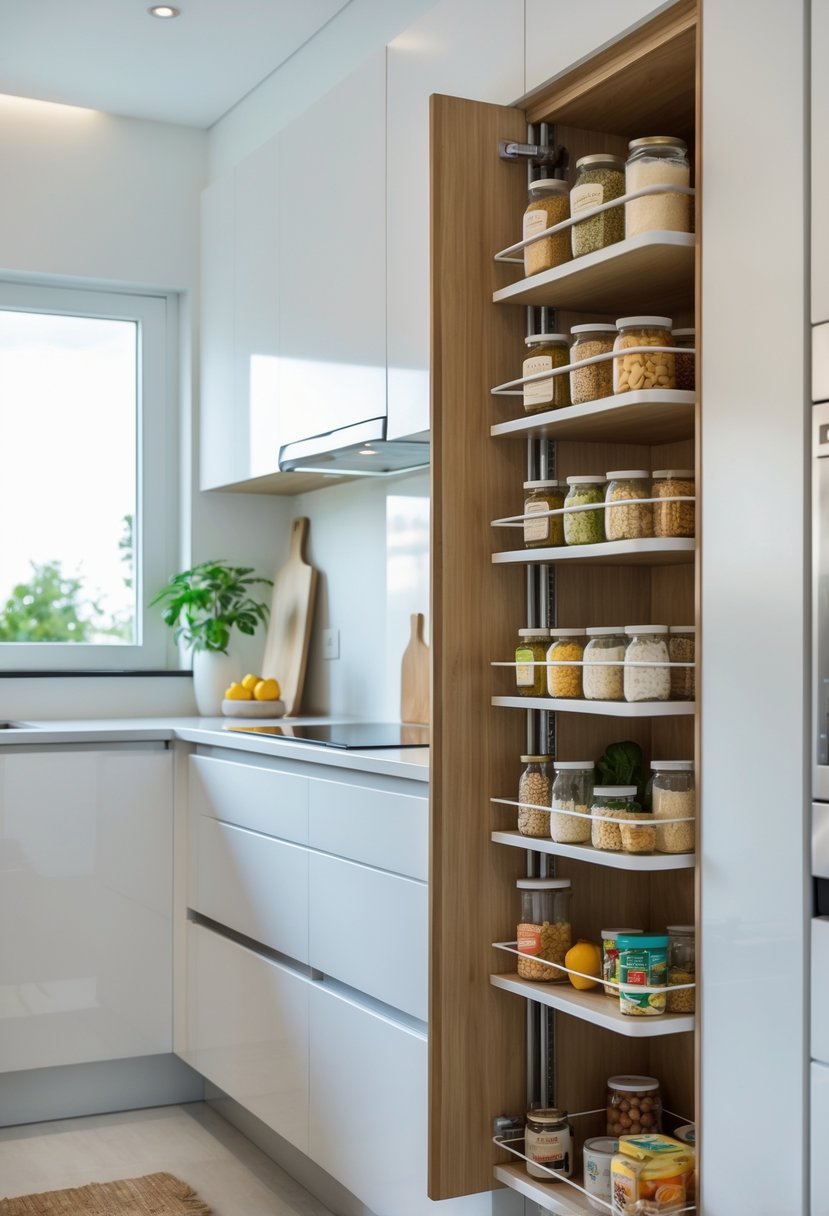
Pull-out pantry shelves make use of narrow or deep cabinet spaces that are typically hard to reach. They provide full access to stored items without needing to move other things around.
This design improves organization and helps keep kitchen essentials visible and within easy reach. Ideal for small kitchens, pull-out shelves optimize storage by turning wasted space into practical storage zones.
2) Use magnetic knife strips to free up counter space
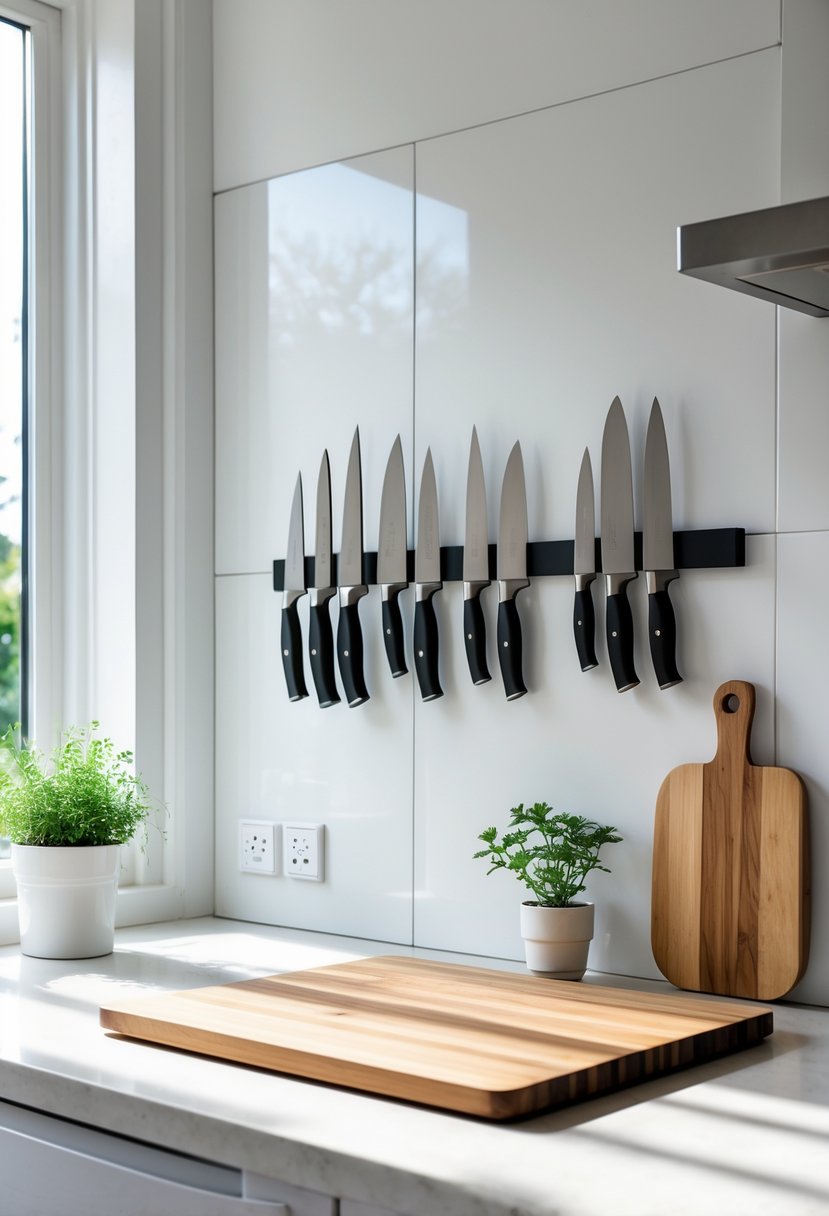
Magnetic knife strips offer a simple way to clear cluttered counters. They securely hold knives off surfaces, making prep areas easier to clean and organize.
Installed on a wall or under a cabinet, these strips keep knives within easy reach. This saves drawer space and protects blades from dulling due to contact with other utensils.
Their sleek, low-profile design fits most kitchen styles, making them a practical choice for small spaces.
3) Incorporate fold-down or drop-leaf countertops for extra prep area
Fold-down or drop-leaf countertops add versatile workspace without taking up permanent room. They can be folded away when not in use, freeing valuable floor and counter space.
This solution is especially useful in small kitchens where every inch counts. It offers 2-4 square feet of extra surface, ideal for prep or quick meals.
Wall-mounted designs utilize vertical space efficiently. They enhance functionality while maintaining a clean, open kitchen layout.
4) Opt for slim, vertical storage racks to maximize wall space
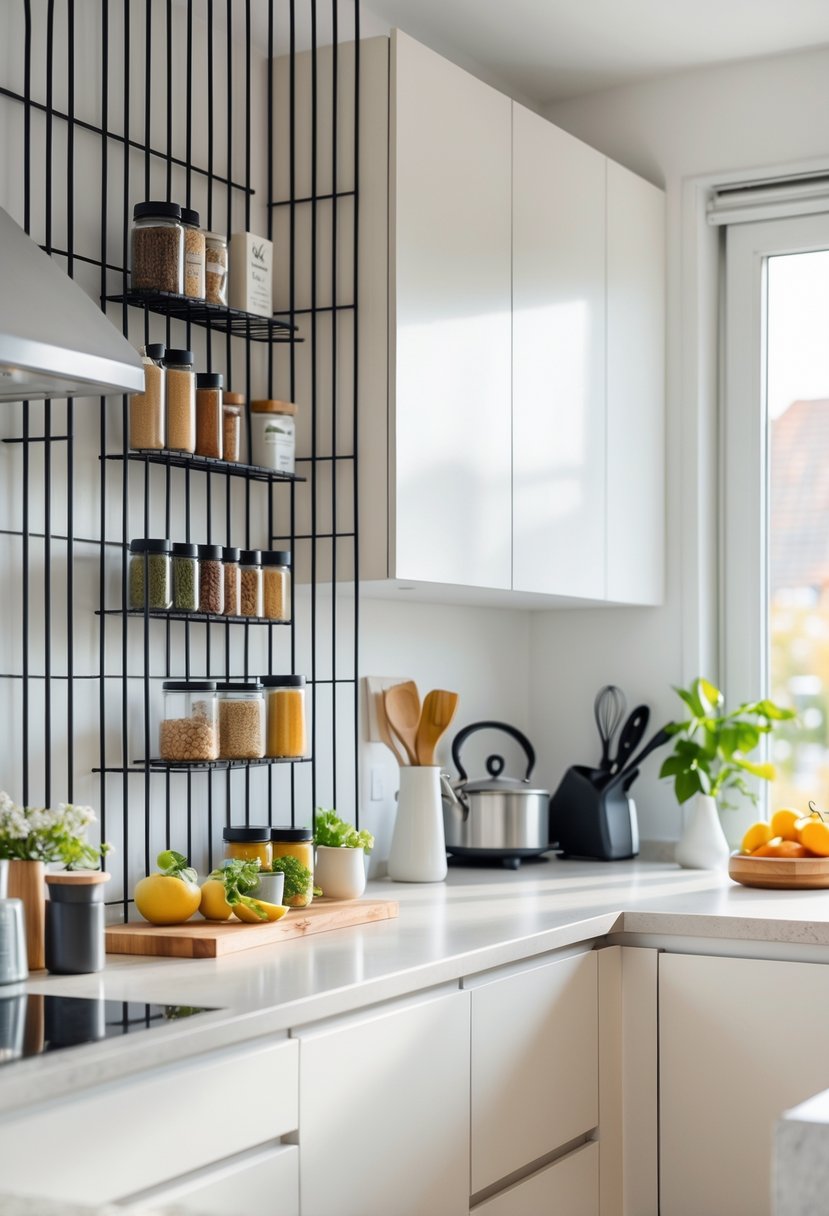
Slim, vertical storage racks make use of unused wall areas, especially in small kitchens. They fit narrow spaces like corners or between appliances without taking up much floor space.
These racks often have adjustable shelves, allowing storage of various items from tall bottles to small containers. This keeps the kitchen organized while freeing up counters and cabinets for other uses.
5) Add under-cabinet lighting to brighten work areas without bulky fixtures
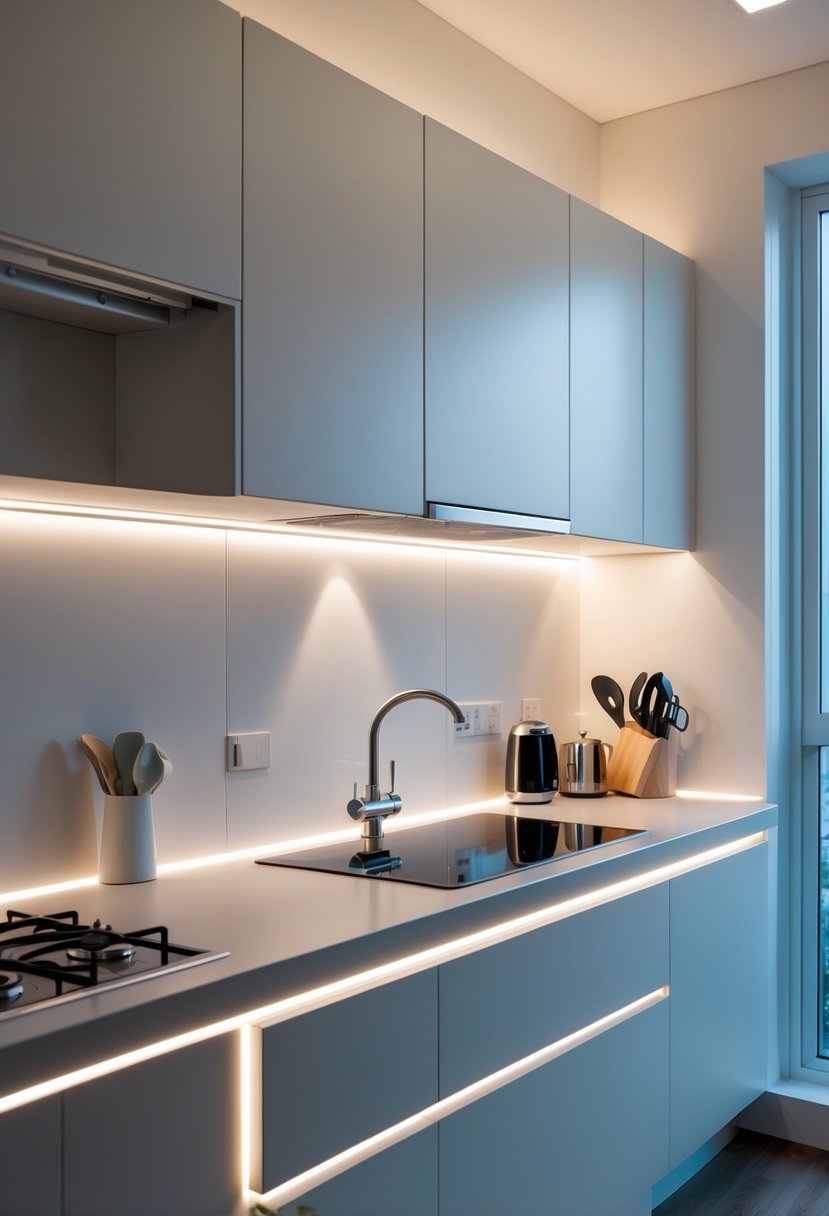
Under-cabinet lighting provides focused illumination directly on countertops, improving visibility for tasks like chopping or reading recipes. It saves space by eliminating the need for large, overhead fixtures that can crowd a small kitchen.
LED strip lights and tape lights are popular choices. They are slim, easy to install, and can be cut to fit specific cabinet lengths. This type of lighting enhances both function and style without adding clutter.
6) Use corner carousel shelves to utilize awkward cabinet corners
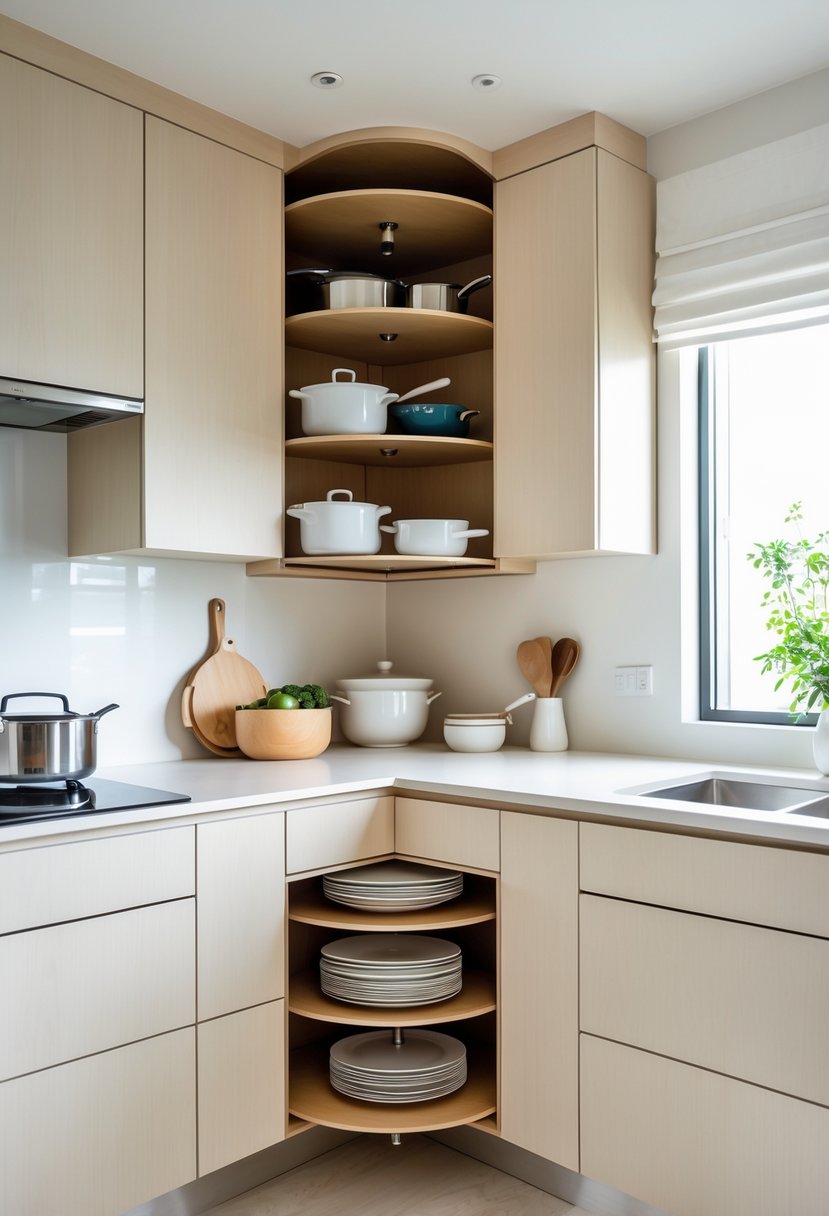
Corner carousel shelves maximize storage in hard-to-reach cabinet corners by rotating items into easy access. They transform wasted space into an efficient spot for pots, pans, and small appliances.
This system reduces clutter and keeps frequently used items visible. It is especially useful in small kitchens where every inch counts.
7) Install a pot rack above the island or sink to save cabinet space
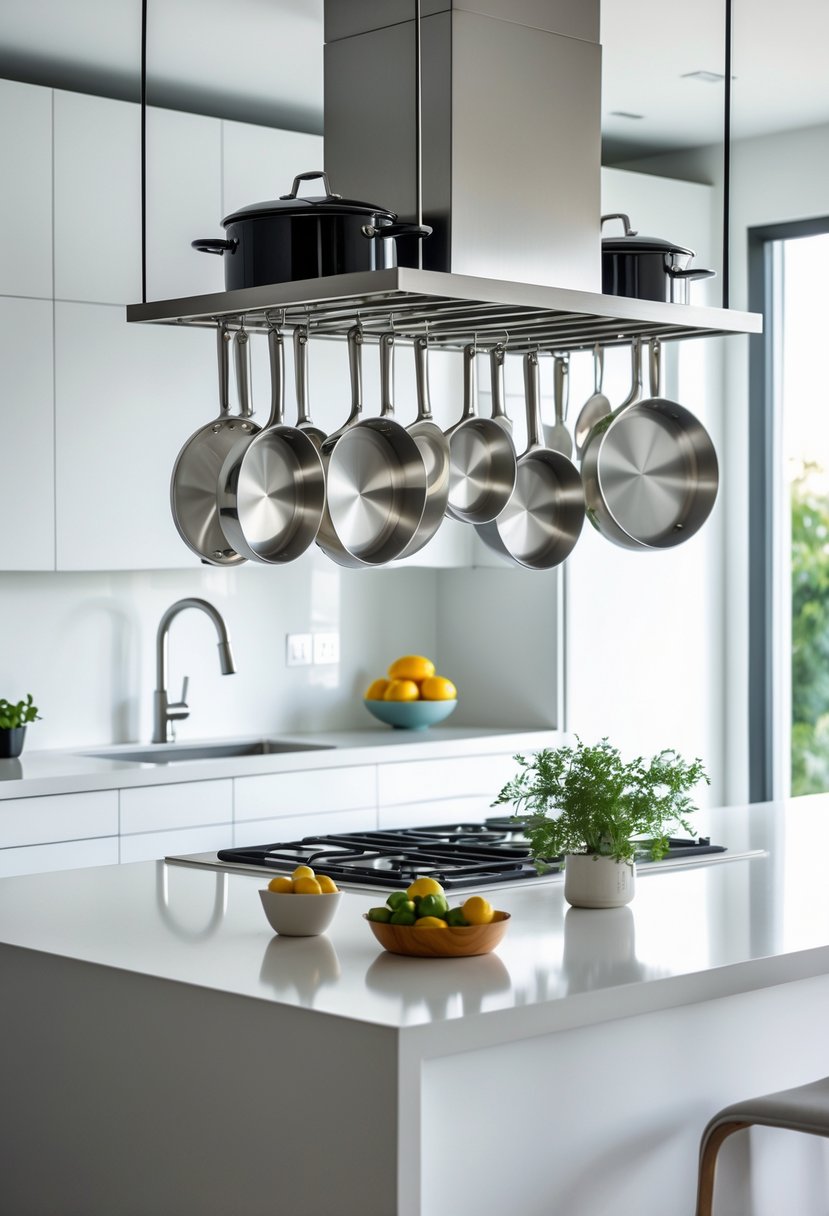
A pot rack above the kitchen island or sink uses vertical space effectively, freeing up cabinet room. It keeps cookware within easy reach, improving kitchen workflow.
Choosing a pot rack that fits the ceiling height is important. It also adds a functional aesthetic element, turning pots and pans into part of the decor.
8) Choose open shelving for frequently used items to create an airy feel
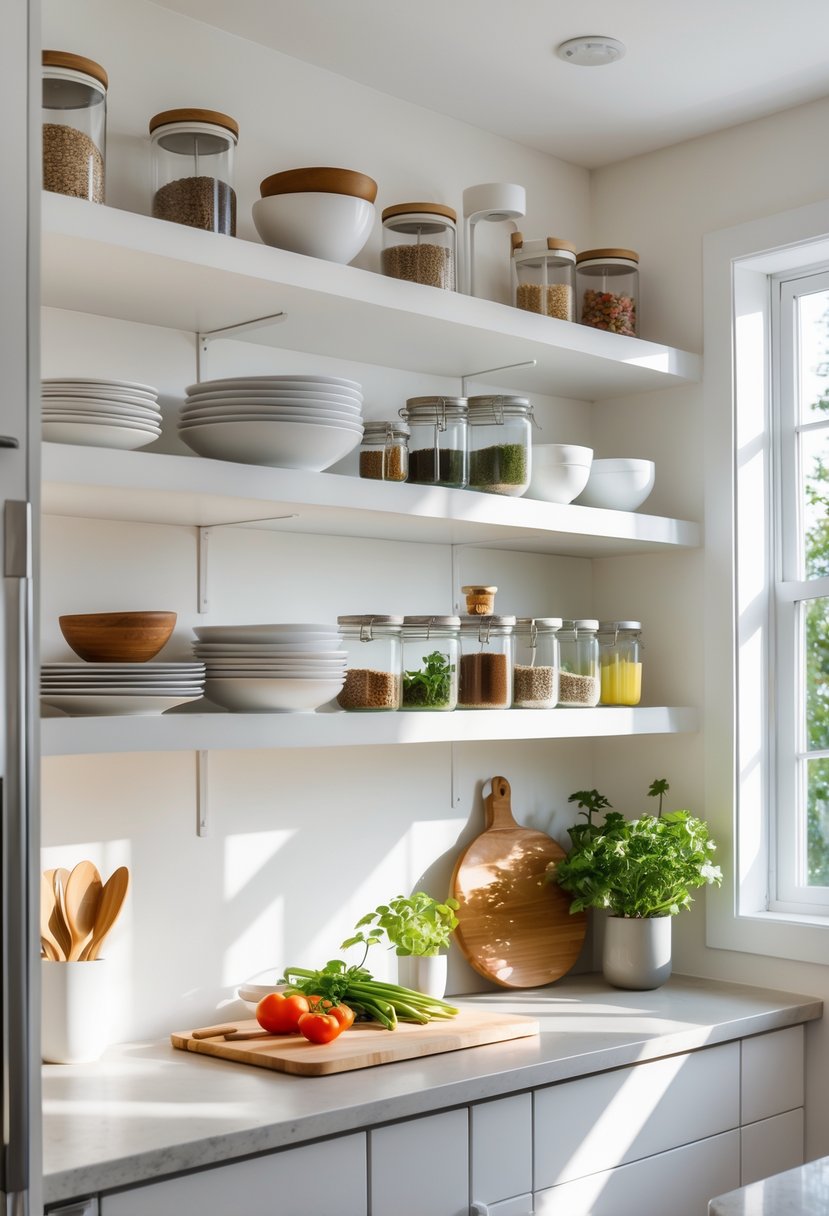
Open shelving offers a practical solution for small kitchens by keeping frequently used items within easy reach. It also eliminates the bulkiness of upper cabinets, making the space feel more open and less cramped.
By displaying dishes, glassware, or cookware, open shelves add a sense of lightness. Thoughtful organization and simple styling help maintain a tidy, functional look without sacrificing storage.
9) Incorporate built-in appliances to streamline the kitchen layout
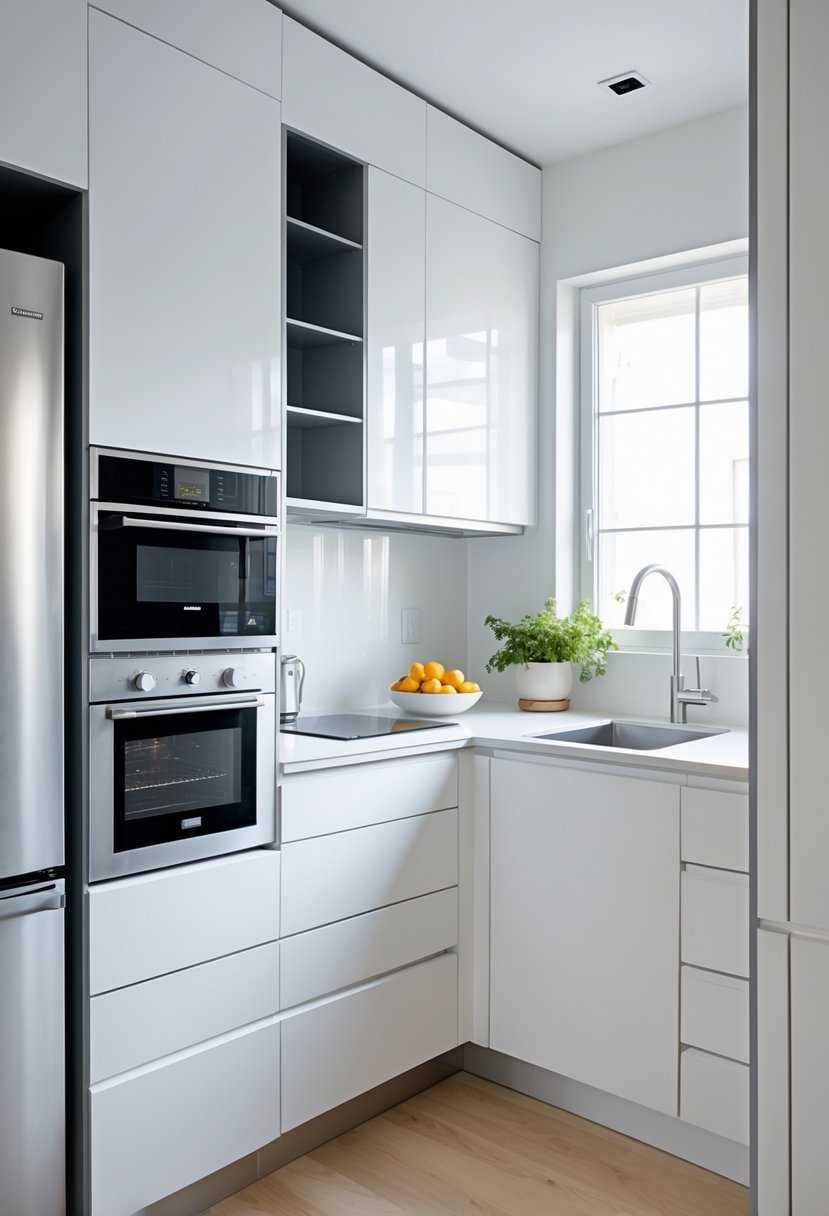
Built-in appliances create a clean, cohesive look by integrating seamlessly with cabinetry. They save valuable floor space, making small kitchens feel less cluttered.
By embedding refrigerators, ovens, and dishwashers, functionality improves without sacrificing style. This design choice enhances workflow and maximizes the use of every inch efficiently.
10) Use stackable, clear storage containers for efficient pantry organization
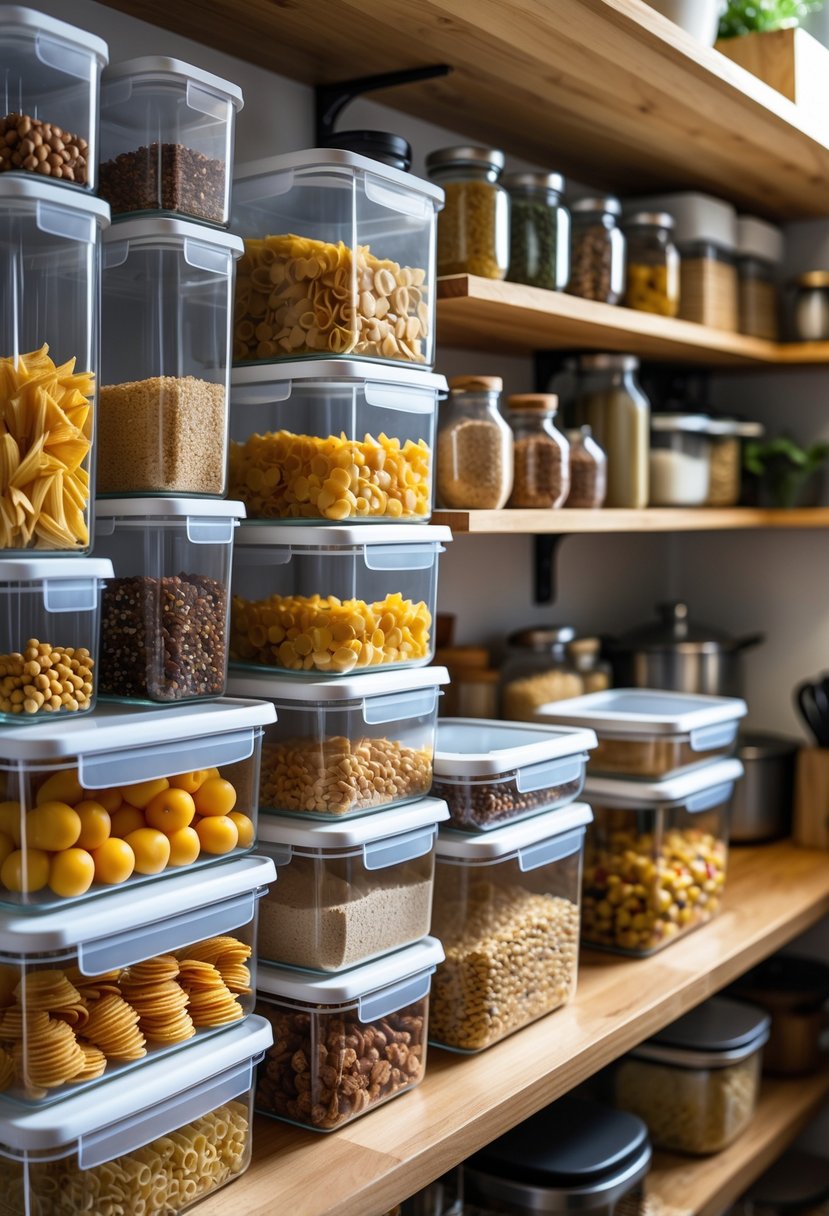
Stackable, clear storage containers help maximize vertical space in the pantry. Their transparency allows for quick identification of contents without opening each container.
These containers can be arranged to fit shelves precisely, reducing clutter. They improve accessibility and keep ingredients fresh and orderly.
11) Add hooks inside cabinet doors for hanging utensils or lids
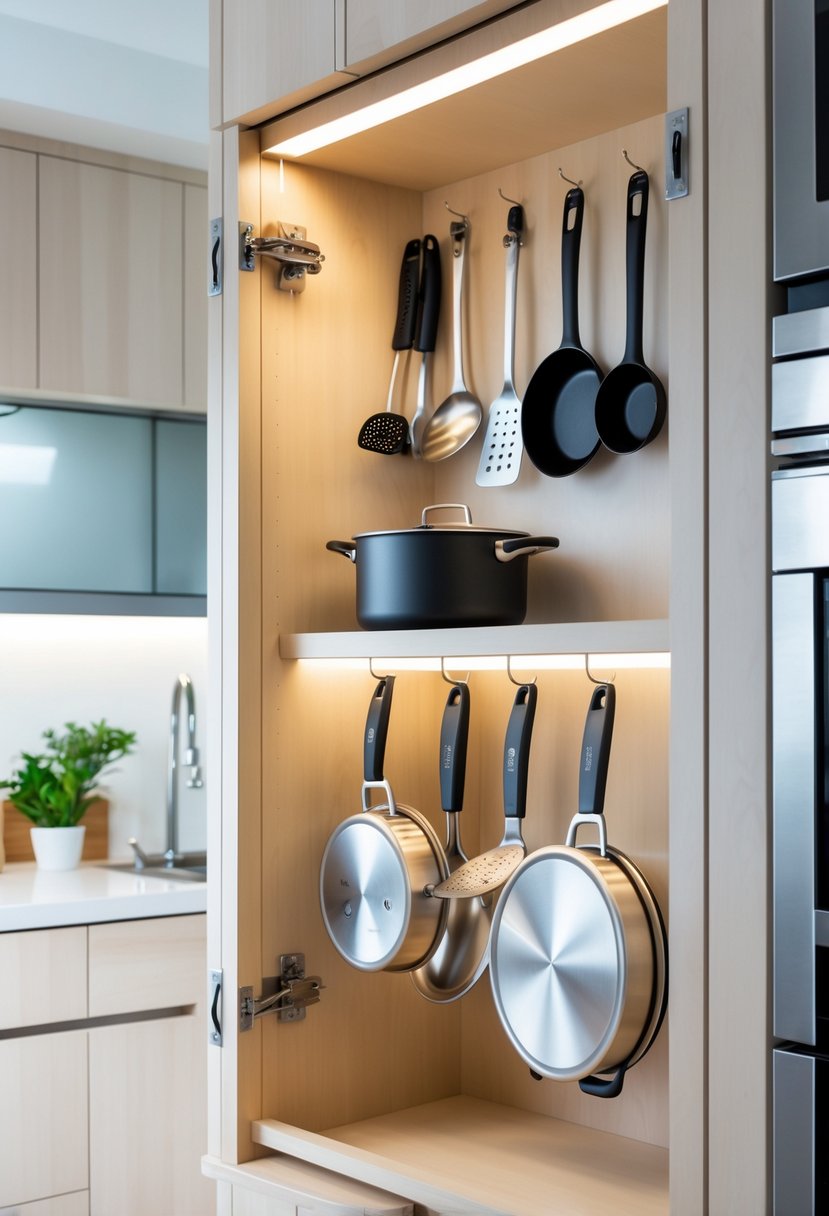
Adding hooks inside cabinet doors creates extra storage without taking up shelf space. It allows easy access to frequently used items like utensils and pot lids.
This method uses often-overlooked vertical space and helps keep cabinets organized. Small adhesive hooks or wire hooks work well for this purpose.
12) Opt for a rolling kitchen cart that can be tucked away when not in use
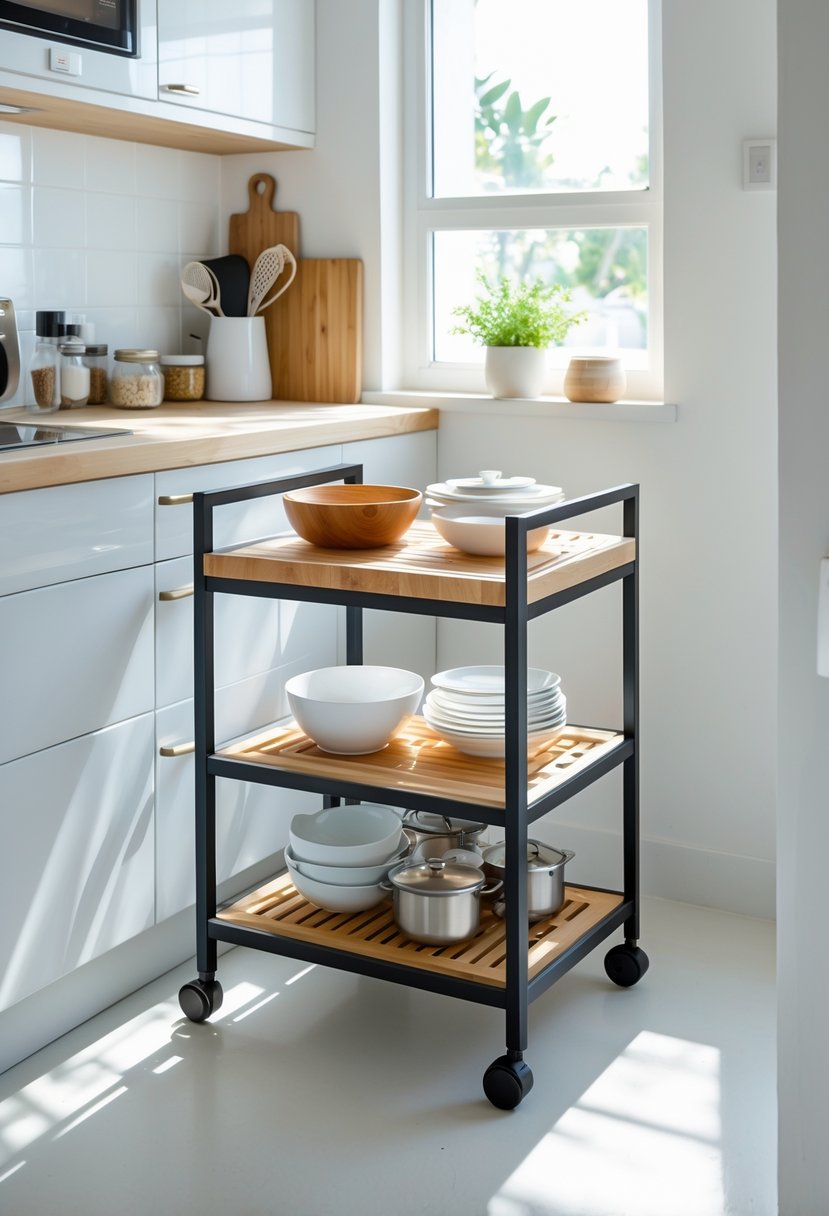
A rolling kitchen cart offers extra workspace and storage while remaining mobile. It can be moved easily and stored in a corner or closet when not needed.
This flexibility is ideal for small kitchens where space is limited. The cart provides functionality without permanently occupying valuable floor area.
13) Choose multi-functional furniture like benches with storage
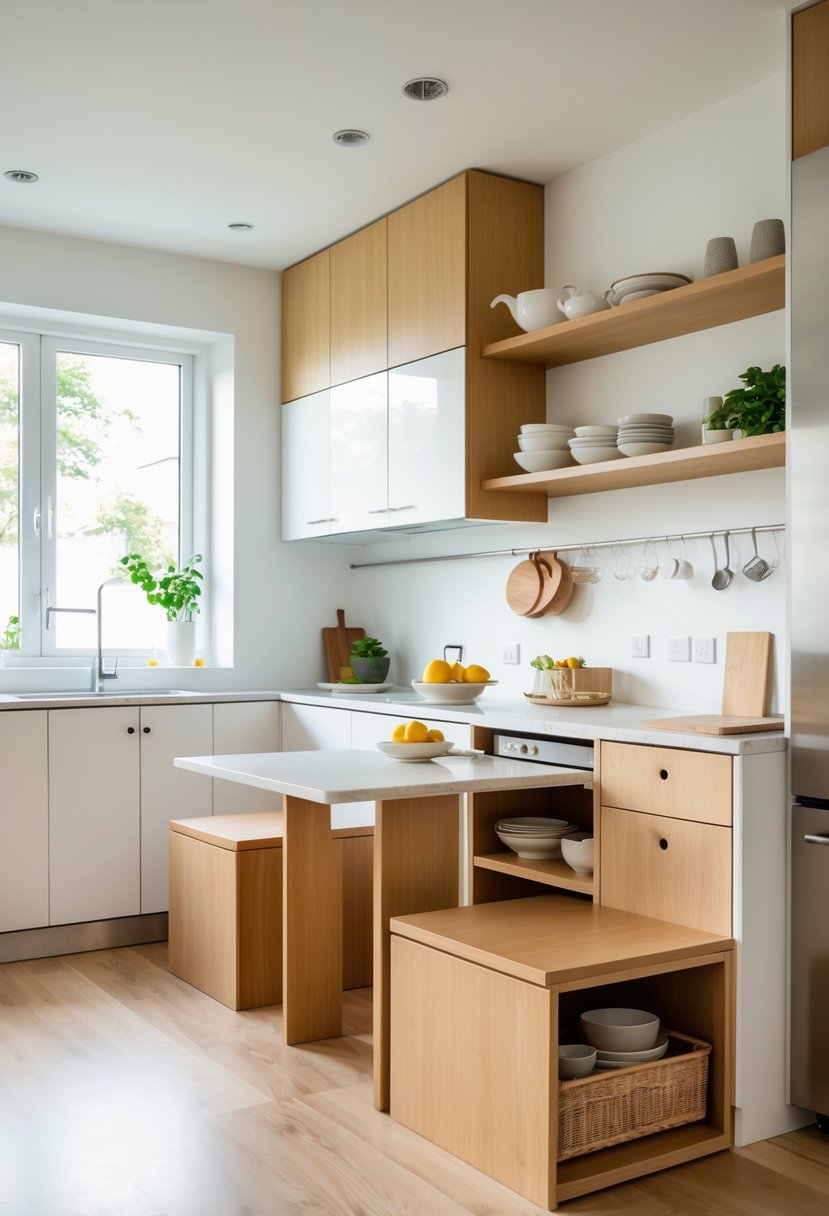
Multi-functional furniture helps maximize limited kitchen space without sacrificing style. Benches with built-in storage offer seating and hidden space for items like kitchen linens or small appliances.
These pieces keep clutter out of sight while maintaining a clean, organized look. They are practical for small kitchens where every inch counts.
14) Paint cabinets in light, reflective colors to make space feel larger
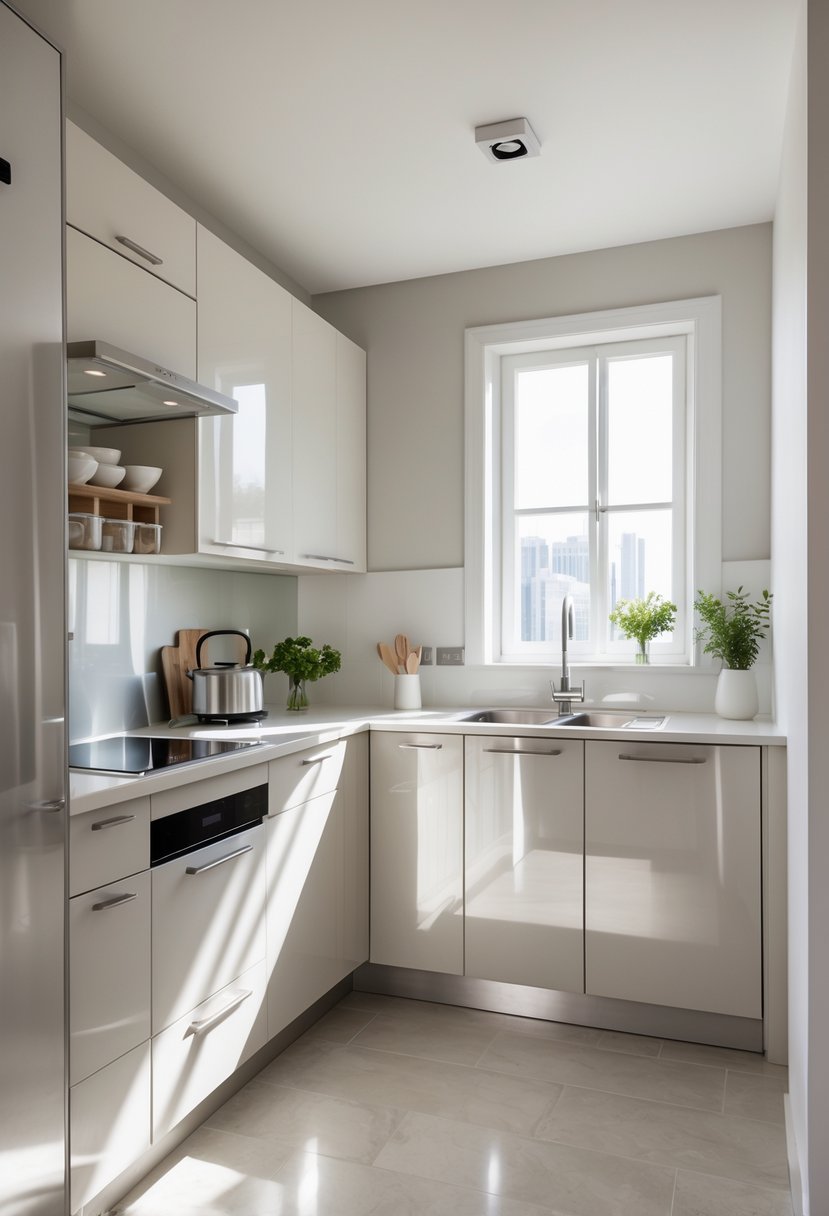
Painting cabinets in light, reflective colors helps brighten a kitchen by bouncing natural and artificial light. Shades like soft white, pale blue, and light beige create an open, airy feel that visually expands the space.
These colors reduce visual clutter and make small kitchens appear less cramped. Light tones also work well with minimalist designs, enhancing the sense of roominess without sacrificing style.
15) Install a backsplash with reflective tiles to enhance light
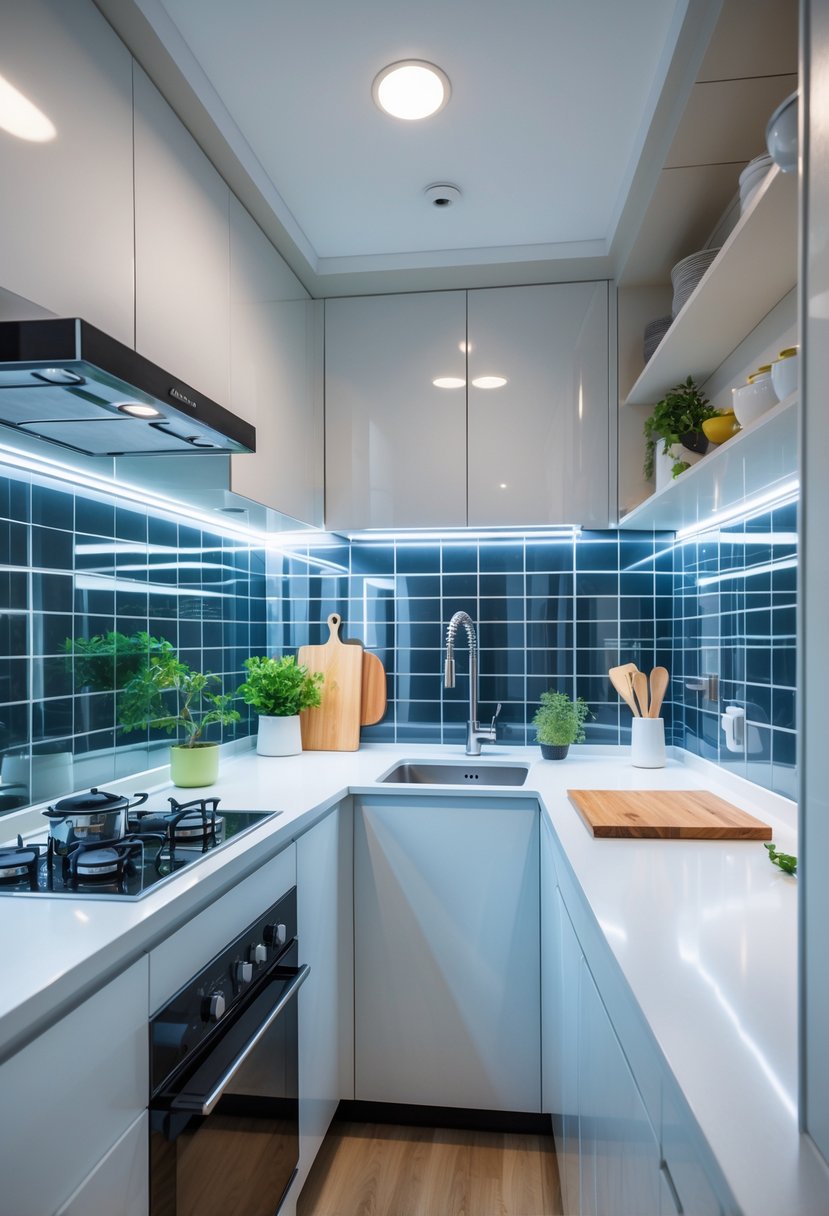
Using reflective tiles like glass or mirrored finishes can brighten a small kitchen by bouncing light around the space. This helps create the illusion of a larger, airier room without adding physical square footage.
Reflective backsplashes also add a modern, clean look. They protect walls while visually opening up cramped areas, making them highly functional and stylish in tight kitchens.
16) Use pegboards on empty walls for flexible storage solutions
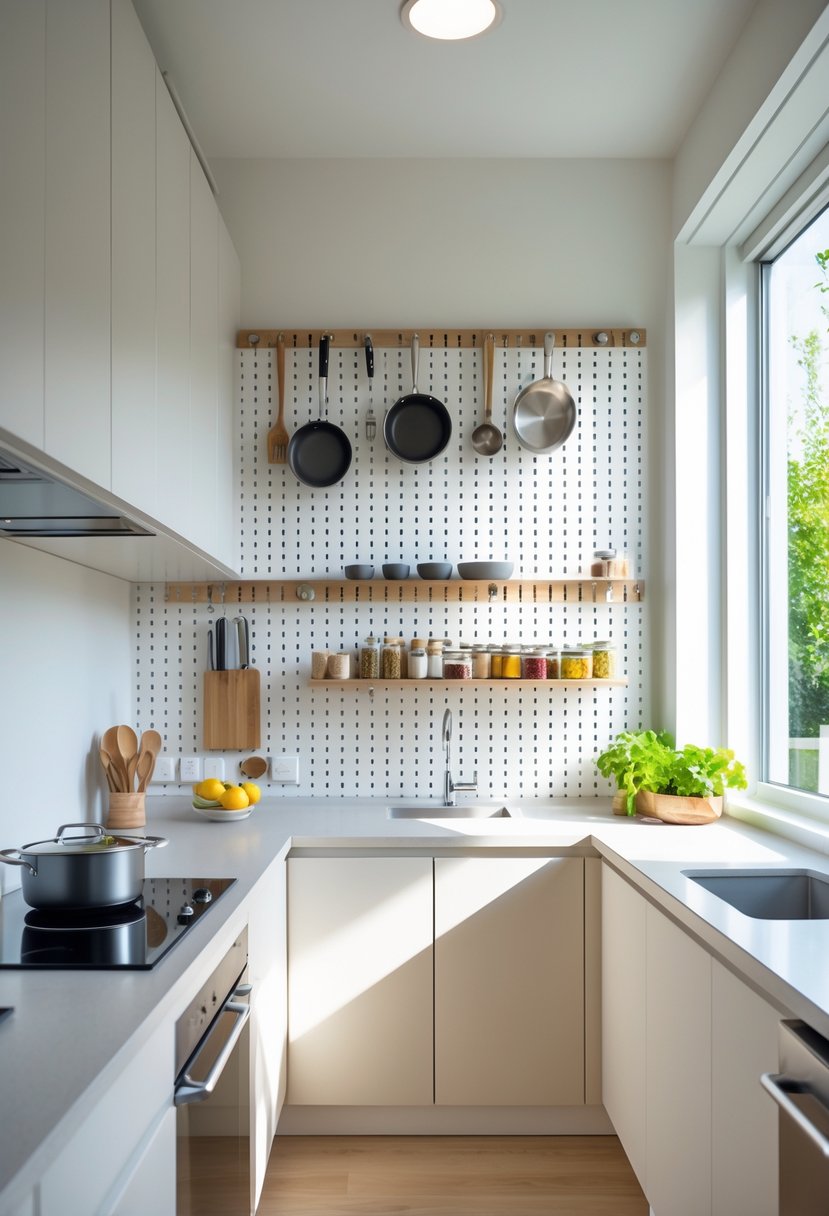
Pegboards turn unused wall space into practical storage areas. They offer customizable layouts, allowing users to hang utensils, pots, and other kitchen tools.
They suit small kitchens well, fitting various sizes and styles. Pegboards provide easy access while keeping counters clear. Adjusting hooks and shelves keeps the system adaptable as needs change.
17) Select slim-profile appliances designed for small spaces
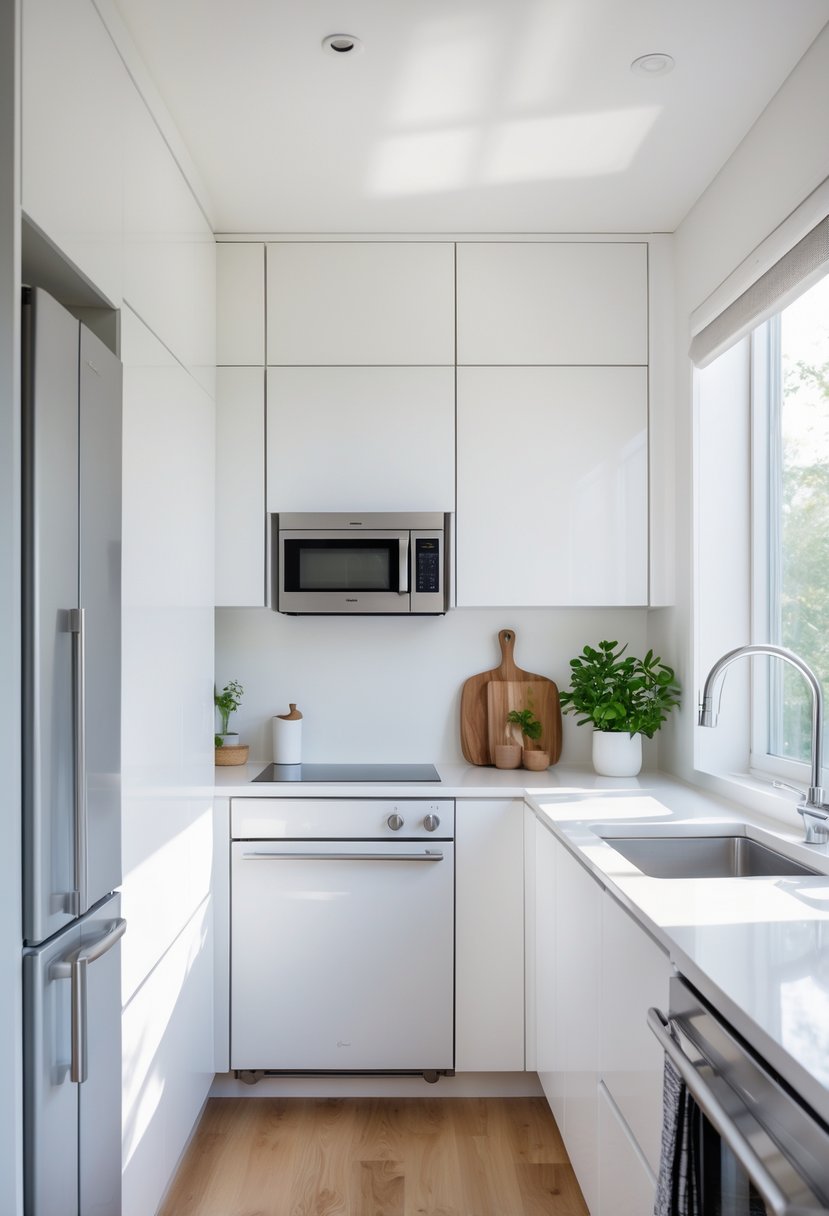
Slim-profile appliances offer practical solutions for kitchens with limited space. These models maximize functionality without overwhelming the room.
They include compact refrigerators, narrow ovens, and range hoods that fit into tight areas. Choosing these appliances allows for efficient use of every inch while maintaining essential kitchen capabilities.
18) Mount floating shelves above the sink for plants or cookbooks
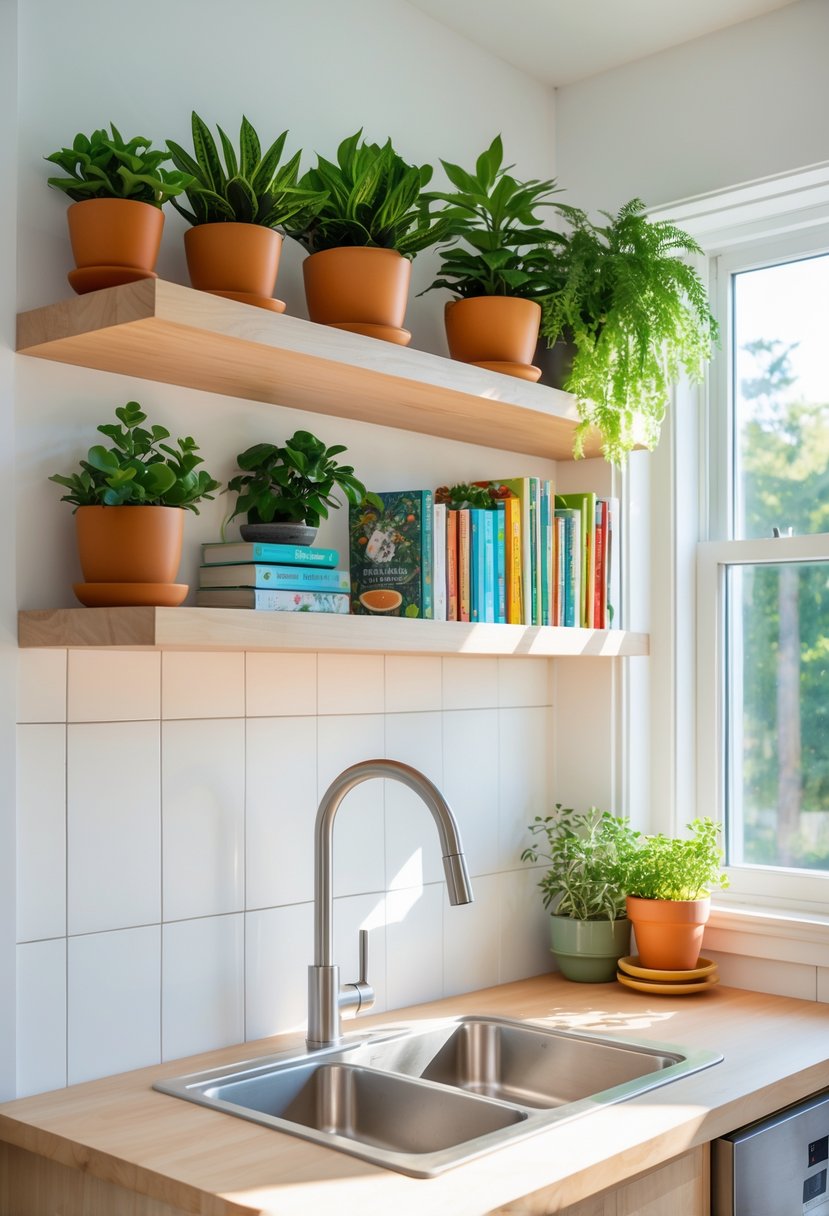
Floating shelves above the sink add functional storage without using counter space. They keep cookbooks or small plants within easy reach while adding visual interest.
This setup works well in small kitchens by utilizing often overlooked vertical space. It also helps maintain a clean, organized countertop and enhances the room’s aesthetic with greenery or decorative items.
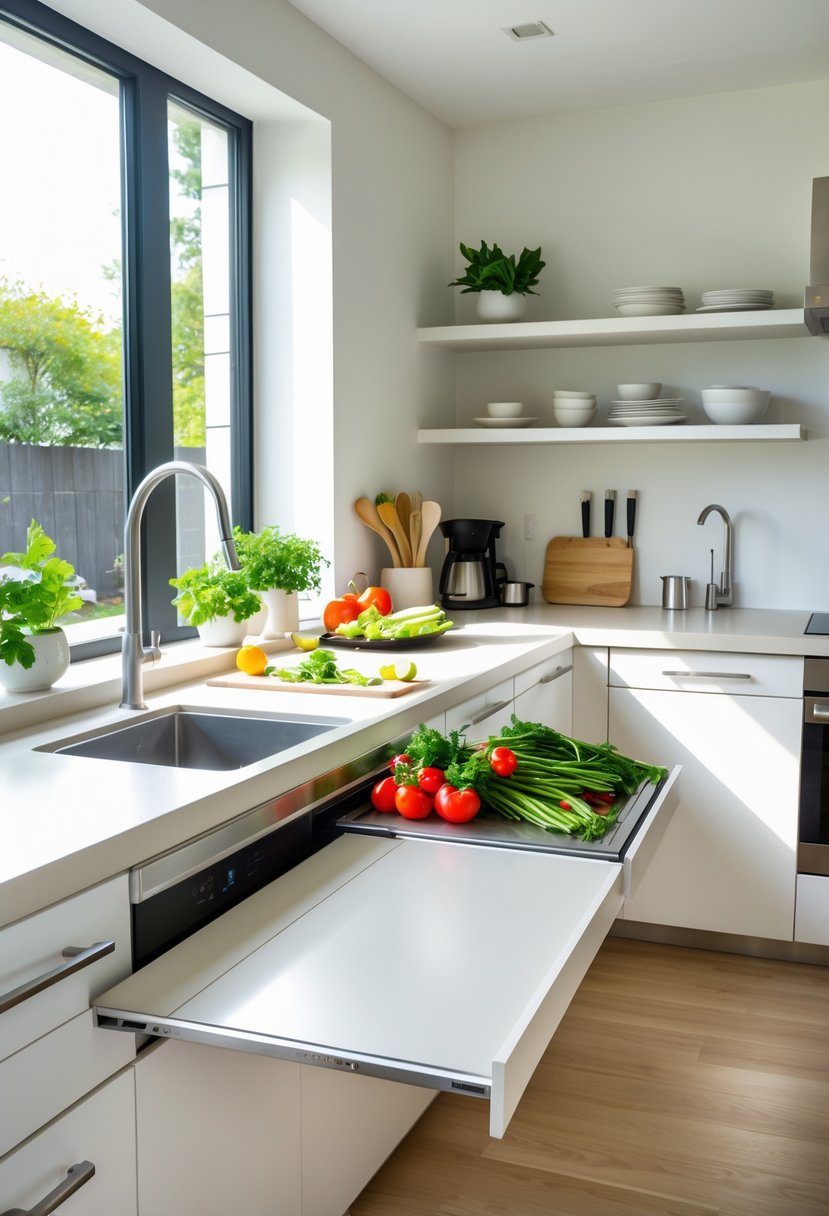
19) Use a pull-out cutting board to extend counter space temporarily
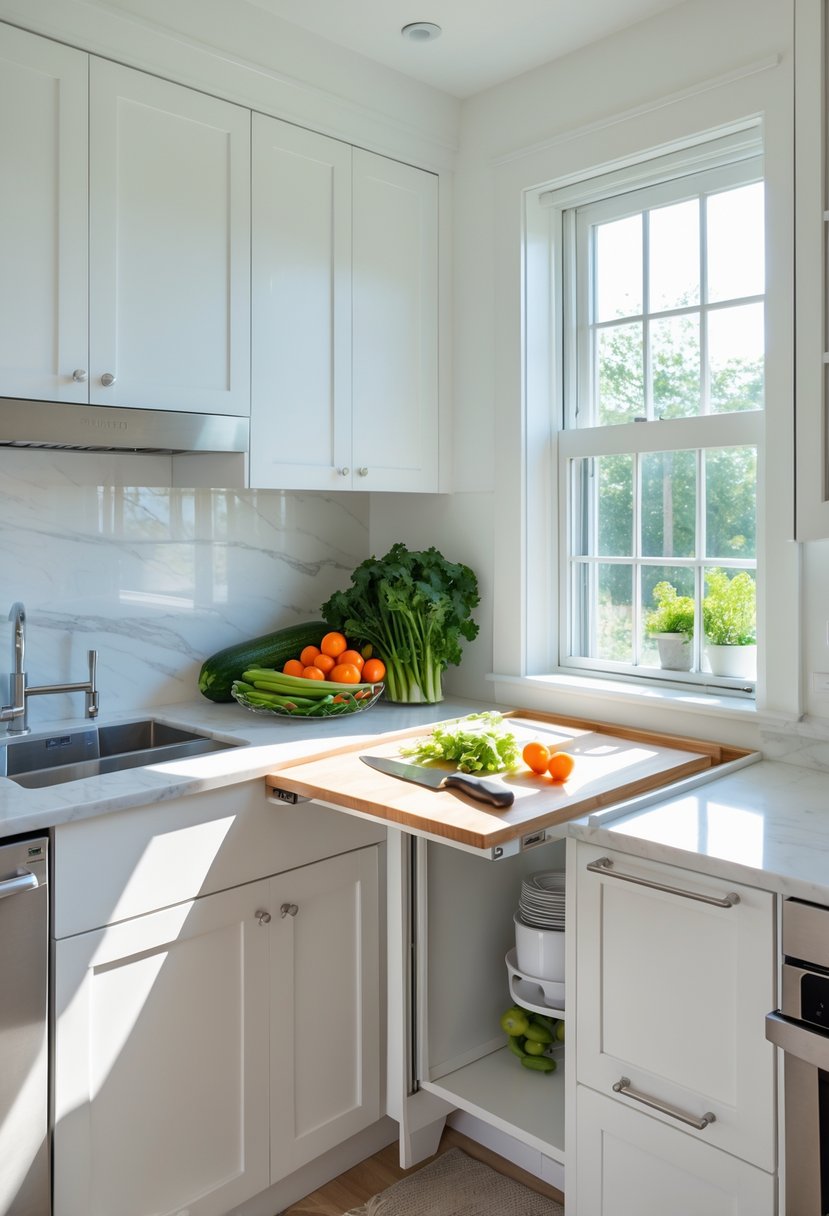
A pull-out cutting board provides extra workspace by sliding out from cabinetry when needed. It adds prep space without permanently taking up countertop area.
This solution works especially well in small kitchens where every inch counts. It can be tucked away when not in use, maintaining a clean and uncluttered look.
Choosing a model that fits above a drawer helps preserve storage space while boosting functionality.
20) Install a vertical wine rack to keep bottles accessible and compact
A vertical wine rack is a practical way to save space in small kitchens. It stores bottles upright, making them easy to see and grab.
This design fits neatly into narrow spaces or unused corners. It helps organize wine without taking up valuable counter or cabinet space.
Vertical racks can be freestanding or wall-mounted, offering flexibility based on kitchen layout. They provide efficient storage while maintaining accessibility.
Principles of Small Kitchen Design
Creating a small kitchen that feels open, functional, and stylish requires a careful balance of lighting, layout, and movement. These elements work together to maximize space without sacrificing usability.
Maximizing Light and Openness
Natural and artificial lighting dramatically affect the perception of space in a small kitchen. Large windows or glass doors allow natural light to flood in, making the room feel larger and more inviting. When natural light is limited, layering artificial light sources—such as recessed ceiling lights, under-cabinet LED strips, and pendant lamps over work areas—can help maintain brightness and reduce shadows.
Light-colored walls and surfaces enhance this effect by reflecting light around the room. Glossy finishes on cabinets and countertops also improve light distribution. Removing bulky upper cabinets or replacing them with open shelving can open sightlines and reduce visual clutter, contributing to a more spacious feel.
Efficient Traffic Flow
An effective layout minimizes obstacles and unnecessary steps, allowing smooth movement between key kitchen zones: cooking, cleaning, and storage. The classic “work triangle”—arranging the sink, stove, and refrigerator in a compact triangular pattern—remains relevant to small kitchens by reducing walking distances.
Narrow aisles should be at least 36 inches wide to prevent crowding, but not so wide they waste space. Clear pathways avoid congestion, especially in kitchens shared by multiple users. Zone-specific storage keeps frequently used items within easy reach, cutting down on backtracking. Compact, multi-functional furniture or appliances also help maintain open walkways, making the kitchen more comfortable and efficient.
Creative Storage Solutions
Maximizing kitchen space requires thoughtful organization that blends utility with style. Clever design elements can transform unused corners and walls into efficient storage zones, making small kitchens feel more spacious and orderly.
Integrating Hidden Compartments
Hidden compartments are practical for keeping clutter out of sight without sacrificing accessibility. Drawers with built-in dividers or false bottoms offer discreet storage for utensils, spices, or small appliances.
Cabinet doors can be fitted with narrow racks or magnetic strips to hold spices, lids, or cutting boards. Under-sink areas often go underutilized; installing pull-out baskets or shelves here creates extra room for cleaning supplies without crowding counters.
Furniture with dual functions, like benches with internal storage or fold-down tables with hidden compartments, also optimize space. These solutions maintain a clean look while providing ample storage.
Utilizing Vertical Space
Vertical storage unlocks capacity by extending reach upward rather than outward. Wall-mounted shelves or racks store cookware, dishes, and pantry items efficiently while keeping countertops clear.
Magnetic spice racks attached to walls or refrigerator sides offer easy access without requiring drawer space. Hanging pot racks free cabinet space and create visual interest.
Using tall cabinets with adjustable shelving customizes storage according to needs, including space for tall bottles or baking sheets. Utilizing space above cabinets for baskets or decorative boxes further increases capacity in style.