Small bathrooms often come with challenges like limited space and storage, which can affect both comfort and usability. Finding ways to use the available area efficiently is key to creating a functional and pleasant environment.
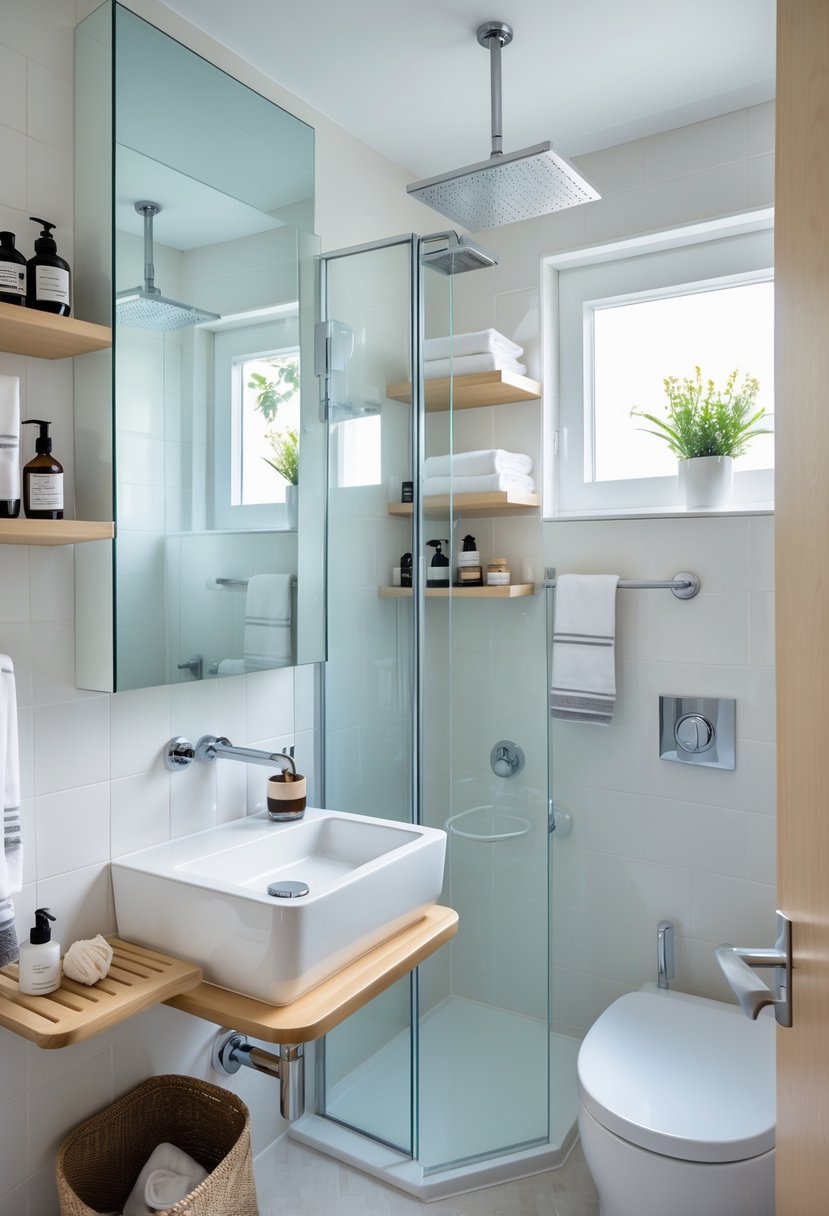
This article will help you discover practical ideas that maximize functionality without sacrificing style. You can apply these strategies to make your small bathroom more organized and easier to use every day.
1) Install floating vanities to free up floor space
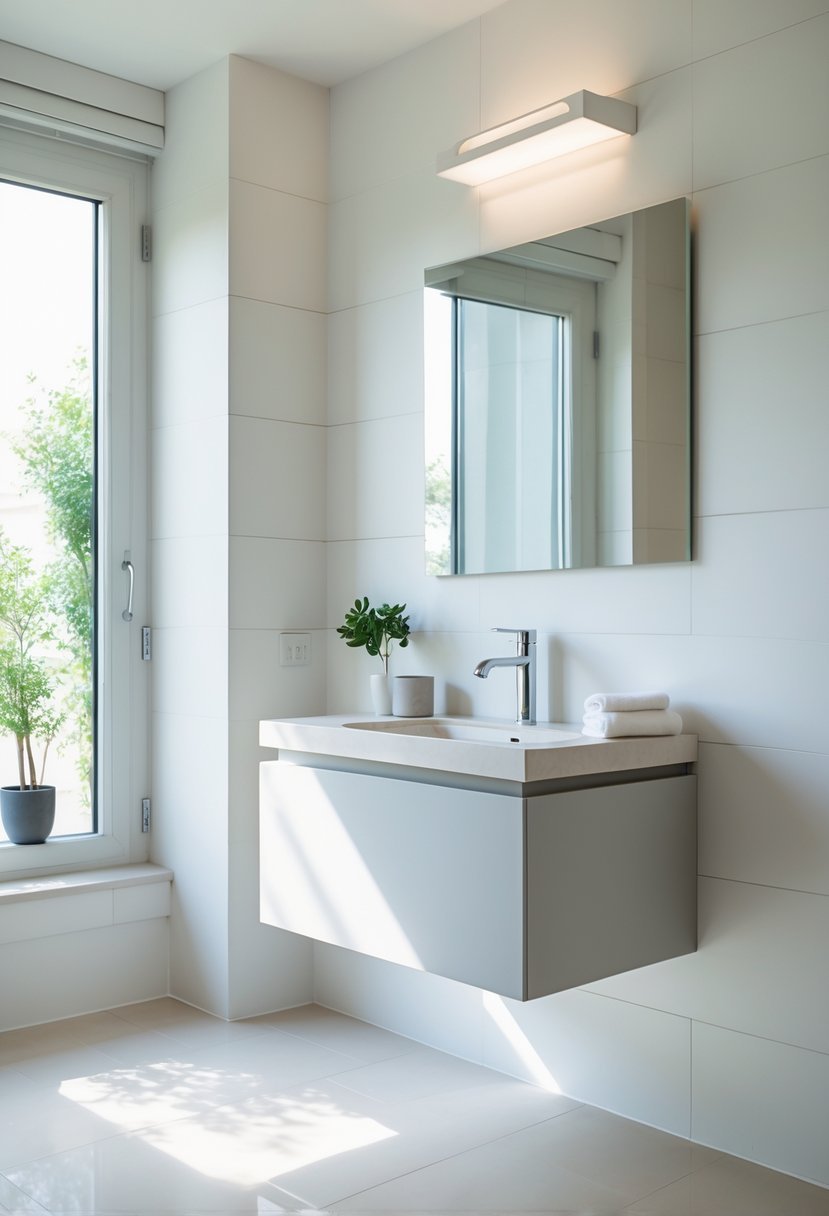
You can make your small bathroom feel more open by installing a floating vanity. It lifts storage off the floor, creating visible space beneath.
This design reduces clutter and increases the sense of height in your room. You also gain easier cleaning access and a modern look.
2) Use over-the-toilet shelving for extra storage
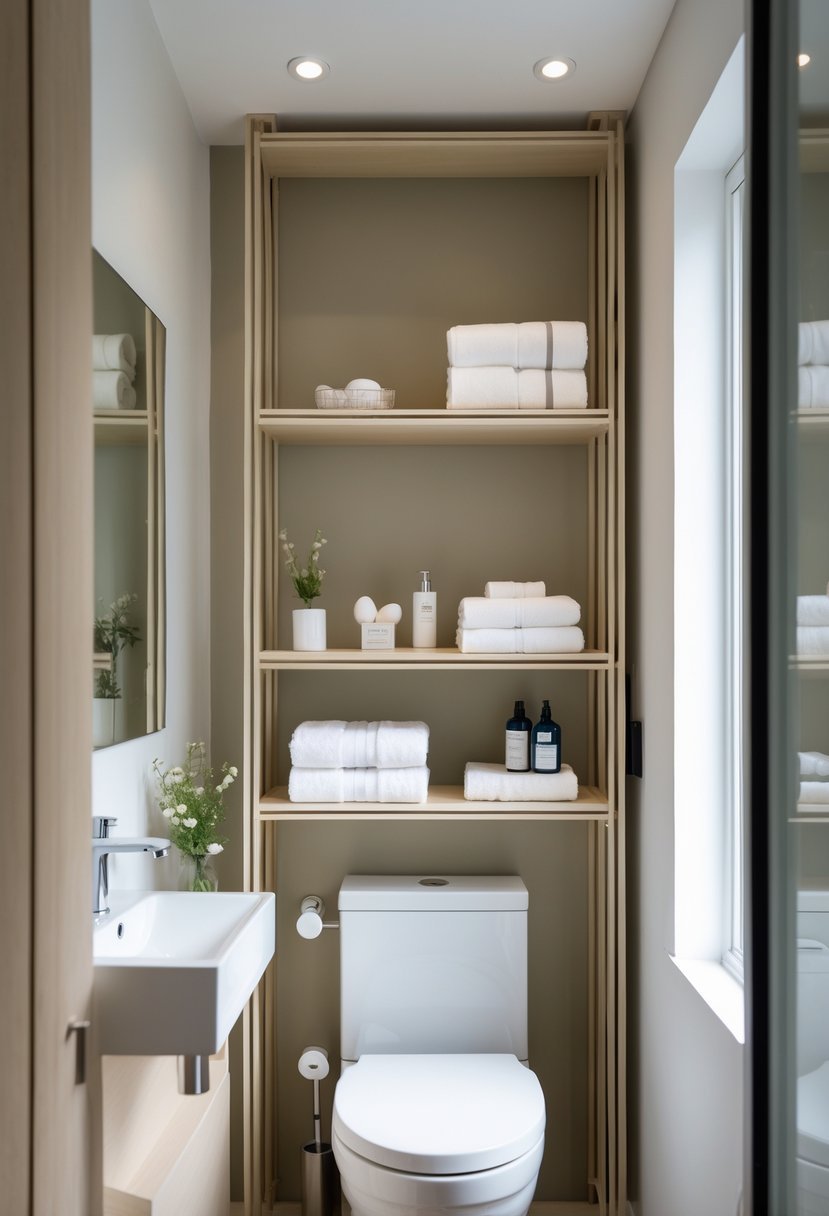
You can maximize limited bathroom space by installing shelves above your toilet. This area is often unused but perfect for storing towels, toiletries, and everyday essentials. Over-the-toilet shelving keeps items accessible while freeing up vanity and floor space.
3) Incorporate recessed medicine cabinets to reduce clutter
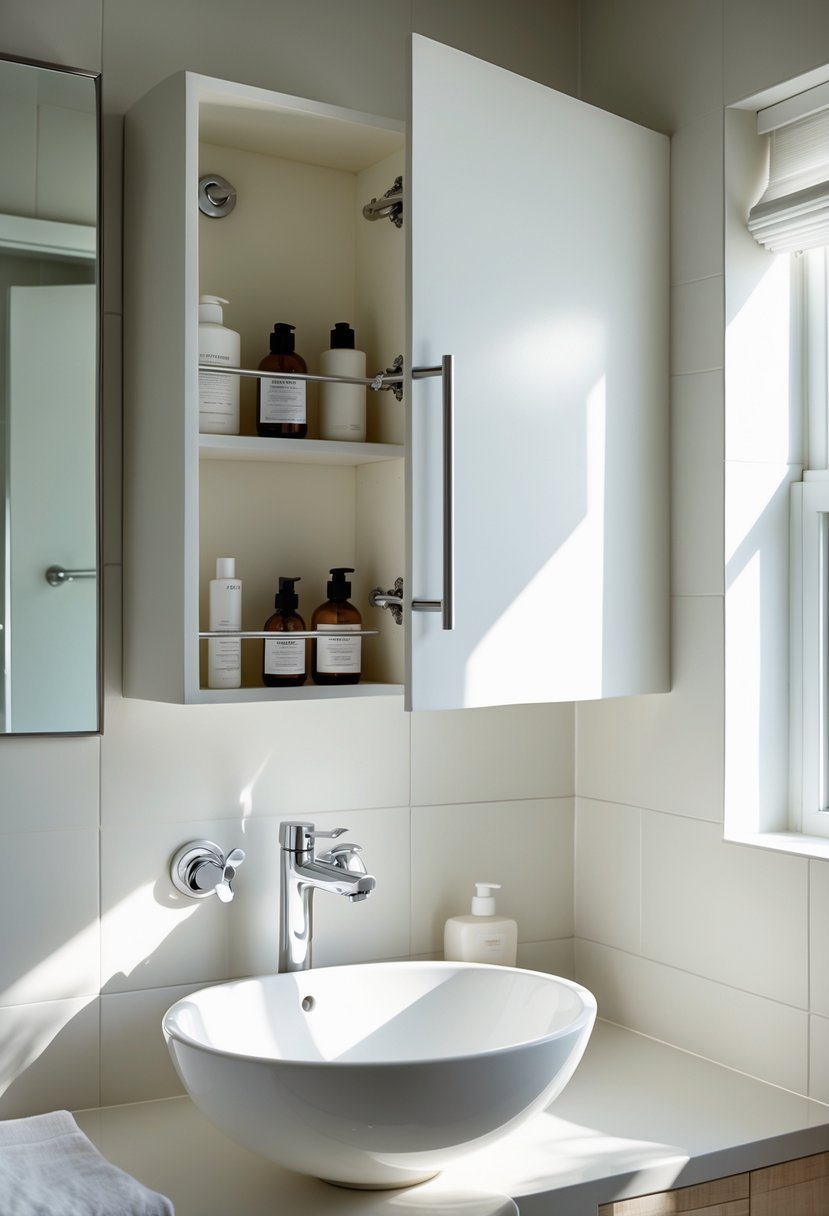
Recessed medicine cabinets fit flush into your wall, saving valuable space. This design keeps your toiletries organized without protruding into the room.
By integrating storage seamlessly, you create a cleaner, more streamlined bathroom. It reduces surface clutter and makes your space feel larger and more open.
4) Choose a pedestal sink to open up the room
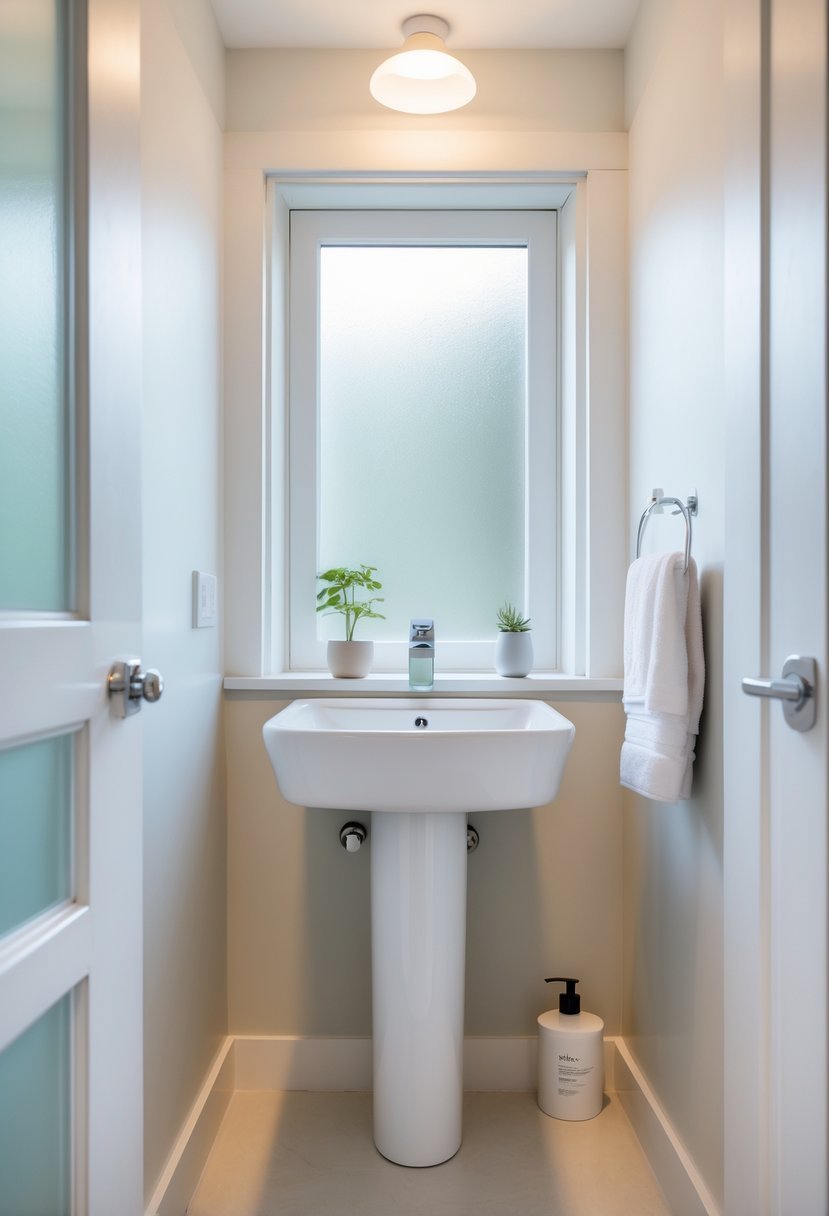
You can open up your bathroom by choosing a pedestal sink. Its slim design frees up floor space, making the room feel less crowded.
With no bulky cabinet below, you gain more visible area. This helps your small bathroom appear larger and more open.
5) Add large mirrors to create a sense of spaciousness
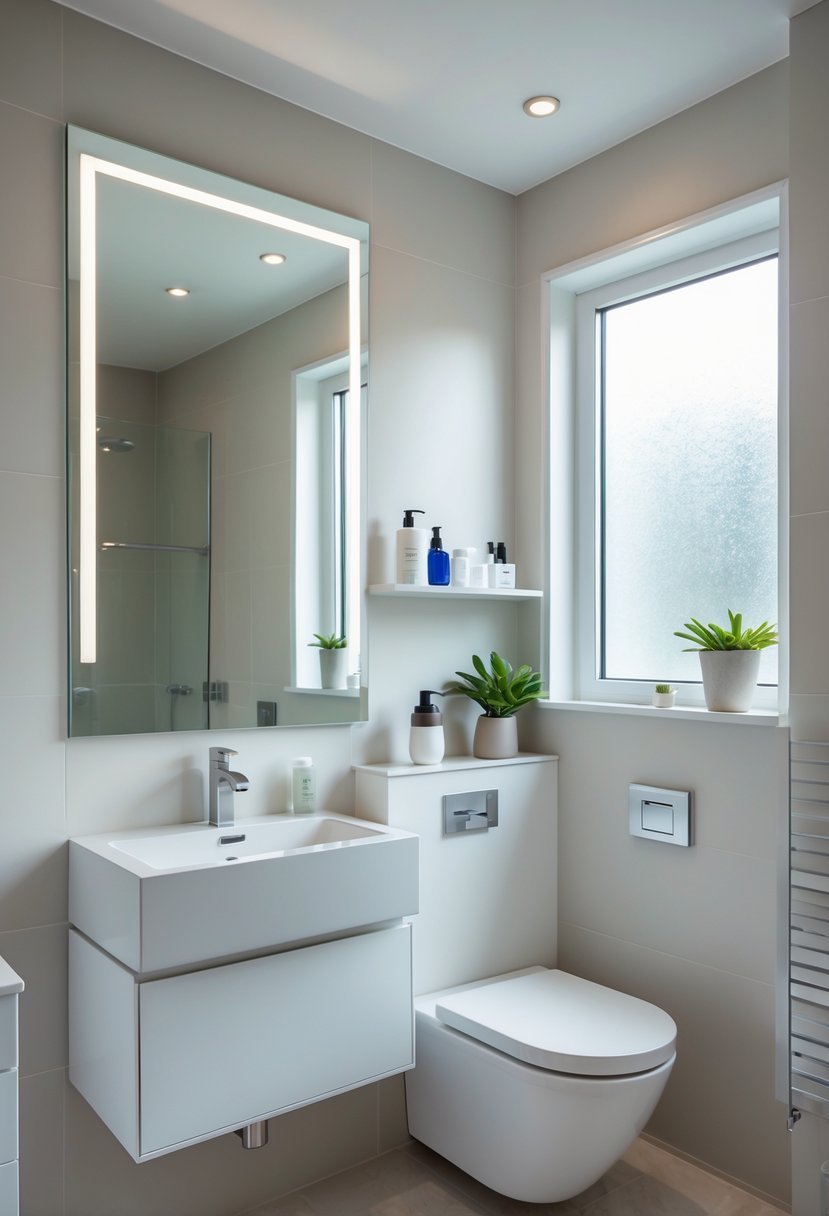
You can make your bathroom feel larger by installing a large mirror. Mirrors reflect light and open up visual space, reducing any sense of confinement.
Place your mirror strategically to maximize natural or artificial light. This simple change enhances both brightness and depth in your small bathroom.
6) Use light, neutral paint colors to brighten the space
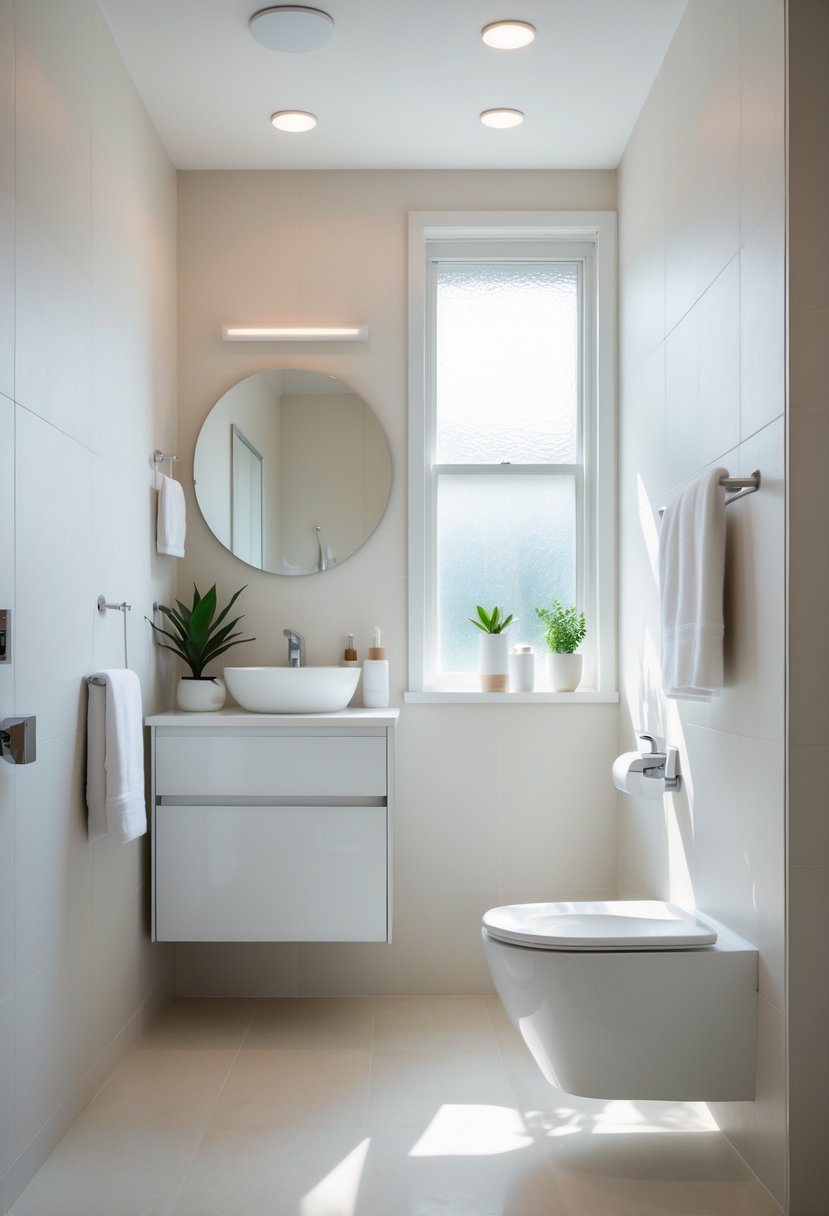
You can make your small bathroom feel more open by choosing light, neutral paint colors. Shades like soft beige, pale gray, or white reflect natural light, helping the room appear larger and airier.
Neutral tones also create a clean, calming atmosphere. They easily complement different fixtures and accessories, allowing you to change decor without repainting.
7) Opt for glass shower doors instead of curtains
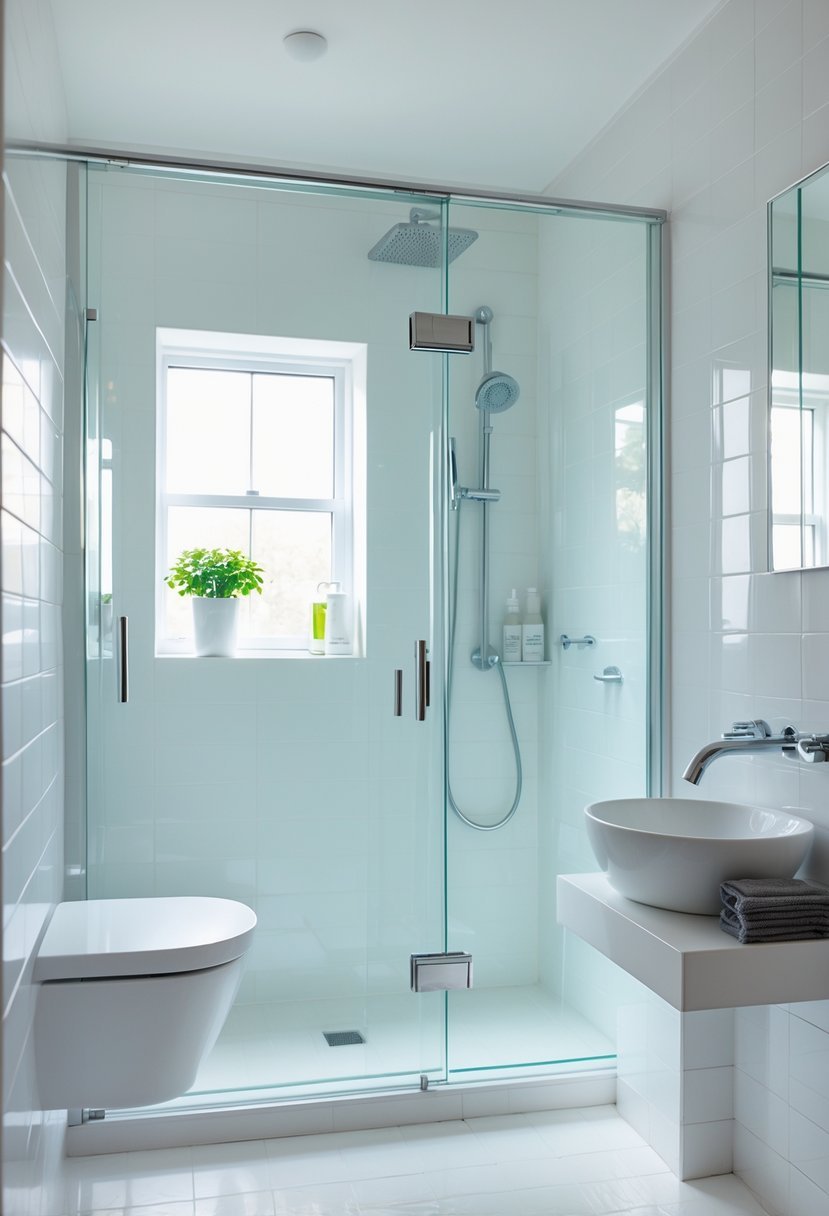
Glass shower doors create a cleaner, more open look in your bathroom. They let light pass through, making the space feel larger and less cluttered.
Frameless glass doors add modern style without the bulk. They also reduce mold and maintenance compared to curtains, improving hygiene and durability.
8) Install wall-mounted faucets to save counter space
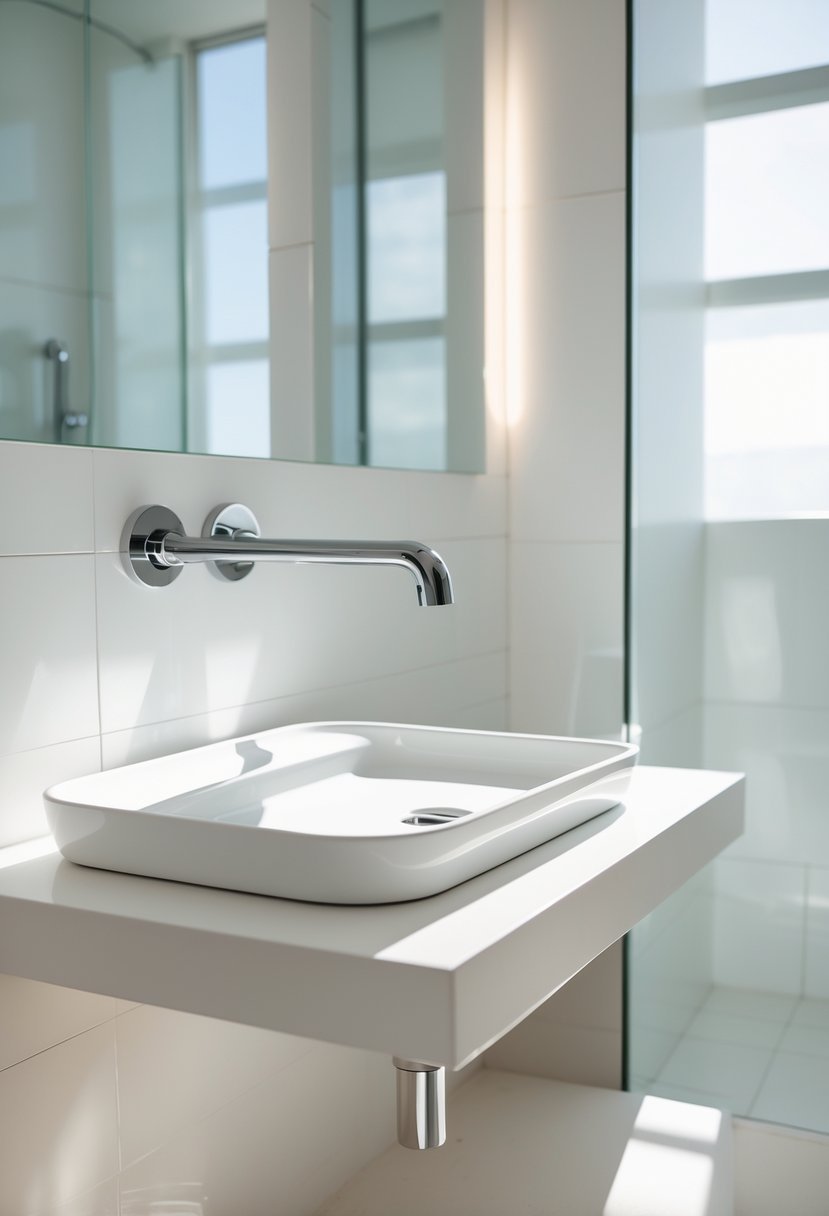
You can free up valuable counter space by choosing wall-mounted faucets. These fixtures attach directly to the wall, leaving your sink area clear for essentials.
This setup also makes cleaning easier and enhances the sense of openness in your bathroom. It’s a practical choice for compact rooms.
9) Use vertical storage solutions like tall cabinets
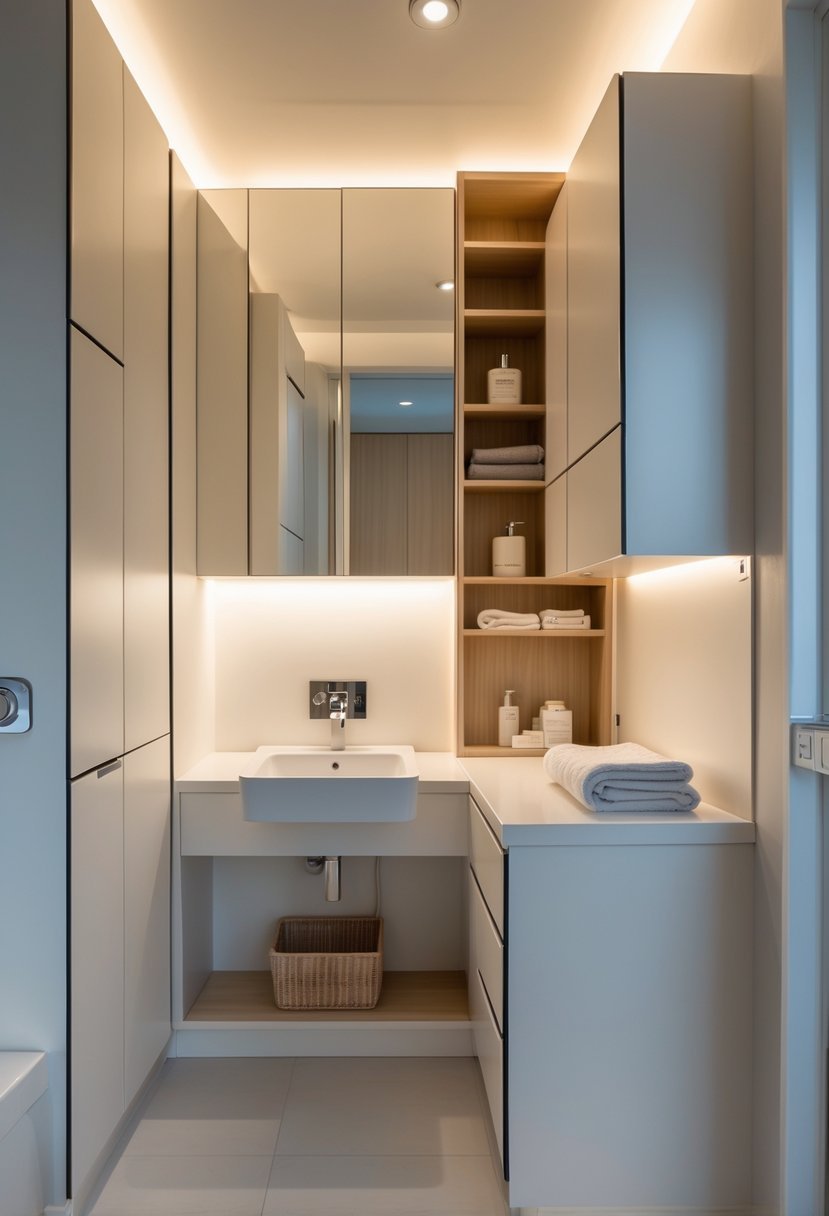
You can increase usable space by installing tall cabinets that take advantage of your bathroom’s height. These cabinets store towels, toiletries, and cleaning supplies without crowding countertops or floors.
Vertical storage helps keep your bathroom organized and creates a more open feel. Choose narrow designs to fit small spaces while maximizing storage capacity.
10) Incorporate under-sink organizers for toiletries
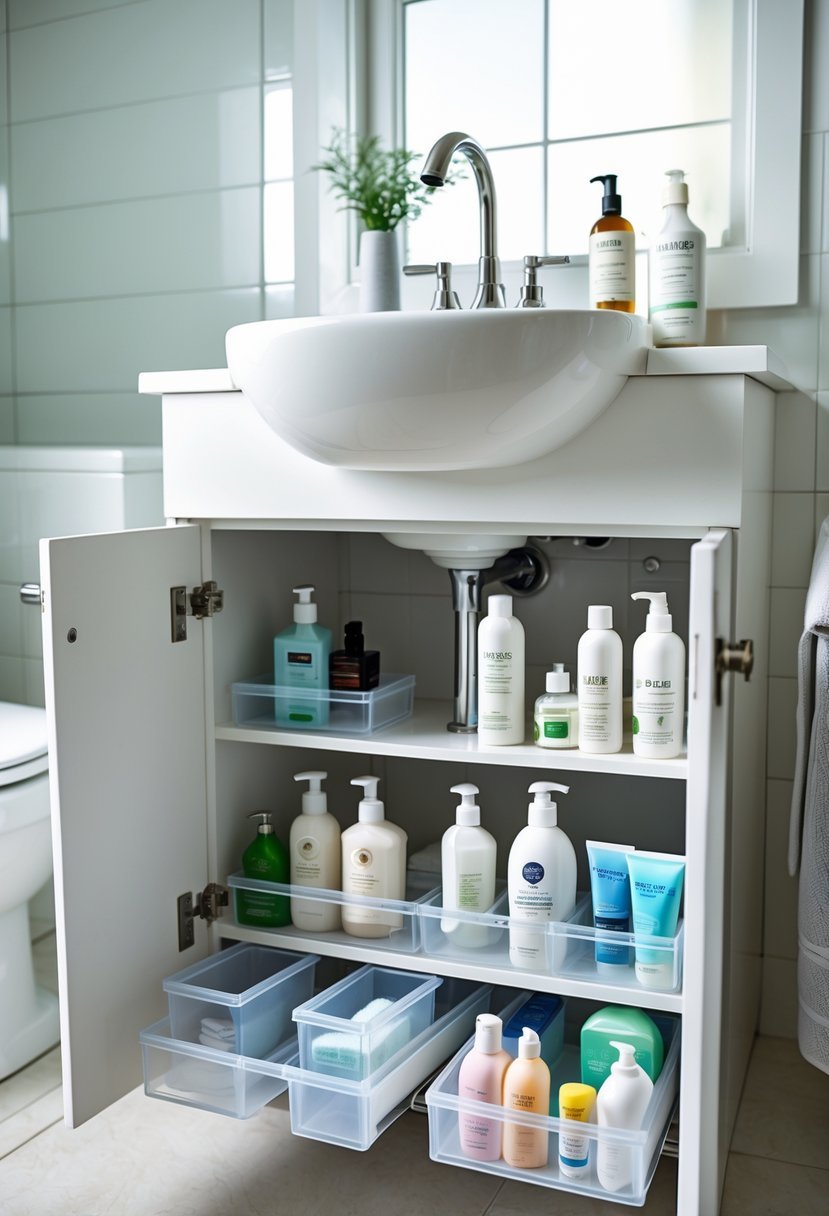
You can maximize hidden storage by using under-sink organizers. Bins, baskets, or drawer dividers keep toiletries neat and easily accessible. This method reduces countertop clutter and uses often-overlooked space efficiently. Choosing organizers that suit your needs helps maintain order in a small bathroom.
11) Choose compact, wall-hung toilets
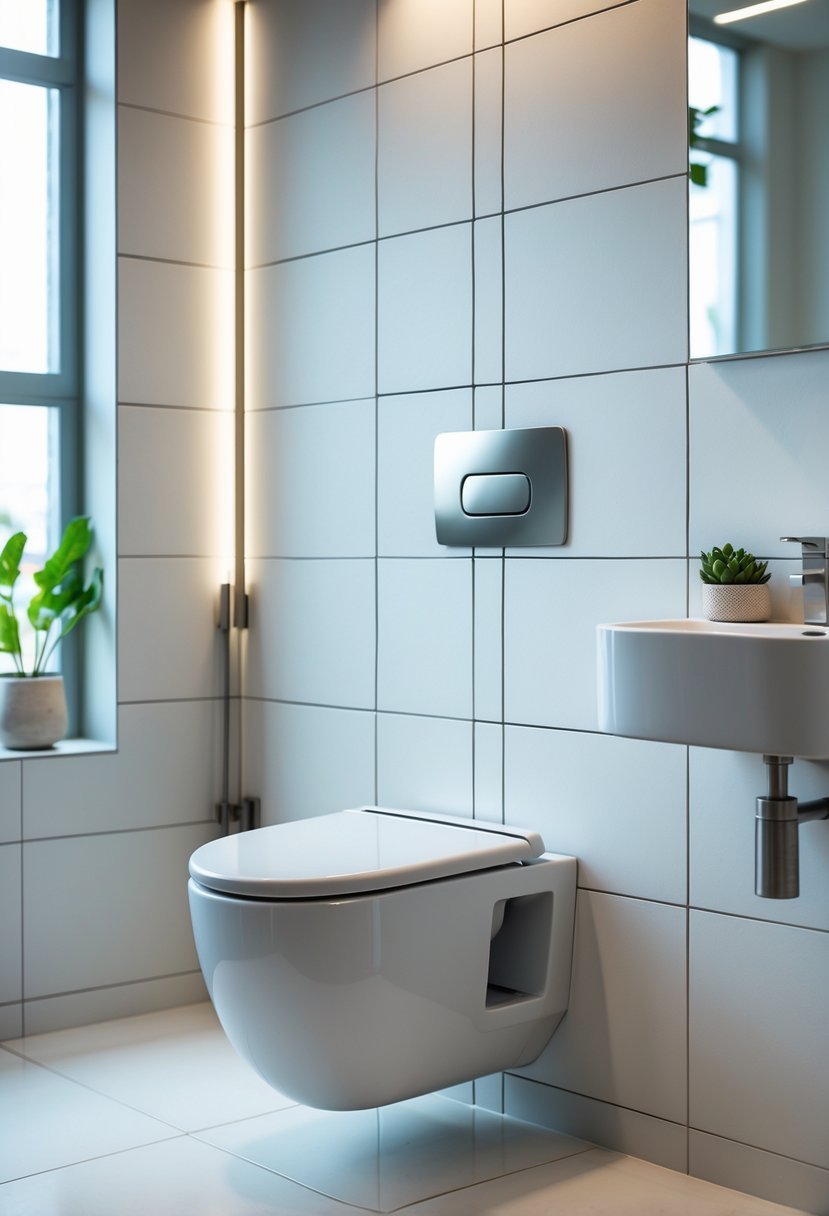
You can save floor space by installing compact, wall-hung toilets. These models fix directly to the wall, freeing up room beneath for easier cleaning and a less cluttered look.
Their streamlined design helps maintain an open feel, especially in tight bathrooms. Select one with a concealed tank for added space efficiency.
12) Add LED lighting around mirrors for better illumination
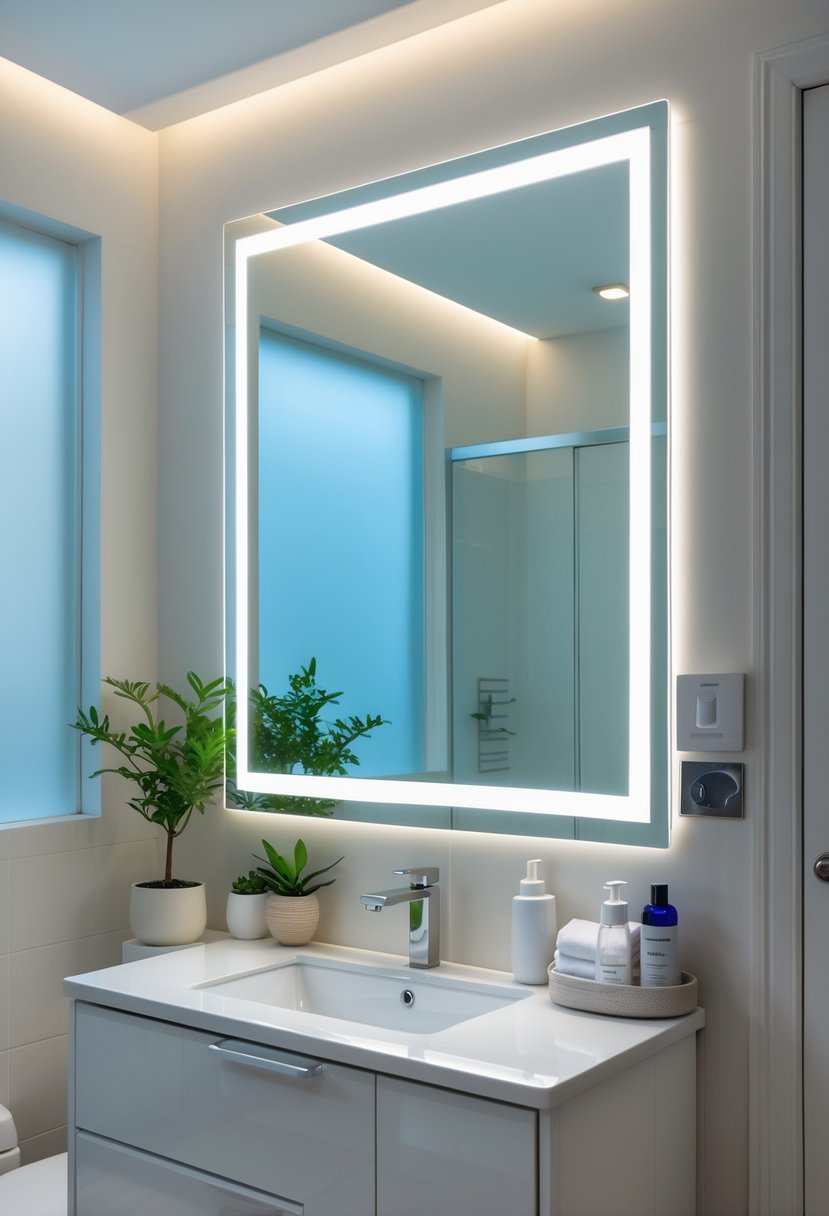
Adding LED lighting around your bathroom mirror improves visibility for daily tasks like shaving or applying makeup. It offers even, bright light without shadows, making the space feel larger and more open.
Choose slim, edge-lit LED mirrors with dimmers and anti-fog features for convenience and efficiency. This lighting upgrade requires minimal space and adds a modern touch to your bathroom.
13) Use multi-functional furniture, such as mirror cabinets with storage
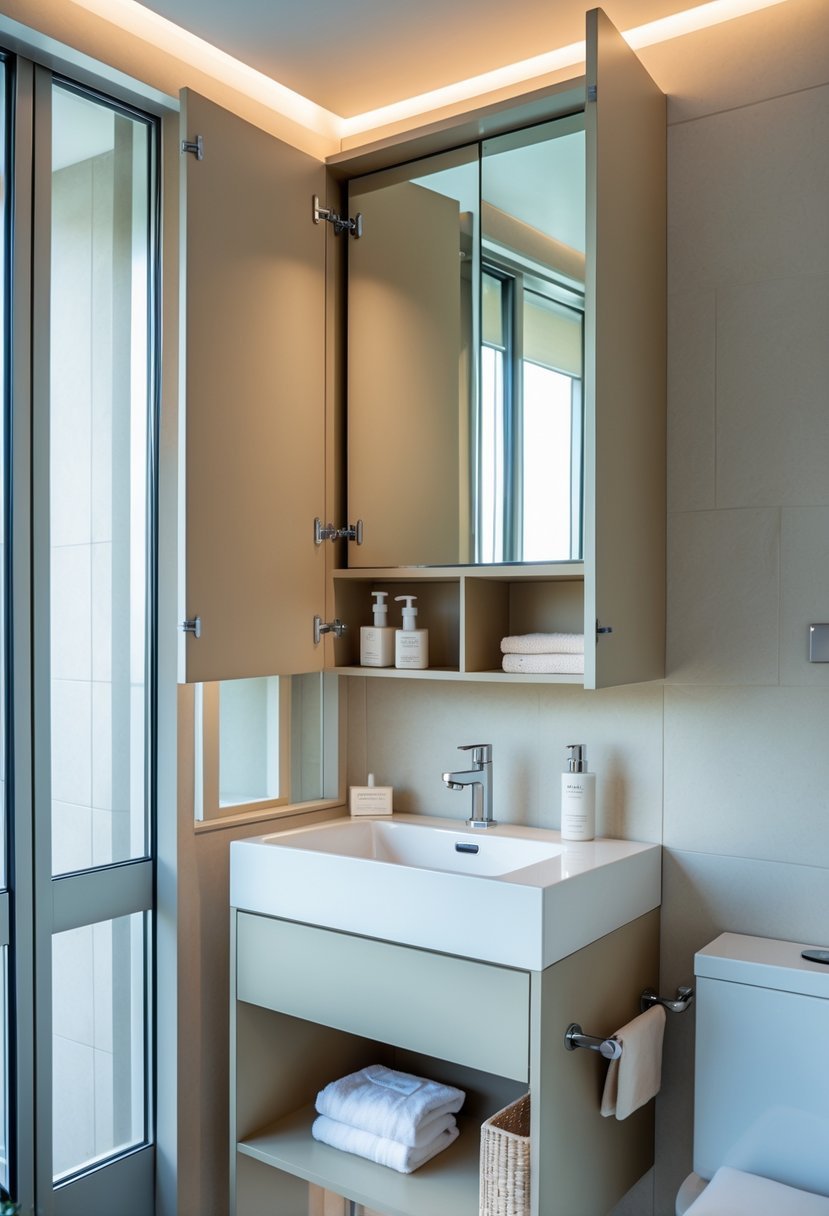
You can save space by choosing mirror cabinets that open to reveal storage. These units combine reflection and hidden shelves, keeping essentials within reach but out of sight. This helps maintain a clean, uncluttered look in your bathroom. Multi-functional furniture like this maximizes utility without crowding your space.
14) Install towel bars on the back of bathroom doors
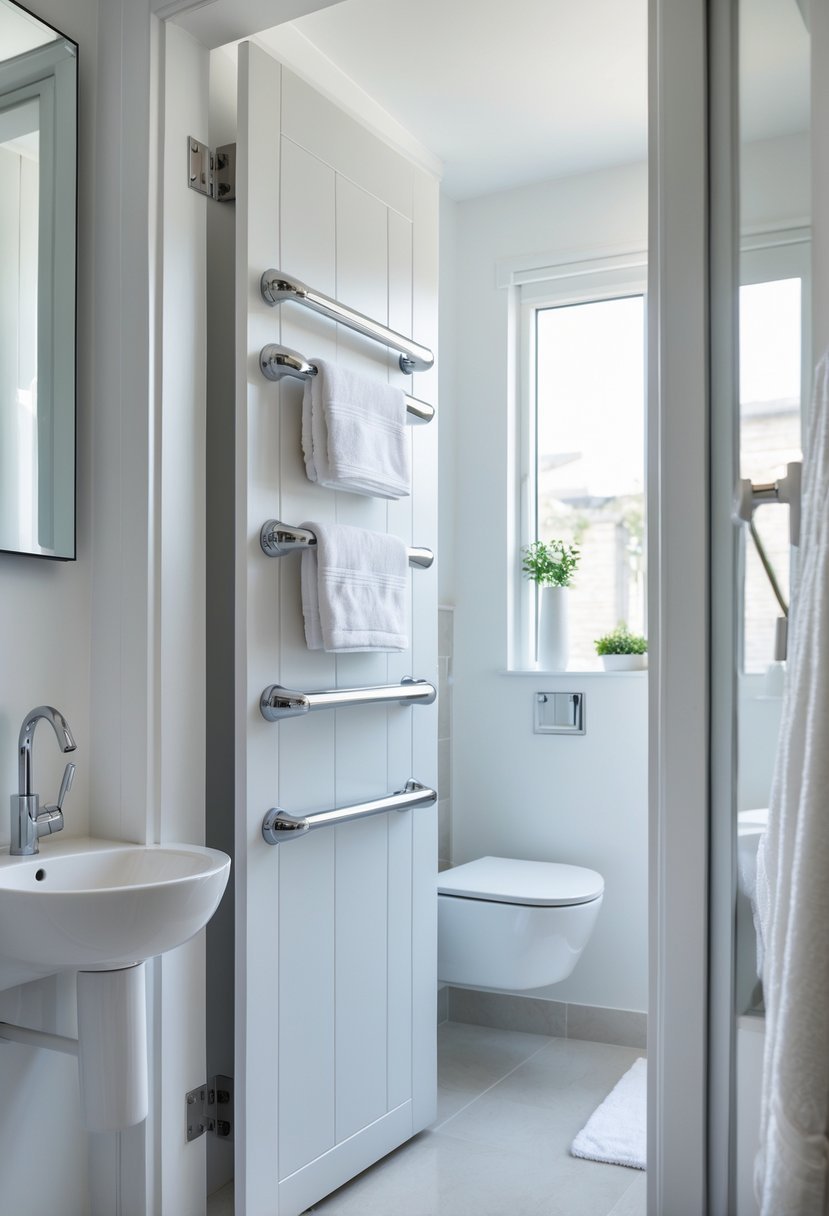
You can use the back of your bathroom door to hang towel bars, making good use of otherwise wasted space. This keeps towels within reach without crowding wall areas. Choose slim or vertical bars to avoid blocking door movement.
15) Incorporate shallow shelves for small items
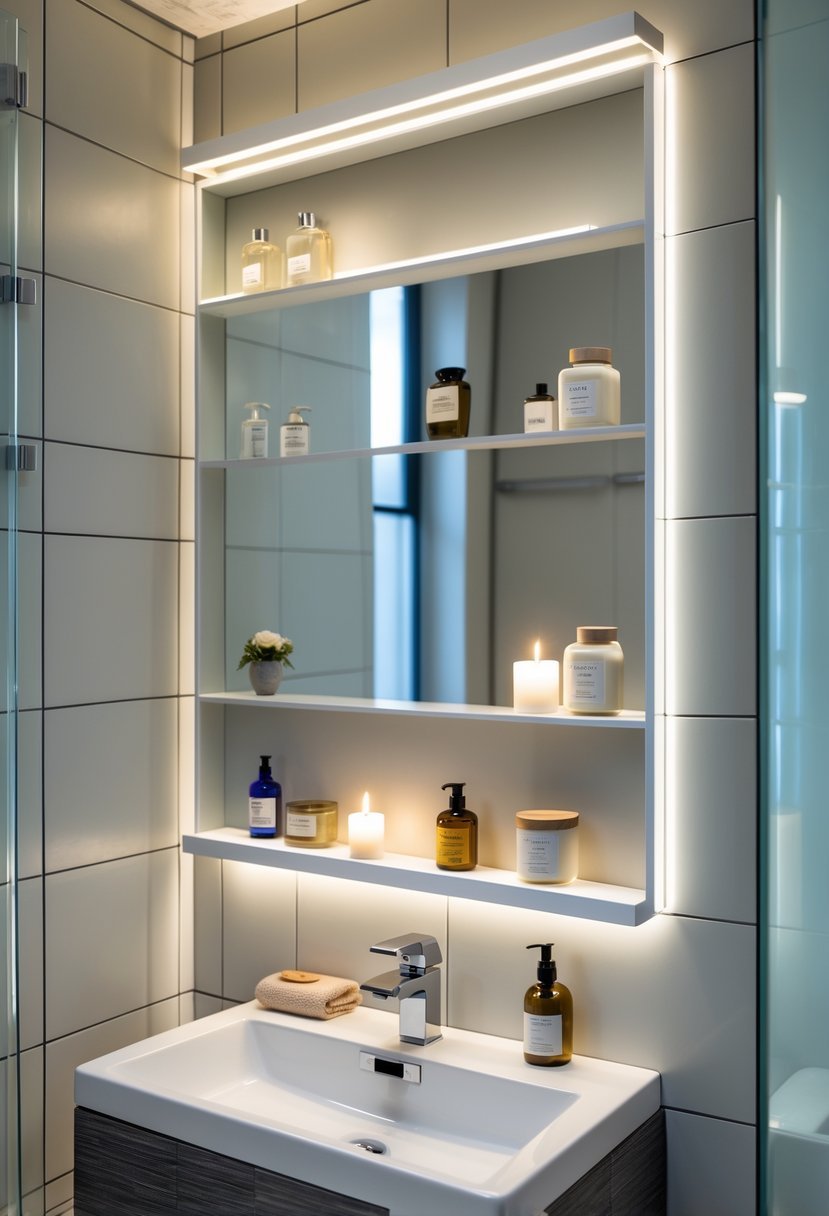
You can use shallow shelves to store toiletries, cosmetics, and other small essentials without crowding your bathroom. These shelves fit easily above sinks or near mirrors, keeping items accessible yet neatly organized. This approach saves space while maintaining a clean, functional look.
Design Principles for Compact Bathrooms
Maximizing a small bathroom’s functionality depends heavily on smart spatial planning, a carefully chosen color scheme, and selecting fixtures that serve multiple purposes without overcrowding the space. Each decision should contribute to making your bathroom feel open, efficient, and comfortable.
Optimizing Layout for Flow
Creating a fluid layout is essential in a compact bathroom. Prioritize placing fixtures in a way that minimizes clutter and keeps pathways clear. Position the toilet and sink opposite or adjacent to each other to open up floor space.
Use vertical space effectively by installing wall-mounted storage or shelving. Consider a floating vanity; it frees up floor area, giving your bathroom an open feel. Avoid bulky cabinets that encroach on limited space.
Measure your bathroom carefully and sketch the layout before purchasing fixtures. Every inch counts, so compact, multi-functional elements, like a combined sink-toilet unit or corner shower, optimize the available room and improve movement.
Choosing the Right Color Palette
Selecting light and neutral tones brightens your bathroom and visually expands the space. Shades like soft whites, pale grays, or muted pastels reflect more light and create an airy atmosphere.
Avoid dark or overly saturated colors, which can make the room feel smaller and cramped. Use a monochromatic palette or subtle contrasts to keep the look cohesive.
You can incorporate color through accessories or tile accents for personality without overwhelming the room. Matte finishes reduce glare, and semi-gloss paint on trim adds subtle shine, enhancing light reflection.
Selecting Functional Fixtures
Opt for space-saving fixtures designed for small bathrooms. Compact toilets and slimline vanities reduce bulk without sacrificing utility. A wall-hung toilet or slim sink can create extra legroom and storage beneath.
Choose fixtures with integrated storage options, such as mirrored medicine cabinets or vanities with built-in drawers. This minimizes the need for additional furniture.
Consider multi-purpose items like combination sink-toilet units or shower heads with adjustable settings. Prioritize fixtures that balance style with functionality to maintain an uncluttered, practical bathroom.
Practical Maintenance and Upkeep
Maintaining your small bathroom ensures it stays functional and inviting. Focus on controlling moisture levels and choosing materials that simplify cleaning to keep your space efficient and fresh.
Preventing Moisture Build-Up
Moisture is a common issue in small bathrooms and can lead to mold, mildew, and damage. Ensure good ventilation by installing an exhaust fan rated for your bathroom size. Run the fan during and after showers for at least 20 minutes to reduce humidity effectively.
Use a dehumidifier if necessary, especially in bathrooms lacking windows. Regularly check and repair any leaks in faucets, showerheads, or pipes to prevent water accumulation. Seal grout lines and tiles properly to block moisture penetration.
Keep towels and bath mats dry by hanging them up to air out between uses. These steps limit dampness and protect surfaces, preserving your bathroom’s condition over time.
Easy-Clean Materials
Choose surfaces that require minimal effort to maintain for better daily upkeep. Non-porous materials like ceramic tiles, glass, and solid-surface countertops resist stains and mold, making them suitable for bathrooms.
Consider wall panels instead of wallpaper or paint to avoid water damage. Opt for fixtures with smooth finishes because textured materials tend to trap dirt and grime.
Use mildew-resistant grout and caulking to reduce cleaning frequency. Incorporate storage solutions that minimize clutter, as fewer items on display simplify dusting and wiping down surfaces. These choices save time and keep your bathroom hygienic.