Small kitchens can quickly feel crowded and hard to work in, but organizing your space well can make a big difference. Having a tidy kitchen helps you find what you need faster and makes cooking more enjoyable.
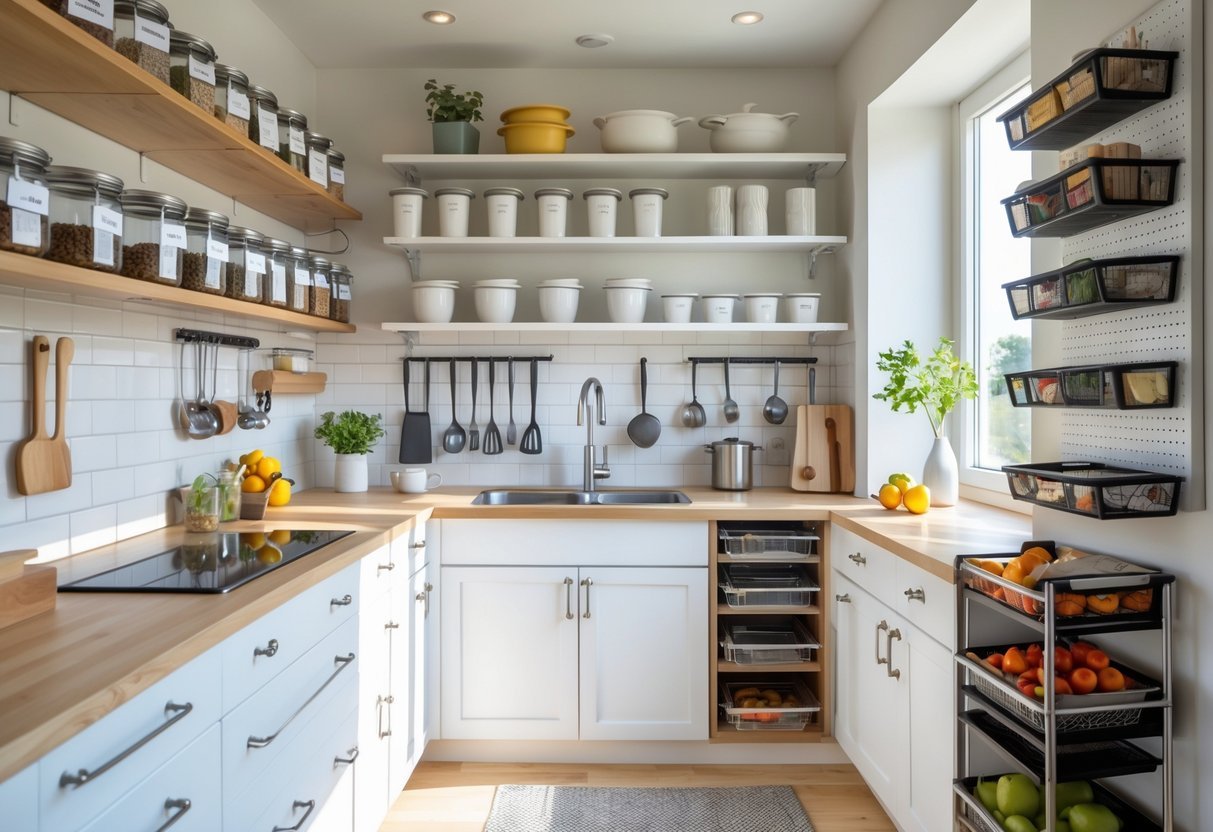
The key to improving your small kitchen is using smart organization tricks that maximize space and reduce clutter. With the right ideas, you can create a kitchen that feels open, efficient, and easier to keep clean.
1) Use a lazy Susan inside cabinets to access items easily
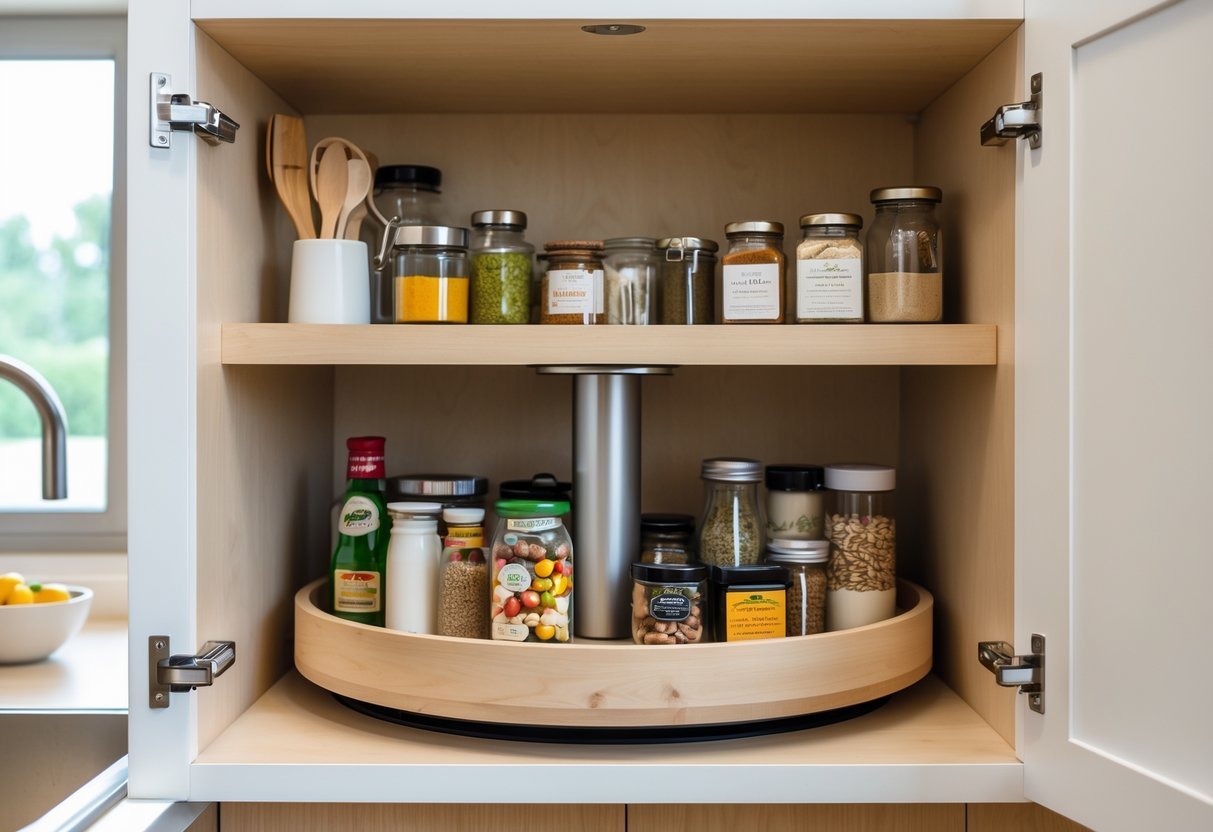
You can install a lazy Susan inside your cabinets to make use of corner space. It spins, so you can reach items in the back without moving everything in front.
This helps keep your kitchen organized and reduces clutter on your counters. You can store spices, baking supplies, or small appliances on it for easy access.
2) Install pull-out pantry shelves for better visibility
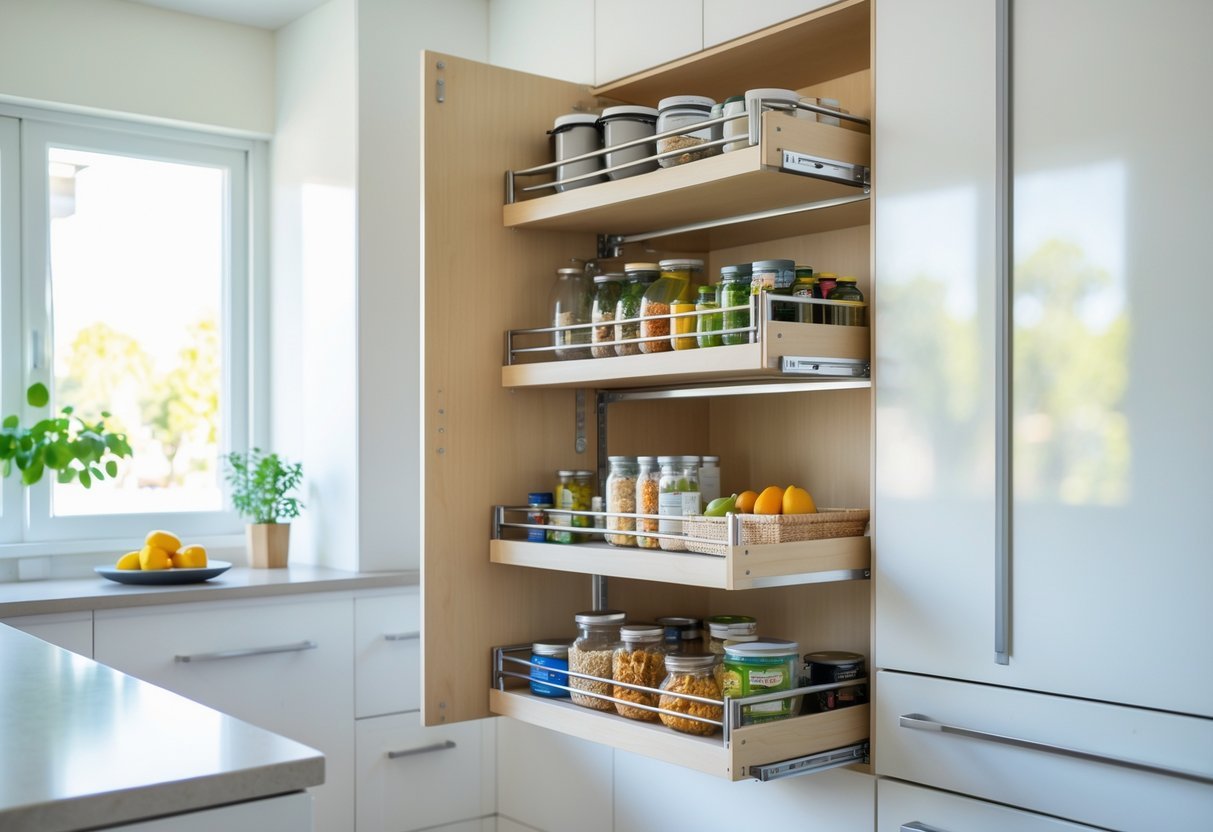
You can improve your pantry by adding pull-out shelves. These shelves slide out, making it easier to see and reach items in the back.
This helps keep your pantry organized and saves time when you cook. Measure your space carefully before installing to ensure a good fit.
3) Mount magnetic knife strips on walls to save counter space
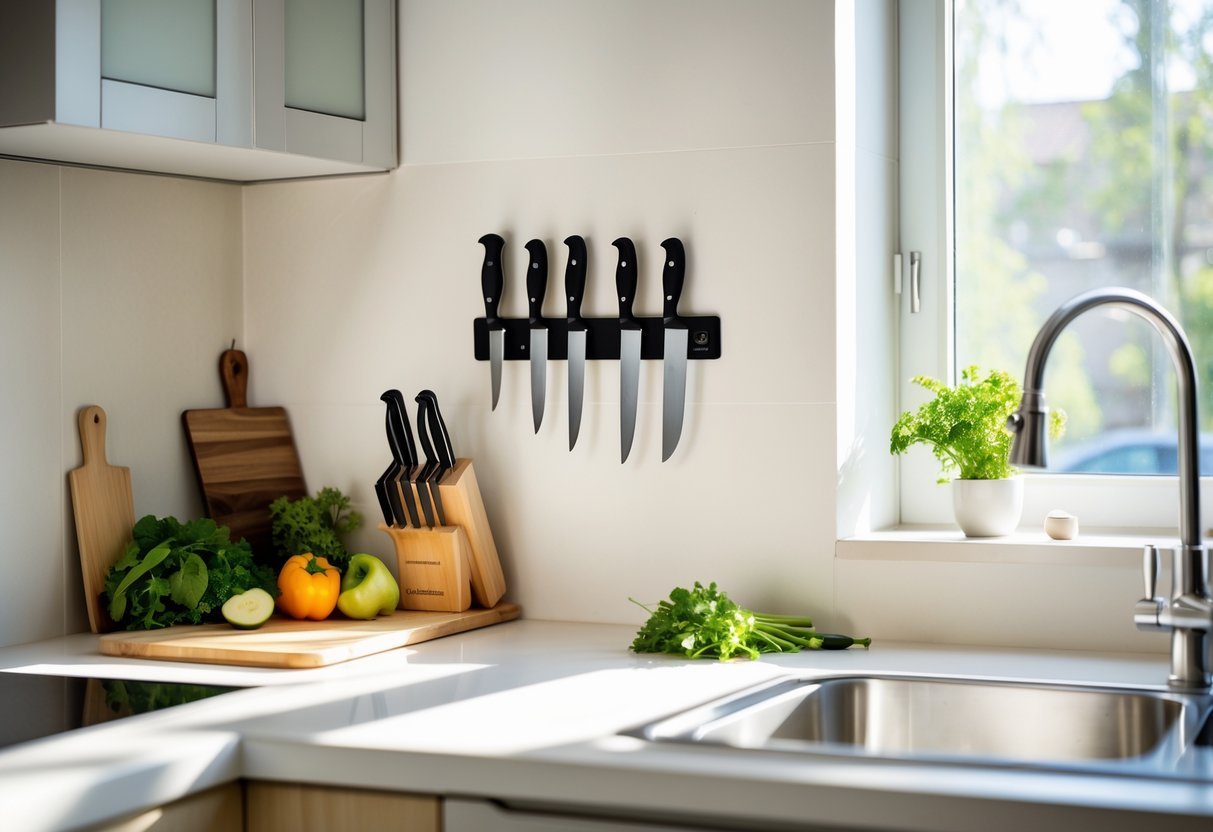
You can use magnetic knife strips to keep knives off your counters. These strips attach to walls and hold your knives securely.
This frees up valuable space and makes your knives easy to reach while cooking.
Magnetic strips also help keep knives dry and visible, which is better for safety and hygiene.
4) Utilize vertical wall racks for pots and pans
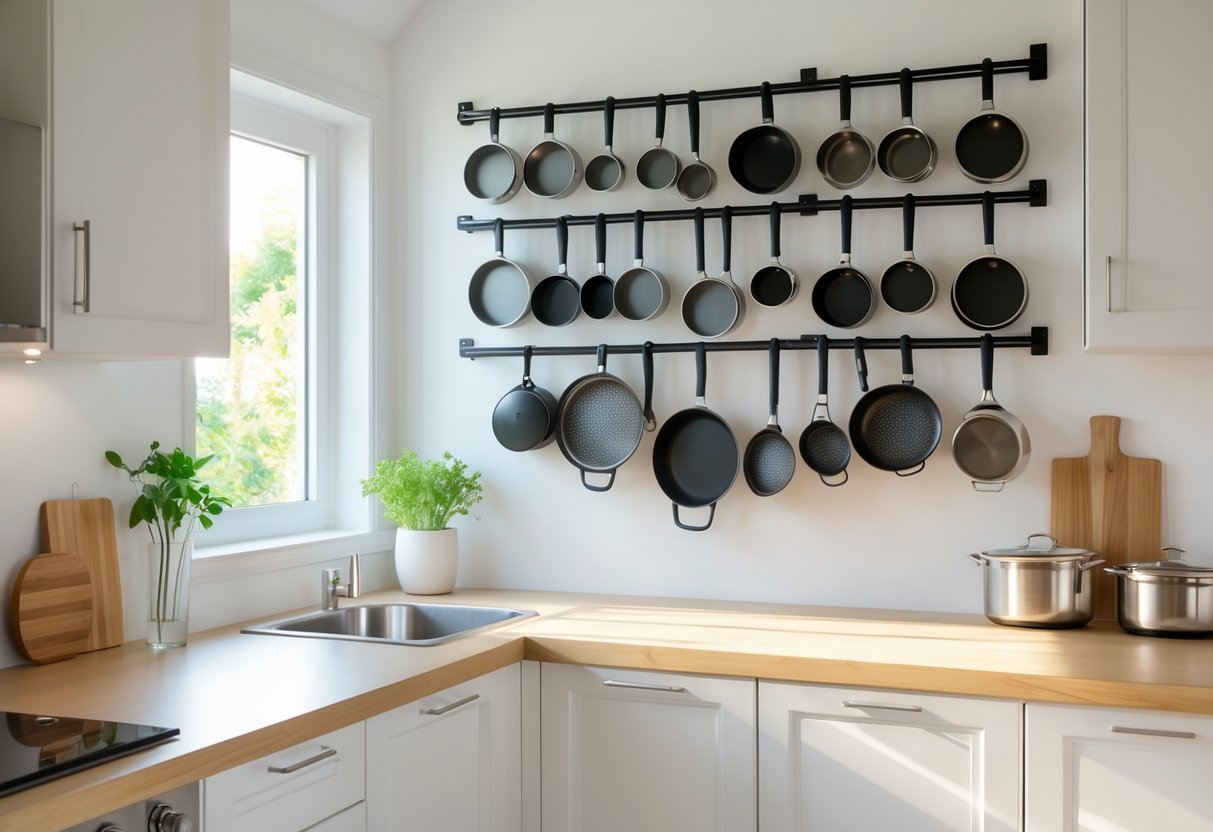
You can save cabinet space by hanging pots and pans on vertical wall racks. These racks keep your cookware visible and easy to reach.
Install them at a height that suits your use. This helps keep heavy pans within safe reach.
Choose racks with adjustable hooks for flexibility. This way, you can fit different sizes of pots and pans neatly on your wall.
5) Add under-cabinet hooks for hanging mugs
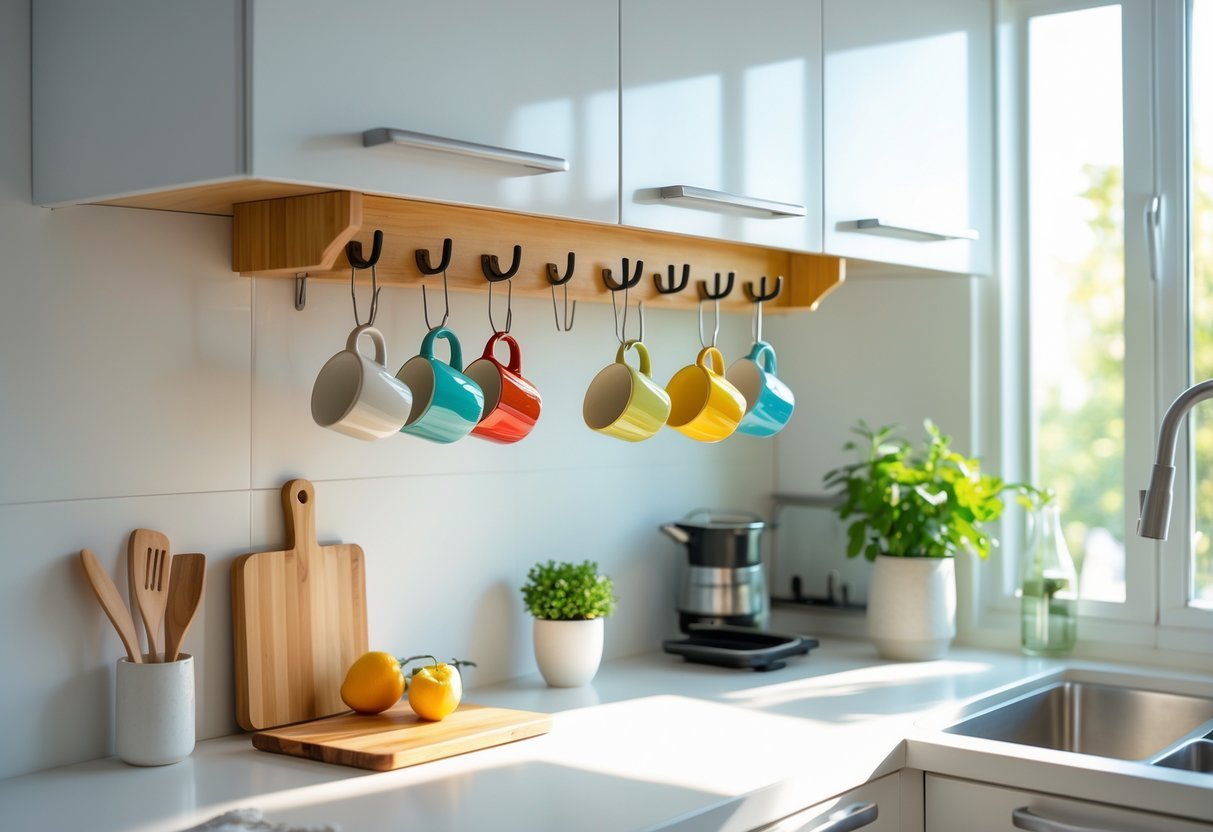
You can save space by installing hooks under your cabinets to hang mugs. This keeps mugs within easy reach and frees up cabinet room.
These hooks are simple to install and help reduce counter clutter. They work well in small kitchens with limited storage.
6) Use stackable clear pantry containers to reduce clutter
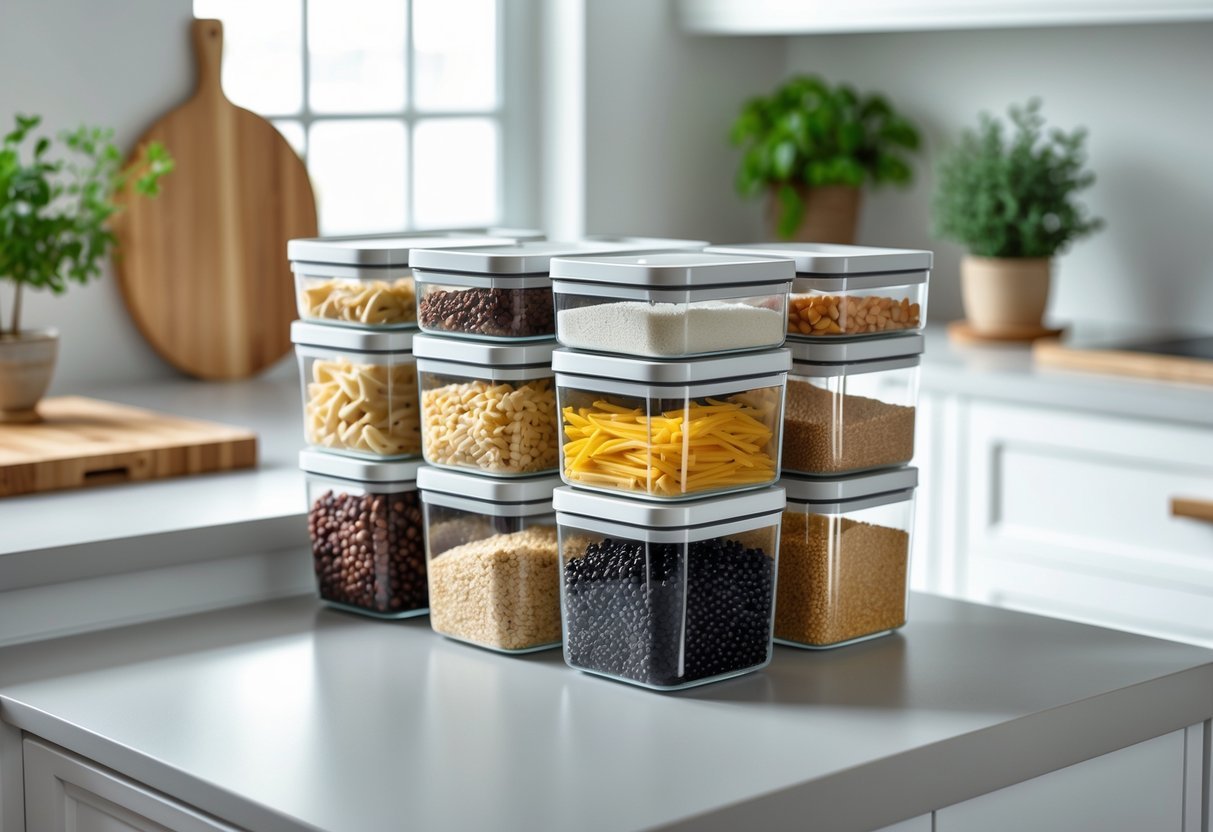
You can save a lot of space by using stackable clear containers in your pantry. They let you see what’s inside without opening them. This reduces mess and helps keep everything in order.
Clear containers come in different sizes. Choose ones that fit your needs and stack well together. This way, you use vertical space and keep your shelves neat.
Look for containers with airtight lids. They keep food fresh and prevent spills. This makes your kitchen cleaner and your pantry easier to manage.
7) Incorporate over-the-door organizers on pantry doors
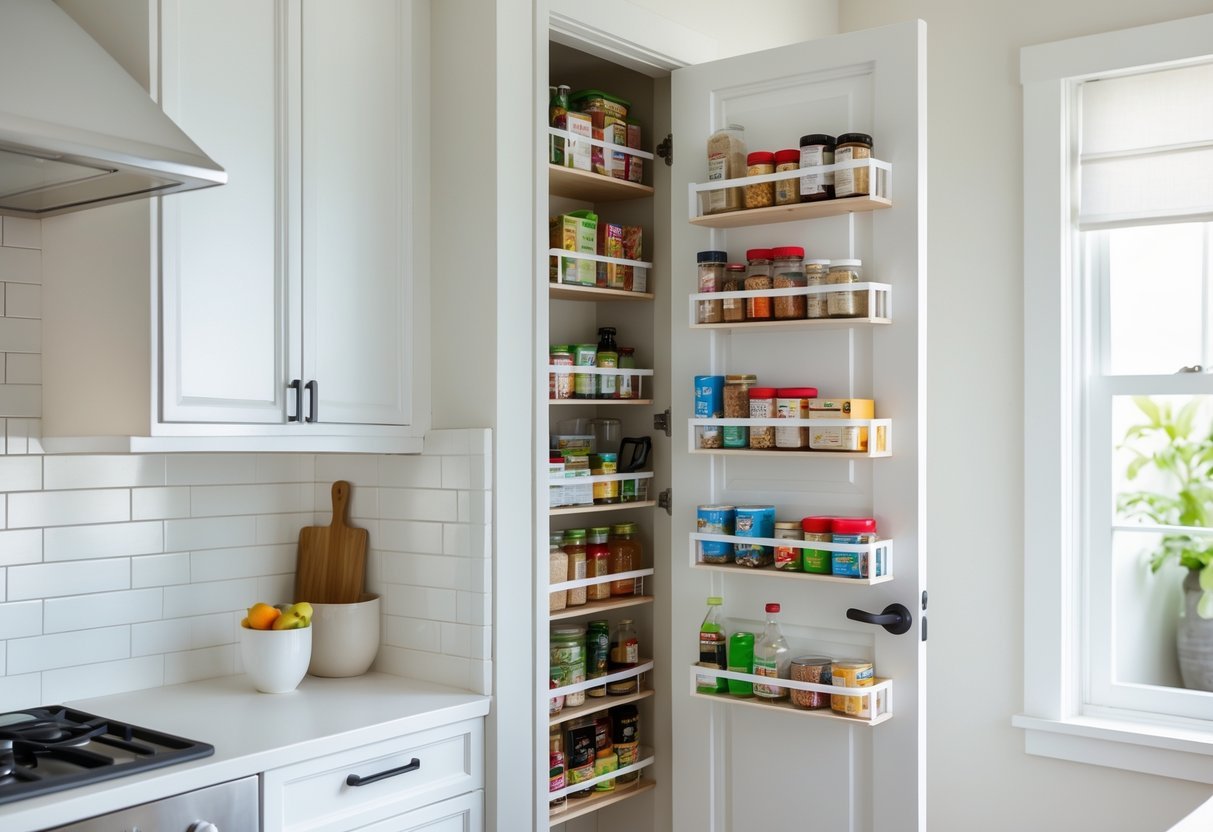
You can use over-the-door organizers to add storage without taking up floor space. These racks hold spices, snacks, or small kitchen tools.
They fit easily on most pantry doors. This helps keep items visible and reachable while saving counter and shelf space.
8) Place tiered spice racks inside cabinets
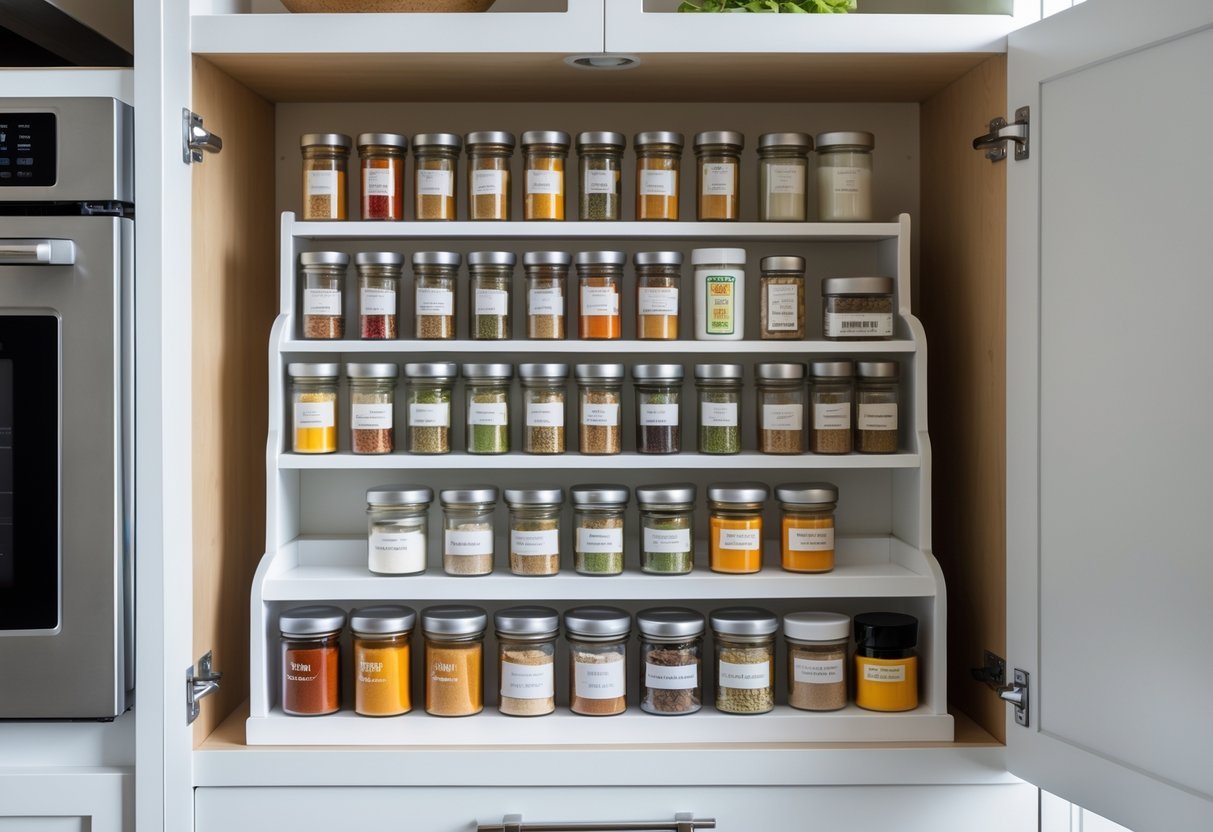
You can save space and see all your spices by using tiered racks inside your cabinets. These racks create levels so smaller jars don’t get hidden behind bigger ones. This helps you find spices faster when cooking.
Tiered racks fit neatly inside most cabinets and keep spices organized. They make use of vertical space, which is often wasted. Installing one is a simple way to clear clutter from your counters.
9) Install sliding baskets in lower cabinets
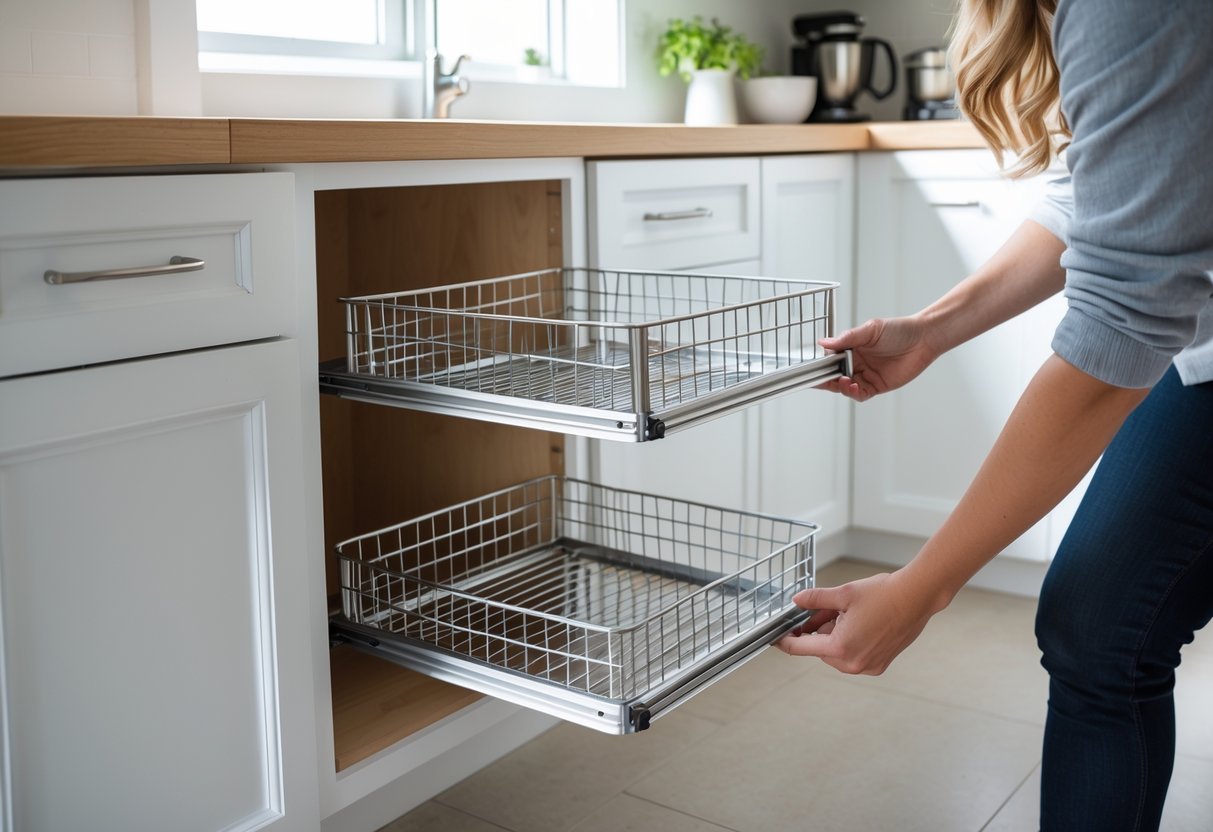
You can add sliding baskets to your lower cabinets to improve access. They make it easier to reach items in the back without bending or moving everything.
These baskets help keep your kitchen tidy by organizing pots, pans, or food containers. They slide out smoothly, saving you time when cooking or cleaning.
10) Use a fold-down table for extra prep space
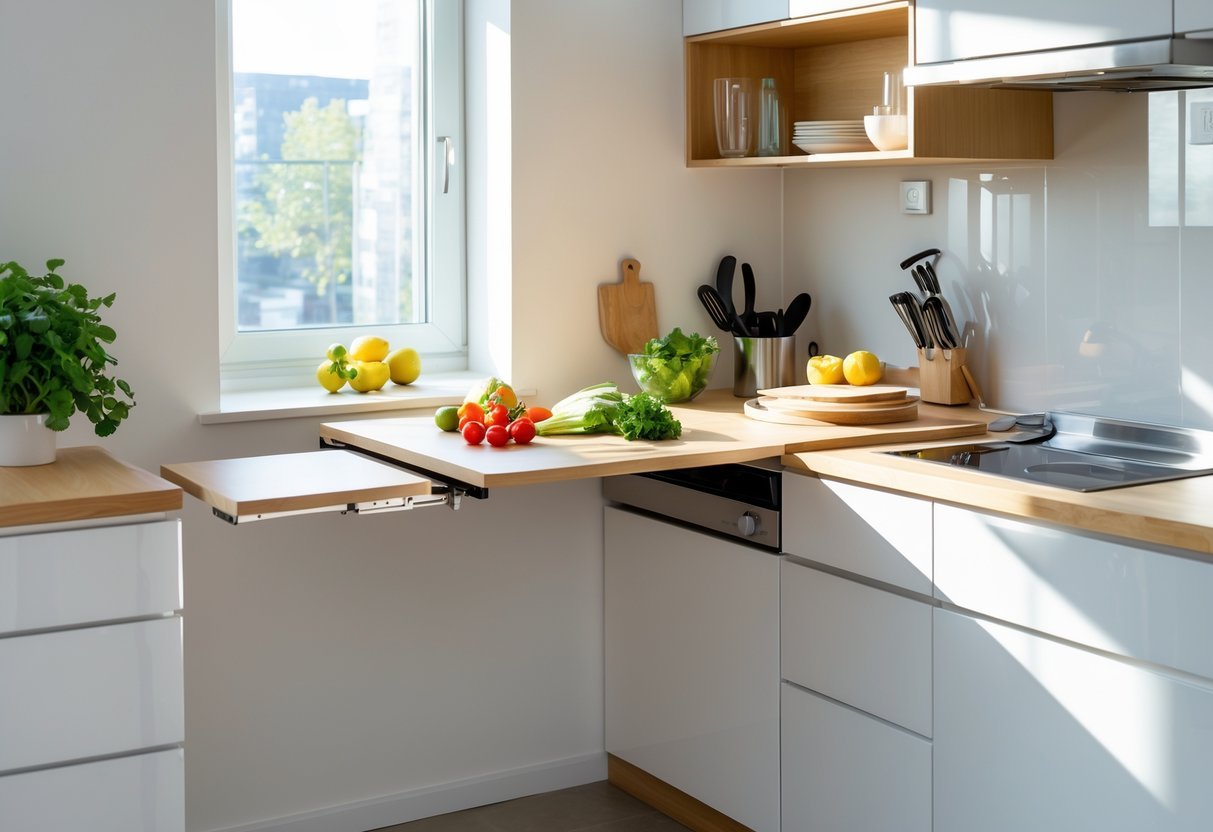
You can add a fold-down table to your kitchen wall for more workspace. It stays folded up when not needed, saving floor space.
This type of table is easy to use and helps keep your kitchen organized. It gives you extra room for cooking or dining without clutter.
11) Hang a pegboard to organize utensils and tools
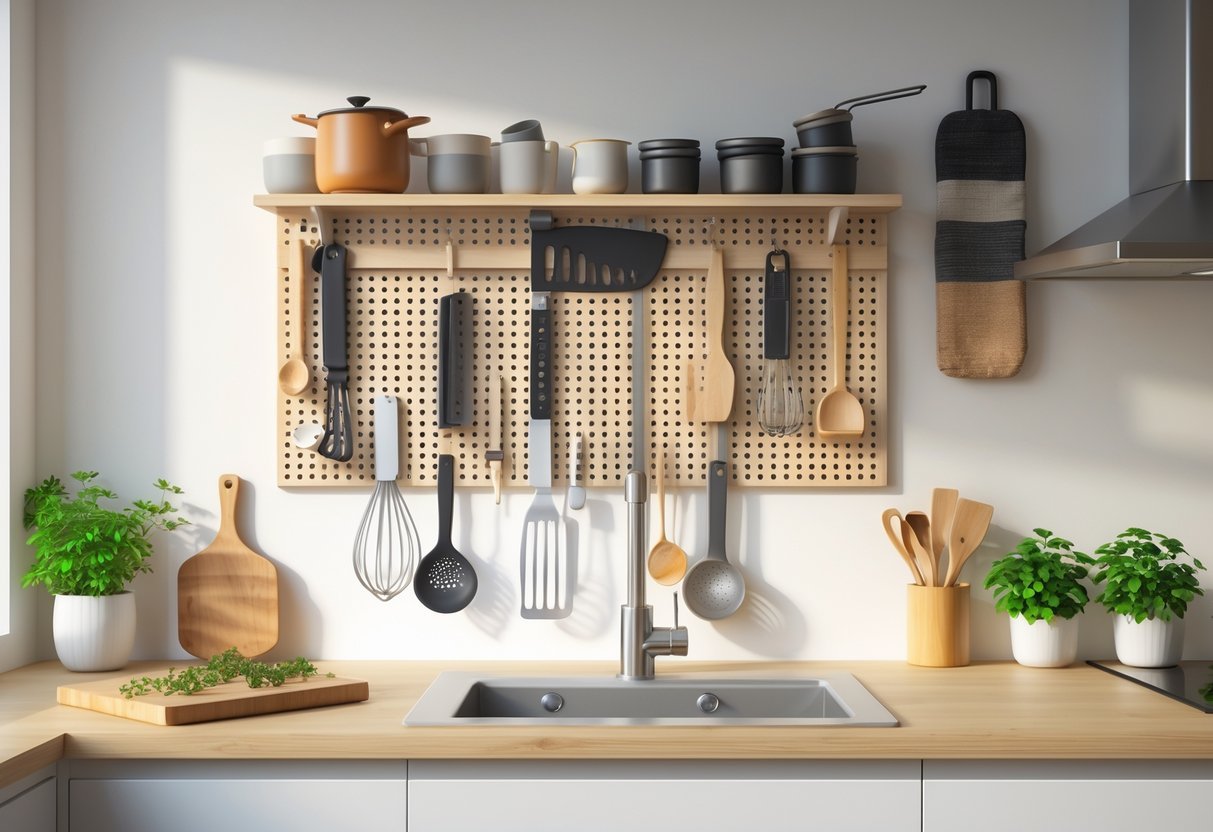
You can mount a pegboard on a kitchen wall to hang utensils and tools. This frees up drawer space and keeps items easy to find.
Use hooks and small baskets on the pegboard to hold spoons, spatulas, and other gadgets. It keeps your kitchen neat and tools within reach.
12) Employ collapsible kitchen tools to save drawer space
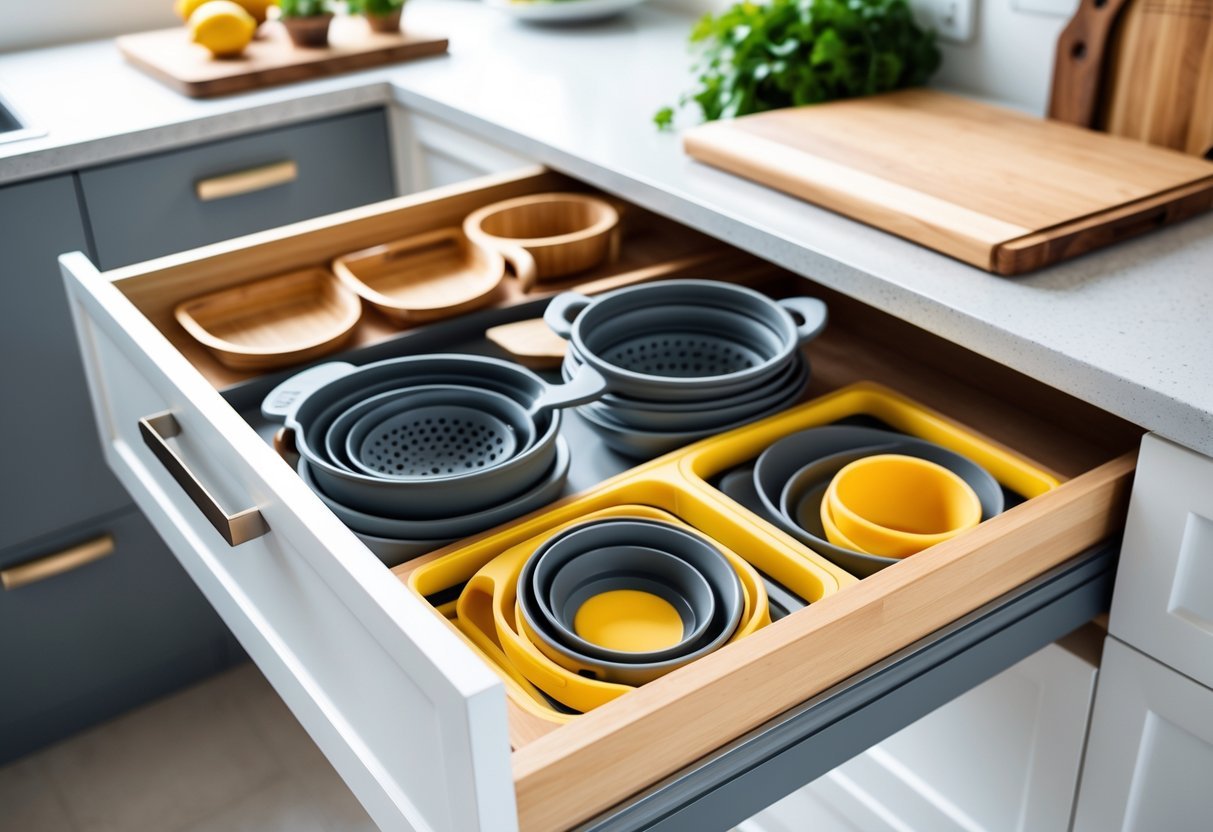
You can free up drawer space by using collapsible kitchen tools. Items like collapsible colanders, measuring cups, and bowls shrink when not in use. This helps keep your small kitchen neat and less crowded.
Collapsible tools also stay functional but take up less room. They fit easily into drawers or cabinets, letting you store more items in tight spaces. Choosing these tools makes your kitchen more organized and practical.
13) Add a slim rolling cart for flexible storage
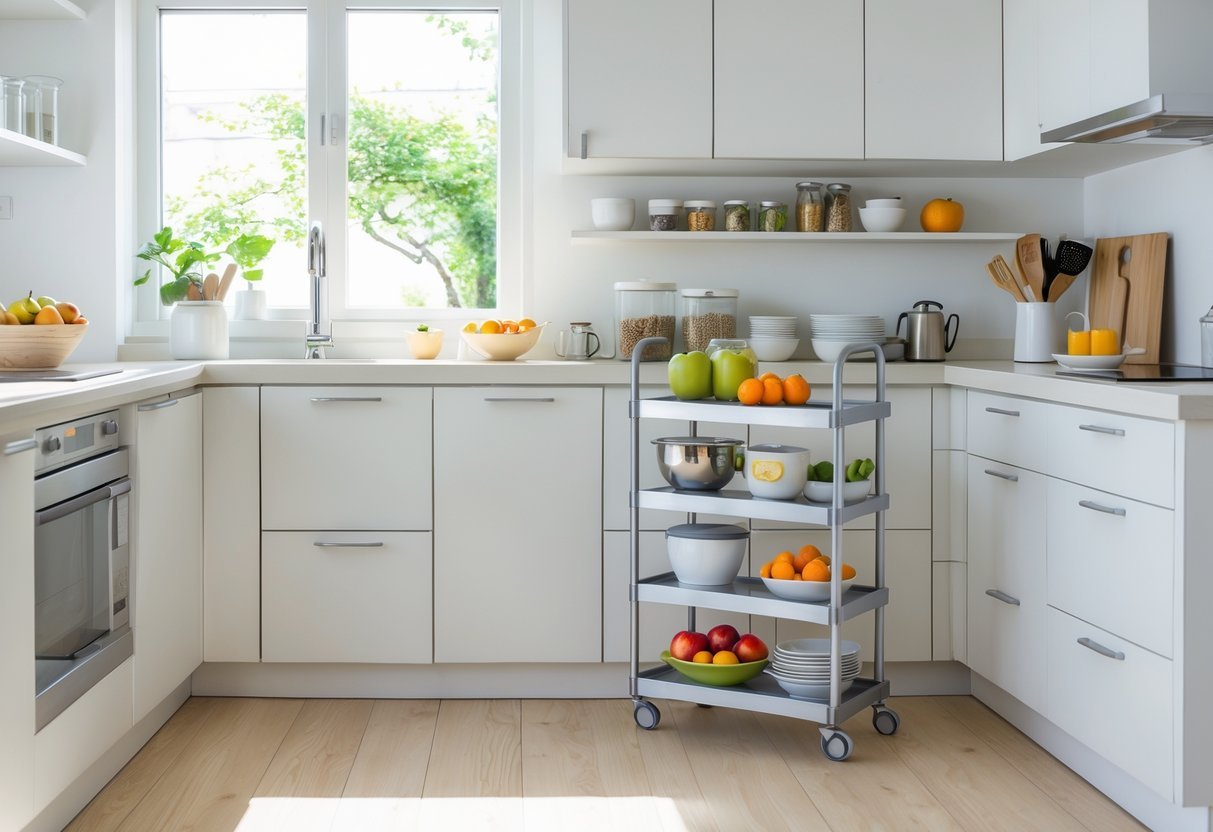
You can increase storage without losing floor space by adding a slim rolling cart. It moves easily, letting you access items or create more prep room.
Choose one with locking wheels for safety and shelves or drawers to organize your things neatly. It works well for spices, small appliances, or utensils.
14) Use drawer dividers for cutlery and utensils
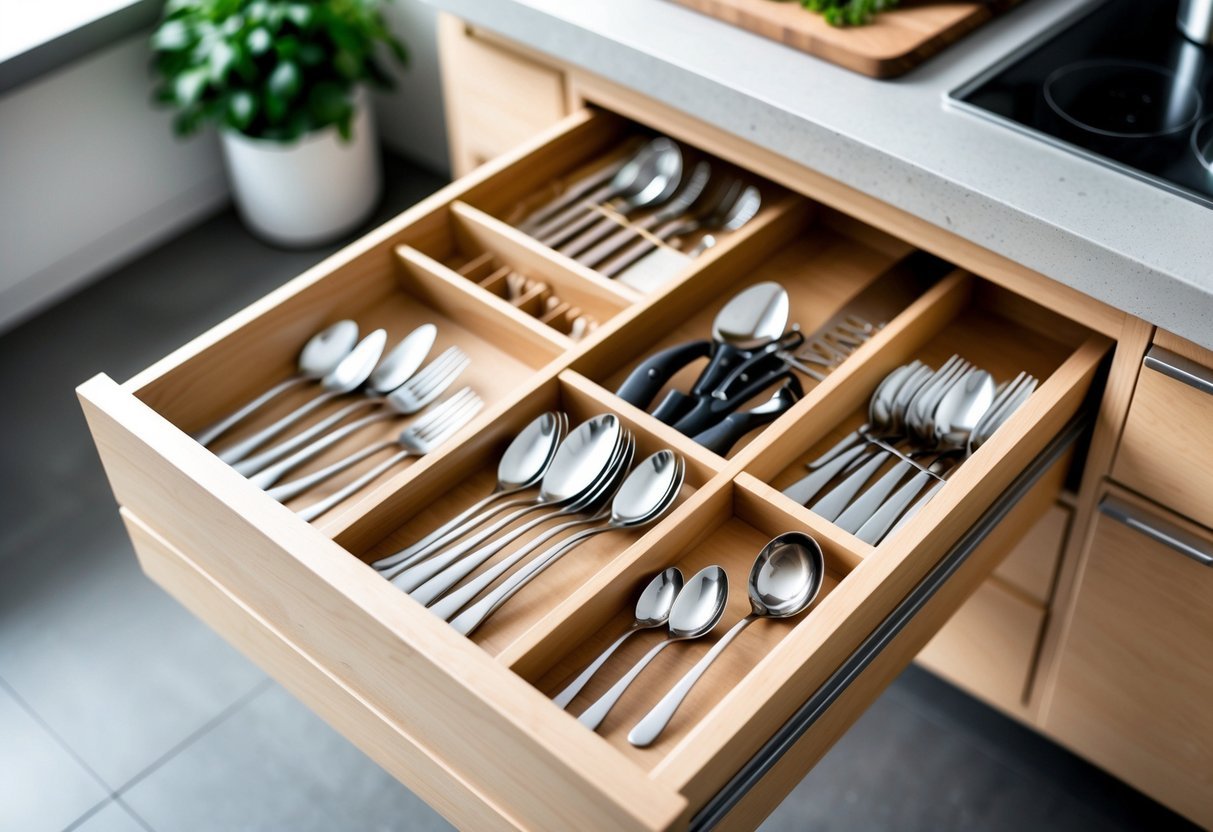
You can keep your kitchen drawers neat by using drawer dividers. They separate your cutlery and utensils, making it easy to find what you need.
Choose dividers that fit your drawer size. You can buy them or make your own using simple materials like cardboard. This helps you save space and stay organized.
Key Principles for Small Kitchen Organization
To make the most of your small kitchen, focus on clever ways to save space, arrange areas for easy access, and keep clutter under control. These steps will help you work smoothly and keep your kitchen neat.
Space-Saving Mindset
Think vertically and use every inch wisely. Mount shelves on empty walls or above counters to store jars, utensils, and small appliances. Use stackable containers and drawer organizers to maximize drawer space.
Invest in multipurpose items like cutting boards that fit over your sink or stove to add workspace when you need it. Hooks and magnetic strips can hold pots, pans, or knives on walls or inside cabinet doors.
Keep counters clear by storing rarely used gadgets elsewhere. This approach creates more room for prep work. Always ask yourself if an item has a specific spot that doesn’t take up valuable work areas.
Efficient Zoning Techniques
Divide your kitchen into zones based on how you use the space. For example, set up a cooking zone with pots, pans, and spices near the stove. The cleaning zone, with dish soap and towels, should be close to the sink.
Keep utensils and cutting boards near food prep areas. Store snacks and dishes where they are easy to reach. This reduces walking around, which is important when space is tight.
Use clear labels or color coding to know where things belong. This helps you stay organized and speeds up cooking. Group similar items instead of scattering them. A well-planned layout saves time and reduces clutter.
Decluttering Strategies
Regularly remove items you don’t use. If you haven’t touched something in six months, think about donating or storing it elsewhere. Clutter takes up space and makes working harder.
Use baskets or bins for small items like spices or snacks. This keeps smaller things from getting lost in drawers or cabinets. Clear containers make it easy to see what you have at a glance.
Limit what you keep on the counter. Only leave out daily essentials like a coffee maker or knife block. The less you have on display, the cleaner and larger your kitchen feels. Decluttering helps keep your kitchen functional and inviting.
Maintaining Organization Over Time
Keeping your small kitchen organized means making regular efforts to stay on top of clutter and storage. You need simple habits for daily care and times when you rethink your setup to fit changing needs.
Daily Tidying Habits
Start by putting things back immediately after use. This small step prevents clutter from building up on counters and in drawers. Wipe down surfaces daily to keep your workspace clean and inviting.
Keep a small basket or bin to collect stray items that don’t belong in the kitchen. At the end of the day, return these items to their proper places. This habit stops clutter from spreading.
Limit how many items sit out on counters. Only keep essentials like a coffee maker or knife block visible. Store the rest inside cabinets or on shelves to maintain clear spaces.
Seasonal Reassessment
Every few months, spend time reviewing your kitchen’s organization. Check expired food, duplicates, and items you don’t use. Removing unnecessary stuff frees up valuable space.
Adjust your storage to match seasonal needs. For example, store holiday baking tools separately when not in use. Swap out frequently used gadgets depending on the season, such as grilling tools in summer.
Use this time to optimize storage containers, shelves, and drawer dividers. If something doesn’t work well, replace it or rearrange until the kitchen feels efficient and comfortable again.