Modern kitchen design focuses on creating spaces that are both functional and stylish, reflecting contemporary living needs. It balances aesthetics with practicality, offering solutions that support daily routines while enhancing the overall home environment.
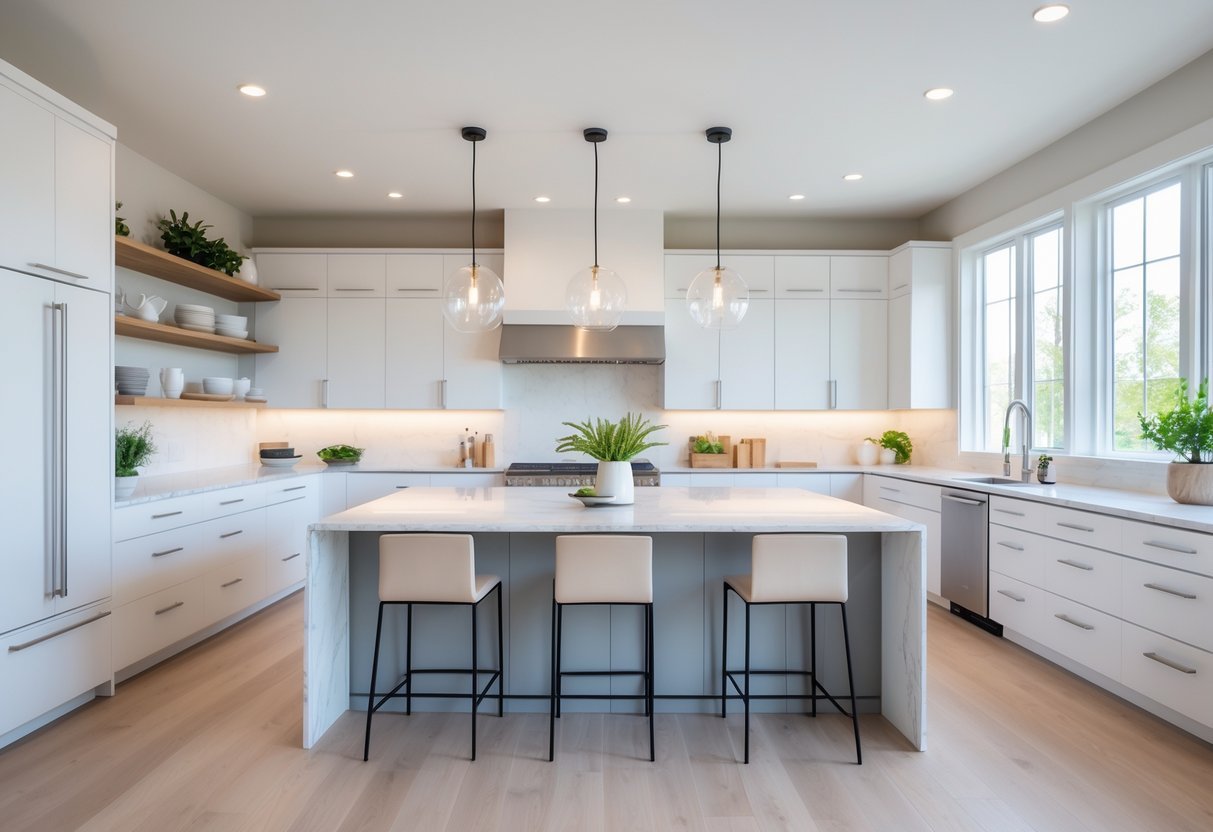
This article presents 15 kitchen design inspirations tailored to modern living, highlighting ideas that combine efficiency, innovation, and current design trends. These concepts aim to help anyone looking to update or remodel a kitchen in a way that suits today’s lifestyle demands.
1) Open-concept layout with seamless flow to living areas
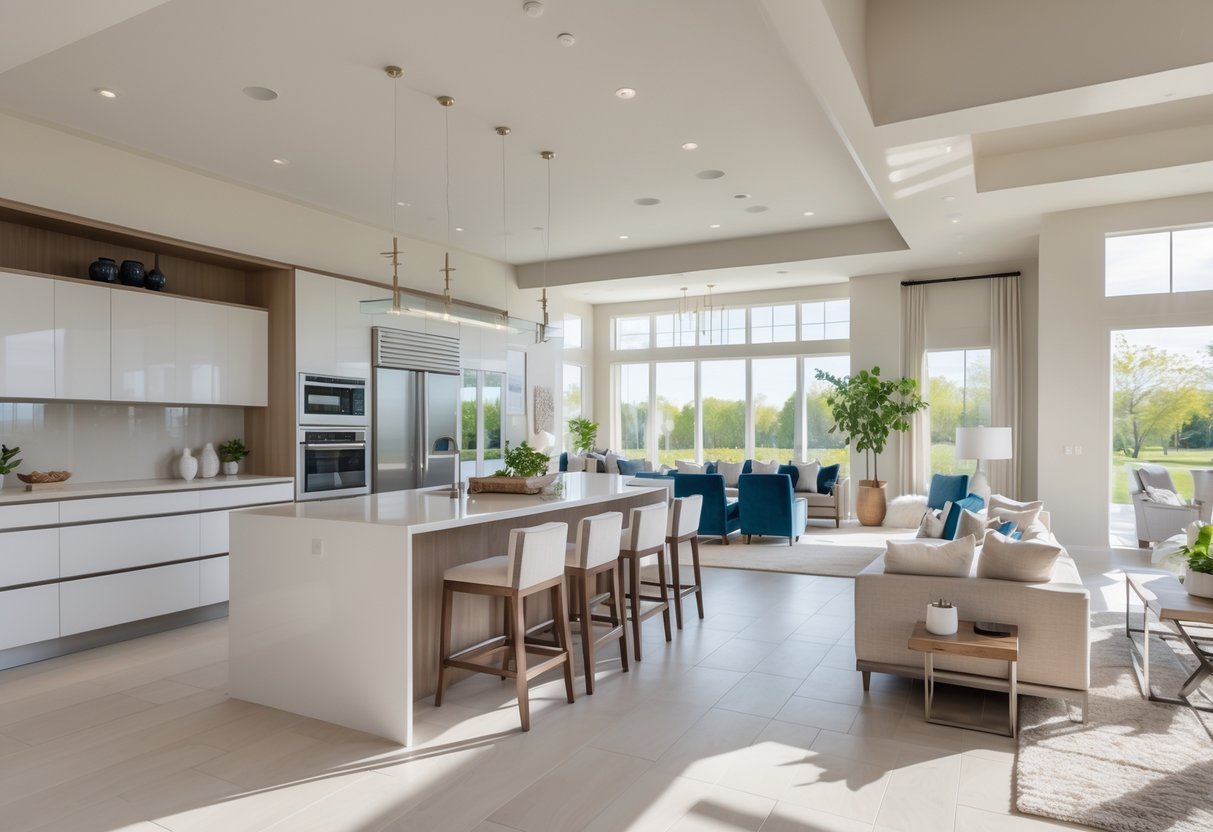
An open-concept kitchen layout removes barriers between cooking and living spaces. This design enhances natural light and encourages social interaction.
Seamless flow is achieved through careful zoning. Elements like rugs or ceiling treatments help define areas without breaking visual unity.
The approach maximizes square footage and creates a multifunctional environment. It suits both large homes and cozy apartments, offering flexibility in use.
2) Matte black fixtures paired with white cabinetry
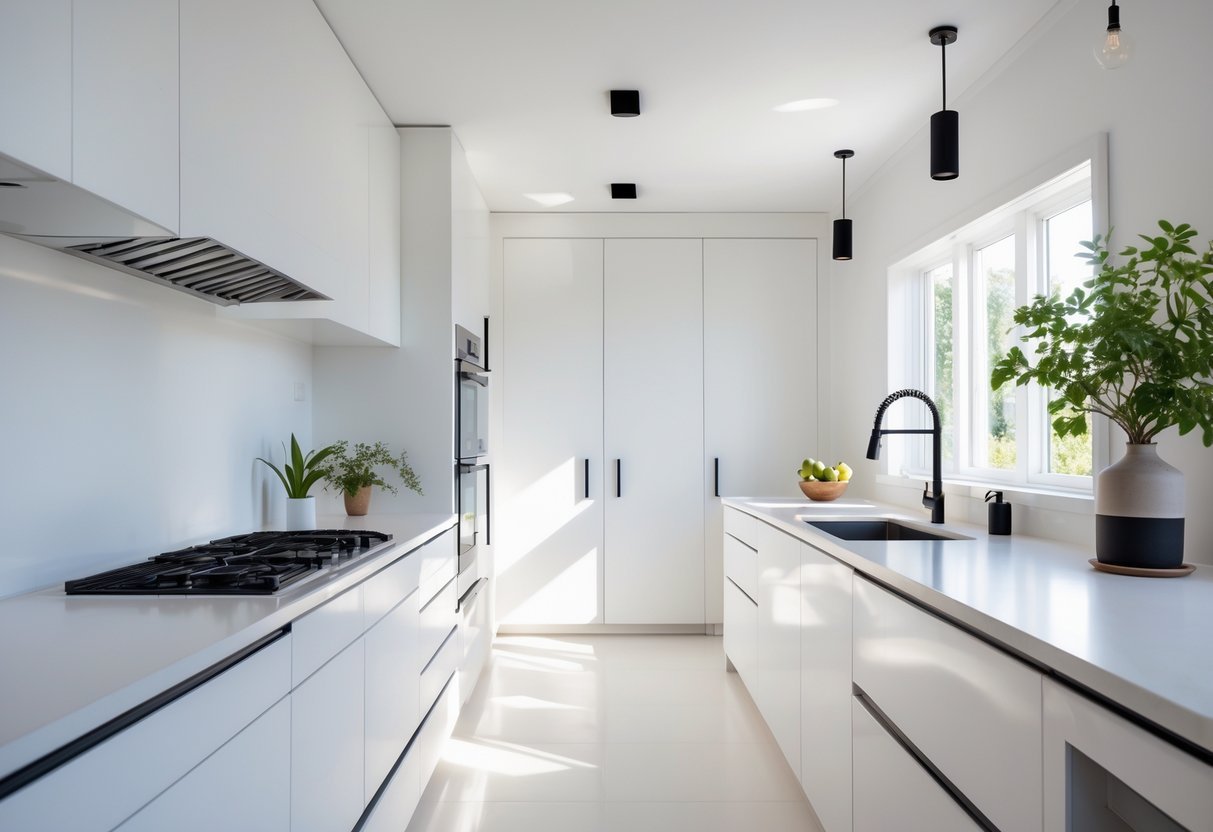
Matte black fixtures create a striking contrast against white cabinetry. This pairing emphasizes clean lines and a modern aesthetic.
The look balances boldness with simplicity. It suits minimalist and contemporary kitchens.
Incorporating matte finishes reduces glare and adds subtle texture. It keeps the design sleek and sophisticated.
White cabinets reflect light, preventing the black fixtures from overpowering the space. This maintains an open, airy feel.
This combination works well with various materials, including marble countertops and wood accents. It offers flexibility in styling choices.
3) Integrated smart appliances for tech-savvy kitchens
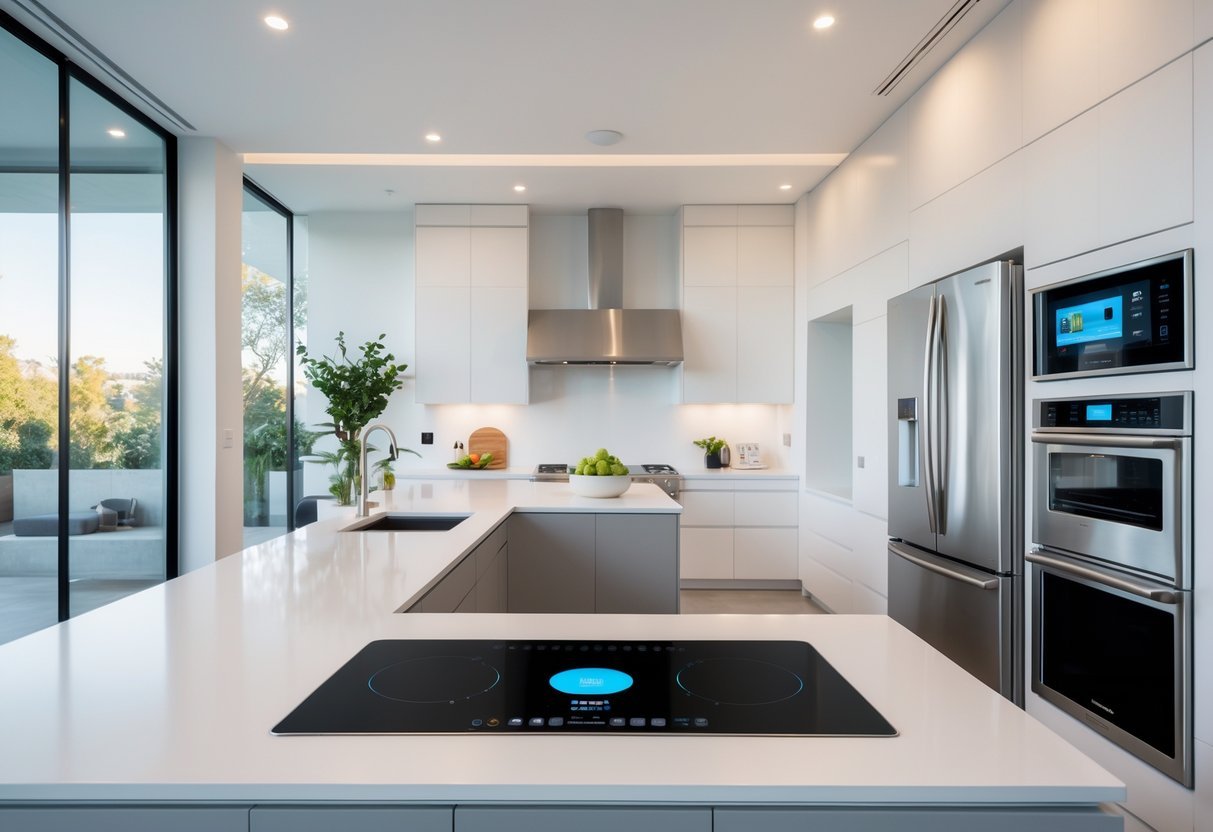
Integrated smart appliances combine technology with sleek kitchen design. They fit seamlessly into cabinetry, preserving clean lines while adding modern functionality.
These appliances often feature voice control, touchless operation, and app connectivity. Users can monitor cooking and adjust settings remotely for convenience.
Smart ovens, refrigerators, and dishwashers improve efficiency by optimizing energy use. Integration also includes built-in charging stations and adaptive lighting for a smarter kitchen environment.
4) Waterfall marble countertops
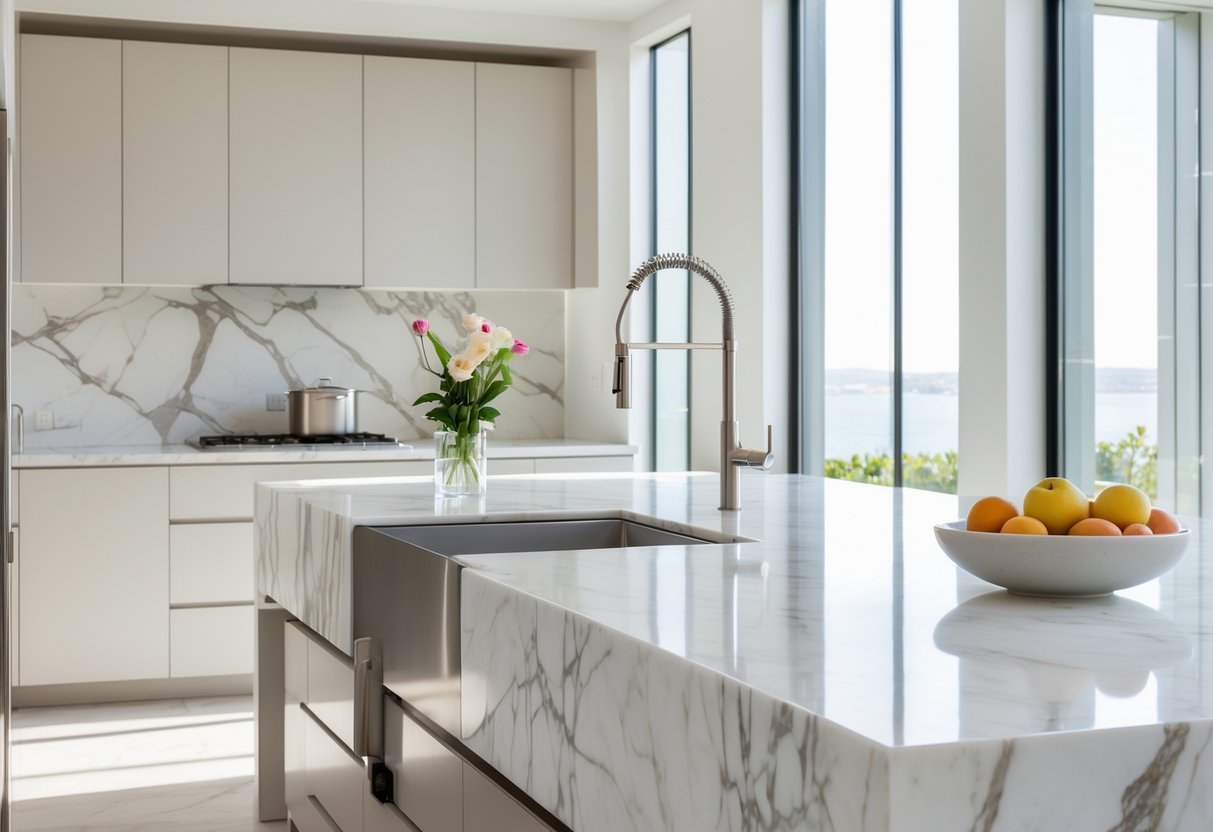
Waterfall marble countertops feature stone that extends seamlessly down the sides of cabinets or islands. This design creates a continuous flow, adding a modern and elegant touch to the kitchen.
They often use bright white marble with subtle veining, which pairs well with dark cabinets for a balanced, sophisticated look. The extended stone adds visual weight, emphasizing clean lines and a minimalist aesthetic.
This style can make kitchens feel spacious and luxurious without extra ornamentation. It works well in various kitchen layouts, providing both practicality and a striking appearance.
5) Two-tone cabinetry with contrasting colors
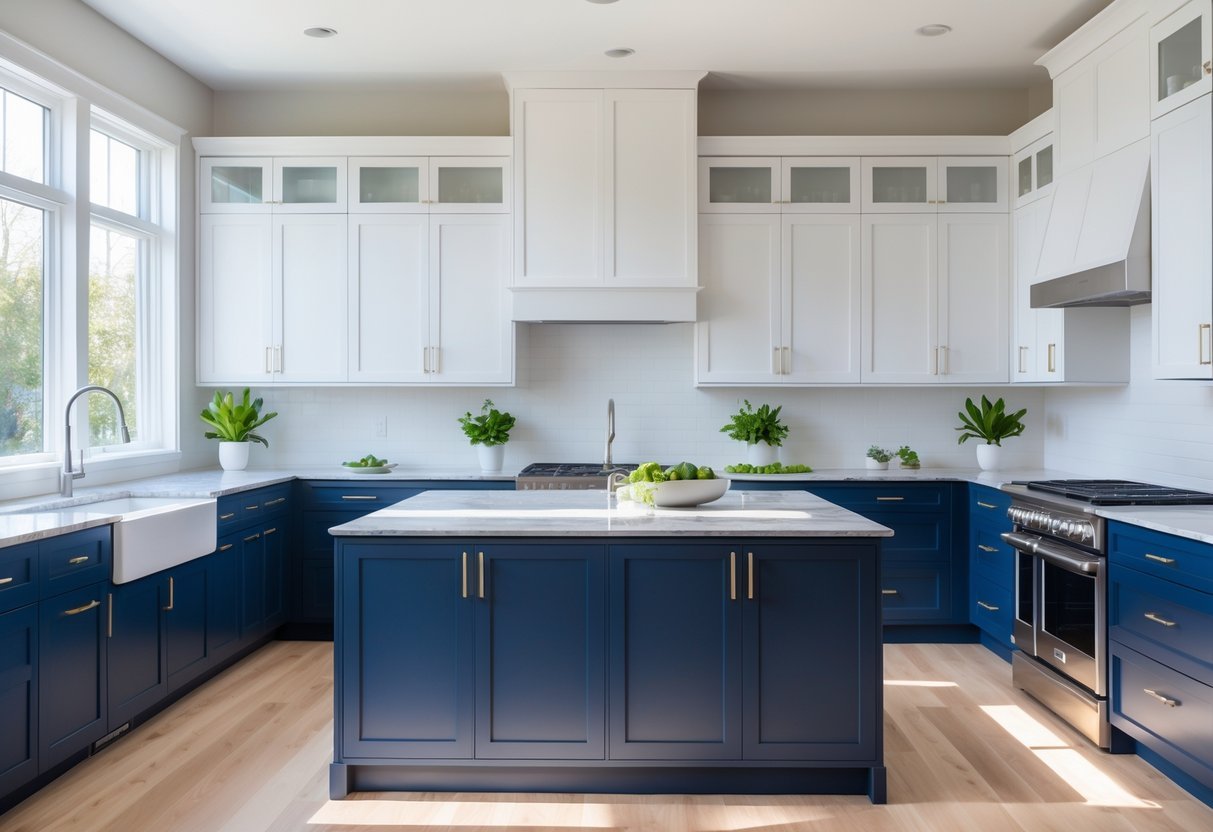
Two-tone cabinetry uses different colors for upper and lower cabinets, creating a distinct visual divide. This approach adds depth and makes the kitchen feel more dynamic.
Dark shades usually ground the lower cabinets, while lighter colors on top keep the space open and airy. The contrast enhances architectural features and provides a custom look.
Designers often pair complementary or bold colors for a modern edge. This method works well in various kitchen sizes and styles, balancing function with aesthetic appeal.
6) Minimalist handleless cabinets
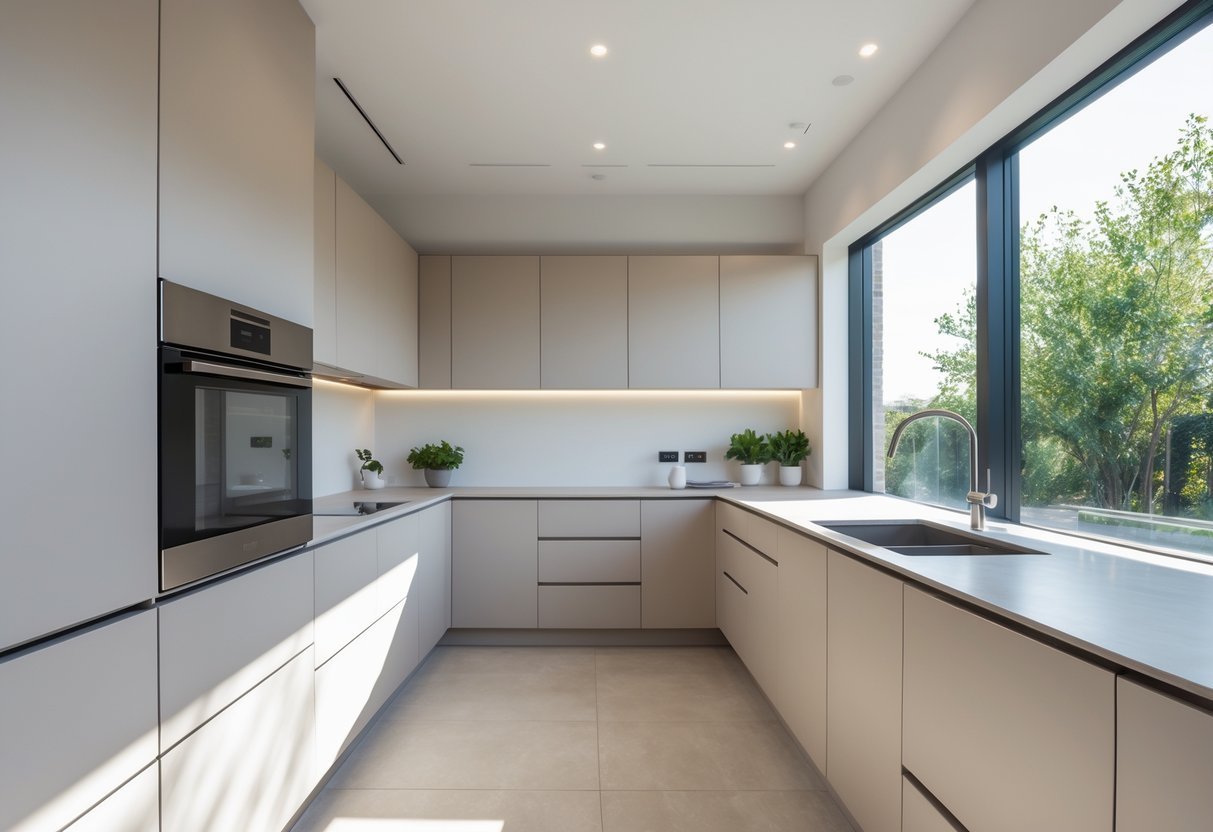
Minimalist handleless cabinets create a seamless, streamlined look in the kitchen. Without traditional handles, these cabinets emphasize clean lines and smooth surfaces.
This design enhances functionality by reducing visual clutter. It often uses push-to-open or integrated grip systems for ease of use.
Such cabinets also help small kitchens feel more open and spacious. They align with modern aesthetics focused on simplicity and efficient use of space.
7) Large kitchen islands with built-in seating
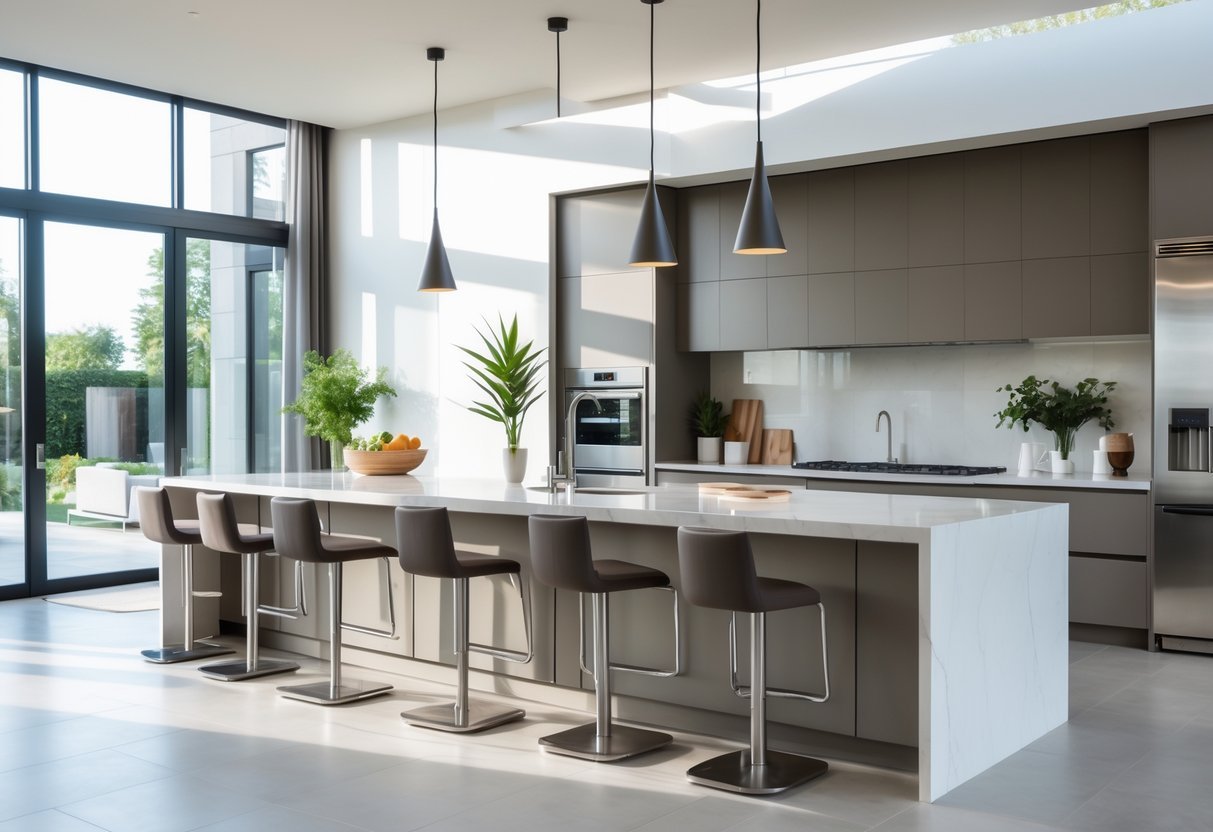
Large kitchen islands with built-in seating offer practicality and style. They provide ample workspace while creating a social hub for family and guests.
The integrated seating optimizes space and ensures a seamless flow between cooking and dining areas. These islands suit open-plan layouts and accommodate multiple users comfortably.
Designs often include multi-level counters and storage options. This allows for organized preparation zones and casual dining spots in one central piece.
8) Subway tile backsplash in herringbone pattern
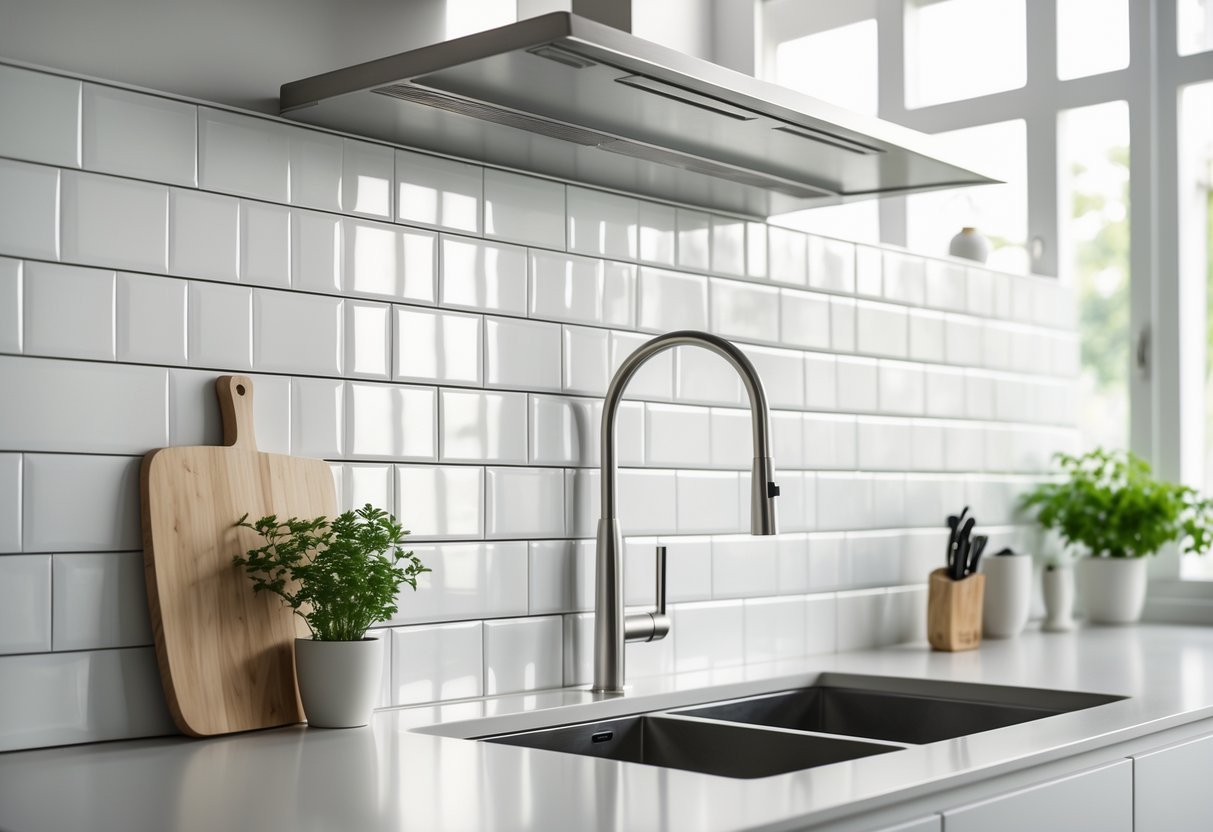
The herringbone pattern adds visual interest by arranging rectangular subway tiles in a zigzag layout. It creates depth and texture without overwhelming the kitchen space.
This design suits both classic and modern kitchens. It works well with different materials like ceramic, stone, or porcelain, offering versatility in style.
The pattern also enhances durability since tile backsplashes protect walls from splashes and spills. It turns a practical feature into an appealing focal point.
9) Pendant lighting over the island with industrial design
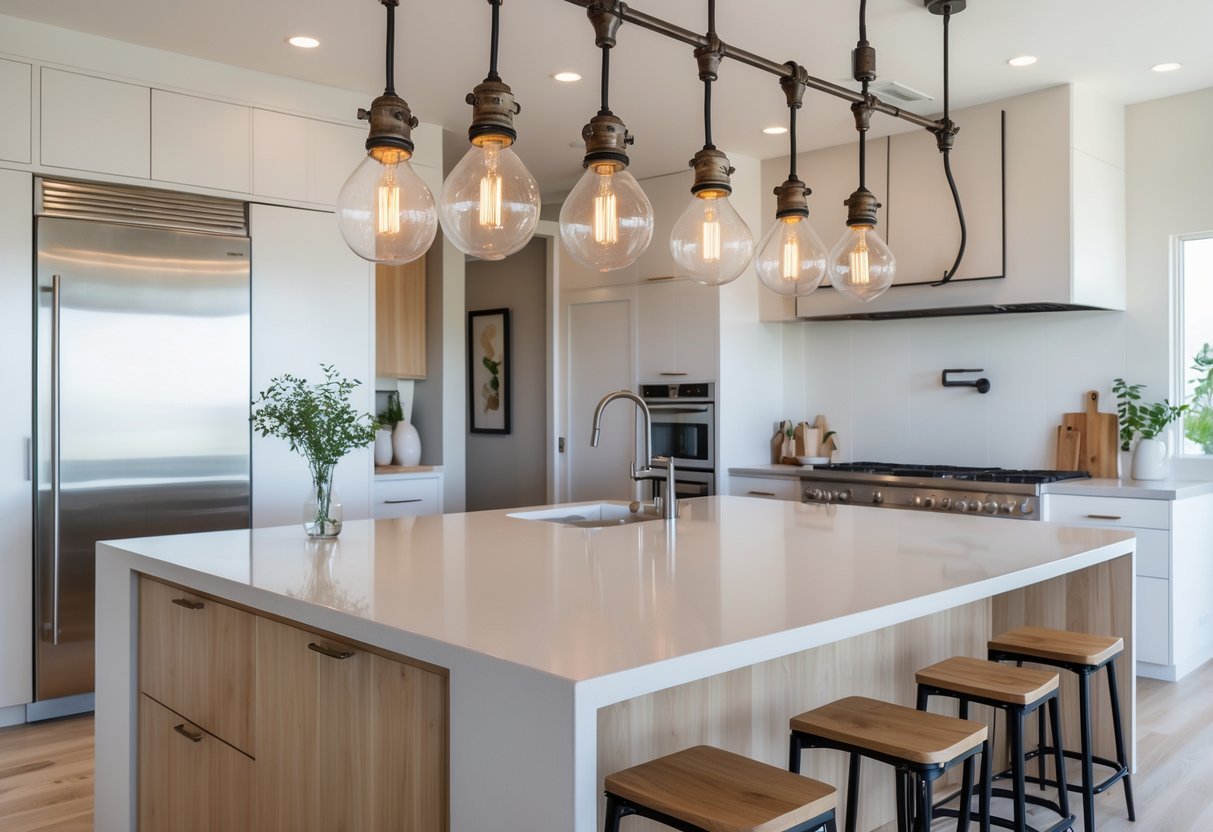
Pendant lights with industrial design suit kitchens that blend rustic charm and modern utility. They typically feature exposed bulbs, metal cages, and black iron finishes.
These lights add texture and character without overpowering the space. The warm glow from Edison bulbs creates a comfortable atmosphere, perfect for both cooking and casual dining.
Industrial pendant lighting works well over islands, highlighting the workspace while contributing to a relaxed, authentic look. Its practical design supports task lighting needs in a stylish way.
10) Floating wooden shelves for open storage
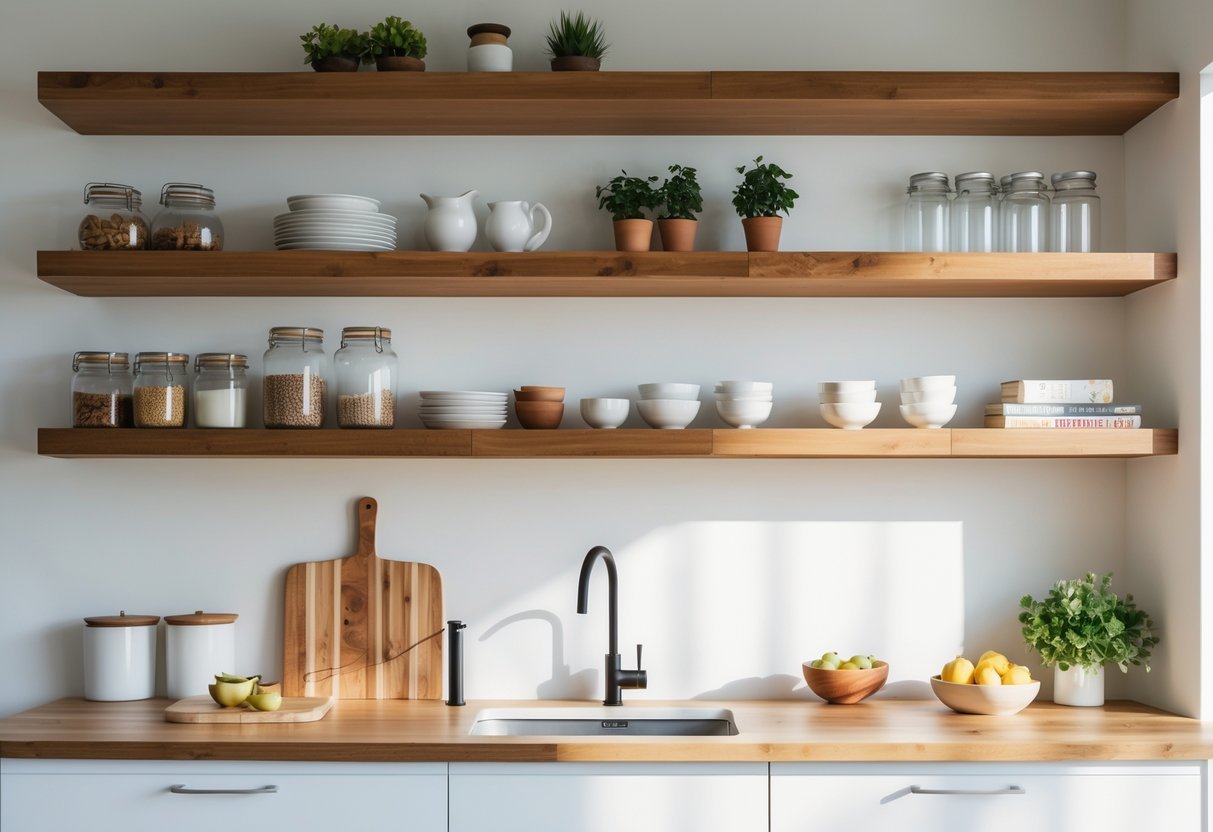
Floating wooden shelves offer practical and stylish open storage for modern kitchens. They utilize vertical space efficiently, keeping frequently used items within easy reach.
Wood adds warmth and natural texture, complementing various kitchen styles from rustic to contemporary. Their minimalist design creates an open, airy feel without bulky cabinetry.
These shelves can display kitchenware, decorative pieces, or herb pots, enhancing both function and aesthetics. Proper material choice ensures durability and easy maintenance in busy kitchen environments.
11) Warm wood textures combined with sleek metals
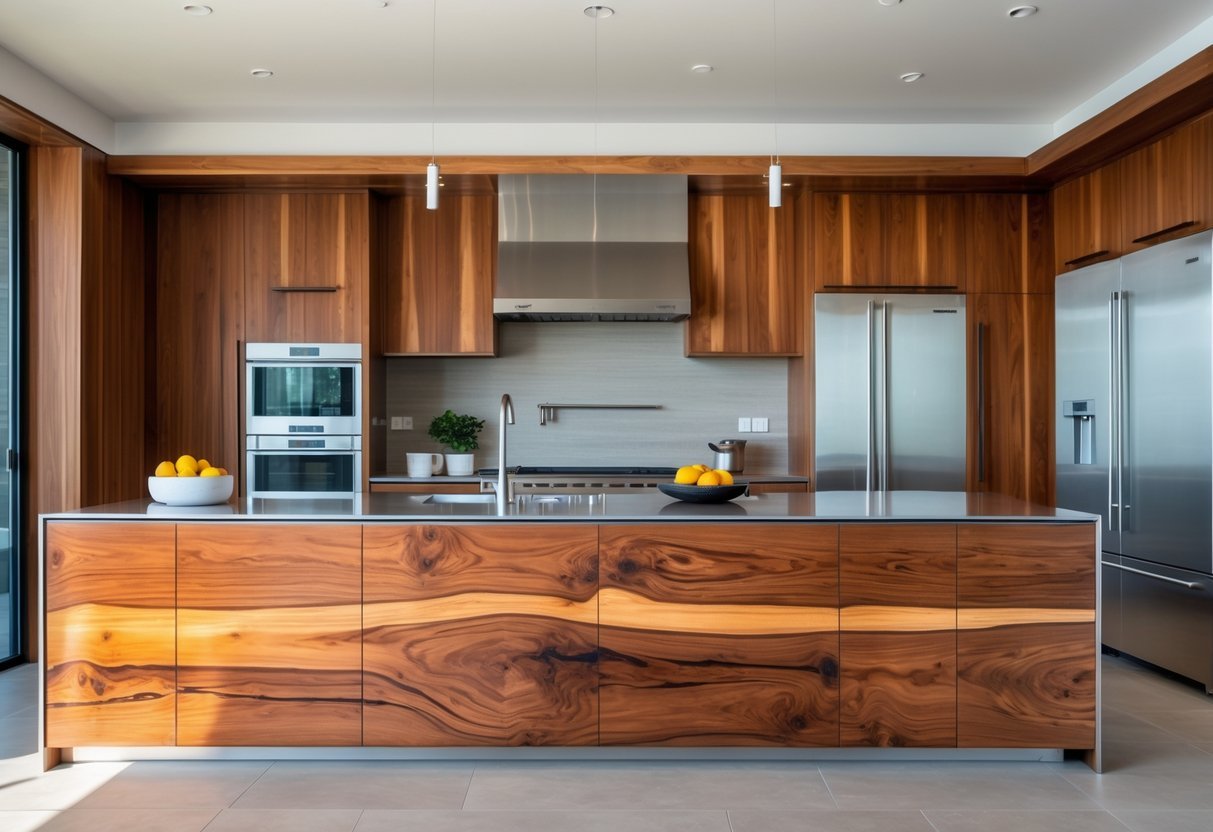
This design merges the natural warmth of wood with the cool, clean lines of metal. Wood adds depth and character, while metal brings a modern, polished feel.
The contrast creates visual interest without overwhelming the space. Materials like walnut or oak pair well with stainless steel or matte black hardware.
Metal accents enhance functionality and style, such as metal lighting fixtures or cabinet handles. Together, these elements balance coziness with contemporary sophistication.
12) Concealed pantry with pocket doors
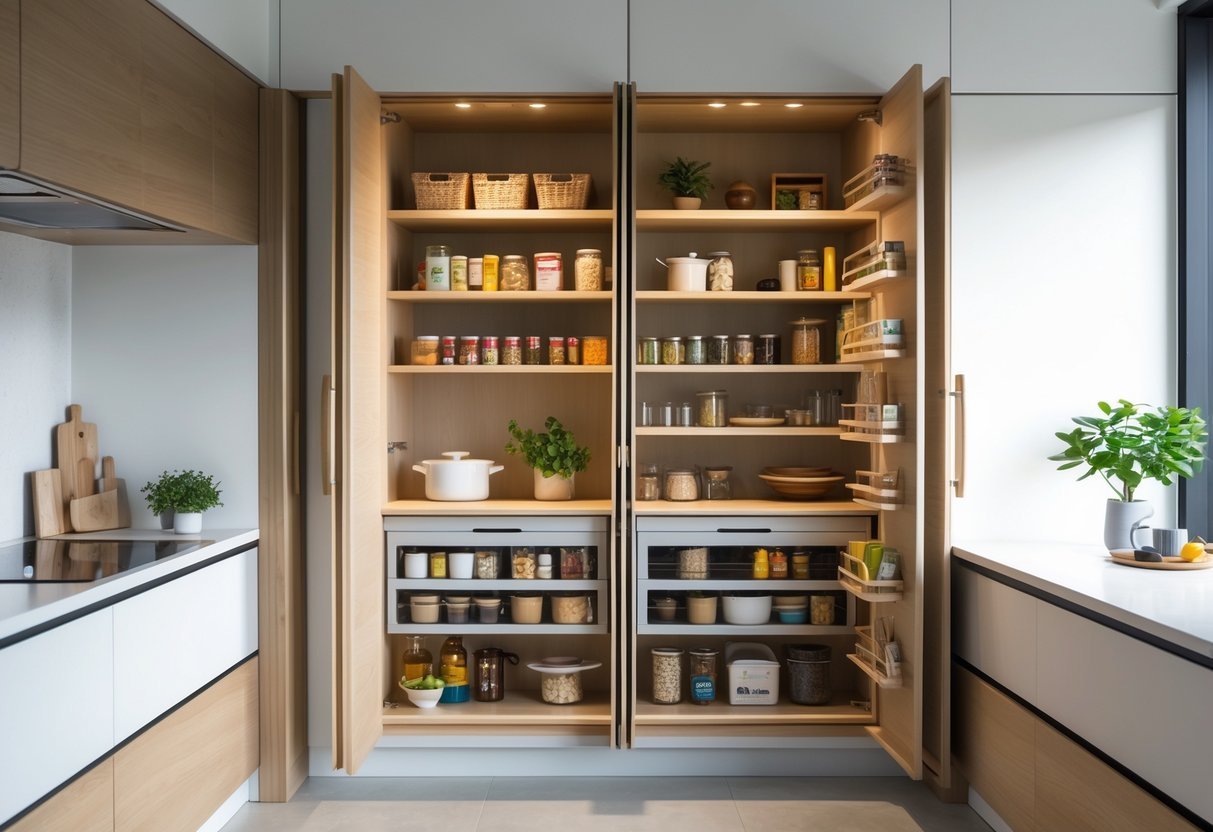
A concealed pantry with pocket doors offers a sleek, space-saving solution. The doors slide quietly into the wall, eliminating the need for clearance space.
This design maintains a clean, uninterrupted kitchen look. When closed, the pantry blends seamlessly with the surrounding cabinetry, enhancing a modern aesthetic.
Pocket doors suit kitchens with limited space or narrow layouts. They provide easy access to pantry contents without disrupting traffic flow.
13) Under-cabinet LED strip lighting
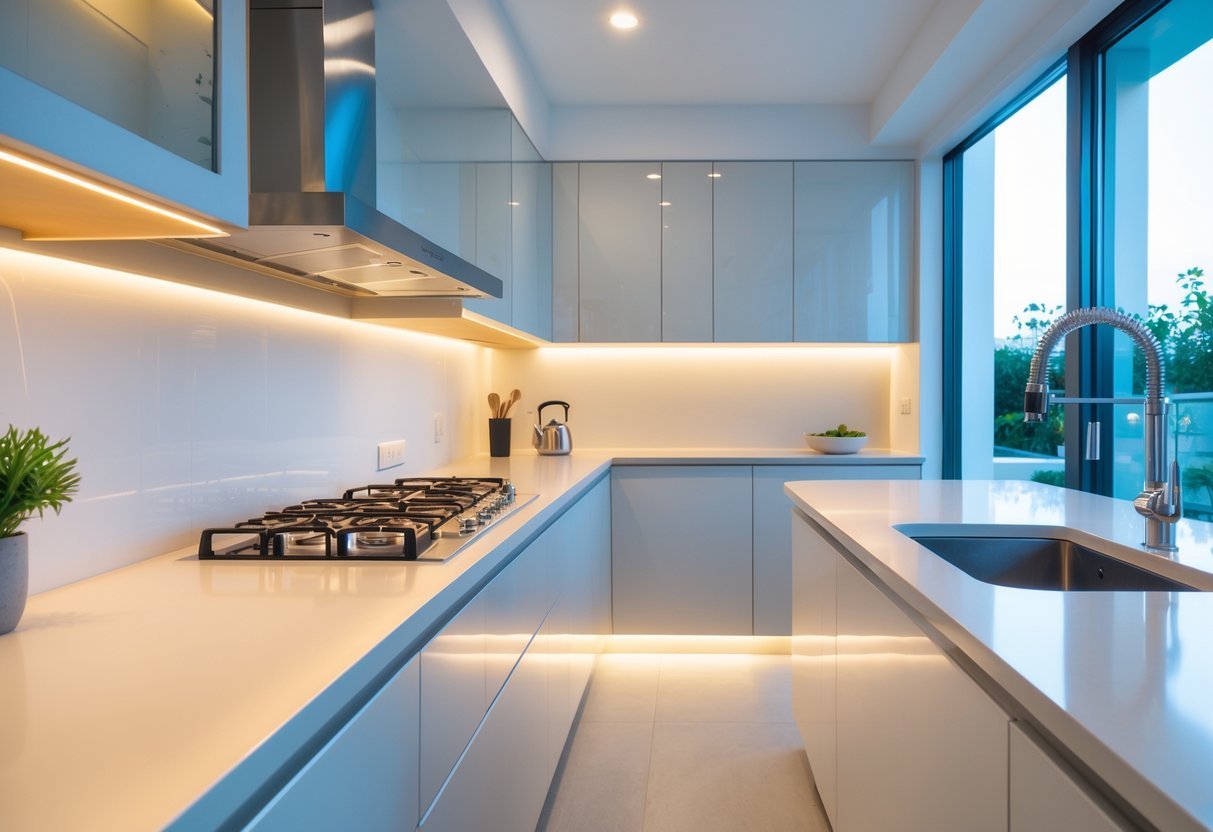
Under-cabinet LED strip lighting offers focused illumination for kitchen countertops. It enhances visibility during food preparation while adding a sleek, modern look to the space.
These flexible strips can be mounted discreetly under cabinets, providing continuous, even light without shadows. They are energy-efficient and easy to install.
LED strips also highlight backsplash designs and countertops, improving both function and aesthetics. Smart options allow dimming and color adjustments for customizable ambiance.
14) Eco-friendly bamboo flooring
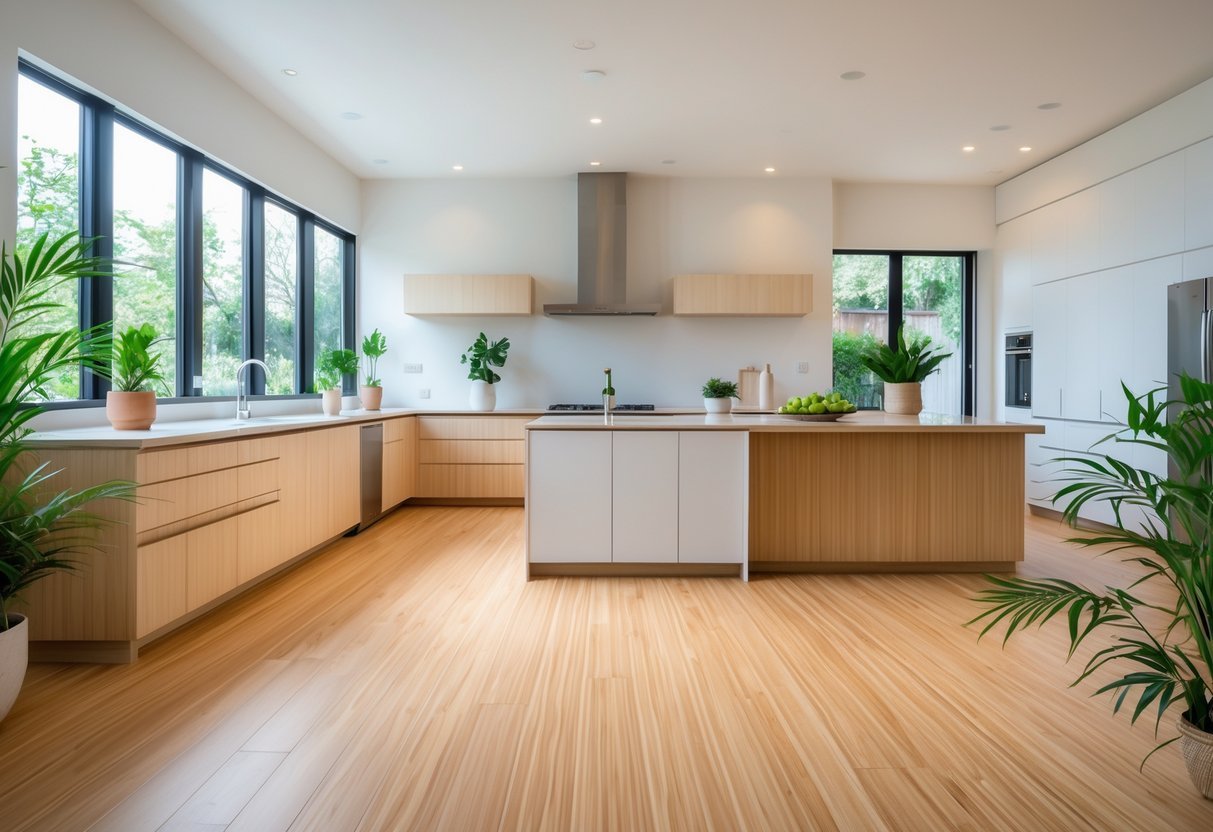
Bamboo flooring offers a sustainable alternative to traditional hardwood. It grows quickly, making it a rapidly renewable resource.
This material is durable and suitable for busy kitchens. It can handle moisture better than some other wood options.
Bamboo adds natural warmth and a modern aesthetic. Its clean lines and light color fit well with minimalist and contemporary designs.
Choosing bamboo helps reduce environmental impact. It combines style and eco-consciousness for a practical kitchen floor choice.
15) Mixed metal accents for visual interest
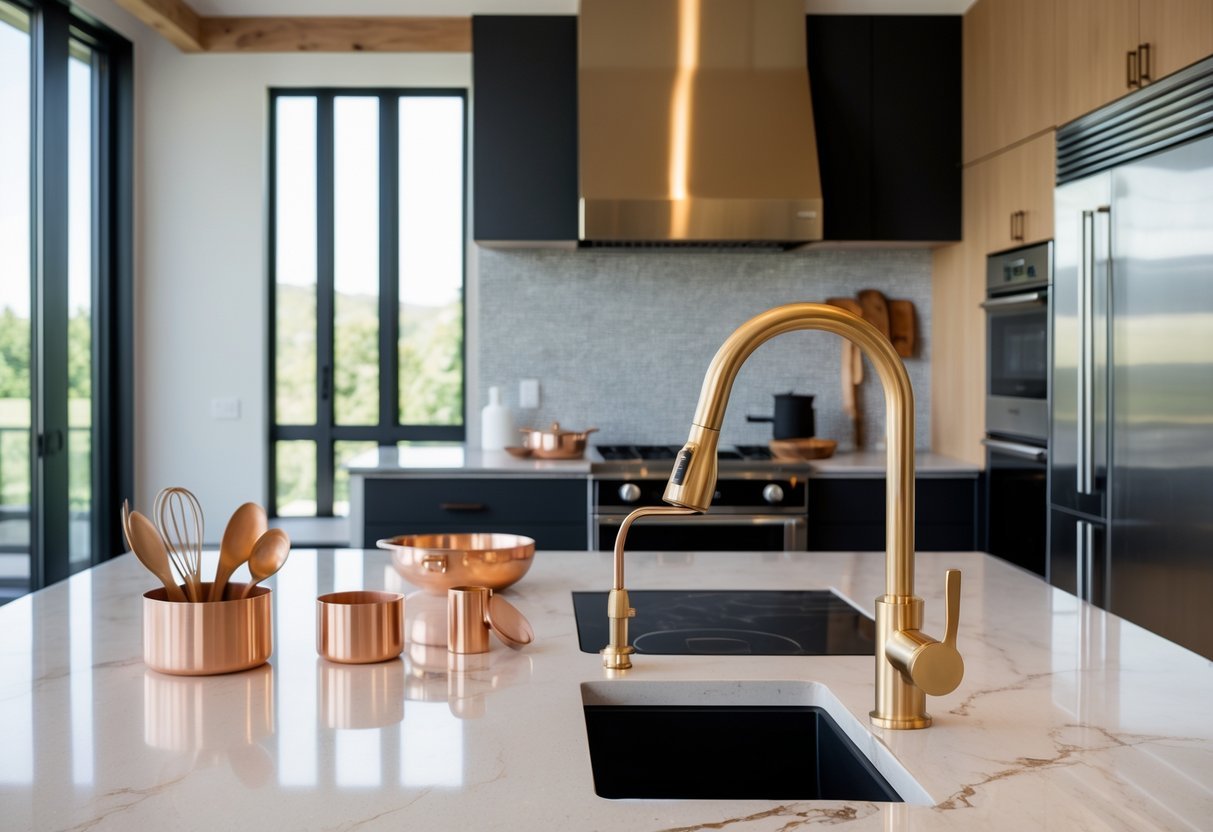
Mixed metal accents bring texture and depth to kitchen design. Combining finishes like brass, matte black, and stainless steel creates a layered, intentional look.
Choosing a dominant metal helps maintain balance. Secondary metals should appear as accents on fixtures, lighting, or hardware to avoid visual clutter.
This approach works well across styles, from modern farmhouse to industrial chic. It enhances sophistication without overwhelming the space.
Key Design Principles for Modern Kitchens
Modern kitchens must merge practicality with style, prioritizing workflows and user convenience. Materials should be both durable and eco-conscious, while lighting needs to enhance visibility without compromising ambiance.
Balancing Functionality and Aesthetics
A successful modern kitchen design integrates efficient layouts with visually clean elements. Handleless cabinets and built-in appliances reduce clutter and create smooth surfaces. Storage solutions such as pull-out drawers and hidden compartments increase usability without disrupting design lines.
Clear zoning for cooking, cleaning, and prep areas supports workflow. Countertops made from low-maintenance materials, like quartz or solid surface, maintain an elegant yet practical environment. Color schemes tend toward neutral or monochromatic palettes, emphasizing simplicity while allowing accents or textures to add personality.
Incorporating Sustainable Materials
Sustainability in kitchen design involves selecting eco-friendly and long-lasting materials. Cabinets made from reclaimed wood or bamboo minimize environmental impact and offer unique textures. Low-VOC paints and finishes reduce indoor air pollution.
Countertops manufactured from recycled glass or composite stone combine durability with sustainability. Energy-efficient appliances contribute to reducing a kitchen’s carbon footprint. By prioritizing sustainable materials, the kitchen supports both environmental responsibility and lasting quality.
Optimizing Natural and Artificial Lighting
Lighting should balance brightness and warmth for both function and mood. Large windows or skylights maximize daylight, reducing reliance on electrical lighting. Natural light supports food preparation and enhances the sense of space.
Artificial lighting often includes layered solutions: recessed ceiling lights for general illumination, under-cabinet LEDs for task lighting, and pendant fixtures for style. Dimmable options allow control over ambiance throughout the day. Attention to color temperature ensures light complements the kitchen’s finishes and activities.
Enhancing Your Kitchen with Smart Technology
Smart technology in the kitchen focuses on convenience, efficiency, and improving daily tasks. It includes advanced appliances and systems that adjust automatically to preferences, making cooking and maintenance more manageable.
Integrating Smart Appliances
Smart appliances bring precision and connectivity to the kitchen. High-tech refrigerators with internal cameras allow users to check contents remotely via smartphone apps, preventing food waste and aiding grocery shopping. Ovens with programmable cycles and voice control features enable consistent cooking results without manual adjustments.
Coffee makers and dishwashers with smart sensors optimize operation time and energy use, adapting to user habits. Many smart devices communicate with home assistants such as Alexa or Google Home, allowing seamless control through voice commands or automation routines.
Users should prioritize compatibility and ease of integration with existing smart home systems when selecting appliances to maximize their usefulness and reduce setup complexity.
Automated Lighting and Climate Solutions
Automated lighting systems can adjust brightness and color temperature based on the time of day or activity, enhancing both functionality and ambiance. Motion sensors ensure lights activate only when needed, reducing energy consumption.
Climate control in the kitchen includes smart exhaust fans and ventilation systems that respond to humidity and temperature changes automatically. These systems help maintain air quality and comfort while cooking.
Programmable thermostats tailored for kitchen environments support energy efficiency by adapting to usage patterns and seasonal variations. Together, these automated solutions reduce manual adjustments, streamline kitchen operation, and lower utility costs.