Small kitchens can feel challenging to design because space is limited. Many people believe a tiny kitchen means sacrificing style or function. However, thoughtful planning and smart ideas can create a kitchen that feels both cozy and practical.
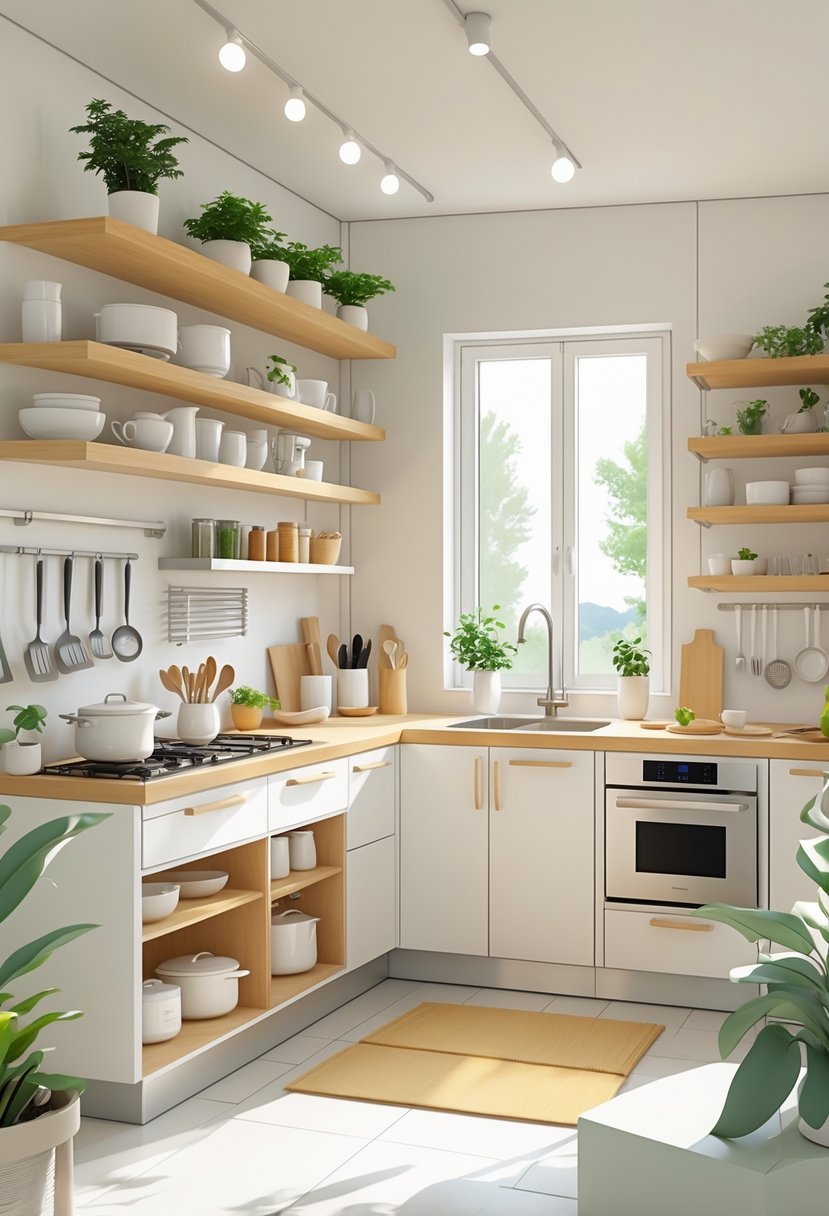
The key to a successful small kitchen is using space efficiently while keeping it comfortable and organized. With the right approach, even the smallest kitchens can support daily cooking and make the most of every inch. This article offers 15 ideas that show how to do this well.
1) Install open shelving instead of upper cabinets
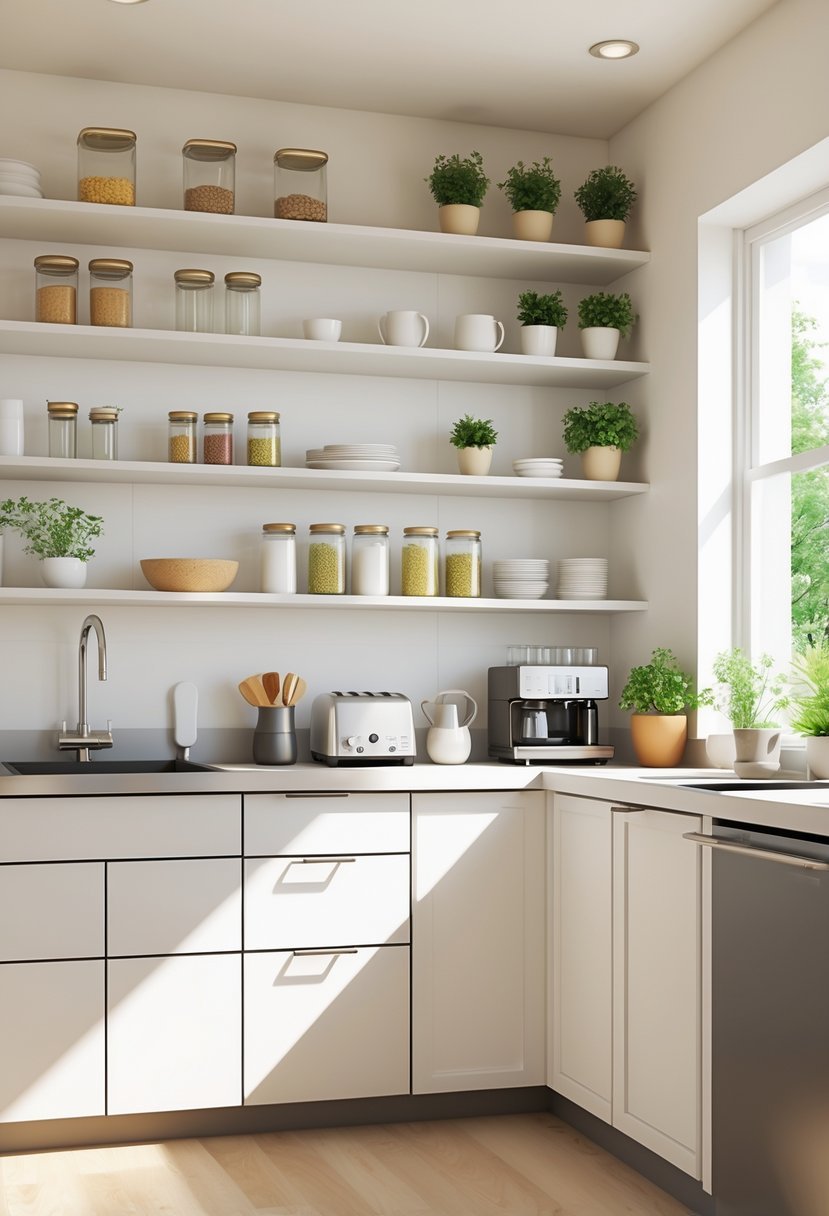
Open shelving can make a small kitchen feel much bigger. Removing bulky upper cabinets frees up wall space and brings in more light. This creates a more open and airy atmosphere.
They offer easy access to everyday items like plates, glasses, and pots. With careful organization, shelves can look neat and stylish. Adding a few decorative pieces, like plants or bowls, can also improve the kitchen’s appearance.
Open shelves work well in different kitchen styles. Floating shelves or corner units fit into tight spaces without crowding the room. This solution blends function and design while keeping the kitchen organized.
In small spaces, open shelving helps reduce visual clutter. It also encourages keeping things tidy since everything is visible. This can make cooking more efficient and enjoyable.
2) Use a rolling kitchen cart for extra prep and storage
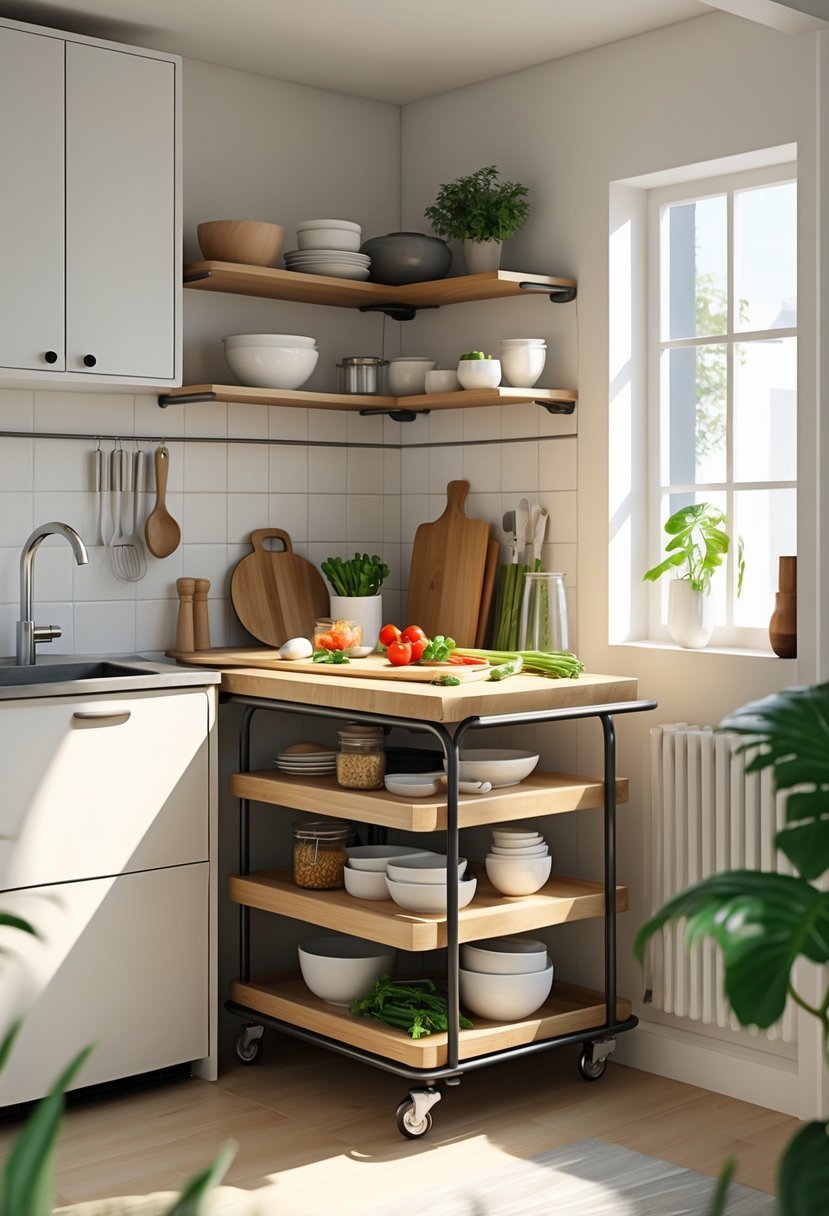
A rolling kitchen cart adds valuable prep space in small kitchens. It gives a movable surface where users can chop, mix, or organize ingredients. This flexibility lets them work wherever there is room, not just at a fixed countertop.
Besides prep space, a kitchen cart offers extra storage. Most carts come with shelves, drawers, or cabinets. These features help keep utensils, pots, and pantry items close by without taking up permanent space.
The mobility of a rolling cart is a key benefit. It can be moved out of the way when not needed, freeing floor space. Some carts even double as serving stations or movable bars for guests.
Many models have sturdy tops made of wood, metal, or concrete. This durability supports various kitchen tasks while blending with different decor styles. Overall, a rolling cart is a simple, practical way to make a small kitchen more functional.
3) Incorporate pull-out pantry drawers
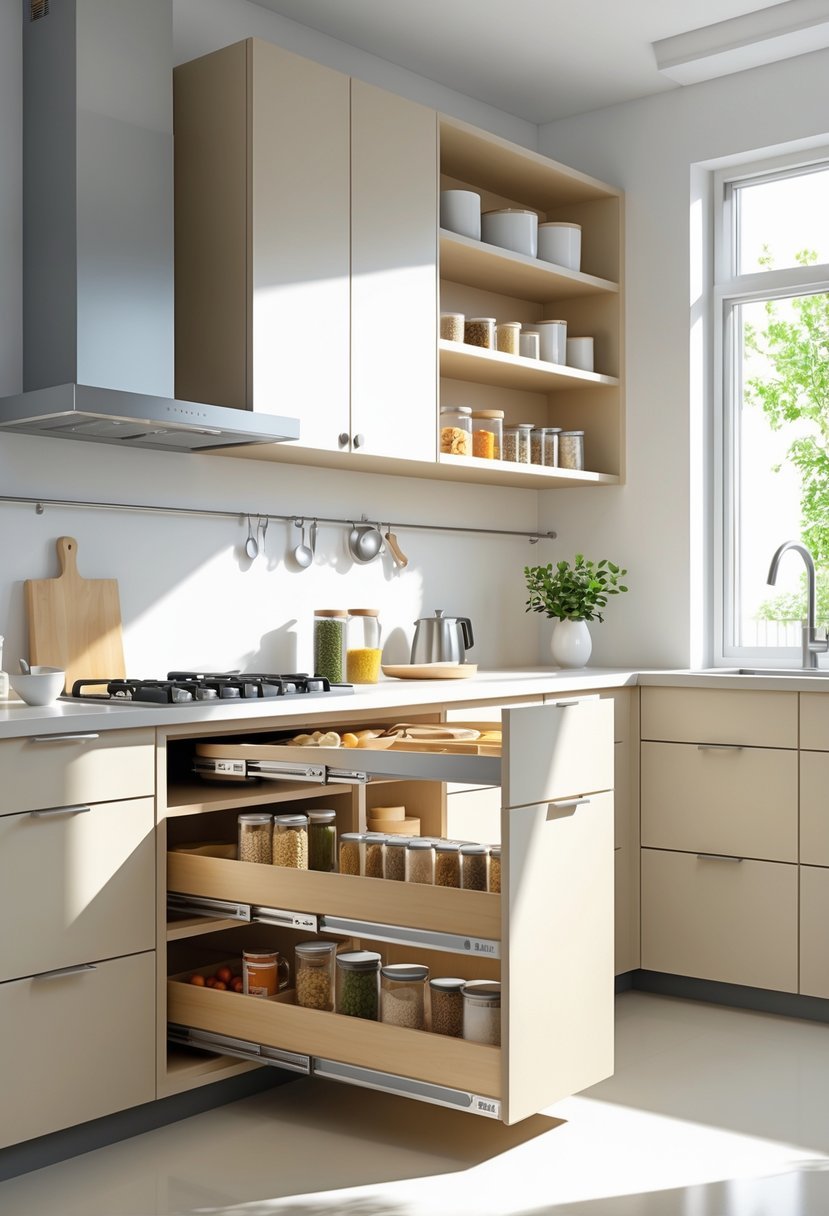
Pull-out pantry drawers are a practical way to boost storage in small kitchens. They use vertical space well and turn narrow gaps into useful areas. This helps keep items visible and easy to reach.
These drawers slide out smoothly, giving full access to everything inside. It stops items from getting lost in the back. People can organize food, spices, and kitchen tools efficiently.
Installing pull-out pantry drawers also keeps countertops clear. This creates a tidier workspace while maximizing cabinet space. The design works well even in tight kitchens where every inch counts.
Strong materials and careful layout make these drawers last a long time. They fit in both new kitchens and upgrades, adding convenience without taking extra room. This solution is simple but effective for small-space storage needs.
4) Opt for a compact, single-basin sink
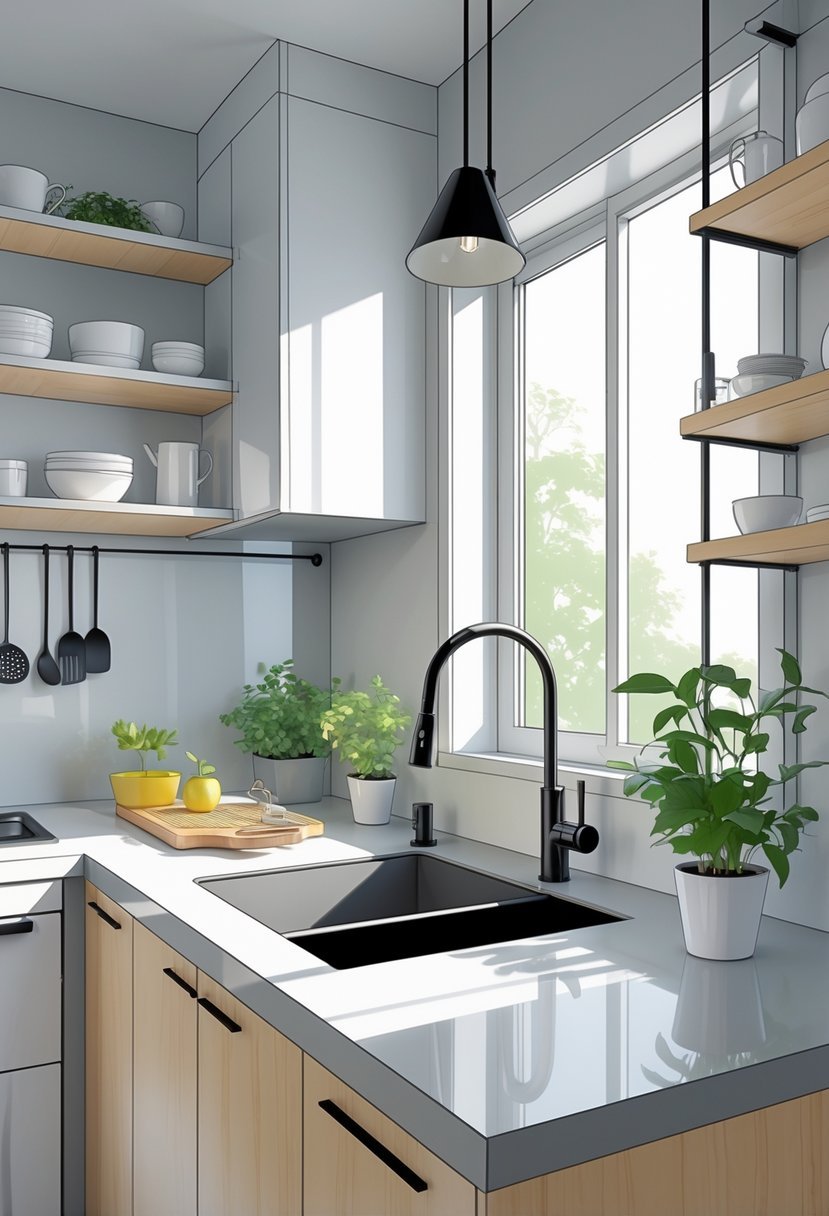
A compact, single-basin sink is a practical choice for small kitchens. It takes up less counter space while still providing enough room for washing dishes and preparing food. This type of sink is often easier to clean and maintain compared to larger, divided models.
Single-basin sinks come in different sizes, usually ranging from 15 to 24 inches wide. Many compact options fit well in tight spaces without feeling cramped. Homeowners can choose from materials like stainless steel, quartz composite, or ceramic, depending on their style and durability needs.
This sink style also offers flexibility in kitchen design. It pairs well with under-mount installation, which helps maximize counter space and creates a streamlined look. Offset drains can further improve workspace by freeing up the bottom of the basin. Overall, a single-basin sink is a solid, space-saving option for small kitchens that balances function and style.
5) Choose a fold-down wall-mounted table
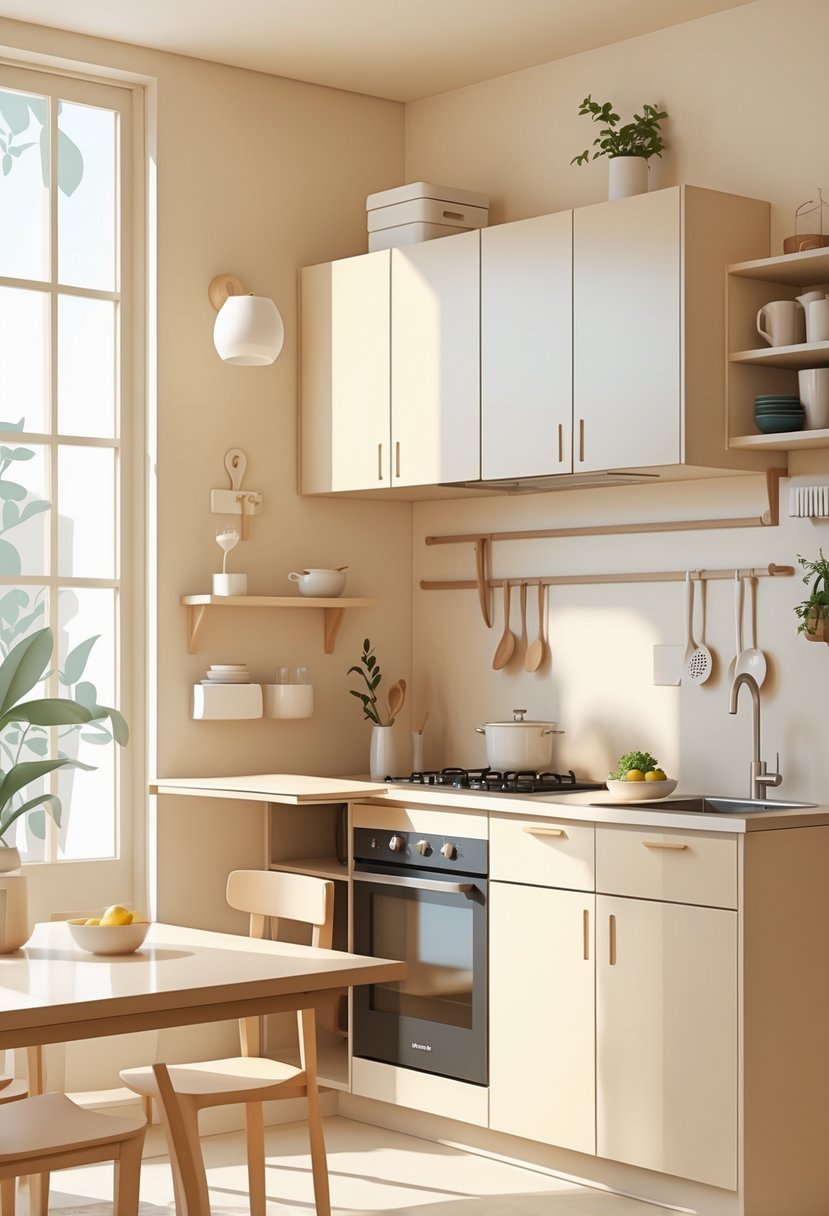
A fold-down wall-mounted table is a practical choice for small kitchens. It attaches directly to the wall and folds up when not in use. This feature saves valuable floor space and keeps the kitchen less cluttered.
When needed, the table easily folds down to create a functional surface for eating or working. It can be a dining spot or a place to prep food, making it versatile. Its simple design fits well in small or multipurpose rooms.
This type of table often comes in different styles, from modern to rustic. It offers both convenience and style without taking up permanent space. It can make a small kitchen feel more open while still providing a solid surface when required.
Choosing a fold-down wall-mounted table helps maximize every inch of space. It suits those who want a neat, efficient kitchen without large, bulky furniture.
6) Utilize magnetic strips for knife storage
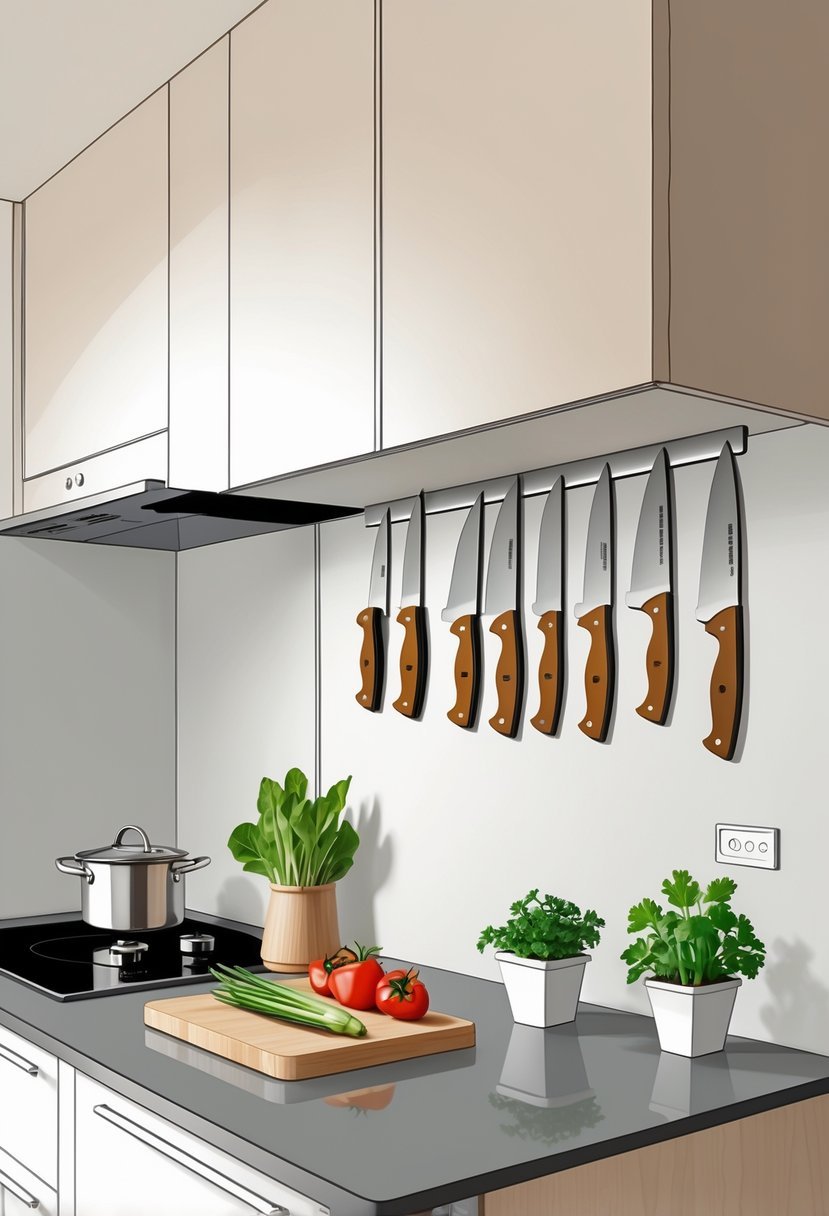
Magnetic strips are a great solution for small kitchens. They free up valuable counter and drawer space by holding knives on the wall. This keeps knives visible and easy to reach while cooking.
Mounting a magnetic strip near the food prep area makes knives accessible without cluttering surfaces. It also helps keep knives organized and prevents damage to blades that can happen in crowded drawers.
Magnetic strips come in different styles, from simple metal bars to decorative wooden designs. They can add a clean, modern look to the kitchen while serving a practical purpose.
Safety is important when using magnetic strips. Placing them high enough keeps knives out of reach of children. The firm magnet holds knives securely, reducing the risk of accidents when handled correctly.
Overall, magnetic strips offer a smart way to organize knives. They maximize space, improve kitchen efficiency, and provide a neat storage option in small areas.
7) Add under-cabinet lighting to brighten the workspace
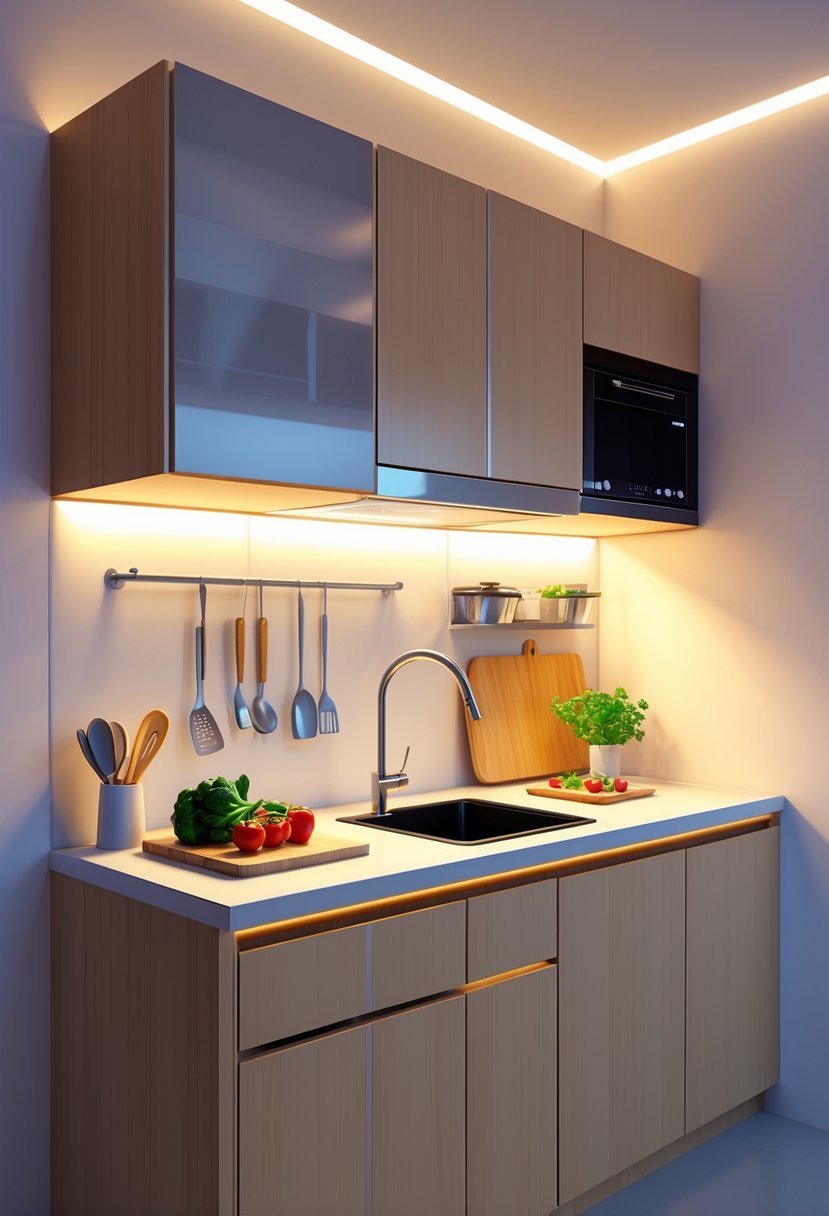
Under-cabinet lighting improves visibility in small kitchens. It provides direct light where people prepare food, making tasks easier and safer. Bright, focused light helps reduce shadows on countertops.
LED strips or puck lights are common choices. They fit neatly under cabinets and consume little energy. Some options offer adjustable brightness, allowing for both bright task lighting and softer ambient light.
This lighting type also enhances the kitchen’s look. It adds a modern touch without taking up space. People can choose warm or cool tones depending on their style and needs.
Motion-activated lights are another convenient option. They turn on only when someone is near, saving energy and adding ease of use.
Overall, under-cabinet lighting maximizes small kitchens by making work areas clearer and more inviting. It blends functionality with simple design, making it an effective addition for compact cooking spaces.
8) Use clear containers to organize dry goods visibly
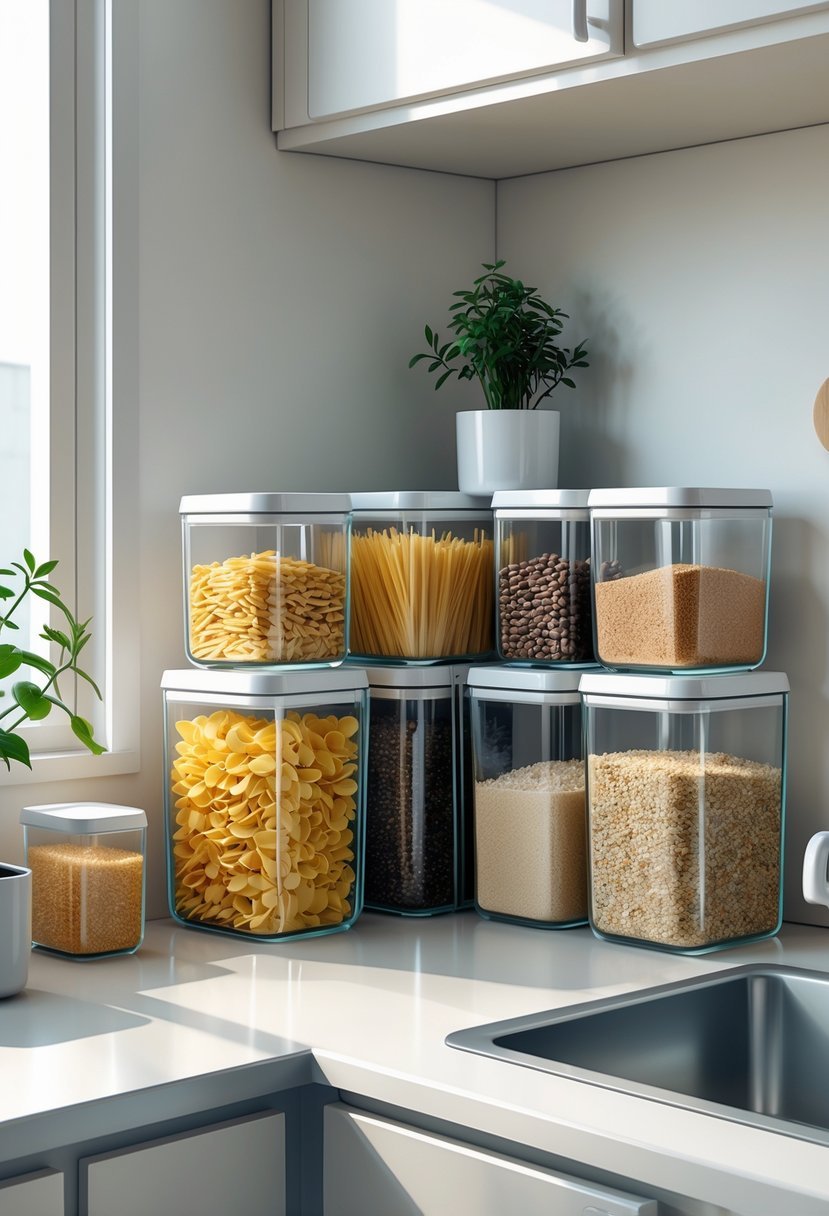
Clear containers help keep dry goods organized by making items easy to see at a glance. This reduces the time spent searching for ingredients and helps keep inventory in check. When containers are transparent, it is simple to spot what needs refilling.
Using clear containers also creates a neat and uniform look inside cabinets or on shelves. Labeling each container adds a layer of clarity, especially for similar-looking items like flour, sugar, or rice. This prevents mix-ups and speeds up cooking prep.
Choosing the right size container is important. Smaller containers suit spices or snacks, while larger ones work well for pasta or grains. Stackable containers save space and make use of vertical storage. Overall, clear containers make a kitchen more functional and visually tidy.
9) Hang pots and pans on a wall-mounted rack
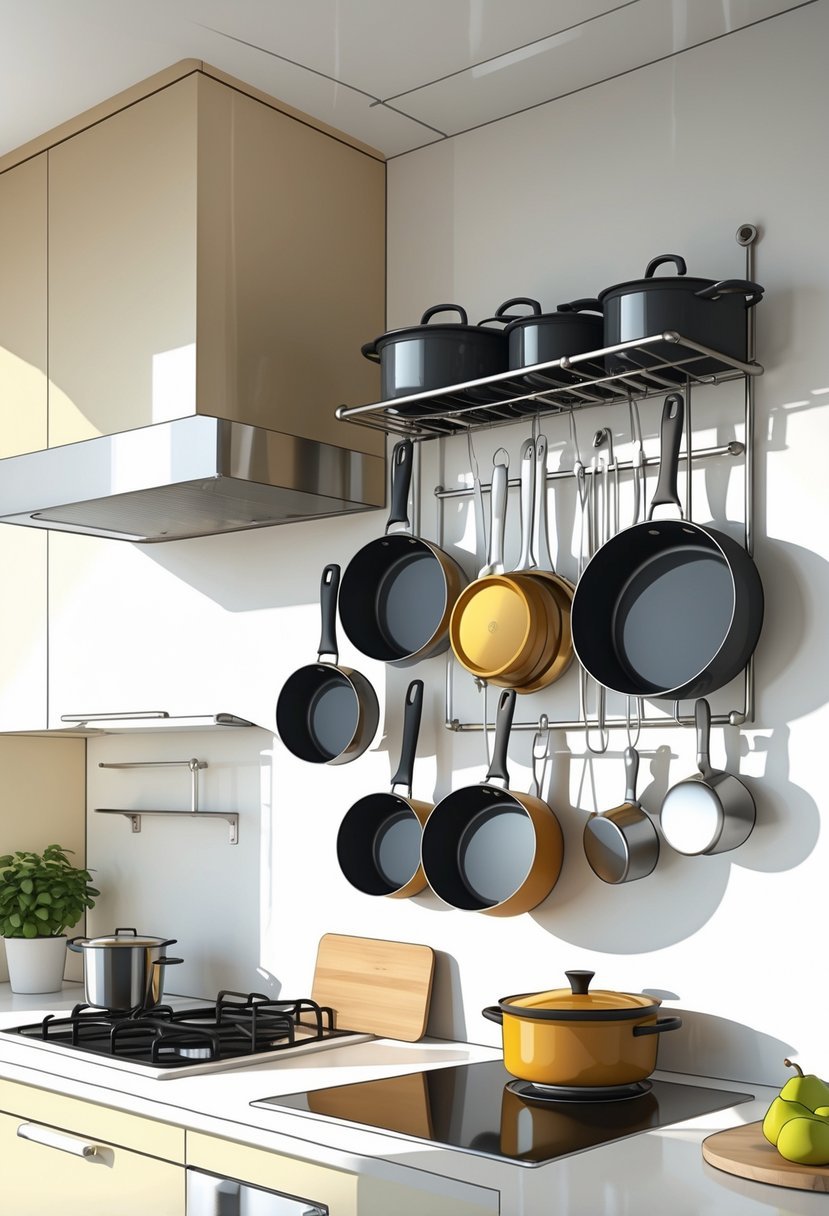
Hanging pots and pans on a wall-mounted rack is a smart way to save cabinet space in a small kitchen. It keeps cookware visible and easy to reach, which helps speed up cooking.
These racks come in many styles. Some have multiple tiers or hooks to hold different sizes of pots, pans, and lids. Others include shelves for extra storage or decoration.
Wall-mounted racks also help make use of vertical space, which is often underused. This can free up countertops and drawers, making the kitchen feel less crowded.
Installing a rack on an empty wall or inside a cabinet door can turn wasted space into practical storage. It also helps keep the kitchen organized by reducing clutter.
Besides pots and pans, similar racks can hold utensils, spices, or small kitchen tools. This adds to their usefulness in small kitchens that need every inch of space.
10) Integrate corner shelves to maximize dead space
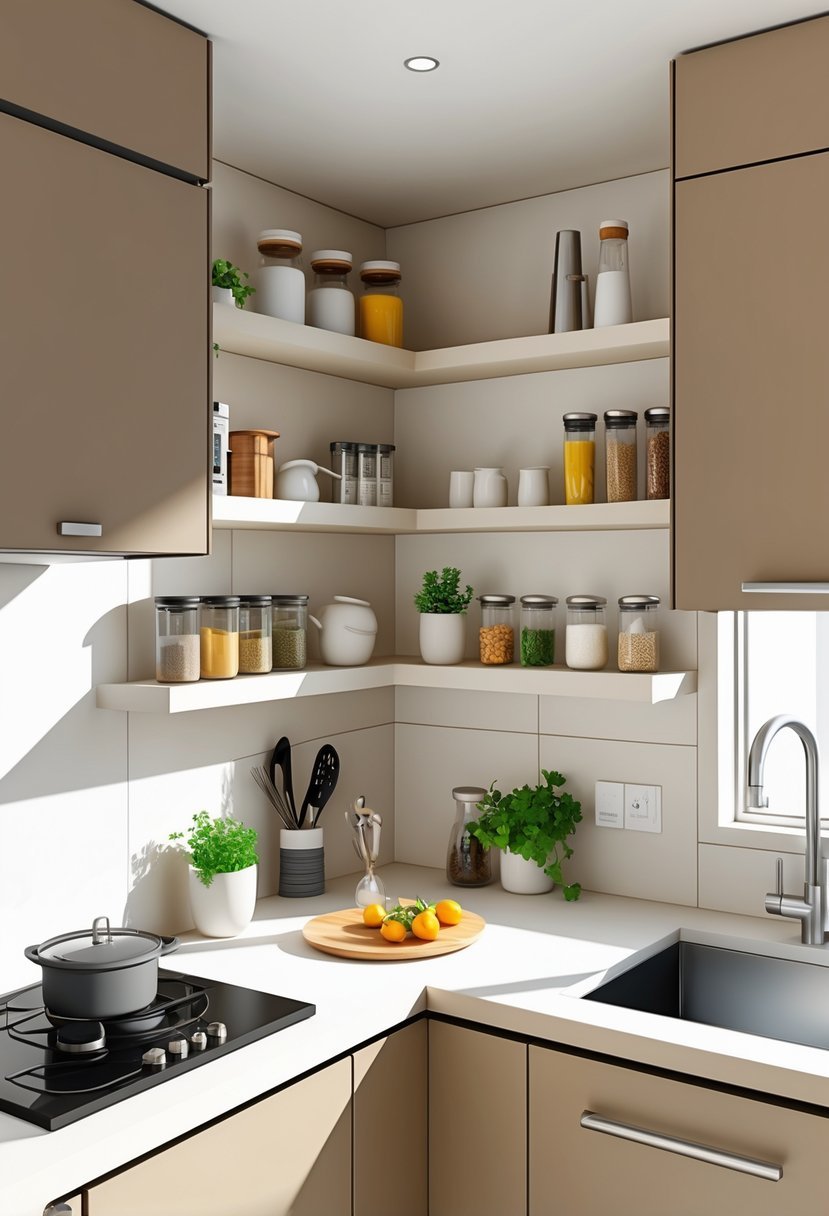
Corner shelves are a smart way to use space that often goes wasted in small kitchens. They fit neatly into corners, turning awkward gaps into useful storage areas without taking up much room.
These shelves can hold dishes, glasses, or small kitchen tools. Open wooden shelves also add visual interest, showing off colorful items and making the kitchen feel more personalized.
Floating corner shelves work well when a kitchen is tight on space. They keep things accessible and make the area feel less crowded. Using narrow shelves or triangular shapes helps keep the kitchen organized and efficient.
Adding corner shelves can free up counter space and reduce clutter. They allow for easy access to regularly used items while keeping the kitchen tidy. This simple change improves storage without the need for bigger cabinets or extra furniture.
11) Select slim-profile appliances designed for small kitchens
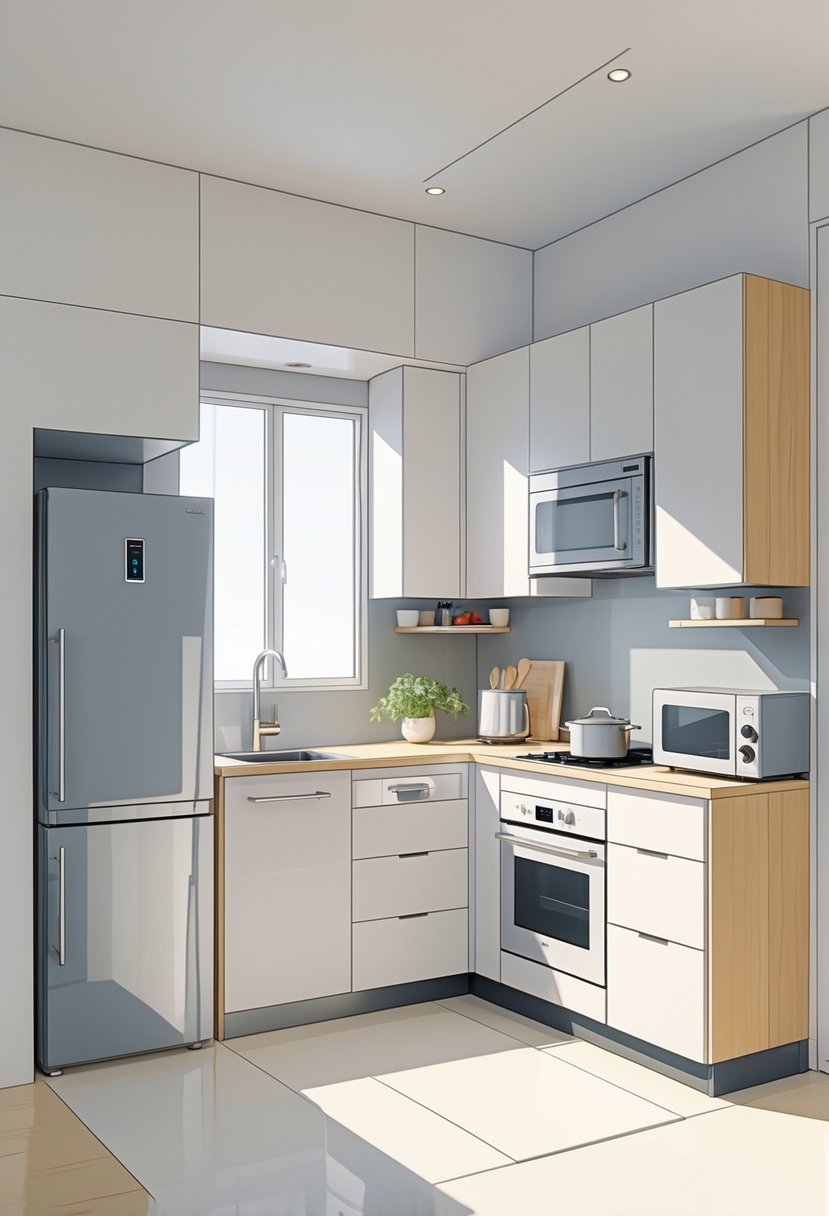
Choosing slim-profile appliances helps make the most of limited kitchen space. These appliances are narrower and take up less countertop or cabinet room while still offering full functionality.
Many slim appliances combine multiple functions, like toaster ovens that also air fry or bake. This reduces the need for several separate devices, saving space and keeping the kitchen less cluttered.
In small kitchens, it is important to pick appliances that fit well without blocking movement. Slim refrigerators, compact dishwashers, and narrow microwaves are all designed to fit tighter spaces while working efficiently.
Energy-efficient models with user-friendly features also suit small kitchens well. They save power, stay safer to use, and can be easier to clean in confined areas.
Overall, slim-profile appliances provide a practical solution for anyone dealing with limited kitchen room. They help maintain a tidy workspace and keep cooking tasks manageable.
12) Install a pegboard to customize storage vertically
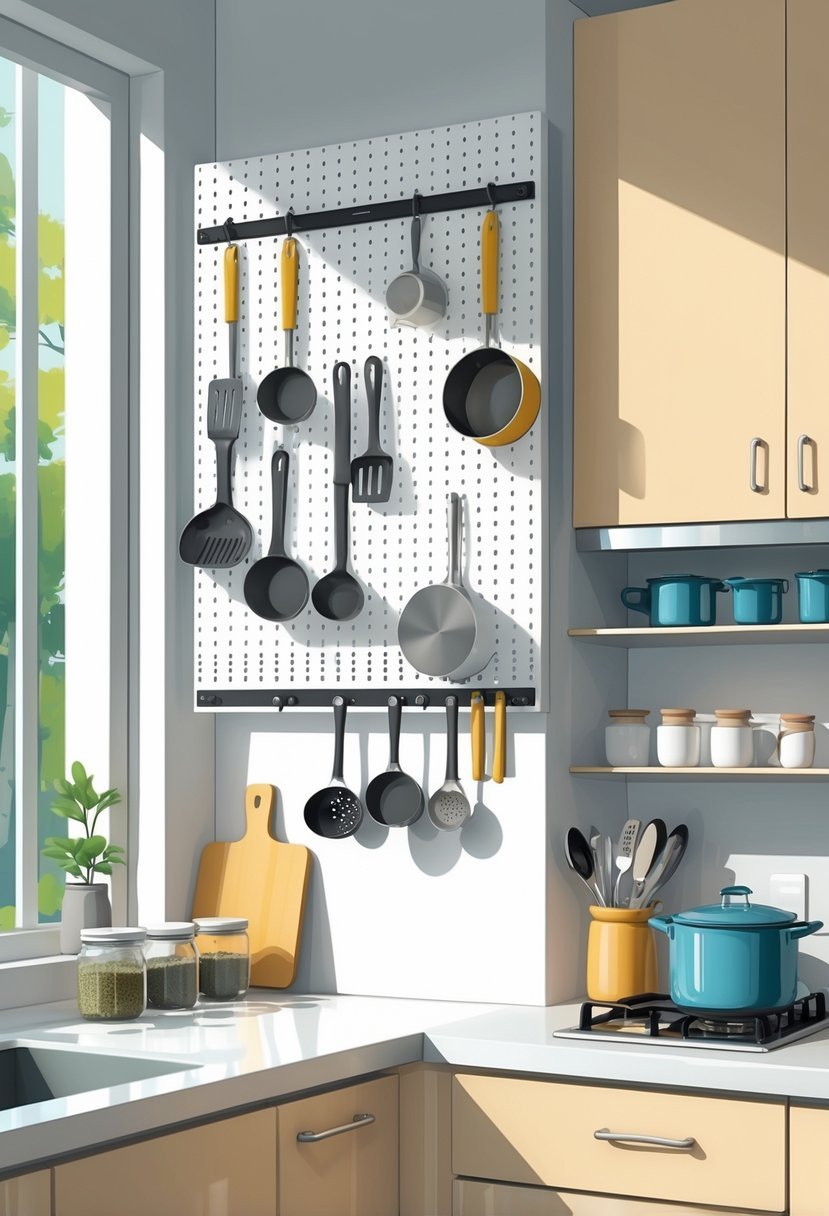
A pegboard is a simple way to add vertical storage in a small kitchen. It makes use of empty wall space, freeing up counters and cabinets. Hooks, shelves, and baskets can be arranged on the pegboard to fit different kitchen tools.
Users can hang pots, pans, utensils, and even small plants like herbs. This keeps items easy to see and reach. The flexibility of pegboards allows people to change the layout anytime based on their needs.
Pegboards also help keep the kitchen organized by defining a spot for each item. Color-coded hooks or labeled baskets make it faster to find things. This system works in kitchens of all sizes, making the most of limited space.
Because pegboards are customizable, they can match the style of the kitchen while adding function. Installing one costs little and does not require major remodeling. It’s a practical solution to reduce clutter and improve workflow in small kitchens.
13) Use light, neutral colors to make the kitchen feel larger
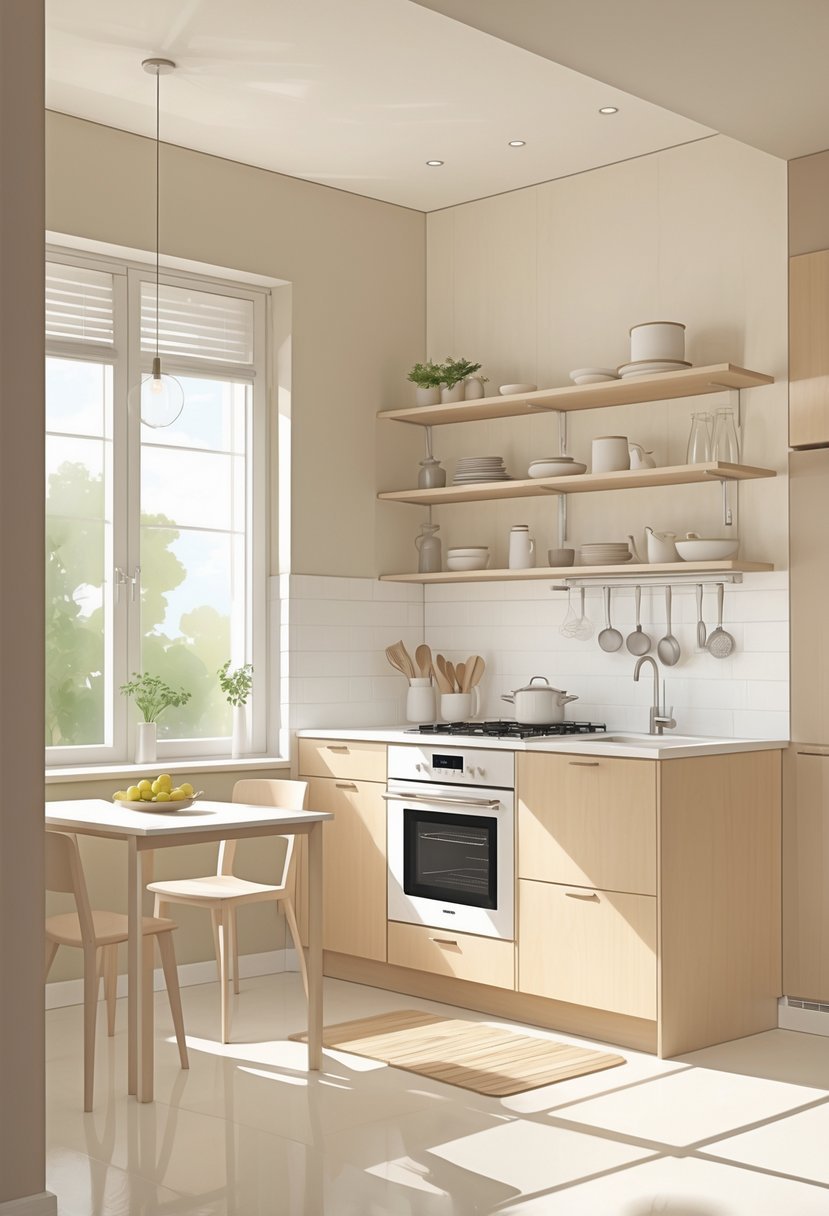
Light, neutral colors help open up a small kitchen by reflecting more natural and artificial light. Shades like white, beige, soft grays, and pastels reduce shadows and give the room an airy, spacious feel. This choice creates a bright, clean backdrop that makes the whole space seem less cramped.
Using a monochromatic color scheme adds to this effect by keeping the look simple and uncluttered. When walls, cabinets, and countertops share similar light tones, the eye moves smoothly across surfaces without interruption. This creates a visual flow that tricks the brain into seeing a larger area.
Neutral colors also offer flexibility. They pair well with most materials and appliances, allowing for easy updates in hardware or accessories. A well-lit kitchen with light colors can feel inviting and functional, even when square footage is limited. This approach is a practical, low-effort way to make a small kitchen more comfortable and open.
14) Place a mirror backsplash to create depth
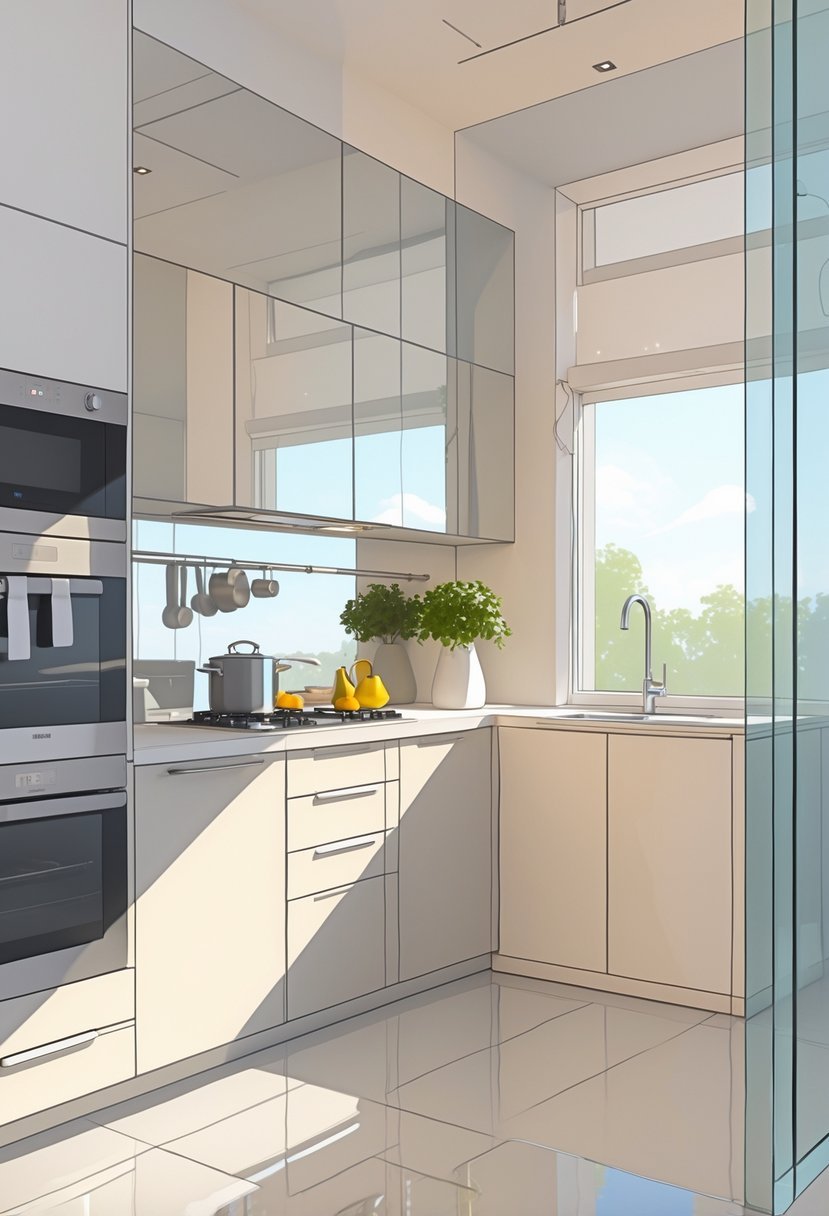
A mirror backsplash can make a small kitchen feel more open and airy. It reflects both natural and artificial light, which brightens the space and adds a sense of depth. This helps the kitchen appear larger than it really is.
Mirrors come in different finishes like clear, smoky, or antiqued, allowing homeowners to choose a style that fits their kitchen’s look. Pairing a mirror backsplash with matte cabinets or dark countertops creates a modern and balanced contrast.
Installing a full-wall mirror backsplash can maximize the visual impact. It creates clean lines and an illusion of extra space without adding clutter. This solution works well in small kitchens that need more light and a simple, sleek design.
15) Incorporate multi-functional furniture like a bench with storage
A bench with built-in storage is a smart choice for a small kitchen. It provides extra seating while also giving a place to keep items like kitchen towels, pots, or small appliances. This type of furniture helps reduce clutter by using space that might otherwise go unused.
Multi-functional benches can also be part of a dining nook or an island. Some benches have lift-up seats or drawers underneath, making it easy to access stored items. This keeps the kitchen area tidy and organized.
Using furniture that serves more than one purpose saves space and adds convenience. It allows for a cleaner look without losing functionality. Multi-functional pieces are especially useful in small kitchens where every inch counts.
Key Principles for Designing a Small Kitchen
Designing a small kitchen requires attention to three main areas: how the space is arranged, the materials used, and the lighting setup. Each plays a vital role in making the kitchen feel larger and more functional.
Maximizing Efficiency With Smart Layouts
Smart layouts focus on using every inch without crowding the space. The most common effective designs for small kitchens are galley, L-shaped, and U-shaped layouts. These keep the work triangle (sink, stove, fridge) close, reducing the need to move around too much.
Cabinet and drawer placement is key. Using vertical storage like tall cabinets or open shelves maximizes space without taking up floor area. Pull-out pantries and corner drawers help avoid wasted space.
Compact, multi-use appliances also free up room. Choosing a smaller fridge or combining an oven and microwave can add more counter space. Clear pathways and minimal clutter improve movement and efficiency.
Selecting the Right Materials and Finishes
Materials and finishes influence how spacious the kitchen feels. Light-colored surfaces such as white, cream, or pale gray reflect more light, making the area appear larger.
Smooth, glossy finishes like lacquered cabinets or polished stone countertops help bounce light around. Matte finishes can feel heavier and sometimes make small areas seem smaller.
Durable materials that are easy to clean help maintain the kitchen’s neat look. For example, quartz countertops offer both resilience and a sleek surface. Using similar colors for cabinets, flooring, and walls creates a seamless effect that reduces visual breaks.
Integrating Lighting Solutions
Good lighting changes how a small kitchen feels. A mix of ambient, task, and accent lighting works best. Overhead LED lights provide even illumination for the whole room.
Task lighting under cabinets is essential for food prep areas. It adds brightness without shadows, improving safety and comfort. Accent lights, like small fixtures inside or above cabinets, can highlight design details and add depth.
Natural light should be maximized. Using sheer window coverings or reflective surfaces nearby can increase sunlight. Adjustable lighting allows for different moods and functions throughout the day.
Common Challenges and How to Overcome Them
Small kitchens pose specific problems that need clear solutions. These include finding enough storage, creating usable counter space, and making the area feel open and inviting despite its size.
Dealing With Limited Storage
Storage is often the biggest issue in small kitchens. To tackle this, it helps to use vertical space by adding tall cabinets or open shelves up to the ceiling. This uses unused wall areas without taking up floor space.
Inside cabinets, organizers like pull-out racks, baskets, and tiered shelves make better use of deep or narrow spaces. Magnetic strips on walls can hold knives or utensils, freeing up drawer space.
Compact, multipurpose furniture with built-in storage also adds room for kitchen tools. Hanging pots and pans can open cabinet space below. Every inch counts, so clutter should be avoided by storing only frequently used items within easy reach.
Optimizing Counter Space
Limited counters mean less room for prep and cooking. One solution is to keep the counter clear by using cutting boards that fit over the sink or stove, adding temporary workspace.
Appliances that serve multiple functions reduce the number of devices taking up space. Wall-mounted racks or rails can store utensils or spices instead of placing them on counters.
Fold-down or pull-out counters add extra work area only when needed. Keeping the countertop as open as possible helps the kitchen feel less cramped and makes cooking easier.
Making Small Kitchens Feel Larger
Small kitchens can feel cramped but can be designed to feel bigger with the right choices. Using light colors on walls and cabinets reflects light, brightening the room.
Mirrors or glossy surfaces create a sense of depth. Good lighting is crucial: layered light sources reduce shadows and make the space welcoming.
Open shelving instead of bulky upper cabinets can open visual lines. Removing clutter and keeping the design simple also helps avoid a crowded look.
Compact layouts, like an L-shape or galley kitchen, improve movement and make the room feel balanced. These ideas help the room feel less confined without changing its size.
Frequently Asked Questions
Small kitchens can feel cramped, but smart choices in storage, color, lighting, and furniture help create a more open and efficient space. Budget-friendly updates and modern design elements also improve function without major remodeling.
How can I maximize storage in a small kitchen space?
Using open shelving instead of upper cabinets frees up visual space and keeps frequently used items within reach. Pull-out pantry drawers make it easy to access stored goods without wasting corner or cabinet space.
Adding a rolling kitchen cart provides extra storage and prep space that can be moved as needed. Utilizing vertical wall space and over-the-refrigerator cabinets also increases storage without crowding the kitchen floor.
What are some budget-friendly small kitchen remodeling ideas?
Installing a fold-down wall-mounted table offers a dining or prep area without taking up permanent space. Replacing bulky sinks with a compact, single-basin model frees counter space.
Painting cabinets or adding new hardware can refresh a kitchen’s look inexpensively. Open shelving is a low-cost alternative to full cabinetry and improves storage and style.
What are the best color schemes for a small kitchen to enhance its size?
Light colors like white, soft gray, and pastels make small kitchens feel brighter and larger. Using the same color on walls, cabinets, and backsplash creates a seamless look that reduces visual clutter.
Adding subtle contrasts with darker trim or minimalist hardware can add depth without shrinking the space.
Can you suggest versatile furniture pieces for kitchens with limited space?
A rolling kitchen cart is highly versatile because it serves as extra storage, prep space, and can be moved to different areas. Fold-down or wall-mounted tables provide dining or workspaces that disappear when not in use.
Stackable stools or slim chairs that tuck under counters save floor space while offering seating when needed.
What lighting options work best to create the illusion of space in a small kitchen?
Bright, even lighting helps prevent shadows that make a room feel smaller. Under-cabinet LED lights illuminate countertops and open shelving to showcase items and increase task lighting.
Recessed ceiling lights or slim track lights avoid bulky fixtures that crowd the room. Using light fixtures with reflective materials can also help bounce light around the space.
How can I incorporate modern design into my small kitchen efficiently?
Choosing clean lines and simple hardware keeps the kitchen looking uncluttered and streamlined. Matte finishes and monochromatic color schemes add a modern feel without overwhelming the space.
Integrating compact, multi-functional appliances saves space and supports a sleek design. Open shelving and pull-out drawers also add contemporary style while improving organization.