Creating a kitchen that feels both inviting and connected to nature can enhance your daily cooking experience. Earthy kitchen designs focus on incorporating natural elements and warm tones to bring a sense of calm and comfort into your home.
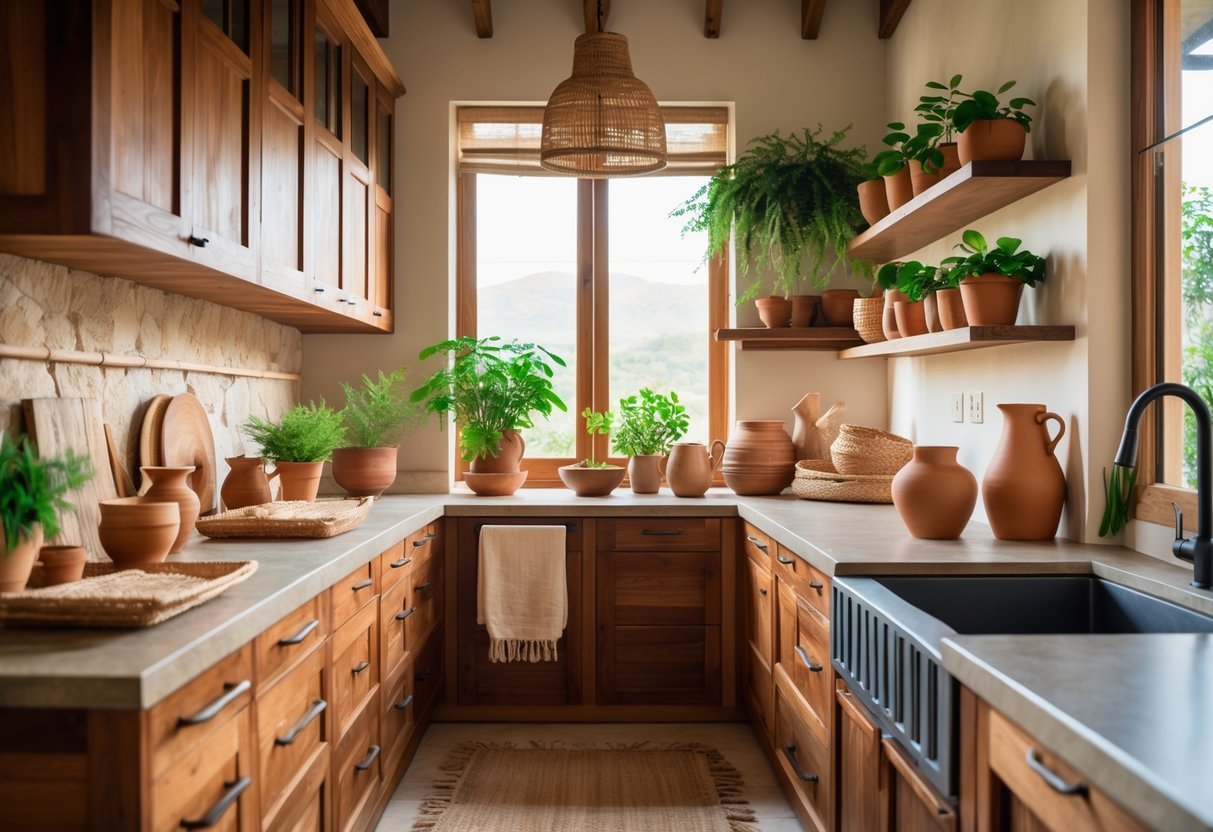
These ideas show you how to use natural textures, colors, and materials to craft a warm and grounded space that fits your lifestyle. Whether you want a subtle update or a full remodel, these concepts help you achieve a balanced, nature-inspired kitchen.
1) Warm wood cabinetry with natural grain
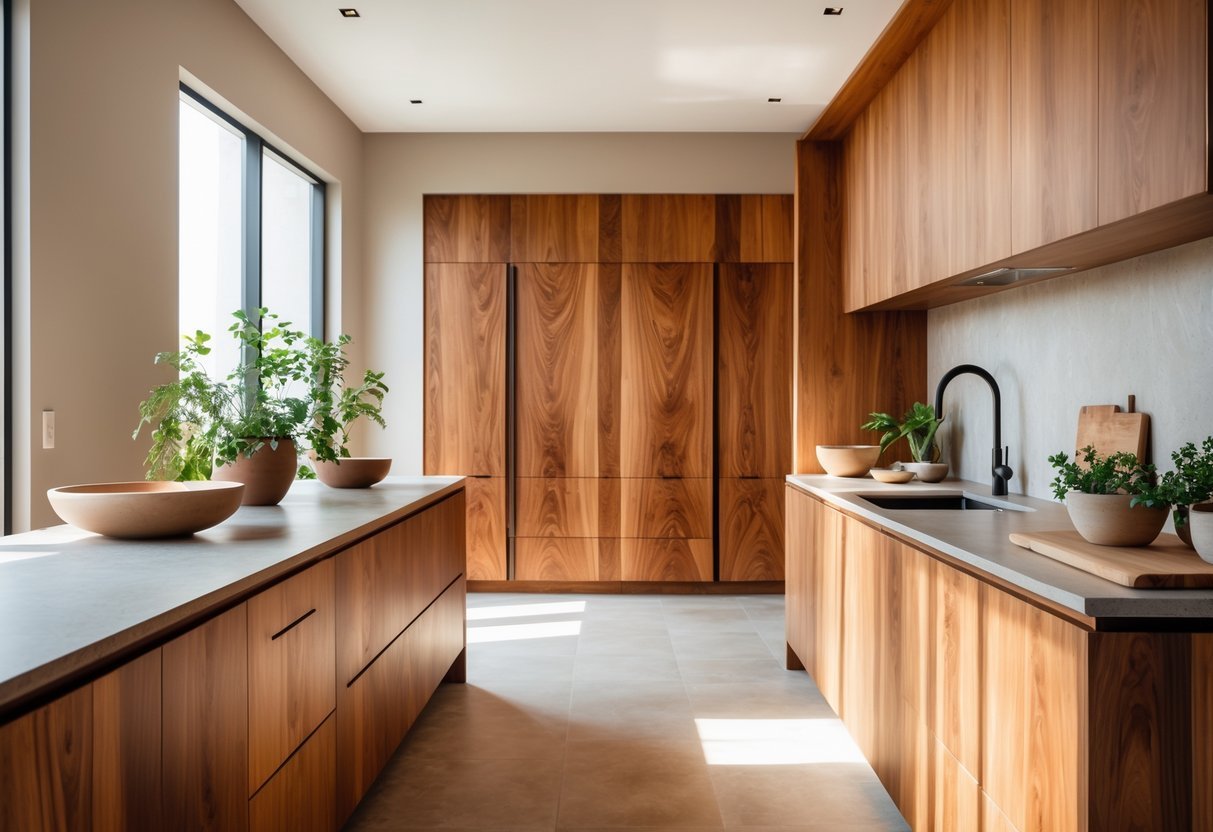
You can bring warmth and texture to your kitchen by choosing wood cabinets that showcase natural grain patterns. Options like oak, walnut, or pine highlight the wood’s unique character.
The visible grain adds depth without overpowering your space. These cabinets work well with both rustic and modern designs, making your kitchen feel inviting yet practical.
Selecting warm wood tones creates a cozy atmosphere. Over time, these materials develop a subtle patina, enhancing the natural beauty and authenticity of your cabinetry.
2) Terracotta tile backsplash
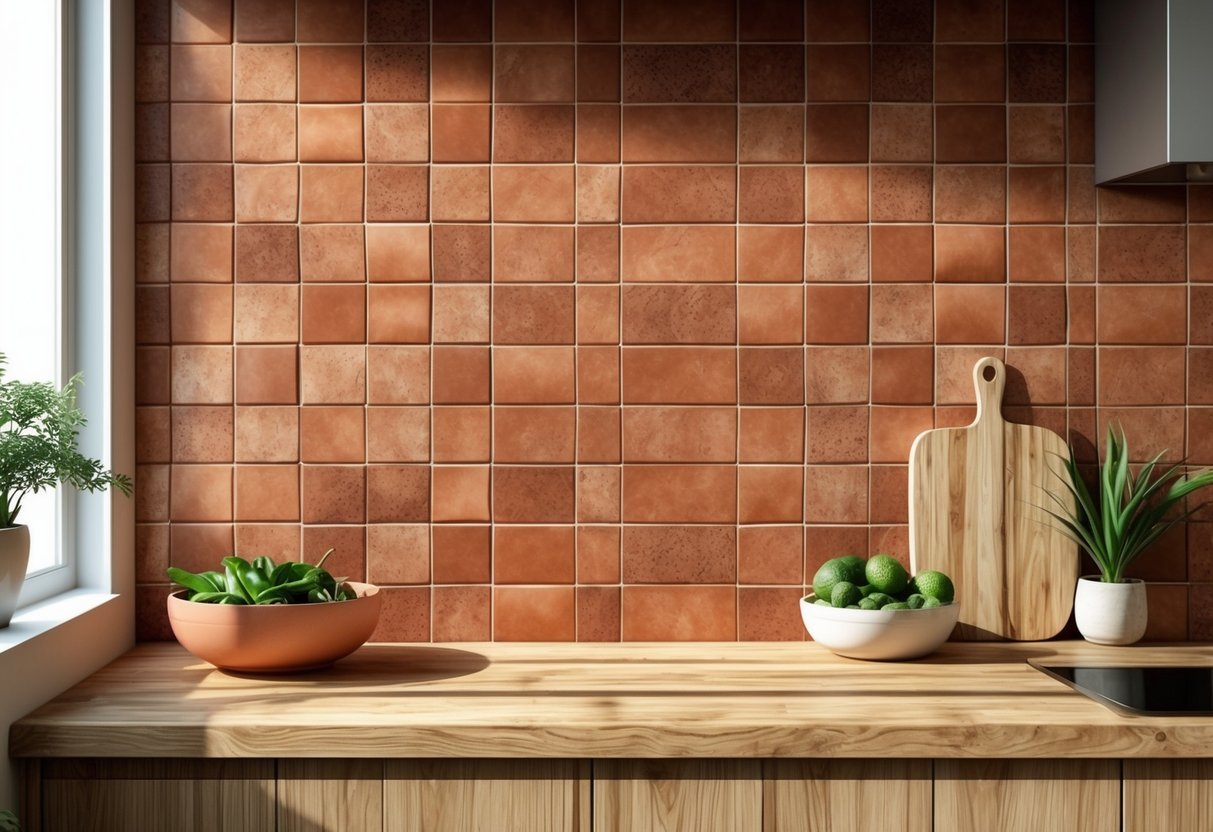
You can add warmth and earthiness to your kitchen with a terracotta tile backsplash. These tiles come in various shapes and sizes, allowing you to customize your design.
Terracotta’s natural orange and red hues create a cozy atmosphere. The material is durable, easy to clean, and pairs well with wood or white cabinetry.
Using terracotta subway tiles with contrasting grout adds texture without overwhelming your space. This backsplash style fits both rustic and contemporary kitchens.
3) Stone countertops in earth tones
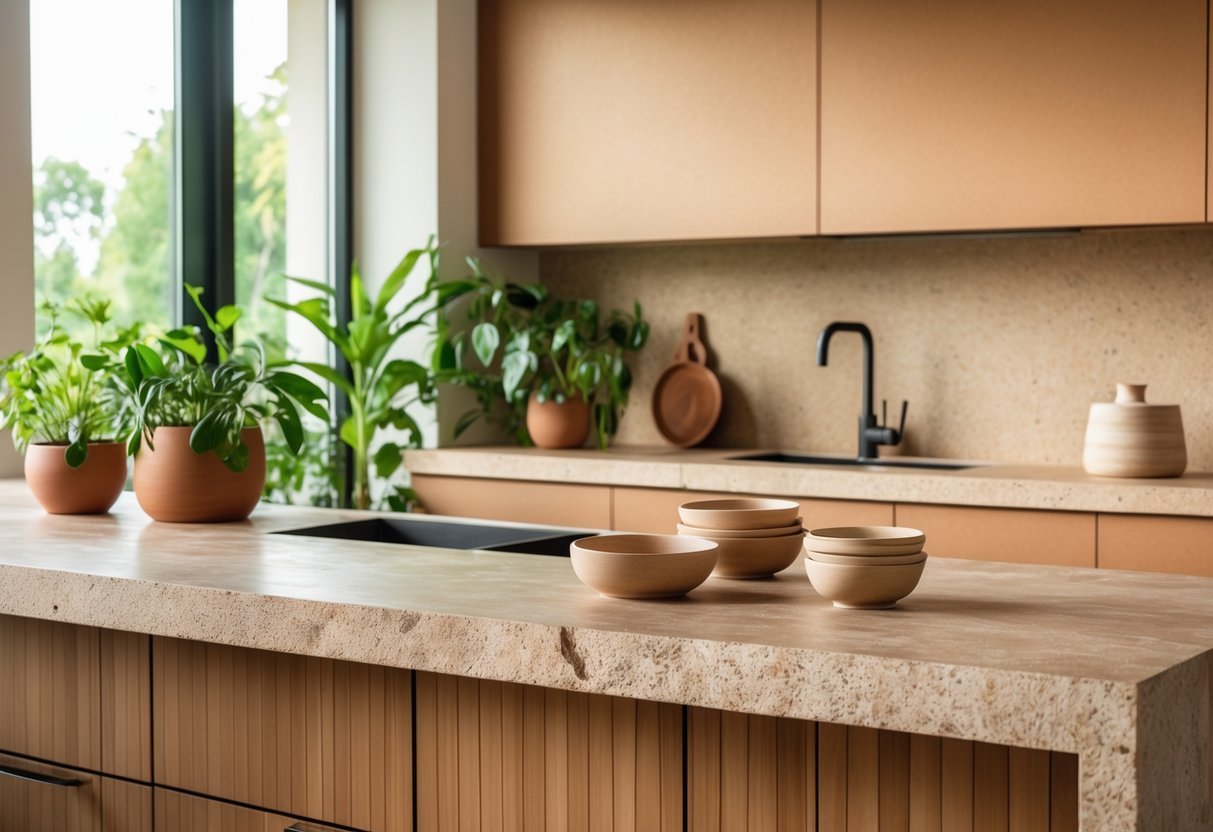
You can use stone countertops in natural earth tones to add warmth and texture to your kitchen. Materials like granite, limestone, or soapstone provide durability and a unique, organic look.
The natural variation in color and pattern makes each countertop one of a kind. These surfaces bring a grounded, tactile quality that complements wood or neutral cabinetry seamlessly.
Choosing stone with soft, earthy hues helps create a calm, inviting atmosphere. It also balances functionality with aesthetic appeal, making your kitchen both practical and visually pleasing.
4) Open shelving with woven baskets
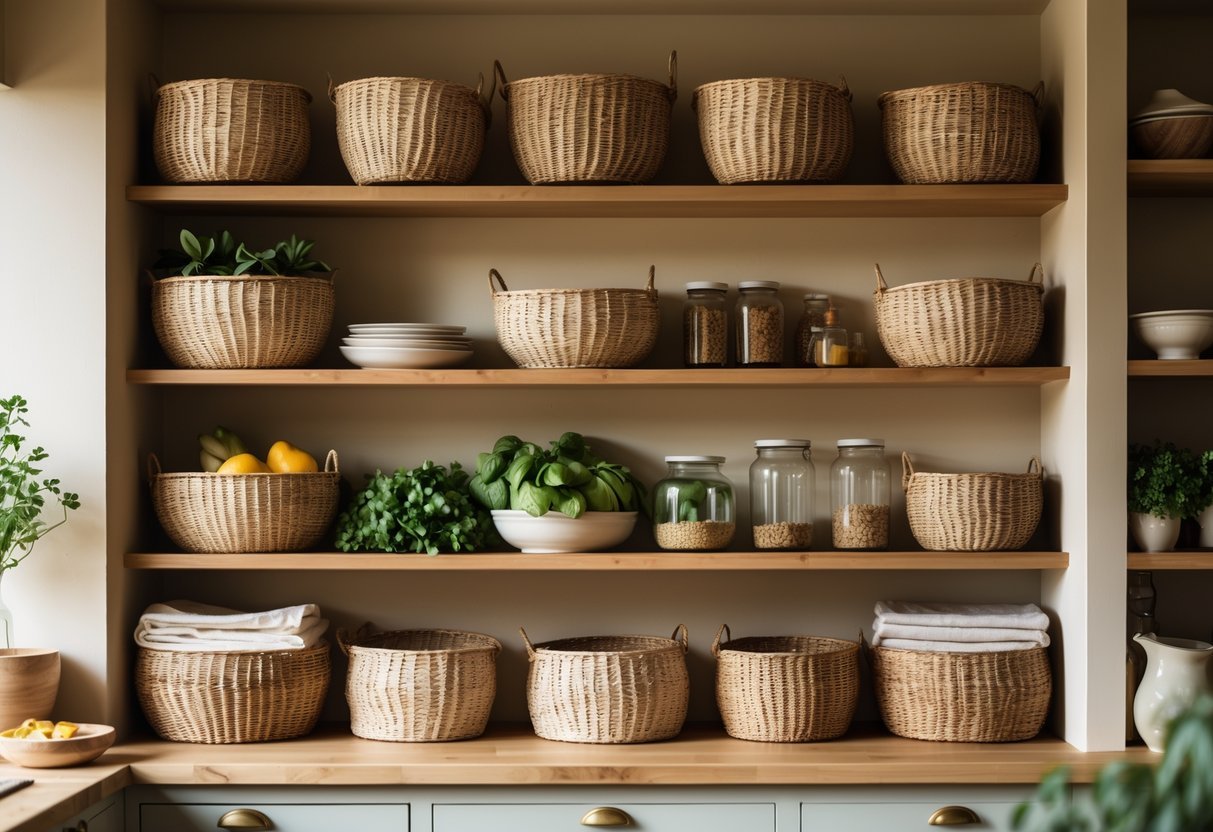
You can enhance your kitchen’s warmth by installing open shelving paired with woven baskets. This combination offers practical storage while adding a natural, handcrafted touch.
Open shelves made of wood provide an organic backdrop. Woven baskets keep items organized and contribute texture, making your kitchen feel both functional and inviting.
This approach allows easy access to dishes, spices, or produce. It also helps you display personal decor, such as handmade pottery or plants, to reinforce the earthy, boho vibe.
5) Forest green matte appliances
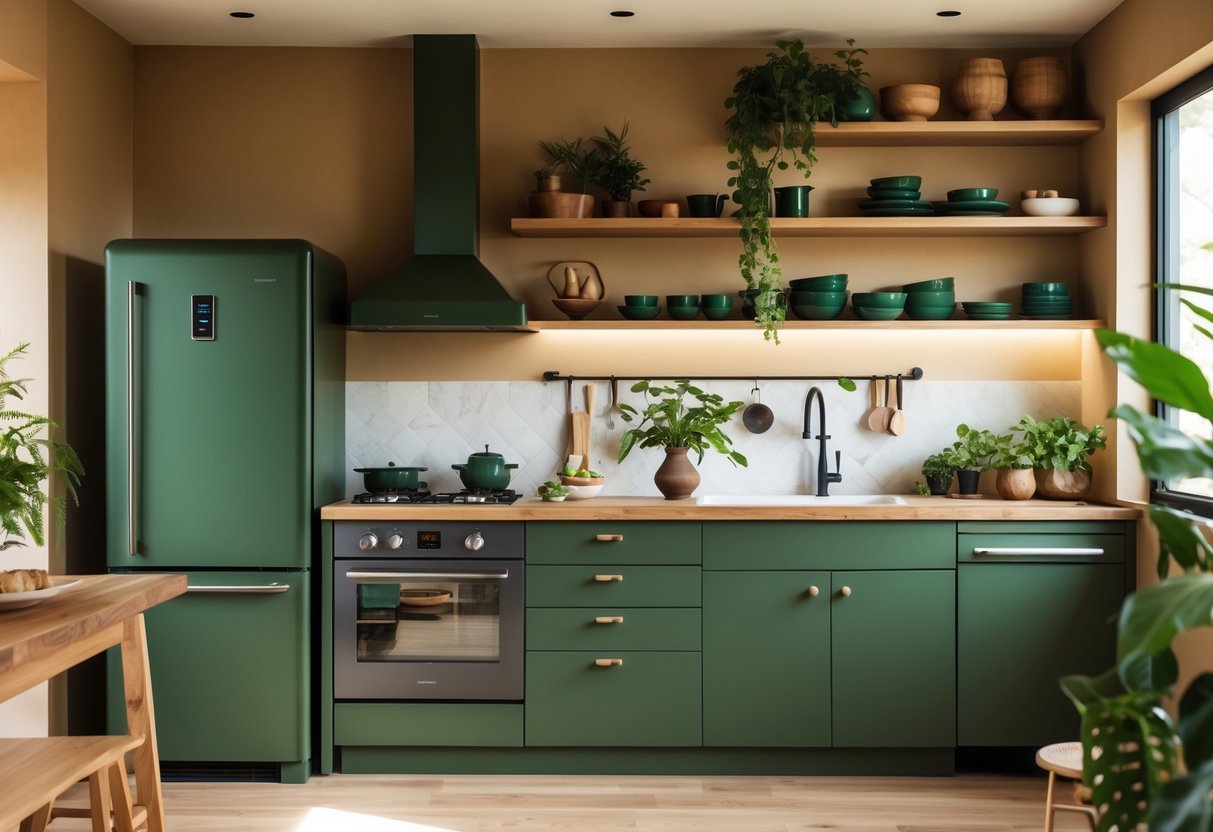
You can create a cohesive look by choosing forest green matte appliances. This deep, muted green adds richness without overpowering your kitchen.
Matte finishes reduce glare and fingerprints, keeping surfaces looking clean. Pair these appliances with natural wood or stone for a grounded, harmonious feel in your space.
These appliances work well in both modern and rustic kitchens. They provide a subtle but bold contrast against lighter countertops or backsplashes.
6) Clay pottery as countertop decor
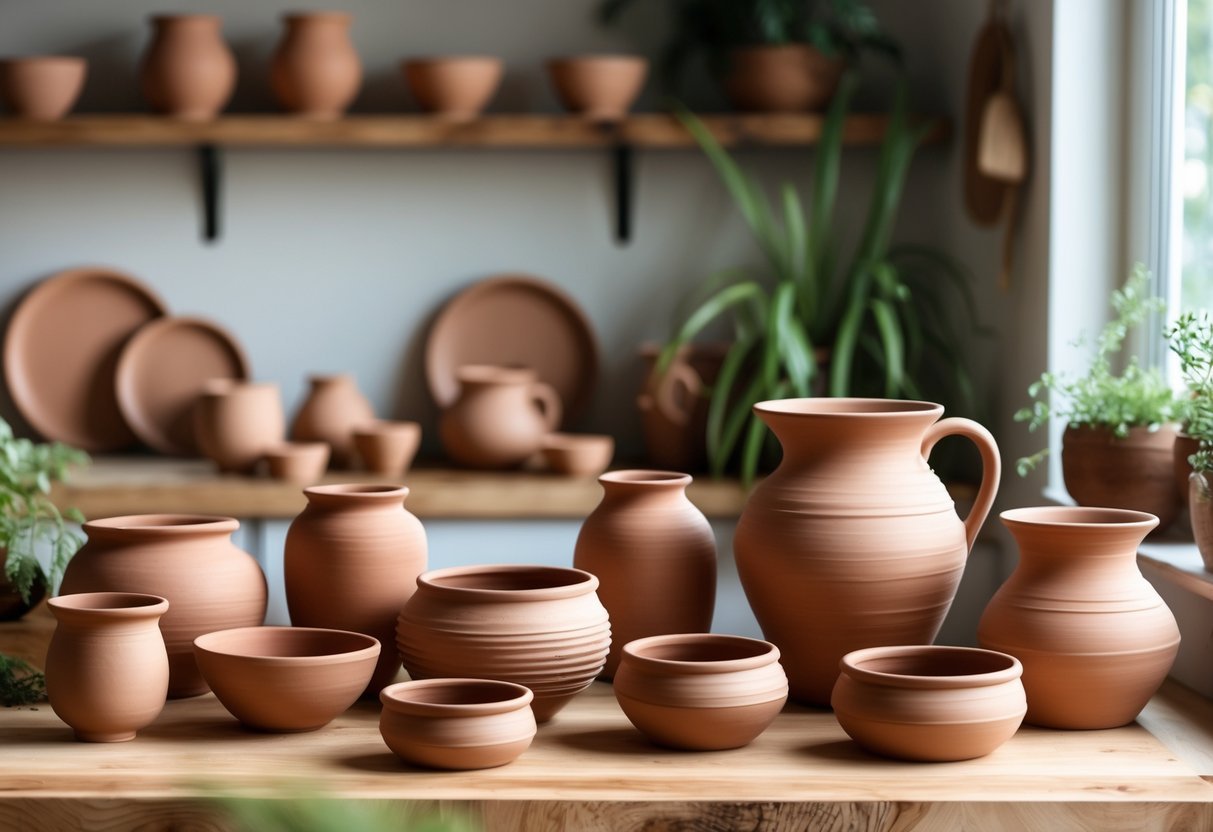
You can add warmth and texture to your kitchen by placing clay pottery on your countertops. These pieces bring an organic element that complements natural materials.
Choose pottery in earthy tones like terracotta or muted clay to enhance a grounded, authentic look. The handmade quality adds subtle imperfections that make your space feel unique.
Position your pottery where natural light can highlight its texture and color. This simple addition creates visual interest without overwhelming your countertop space.
7) Rustic brass fixtures and hardware
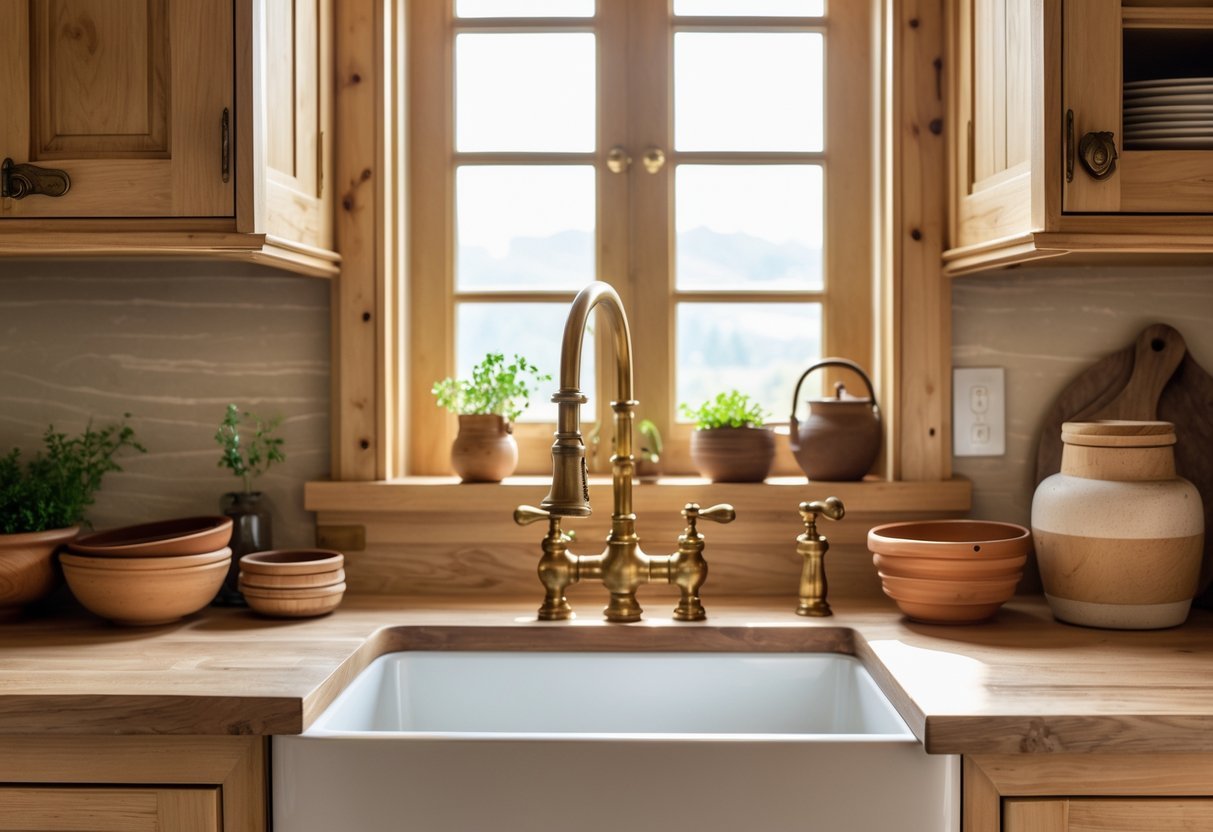
You can enhance your kitchen’s warmth by choosing rustic brass fixtures. These add a subtle vintage touch without overpowering the space.
Brass handles, knobs, and faucets work well on wooden cabinets or contrasting white surfaces. They bring an understated elegance and blend naturally with earthy tones.
Pairing brass hardware with natural wood or stone elements creates a balanced look. It offers durability while contributing to your kitchen’s cozy, grounded feel.
8) Textured linen window treatments
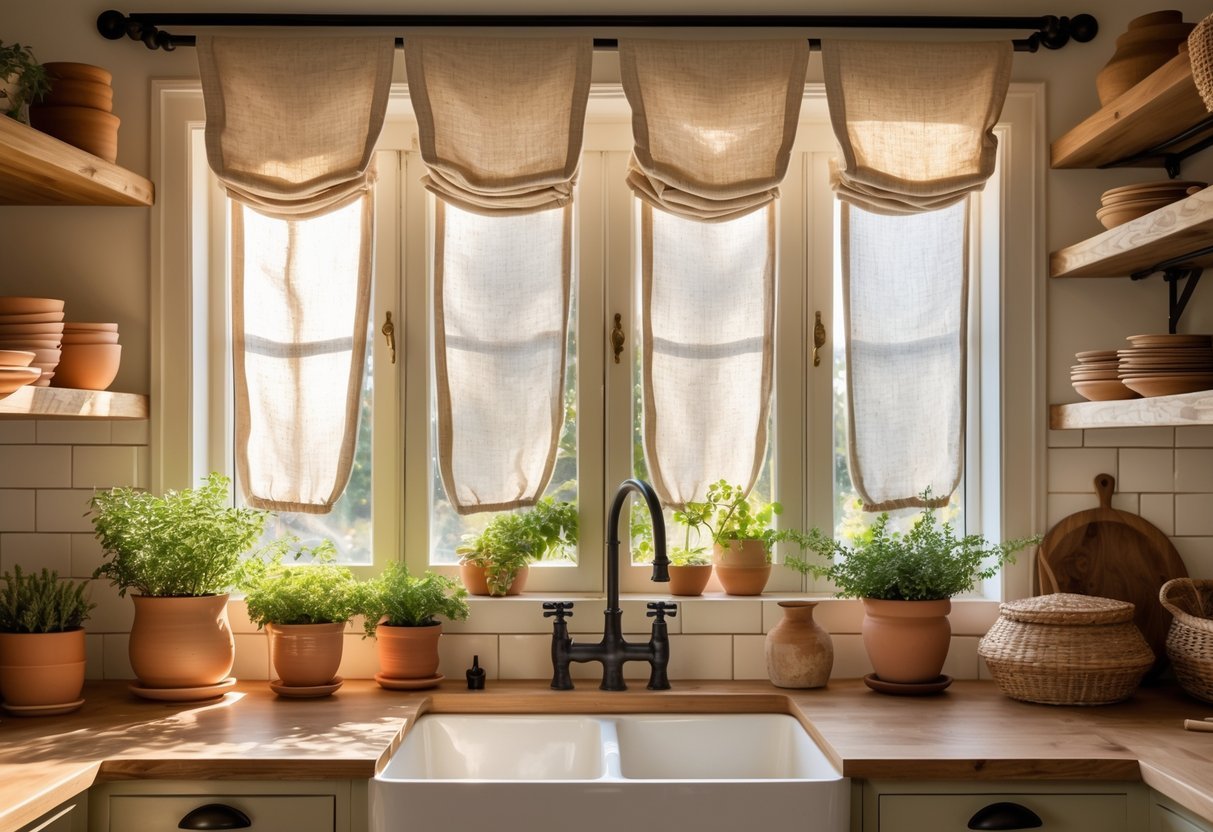
You can soften your kitchen’s look with textured linen window treatments. Linen’s natural fibers add gentle texture without overwhelming the space.
These treatments filter sunlight softly, creating a warm atmosphere. They also enhance the earthy, organic feel that suits natural and warm interiors.
Choose neutral or warm tones to keep the window treatments subtle and inviting. Linen pairs well with wood and other natural materials, linking your kitchen’s elements cohesively.
9) Handcrafted wooden cutting boards
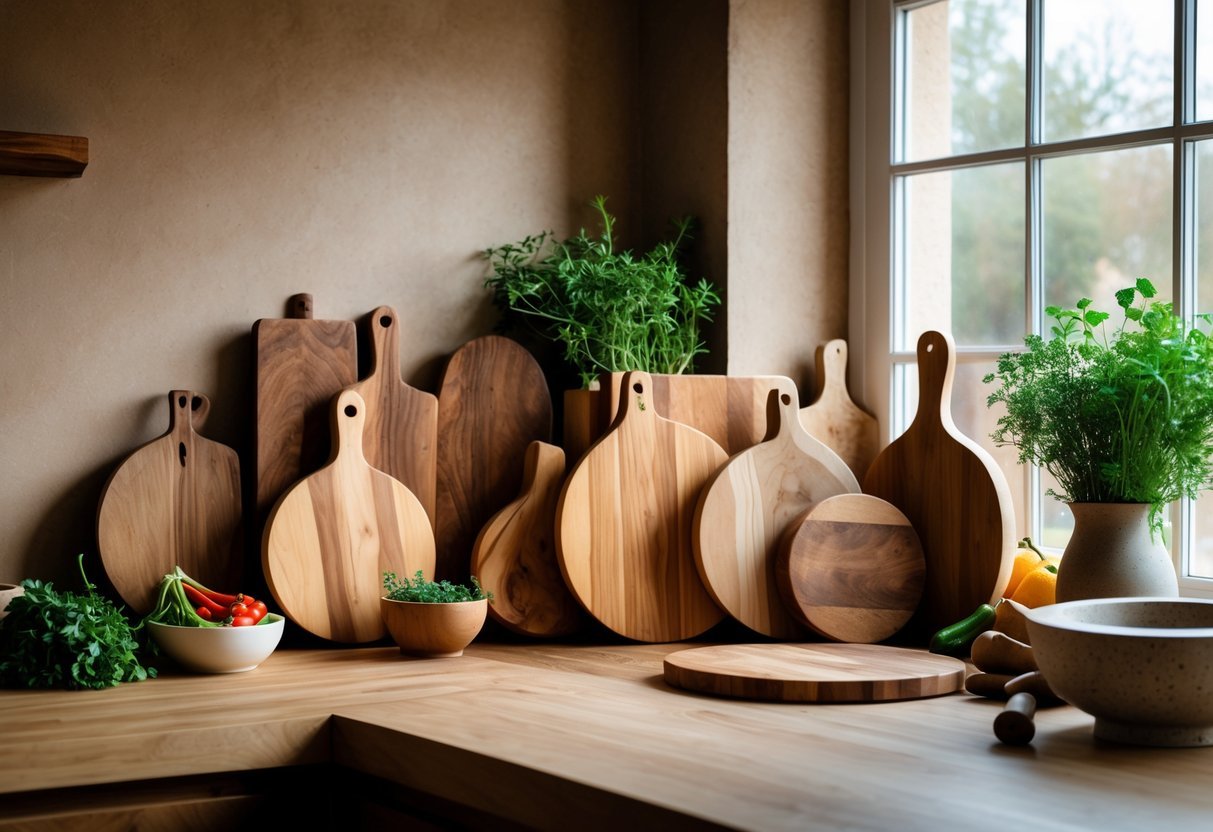
You can enhance both function and style with handcrafted wooden cutting boards. Their natural wood tones add warmth and texture to your kitchen space.
These boards work well for prep, serving, or display. Choosing rich woods like walnut or cherry will complement your earthy kitchen design effortlessly.
Displaying boards with varied shapes and sizes also adds a rustic, organic vibe. They bring practicality while reinforcing the connection to natural materials in your kitchen.
10) Organic jute or sisal rugs
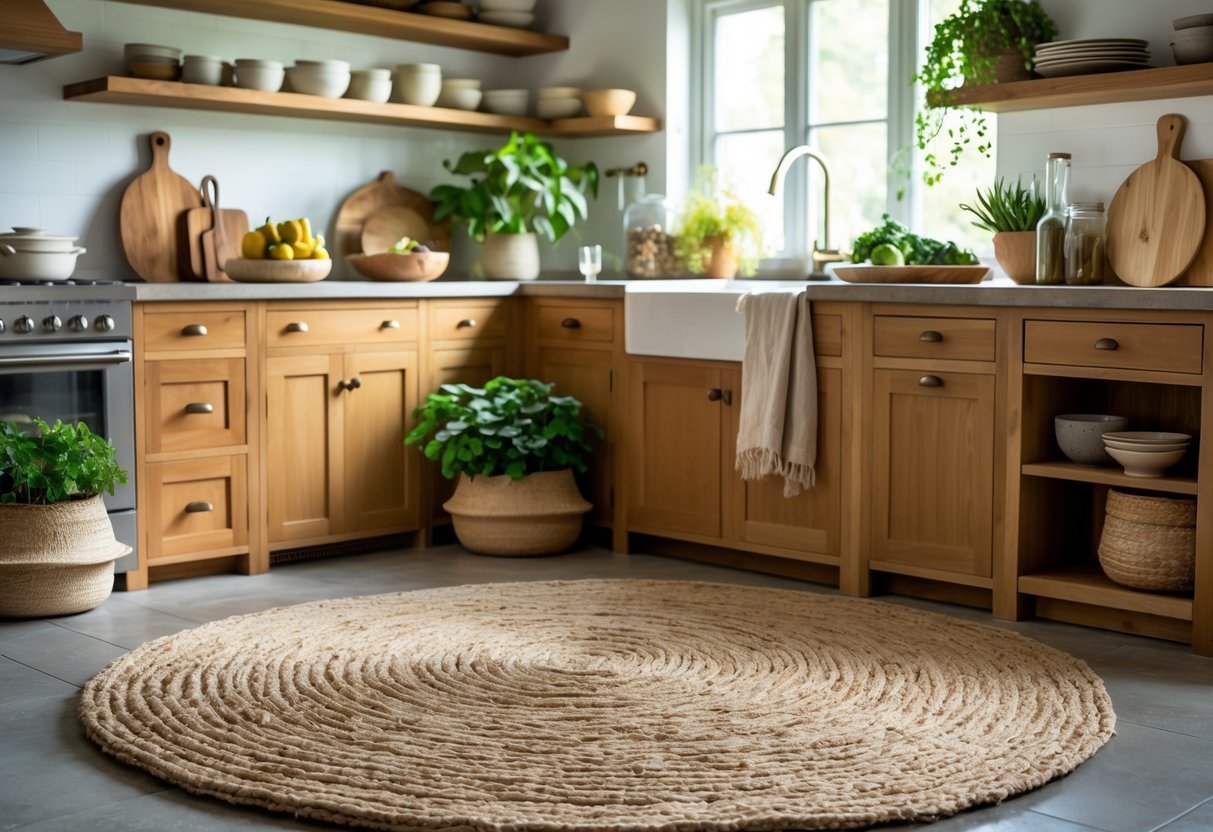
You can add warmth and texture to your kitchen with organic jute or sisal rugs. These natural fibers soften hard surfaces and bring an earthy, grounded feel to the space.
Place them in high-traffic areas or under your kitchen island to define zones while maintaining a cozy atmosphere. They also offer subtle contrast to smooth floors without overwhelming your design.
These rugs are durable and practical, yet their natural look enhances the overall organic aesthetic. Consider a matte sealer if you want to protect the texture without losing its raw appeal.
11) Deep clay or burnt sienna painted walls
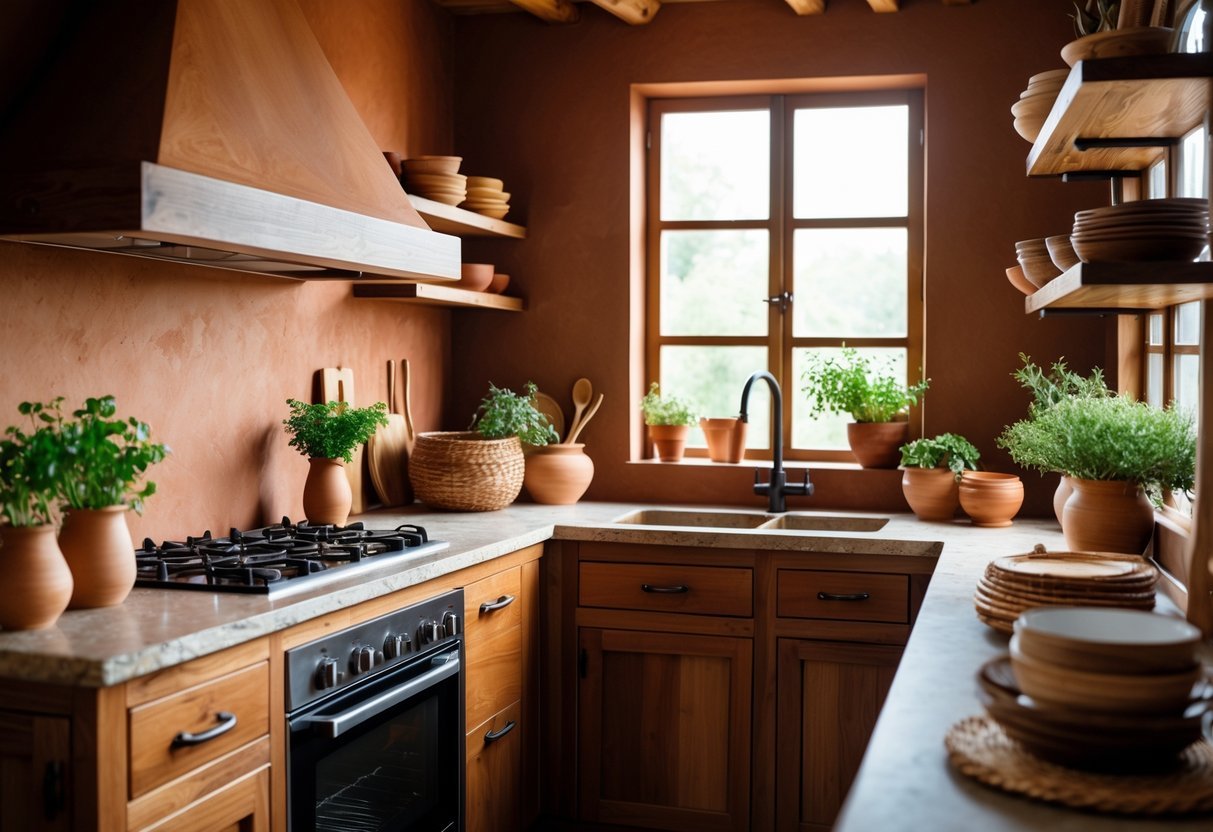
You can create warmth and depth with deep clay or burnt sienna walls. These earthy colors bring a grounded, natural feel to your kitchen.
Burnt sienna works well in rooms with plenty of natural light. It balances brightness without overwhelming the space, keeping the atmosphere cozy and inviting.
Choosing these hues adds a subtle sophistication. They complement wood tones, terracotta accents, and natural textures, helping you achieve a modern yet rustic look.
12) Earth-tone ceramic pendant lighting
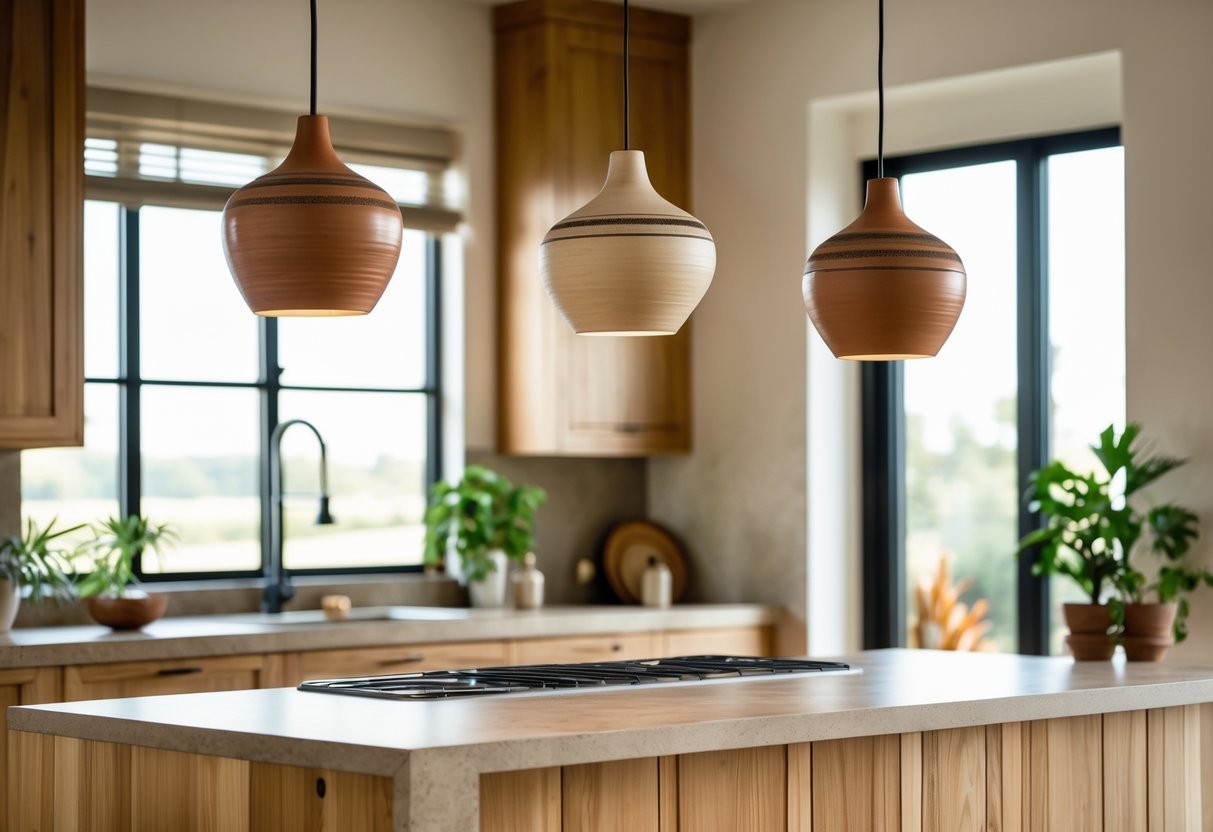
You can add warmth and style with earth-tone ceramic pendant lighting. These fixtures often come in shades like terracotta, warm beige, or muted green.
Ceramic materials bring a natural texture, creating a soft and grounded look above your kitchen island or dining area. The colors complement wooden cabinets and stone surfaces well.
Using pendant lights with earth tones helps maintain an organic, inviting atmosphere. They provide focused lighting while enhancing the overall natural aesthetic of your kitchen.
13) Natural stone or slate flooring
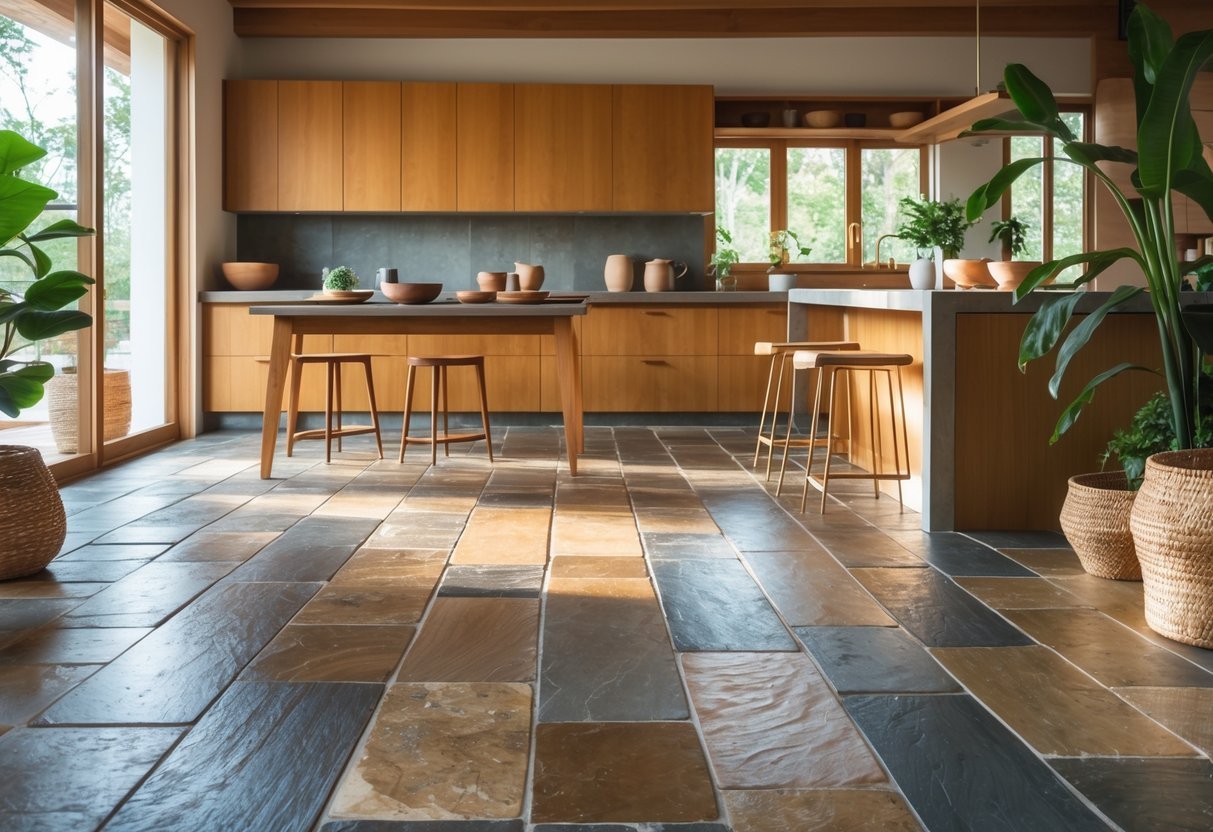
Natural stone or slate floors add texture and depth to your kitchen. Their earthy tones create a grounded, warm atmosphere.
Slate’s varied shades of gray and subtle earthy hues blend well with wooden cabinets. You benefit from a durable surface that withstands daily use.
Stone flooring is easy to maintain and brings organic beauty. Choosing this option connects your kitchen to natural elements without much effort.
14) Indoor herb garden planters
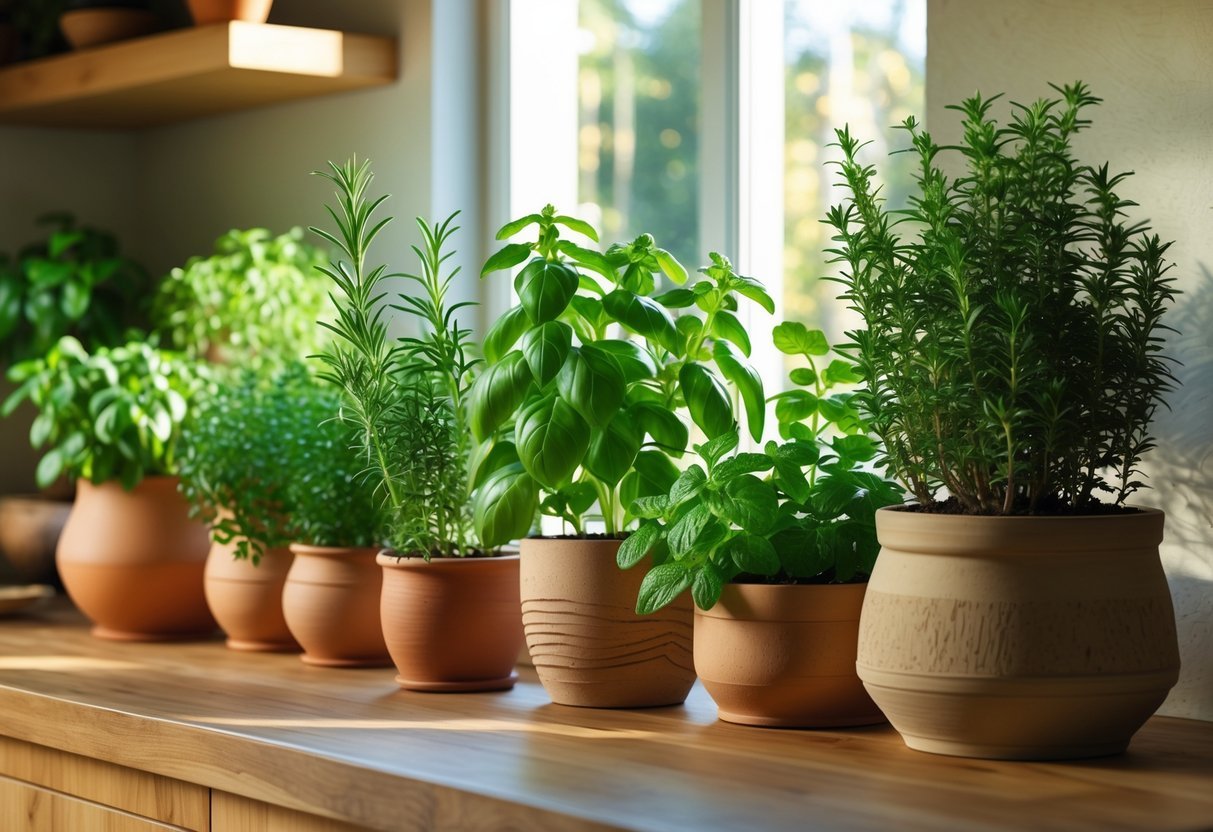
You can enhance your kitchen’s warmth by adding indoor herb garden planters. They bring natural textures and colors that complement earthy interiors.
Choose planters that fit your space and style, like small pots for windowsills or vertical wall-mounted planters for saving counter space. Proper drainage is essential to keep herbs healthy.
Hanging herb planters are practical if you want to keep plants out of reach from pets or children. They also add visual interest without cluttering your kitchen surfaces.
15) Reclaimed wood kitchen island
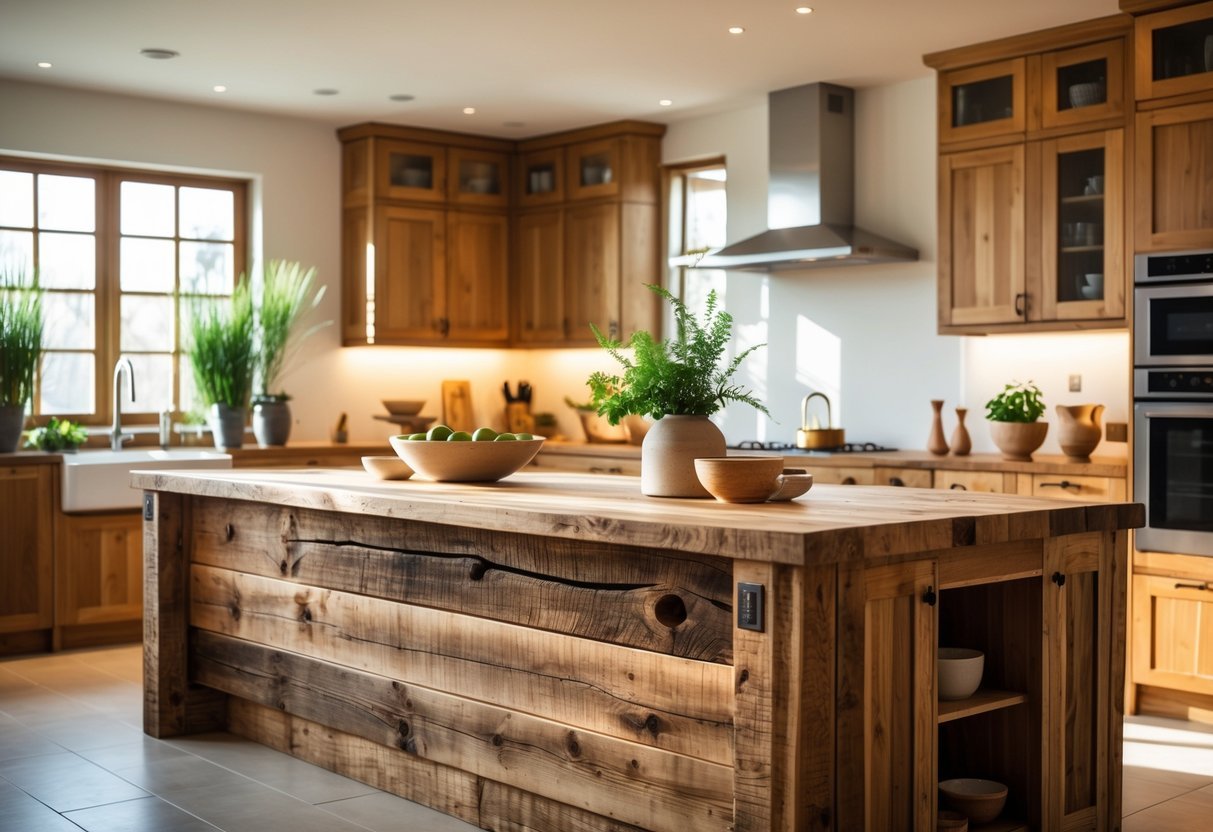
A reclaimed wood kitchen island adds natural warmth and character to your space. It brings a unique, rustic touch while offering durability and sustainability.
You can pair it with modern or farmhouse styles to create a balanced look. The weathered texture enhances the kitchen’s organic feel without overwhelming your design.
Benefits of Earthy Kitchen Design
Choosing an earthy kitchen design brings specific advantages that enhance your cooking space both visually and functionally. It improves your daily environment by fostering calm and offers options for eco-friendly materials that reduce environmental impact.
Connection to Nature
An earthy kitchen design creates a direct link to the outdoors by using natural elements like wood, stone, and clay. This connection helps bring a sense of calm and balance to a busy home environment, which can make meal preparation feel less stressful.
Colors inspired by earth—such as muted greens, warm browns, and soft beiges—simulate natural settings and can improve your mental well-being by promoting relaxation. Surrounding yourself with these tones and textures also encourages mindfulness during daily tasks.
Plants and organic textures add life and tactile richness to your kitchen, making it a space that feels welcoming and grounded. This design approach supports a peaceful atmosphere that enhances your connection to nature even when indoors.
Sustainable Material Choices
Using natural materials like oak cabinetry, maple countertops, or terracotta accents aligns your kitchen design with sustainability. These materials are often renewable, durable, and biodegradable, which lowers your kitchen’s environmental footprint.
You can select responsibly sourced wood or recycled stone to further reduce resource depletion. These choices also tend to age well, minimizing the need for frequent replacements or renovations.
In addition to material choices, earthy designs often emphasize minimalism and longevity over trends. This approach supports sustainable living by encouraging you to invest in quality pieces that last, rather than disposable or synthetic options.
Color Palettes and Material Combinations
Choosing the right colors and materials sets the foundation for a warm and natural kitchen. These choices help create a balanced space that feels inviting without overwhelming your senses.
Harmonizing Earth Tones
Focus on colors like soft olive greens, warm taupes, and muted browns to establish a cohesive earthy palette. You can pair sun-baked terracotta or rich clay shades with pale beige or cream as neutral bases to avoid visual heaviness.
Use accent colors sparingly to maintain harmony. For example, a sage green backsplash or a deep rust-colored island draws attention without dominating. These colors work well because they reflect natural elements like soil, clay, and foliage, connecting your kitchen visually to the outdoors.
Consider layering these tones in different finishes—matte walls, semi-gloss cabinets, and textured tiles—to add depth without adding clutter. This ensures your palette feels grounded and elegant.
Blending Natural Textures
Incorporate materials that complement your color choices and bring tactile interest. Wood grains—like oak or walnut—introduce warmth through cabinetry or flooring. Stone surfaces such as granite or slate add durability while enhancing the natural feel.
You can also use woven textiles or rattan basketry to soften harder materials. These accents provide contrast and keep the overall look inviting.
For countertops, mix materials like polished concrete with wood trim to balance smooth and rough textures. This combination reflects nature’s diversity and keeps your space from feeling too uniform or sterile.