Designing a shared bedroom for kids can be a challenge, especially when space is limited. Creating a room that feels comfortable, functional, and stylish is important for both children and parents.
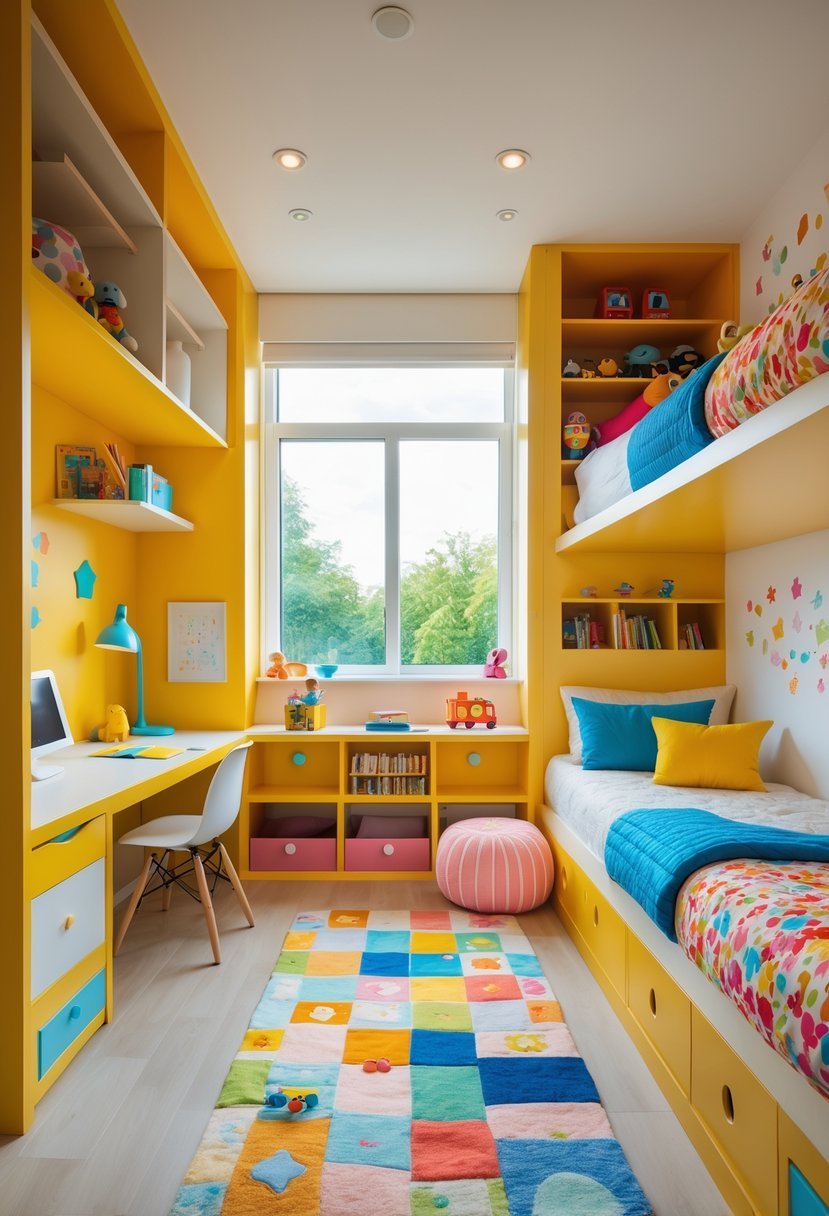
Small shared kids’ bedrooms can be made efficient and cozy by using smart layouts, storage solutions, and thoughtful decor. These ideas help make the most of the available space while keeping the room welcoming for multiple children.
1) Bunk beds with built-in storage drawers
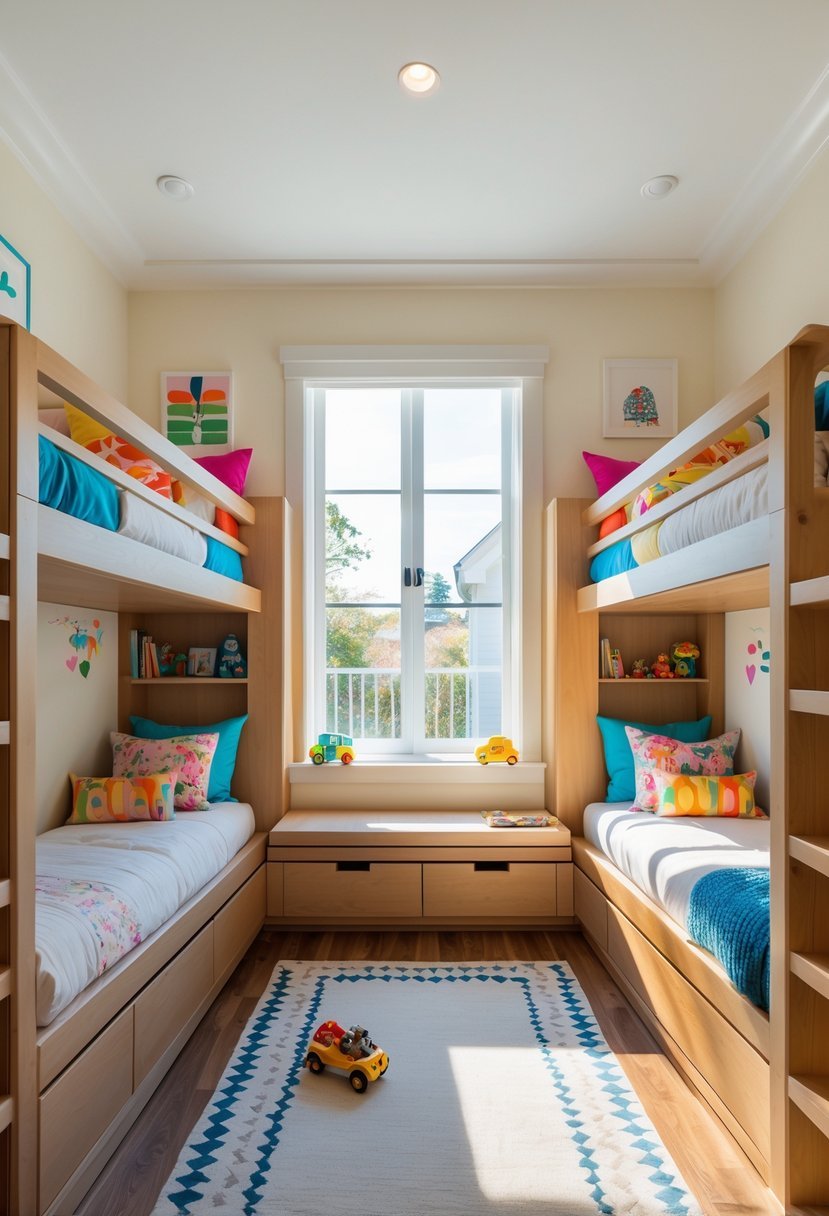
Bunk beds with built-in storage drawers save space and help keep shared bedrooms organized. These beds have drawers under the lower bunk, providing room to store clothes, toys, or bedding.
This design makes use of vertical space, leaving more floor area free for play or other furniture. The storage keeps things tidy without needing extra shelves or dressers.
Many models also include shelves or small compartments along the sides. The simple styles and neutral colors fit well with various room designs.
Built-in storage bunk beds work well for siblings sharing a room. They are practical and help reduce clutter in small spaces.
2) Loft beds to free up floor space
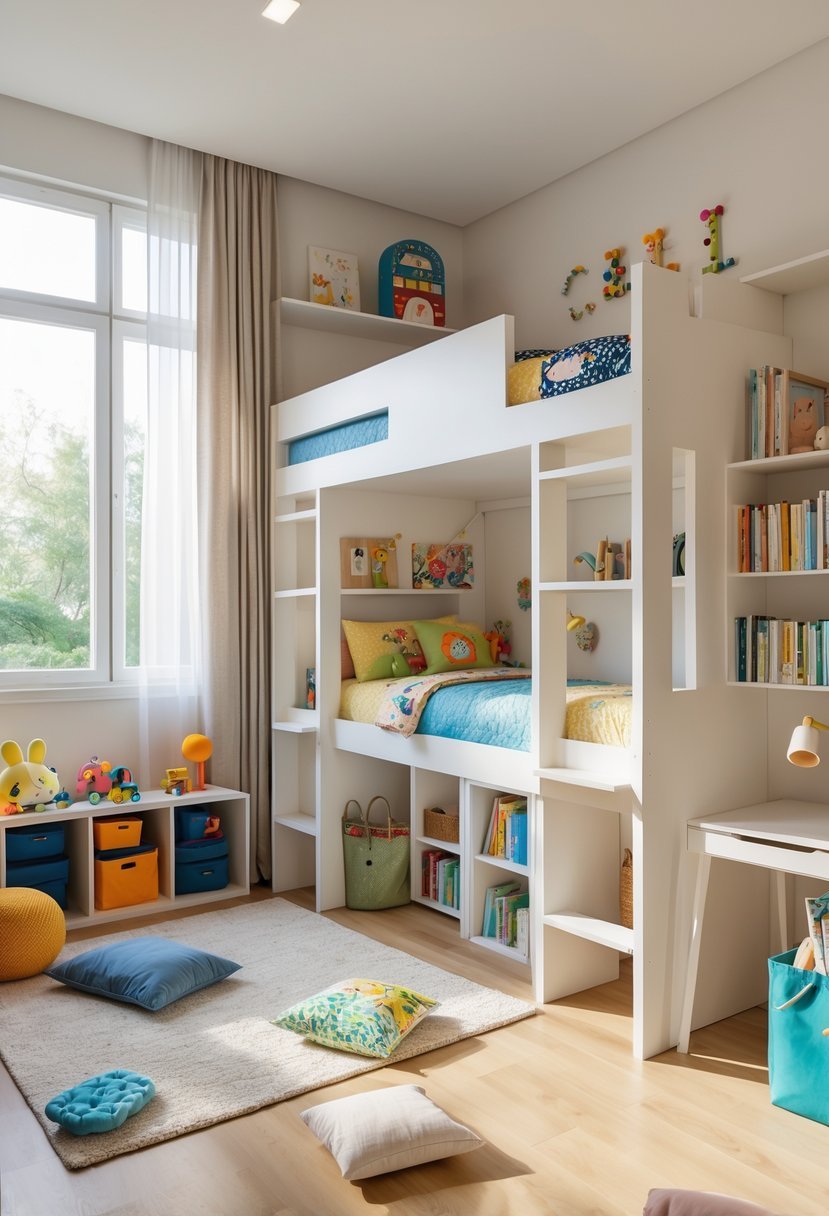
Loft beds raise the sleeping area off the ground, creating extra space below. This open floor space can be used for playing, studying, or storage. It helps small rooms feel less crowded.
Many loft beds come with built-in desks or shelves. These features reduce the need for extra furniture, making the room more organized.
Loft beds work well in shared kids’ rooms. Each child can have a separate sleeping spot while sharing the remaining space for other activities. This design uses vertical space efficiently.
3) Room dividers like curtains or bookshelves
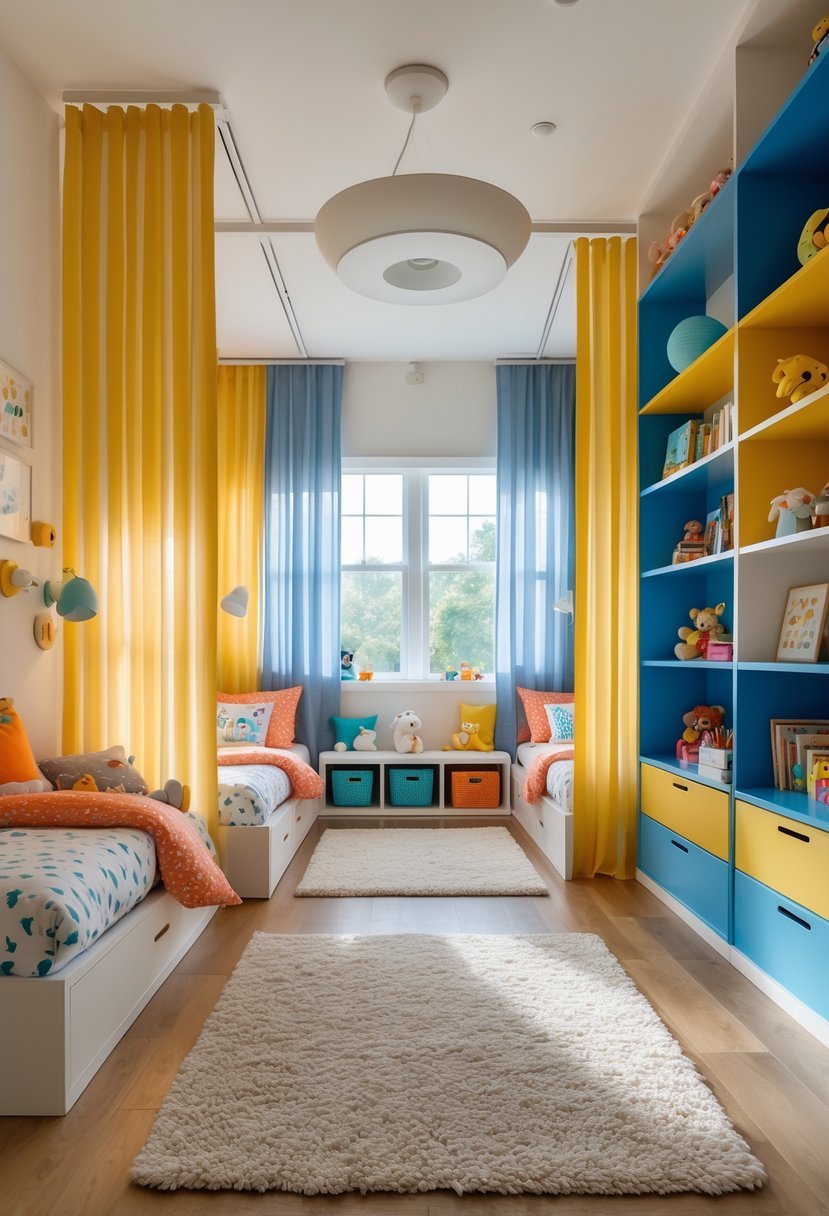
Room dividers help create separate spaces in a small shared bedroom. Curtains offer a flexible option. They can be opened or closed for privacy and are easy to install.
Bookshelves work as a divider while adding storage. They can hold toys, books, or school supplies. This keeps the room tidy and organized.
Both options help children feel like they have their own area. Dividers also reduce distractions and support better focus. They suit different budgets and room layouts well.
4) Under-bed storage bins and boxes
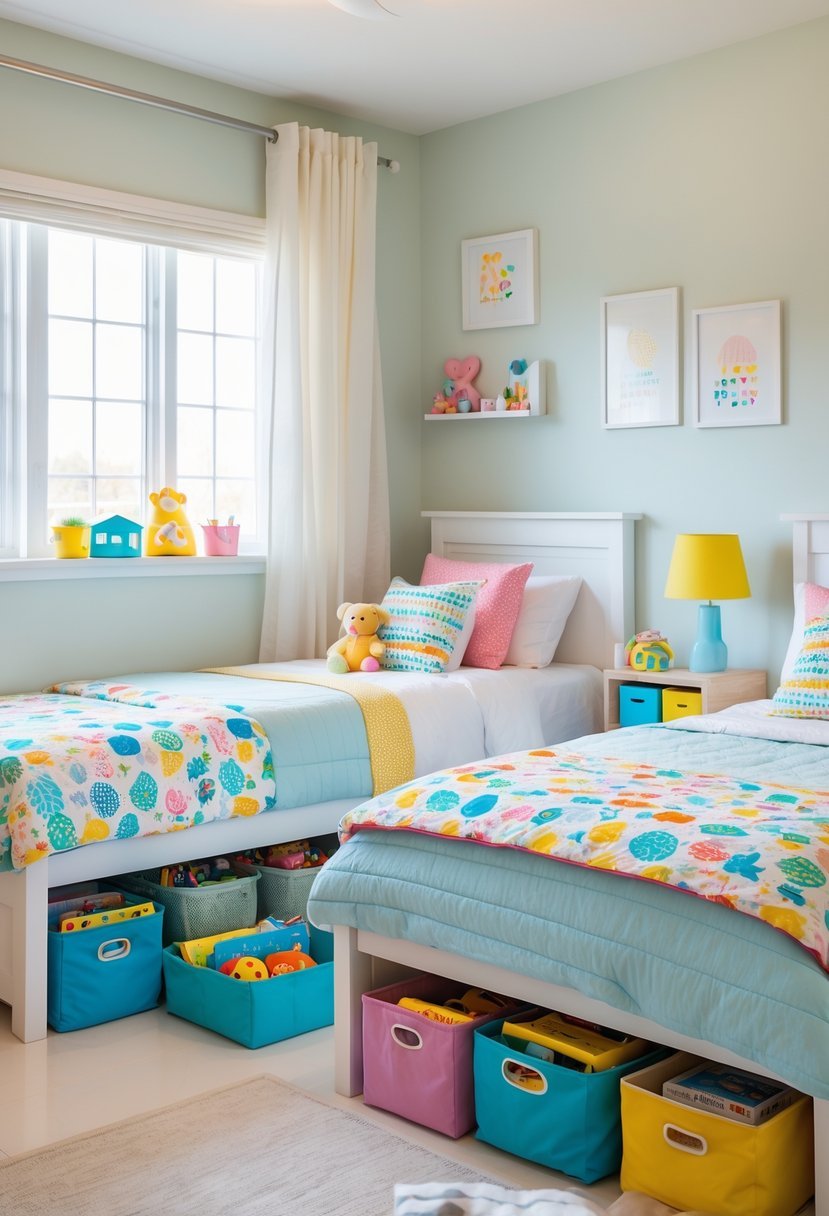
Under-bed storage bins and boxes help use unused space in shared kids’ bedrooms. These containers fit neatly under the bed to hold toys, clothes, or seasonal items.
They make it easier to keep the room tidy and give kids a way to organize their belongings. Bins with wheels add convenience by allowing easy access without heavy lifting.
Using clear or labeled bins helps identify contents quickly. This storage method works well in small rooms where extra furniture is not practical. It keeps floors clear and maximizes available space.
5) Wall-mounted shelving units
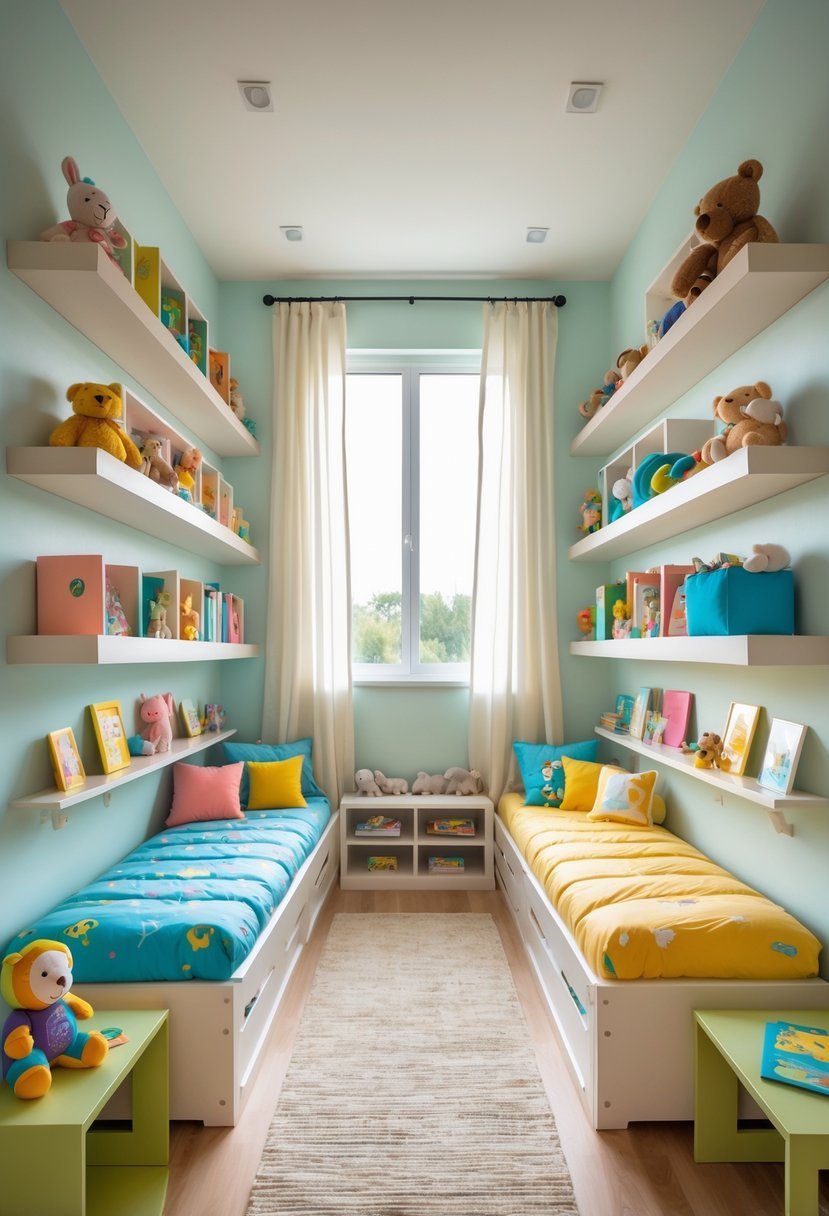
Wall-mounted shelving units help save floor space in small shared bedrooms. They keep books, toys, and decorations organized and easy to reach.
These shelves can be placed at different heights to suit each child’s needs. Using open shelves also adds a sense of openness and prevents the room from feeling crowded.
Shelving units can be simple or decorative, depending on the room’s style. They offer extra storage without taking up valuable room, making the space more functional.
Adding wall shelves encourages kids to keep their belongings tidy and can help divide personal items in a shared space. This makes the bedroom feel more organized and comfortable for everyone.
6) Dual-purpose furniture like desk-bed combos
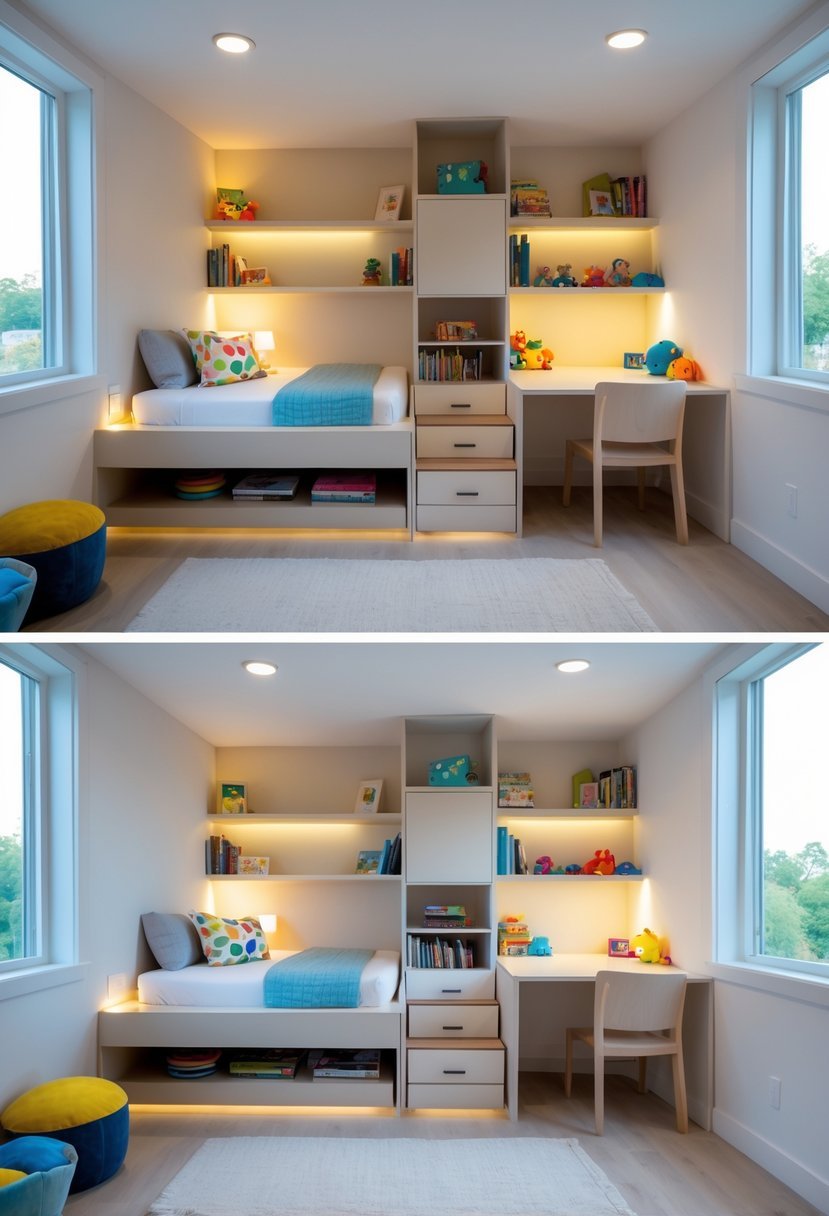
Dual-purpose furniture saves space in small shared kids’ bedrooms. A desk-bed combo combines a sleeping area with a study space, making the room more functional. This type of furniture helps keep the room organized and reduces clutter.
The desk can fold up or slide away when not in use. This allows more floor space for play or other activities. The bed often has built-in storage, which adds extra space for toys or clothes.
Choosing pieces with simple designs helps the room feel less crowded. Dual-purpose furniture like this adapts well as children grow and their needs change. It makes the most of limited space without sacrificing comfort or utility.
7) Bright, playful color palettes
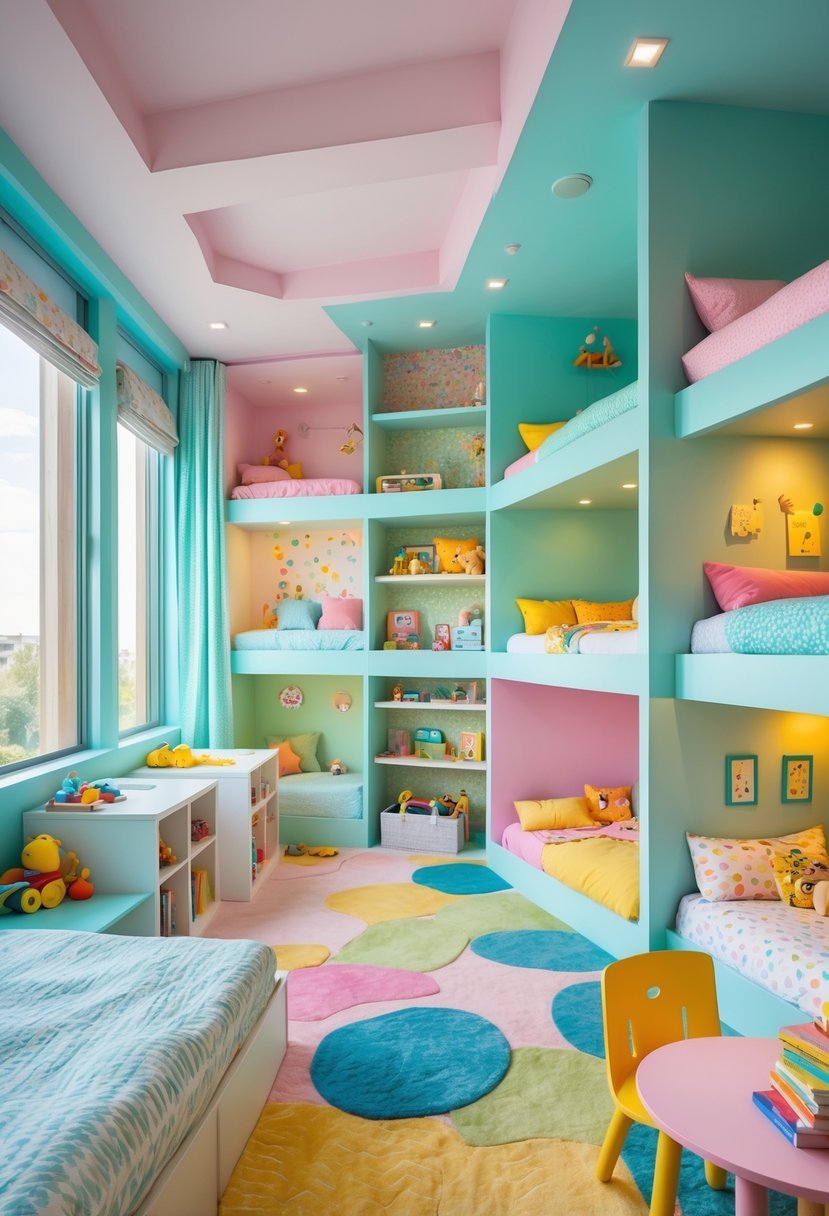
Using bright colors in a small shared kids’ bedroom helps make the space feel lively and fun. Colors like yellow, pink, and blue can create energy and stimulate creativity.
Mixing bold shades with softer tones balances excitement with calm. This helps children feel both playful and relaxed.
Patterns in bedding or curtains add interest without taking up space. Personalizing the colors can make each child feel included in the room’s design.
Choosing the right palette supports a cheerful environment while still fitting the room’s size. Bright, playful colors work well to keep a small space inviting and joyful.
8) Personalized wall art for each child
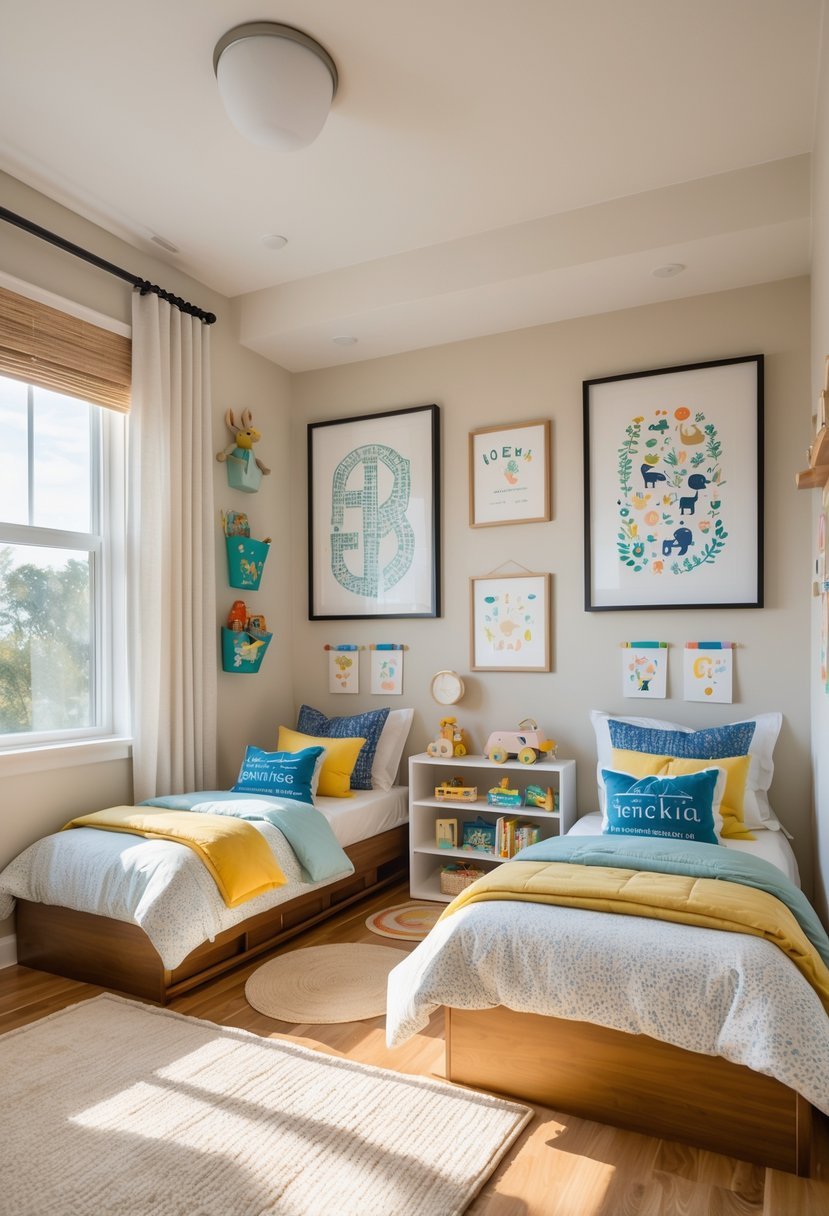
Giving each child their own space on the wall helps create a sense of ownership. This space can showcase artwork, photos, or posters that reflect their interests.
Using removable decals, chalkboard paint, or framed art allows for easy changes over time. It keeps the space fresh and personal.
Personalized name signs or custom pieces also add a unique touch. These art sections help children feel seen and respected within the shared room.
This clear boundary on the wall supports each child’s creativity while keeping the shared space organized and balanced.
9) Clever use of vertical space
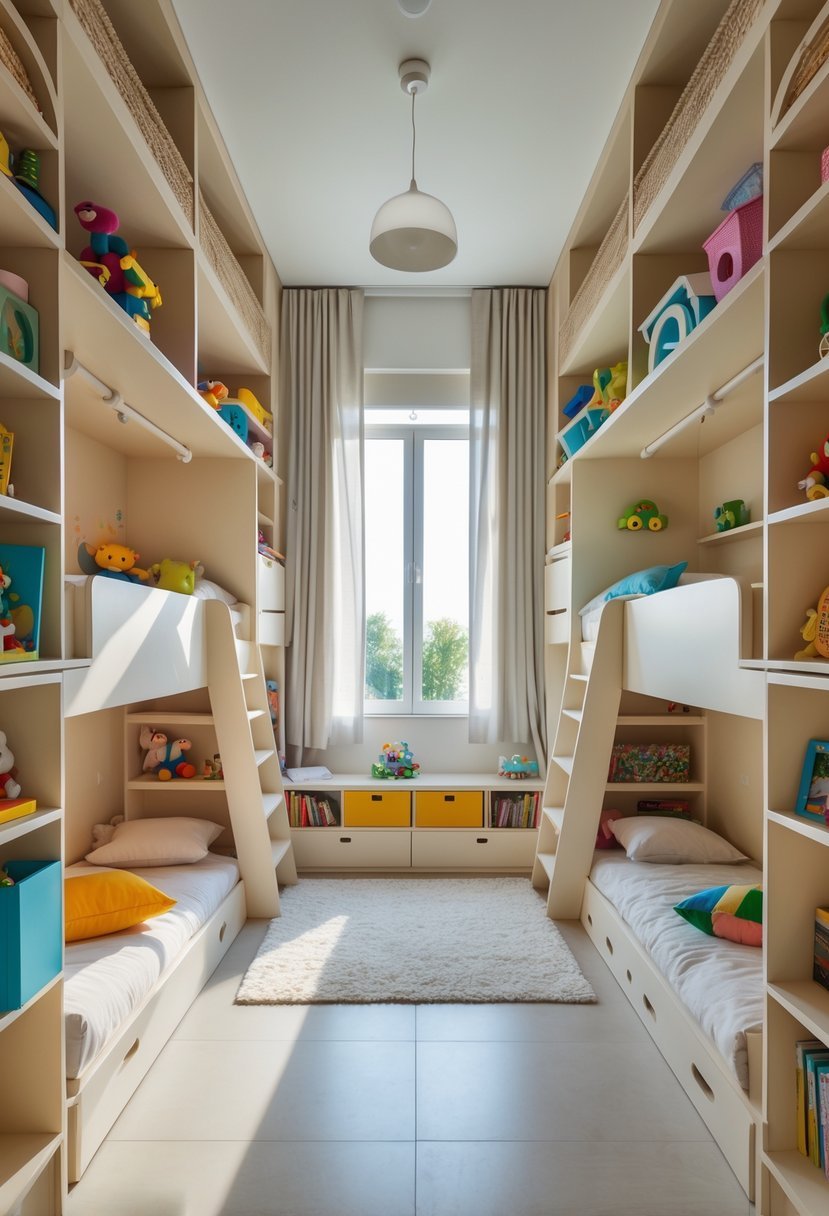
Using vertical space is a smart way to make a small shared bedroom feel larger. Loft beds or bunk beds raise the sleeping area, freeing up floor space for storage or play.
Shelves placed high on walls keep books and toys accessible without cluttering the room. This also helps keep the floor clear and safe.
Adding hooks or wall-mounted organizers can store backpacks, hats, or jackets. Vertical storage creates more room for each child and keeps the space tidy.
10) Compact study nooks integrated into the room
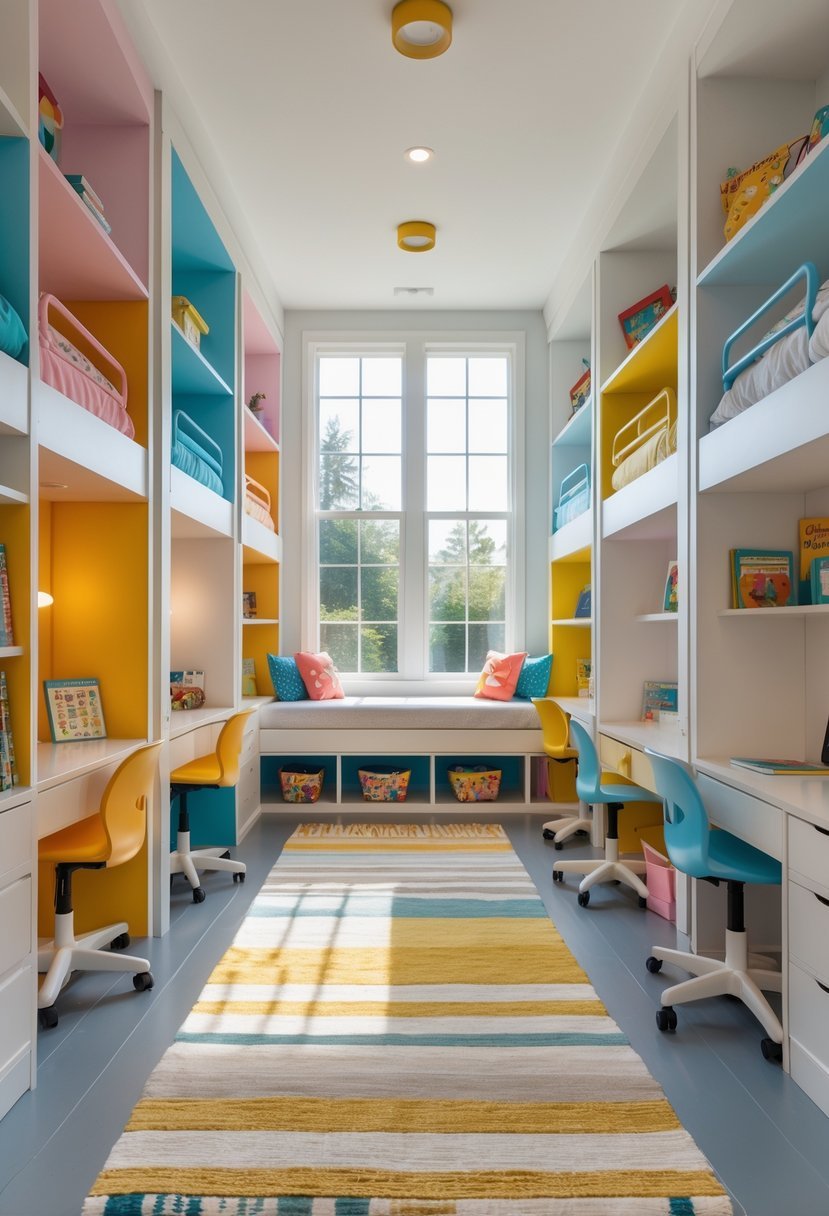
A compact study nook can fit well in a small shared kids’ bedroom. It provides a quiet space for homework and reading without taking up much room.
The nook can include a small desk and an ergonomic chair. Shelves or cubbies nearby help keep books and supplies organized.
This setup encourages focus and learning. It also allows siblings to study together or separately in the same space.
Designing the nook to match the bedroom’s style helps keep the room cohesive. Using vertical space maximizes storage without cluttering the floor.
Overall, a study nook adds function and comfort, making the shared bedroom more useful and inviting for children.
11) Use of soft lighting and fairy lights
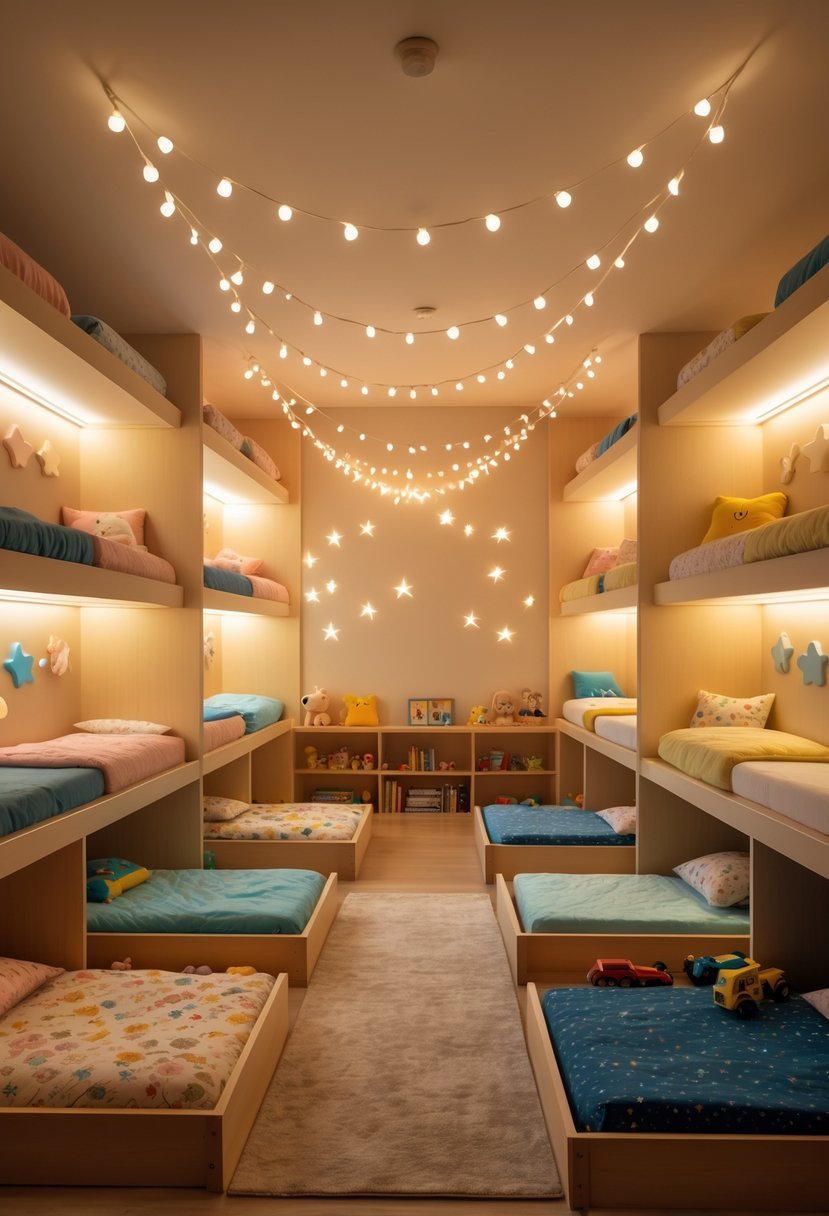
Soft lighting helps create a calm and cozy atmosphere in shared kids’ bedrooms. It can make the space feel warm without being too bright or harsh.
Fairy lights are a popular choice for this. They can be draped around bedposts, walls, or mirrors to add a gentle glow.
These lights also work well as night lights, providing enough light for comfort while helping kids relax. Using soft, warm-colored bulbs keeps the room inviting.
Adding fairy lights around a canopy or inside a glass vase can also add a decorative touch. This simple lighting style suits small rooms and adds charm without taking up space.
12) Low-profile, multi-functional seating
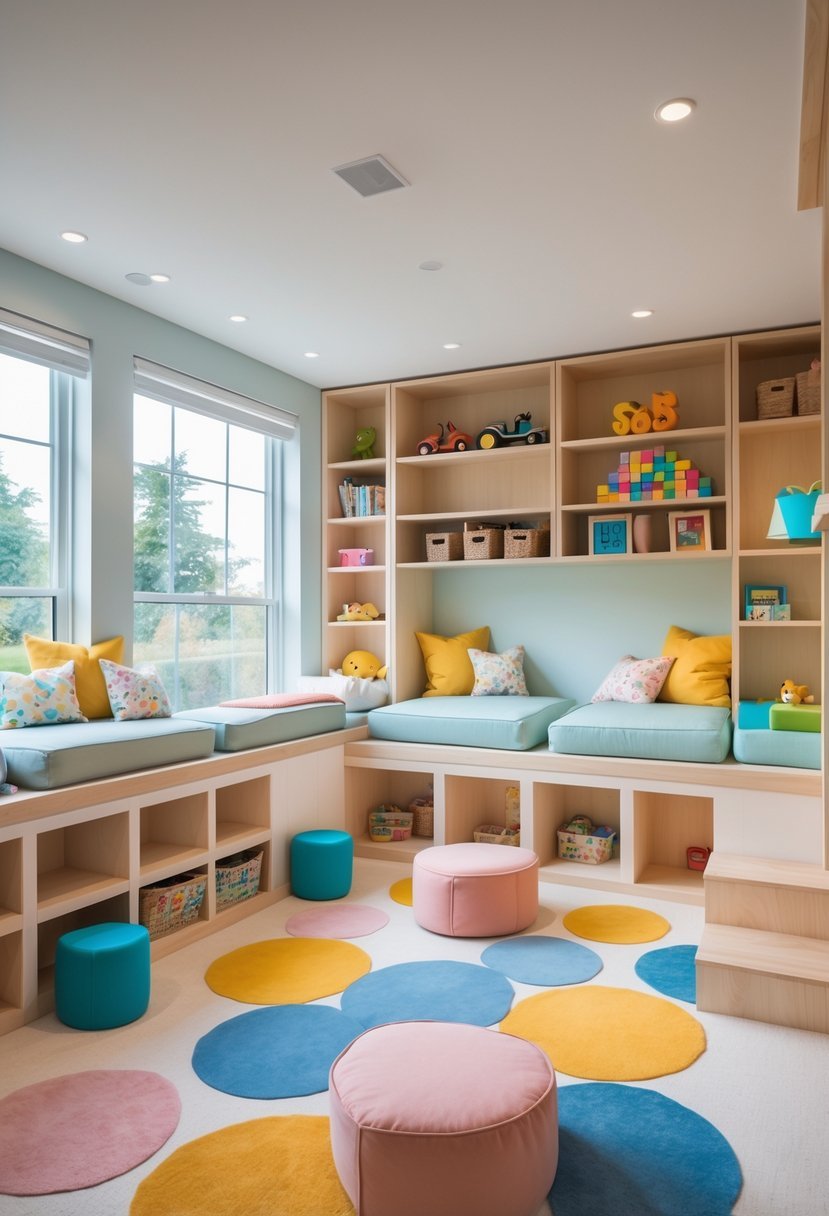
Low-profile seating takes up less space while still offering comfort for kids. It fits well in small rooms where every inch counts. This type of seating keeps the room open and prevents it from feeling crowded.
Multi-functional seating can serve different purposes. For example, a bench with storage underneath provides a place to sit and keeps toys or books organized. Folding stools or poufs can be moved around easily or tucked away when not in use.
Choosing seating that works for play, study, and rest helps make the shared bedroom more practical. It supports flexibility and keeps the space tidy without adding extra furniture.
13) Decorative hooks and pegboards for organization
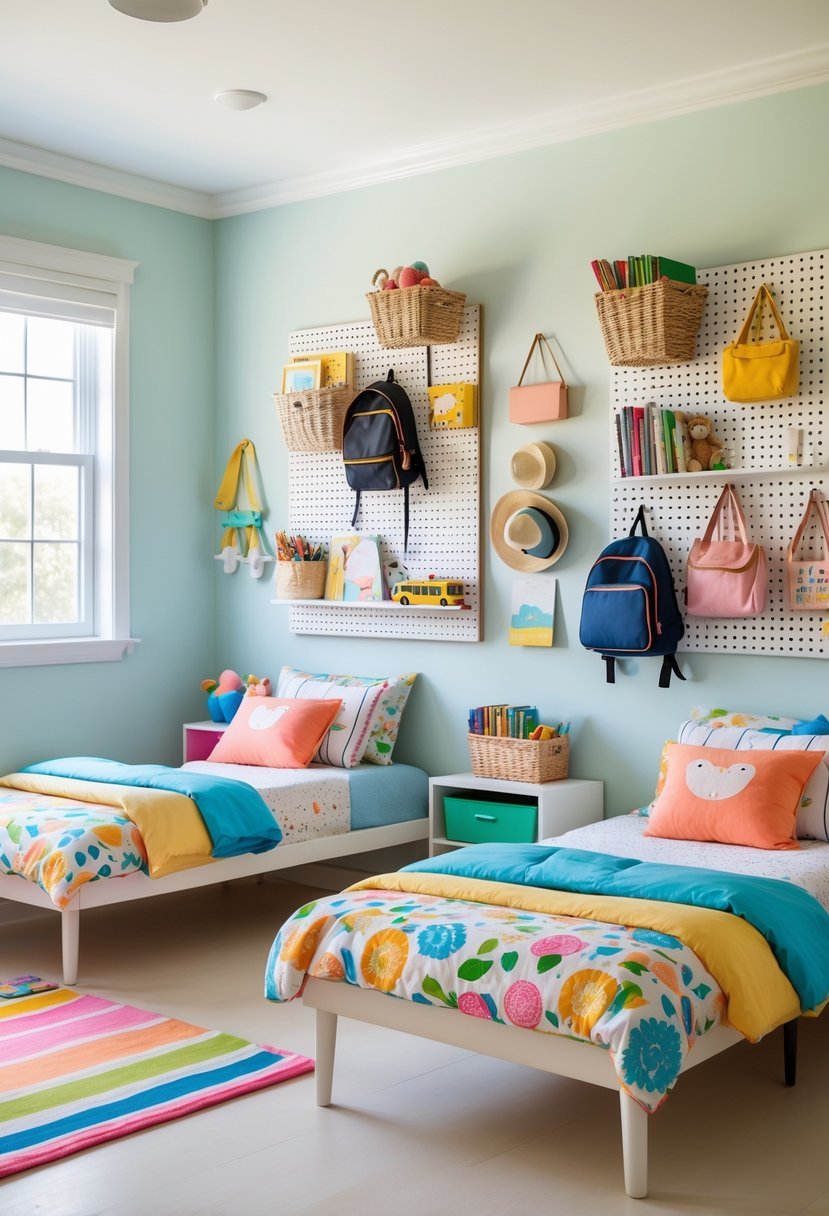
Pegboards offer a flexible way to keep a shared room tidy. They can hold hooks, shelves, and baskets, creating storage space for toys, school supplies, and clothes. This keeps items off the floor and easy to reach.
Decorative hooks add personality while serving a purpose. Kids can hang backpacks, hats, or jackets, helping them stay organized daily. When placed at different heights, hooks work well for children of various ages.
Using pegboards and hooks together maximizes wall space. It allows the room to stay open and uncluttered, which is important in small shared bedrooms. Plus, the look can be customized to fit the room’s style without overwhelming it.
14) Zoned areas for play, study, and sleep
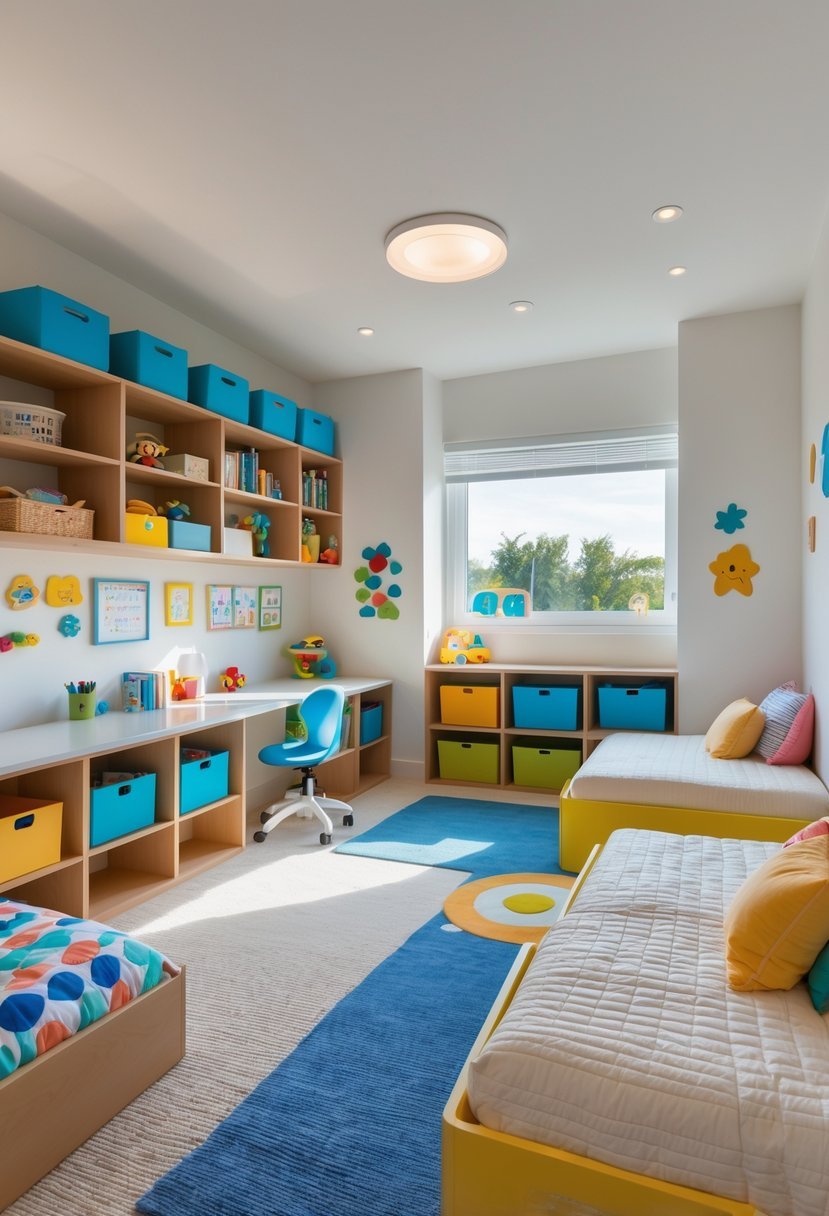
Zoning a small shared bedroom helps children focus and feel comfortable. Separate spaces for sleeping, studying, and playing reduce distractions and keep the room organized.
Using furniture like loft beds with desks underneath creates clear work zones without taking extra floor space. Floating shelves and wall organizers can mark study spots while keeping supplies handy.
Designing a dedicated play area lets kids enjoy downtime without mixing toys with schoolwork. This division supports routines and helps siblings respect each other’s activities within a shared space.
15) Unisex decor themes for shared spaces
Unisex decor works well when siblings share a room but have different tastes. Neutral colors like gray, white, and soft greens create a calm and balanced environment. Patterns such as stripes, polka dots, or geometric shapes add interest without leaning toward one gender.
Using themes like nature, space, or abstract art helps make the room fun for both kids. Furniture should be simple and functional to fit various needs. Personal touches like interchangeable wall art or bedding allow each child to feel included.
This style encourages flexibility. It grows with the children and can be easily updated as their preferences change. It is practical, stylish, and effective for shared kids’ bedrooms.
Core Principles of Small Shared Kids Bedroom Design
Designing a shared bedroom for kids in a small space requires smart choices that make the room comfortable and useful. It often involves careful furniture selection and smart use of vertical height to create more room.
Balancing Practicality and Comfort
Practicality means fitting necessary items without crowding the room. Beds should suit the space, such as compact or bunk beds, to leave floor area open. Storage options must be easy to access for kids and keep toys and clothes organized.
Comfort is about making the room a cozy place to sleep and play. Soft lighting, breathable bedding, and personal touches help children feel relaxed. It’s important to provide enough space for each child to have a small personal area, even in a tight room.
A layout that allows free movement and easy cleaning is also practical. Avoid overcrowding with too much furniture, which can reduce comfort and cause stress.
Maximizing Vertical Space
Using vertical space is key in a small shared bedroom. Beds can have built-in shelves or desks underneath to save floor space. Wall-mounted shelves and hooks keep items off the floor and within reach.
Tall storage units take advantage of height, providing more room for clothes, books, and toys without using much floor space. A pegboard or hanging organizers improve organization without clutter.
Safety is a consideration when using vertical space. Sturdy ladders and secure shelves ensure kids can use these features safely. Proper lighting near vertical storage also makes it easier to find things.
Tips for Maintaining Organization
Keeping a shared kids’ bedroom tidy requires clear storage choices and simple daily routines. Both help children know where things belong and make cleanup faster. Personalizing storage and building habits can prevent clutter and confusion in a small space.
Personalized Storage Solutions
Each child should have their own designated storage areas. Using color-coded bins or labeled boxes helps kids find and sort their belongings without mixing items. For example, one child’s toys might go in blue bins, while another uses red ones.
Vertical storage is key in small rooms. Wall shelves, hooks, or hanging organizers give more room without taking up floor space. Adding shelves near beds or desks lets each child keep personal things close at hand.
Furniture with built-in storage, like beds with drawers or benches with baskets below, adds extra space. These pieces keep items out of sight but easy to reach. Personalized storage creates order and reduces arguments about shared space.
Daily Tidying Habits
Simple daily routines make big differences in shared bedrooms. Setting a fixed time, like 10 minutes before dinner, for all kids to put things away creates a habit. Using a checklist can guide children on what to tidy, such as books, toys, and clothes.
Encouraging kids to return items immediately after use prevents messes from piling up. For example, if a child finishes coloring, they should put crayons back in their bin before getting new toys out.
Parents can also rotate responsibilities, so each child learns to care for the space fairly. Regularly reviewing and decluttering with kids helps keep storage efficient and the room comfortable.
Frequently Asked Questions
This section covers practical tips for arranging a small shared bedroom, setting up personal space, choosing colors, picking furniture, and finding smart storage. These details help make the room comfortable and organized while addressing each child’s needs.
How do I organize a small shared bedroom for kids effectively?
Organize by using vertical space like wall shelves and loft beds. Keep the floor clear with under-bed storage bins. Group similar items together and label boxes for easy access.
Create clear zones for sleeping, playing, and studying to reduce clutter. Use multifunctional furniture to save space.
What are some creative ways to define personal space in a shared bedroom for siblings?
Use room dividers such as curtains or open bookshelves to separate areas visually.
Assign each child their own storage bins or drawers. Personalized bedding can also help define individual space.
Consider different themed areas or small rugs to mark personal zones.
Can you suggest some color schemes that work well in a boy and girl shared bedroom?
Neutral tones like soft gray, cream, or beige create a calm base. Adding pops of color like teal, coral, or mustard can brighten the room.
Pastel shades or primary colors work well if energy and vibrancy are desired. Avoid overly gender-specific colors to keep it flexible.
What furniture pieces are essential for maximizing space in a small shared kids’ bedroom?
Bunk beds with built-in storage drawers save floor space. Loft beds free up room underneath for desks or play areas.
Wall-mounted shelving units hold books and toys without taking floor space. Multi-use furniture like storage ottomans is also a smart choice.
How can I create a gender-neutral design in a small shared bedroom for kids?
Choose colors like green, yellow, or gray that are widely accepted as neutral. Focus on simple patterns and natural materials.
Select furniture and decor that suits both kids without being overly themed or gendered. Let the children add personal touches with interchangeable items.
What are some smart storage solutions for a small shared bedroom occupied by children?
Use under-bed storage bins to keep toys and clothes out of sight. Install wall-mounted shelves for books and daily essentials.
Bunk beds with drawers and built-in shelves provide extra storage while saving floor space. Use labeled boxes or baskets to keep belongings organized.