Small apartments often come with the challenge of limited space, especially in the living room where comfort and style are both important. People living in small homes want their living rooms to feel inviting without feeling cramped. This makes finding the right design ideas essential to maximize the available space.
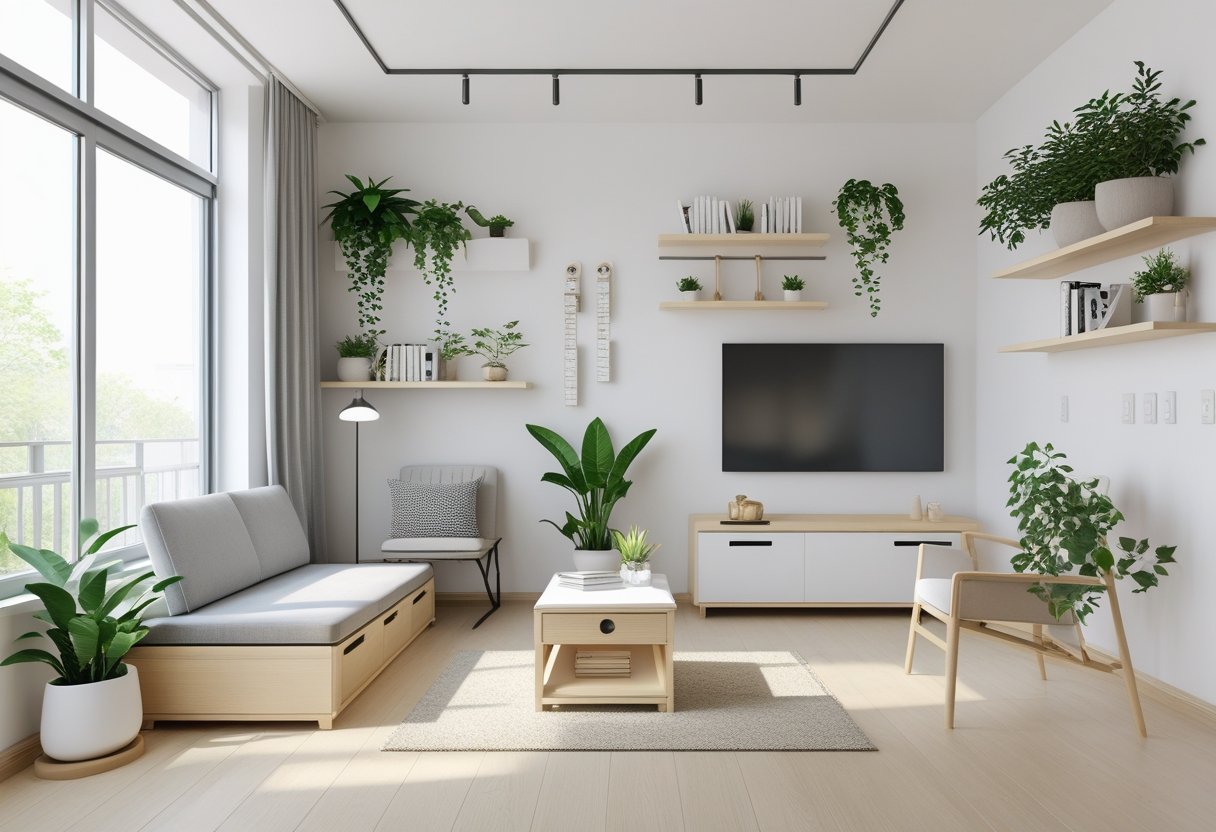
The key is to use smart design choices that make the most of every inch, helping the room feel larger and more functional without sacrificing style. By applying clever layouts and space-saving solutions, small living rooms in apartments can become cozy, practical, and visually appealing.
1) Use multifunctional furniture like storage ottomans to save space
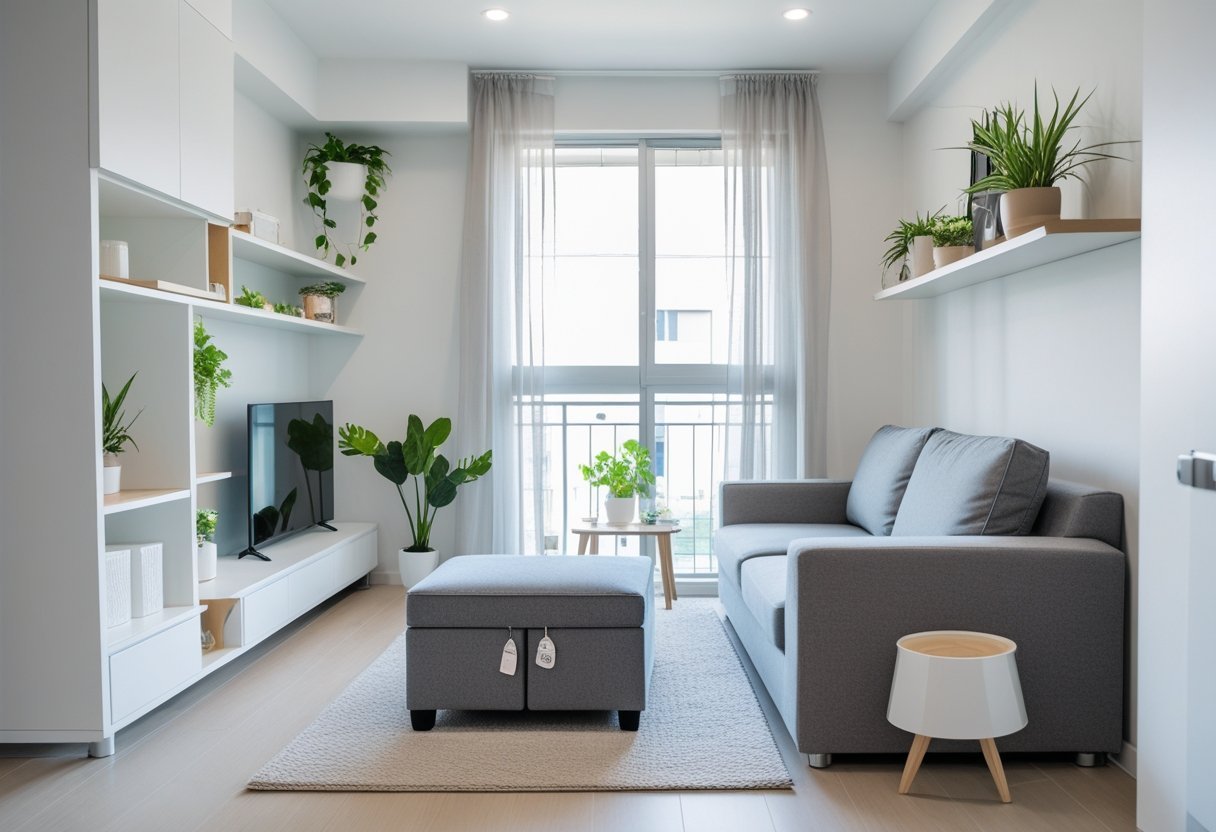
Multifunctional furniture helps make the most of small living rooms. Storage ottomans are a simple way to add extra storage without taking up much room.
They can hold blankets, books, or other items while also serving as seats or footrests. This type of furniture reduces clutter and keeps the space organized. It allows a small apartment to feel more open and usable.
2) Opt for light, neutral wall colors to enhance brightness
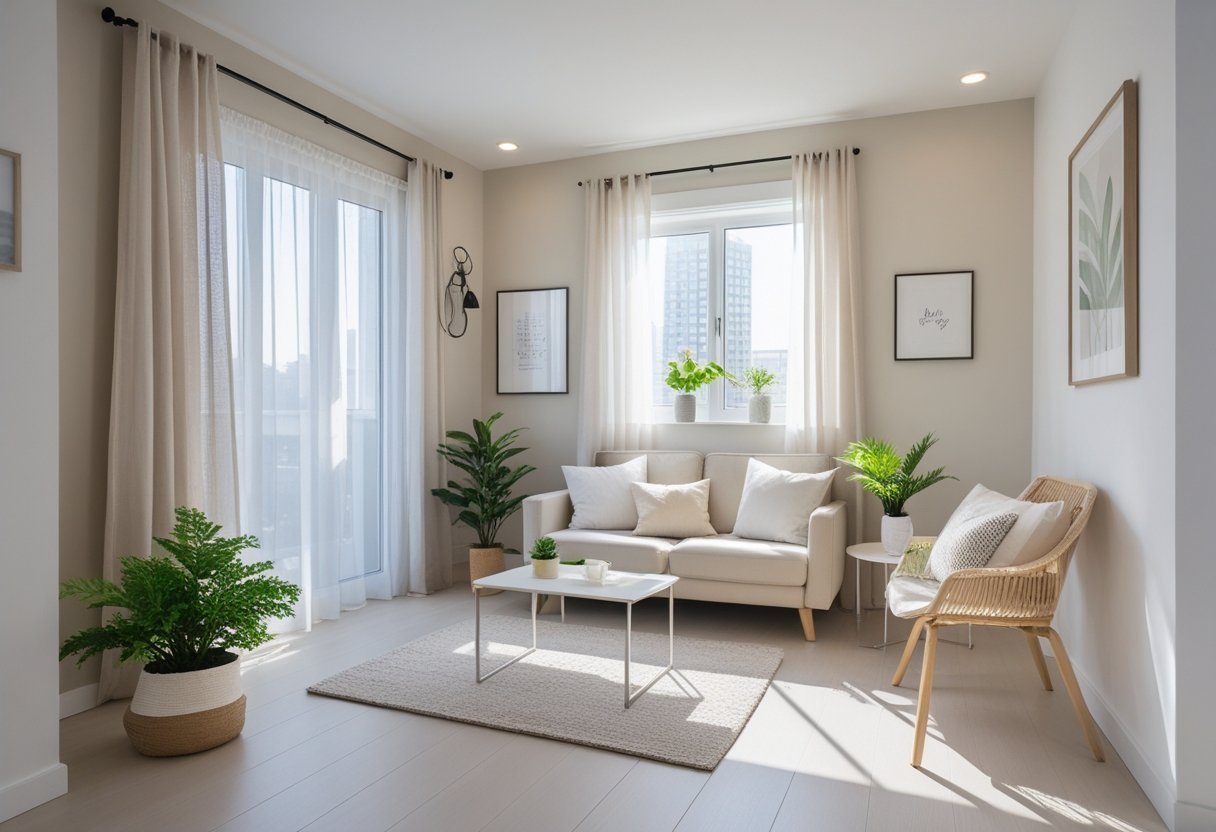
Light, neutral wall colors help make small rooms feel brighter and more open. Shades like white, cream, and soft gray reflect natural light well. This reflection creates an illusion of extra space.
Neutral colors also offer versatility. They serve as a simple backdrop that works with many styles and colors. This allows easy changes in decor without repainting.
Choosing the right light hue can improve the room’s atmosphere. It creates a calm and inviting space while maximizing the feeling of airiness.
3) Install floating shelves for extra storage without floor clutter
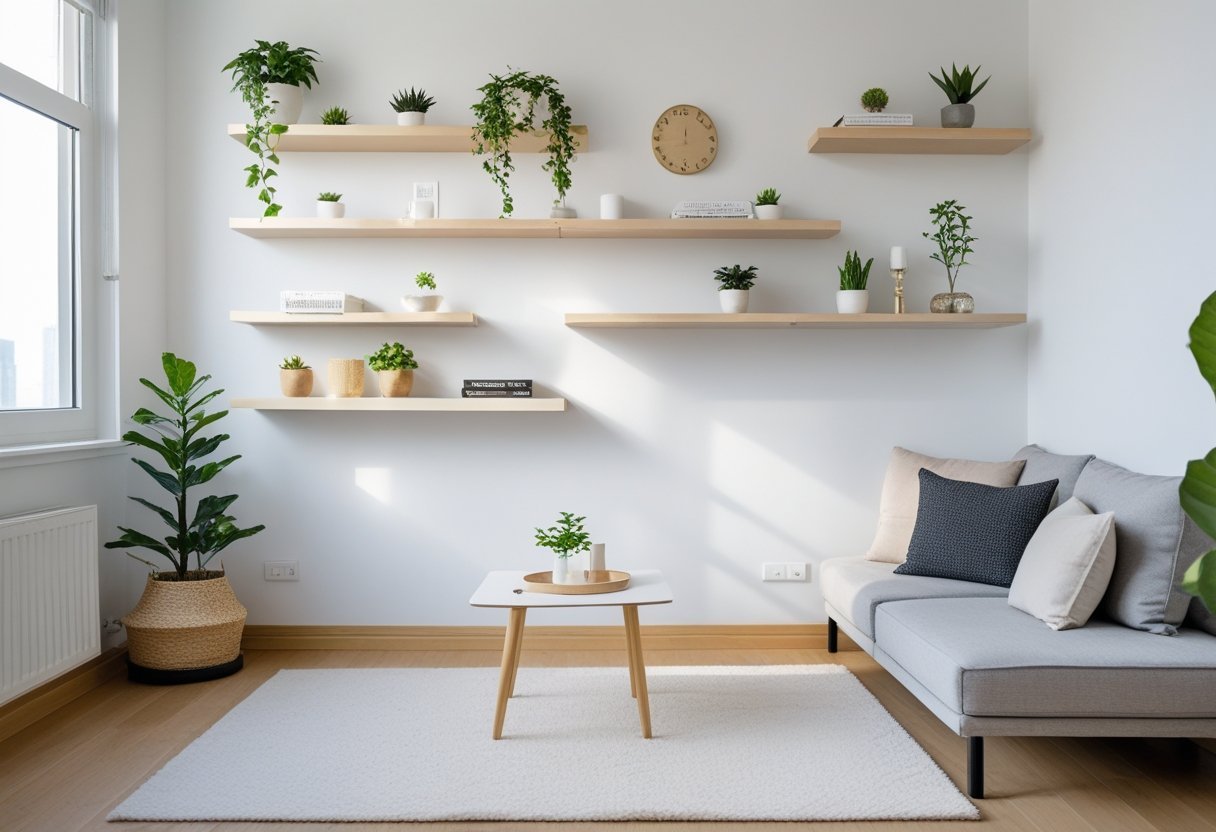
Floating shelves provide extra storage without taking up floor space. They attach directly to the wall and have no visible brackets. This creates a clean, modern look.
They work well for small living rooms because they keep items off the floor. People can use them to store books, plants, or decorative objects. Installation is simple with basic tools like a drill and level.
4) Choose a compact sofa with slim arms to maximize seating area
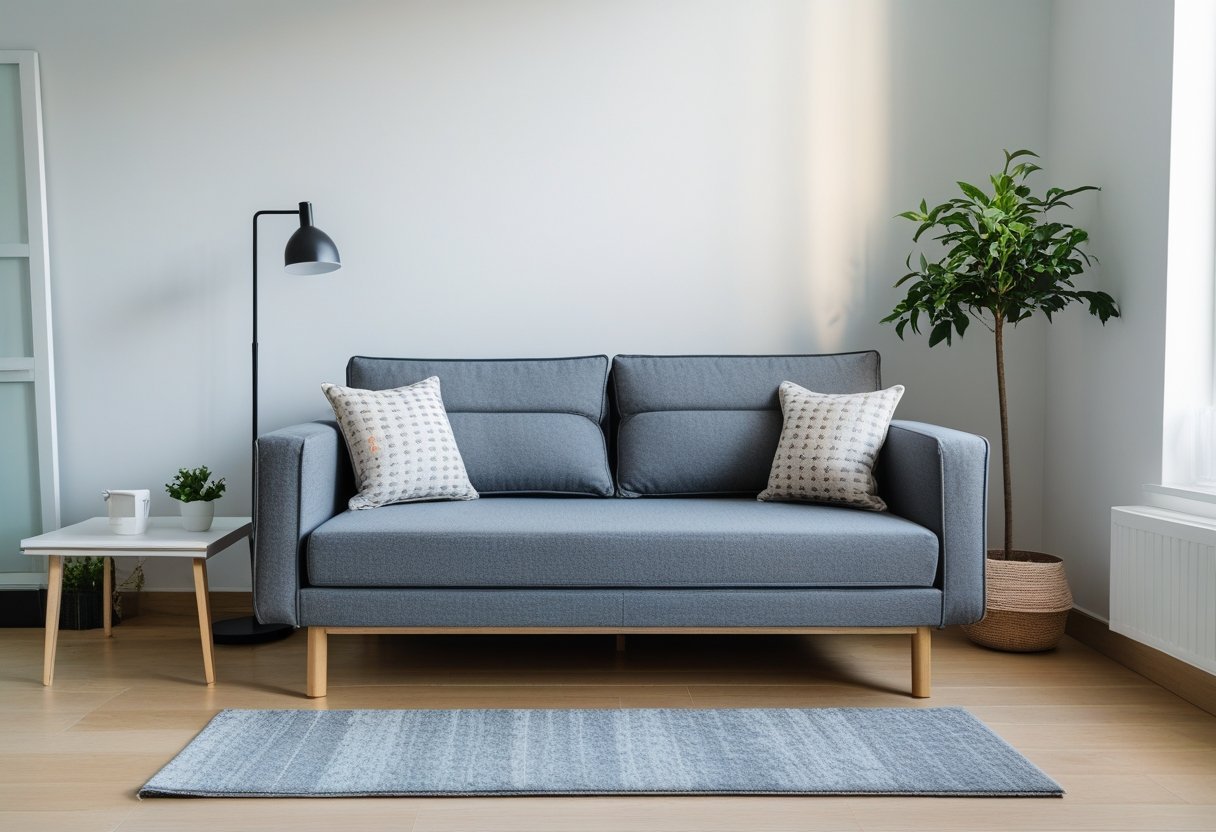
A compact sofa with slim arms helps save space in a small living room. It allows more seating without crowding the room.
Sofas with narrow arms create a cleaner, less bulky look. This makes the room feel more open.
Choosing lightweight designs or those with raised legs also improves the sense of space by showing more floor area. This approach fits well in apartments with limited room.
5) Incorporate mirrors to create an illusion of a larger space
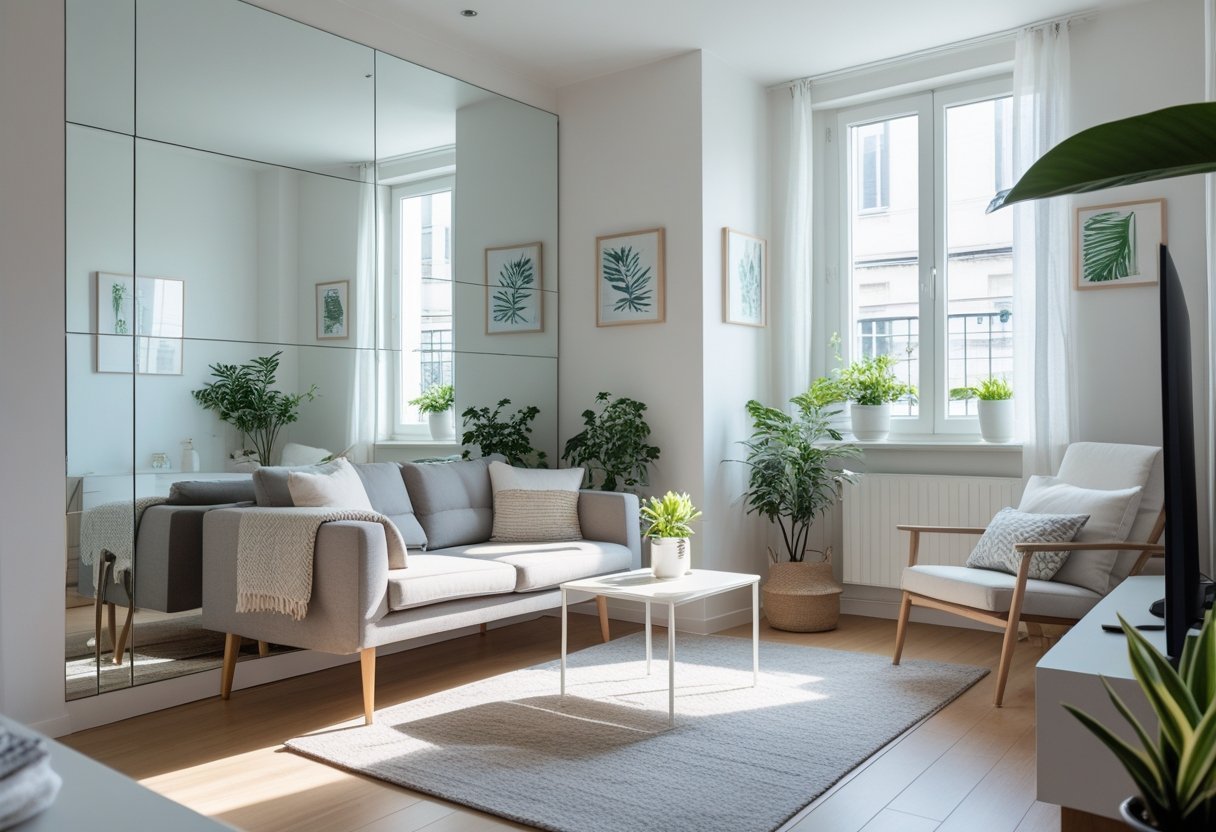
Mirrors reflect light and open up the room by adding depth. Placing a large mirror opposite a window helps brighten the space naturally.
Choosing a mirror with a simple, thin frame works best. It keeps the look clean and avoids clutter.
Mirrors also extend the visual field, making walls seem farther apart. This trick suits small living rooms in apartments well.
6) Use area rugs to define zones within the living room
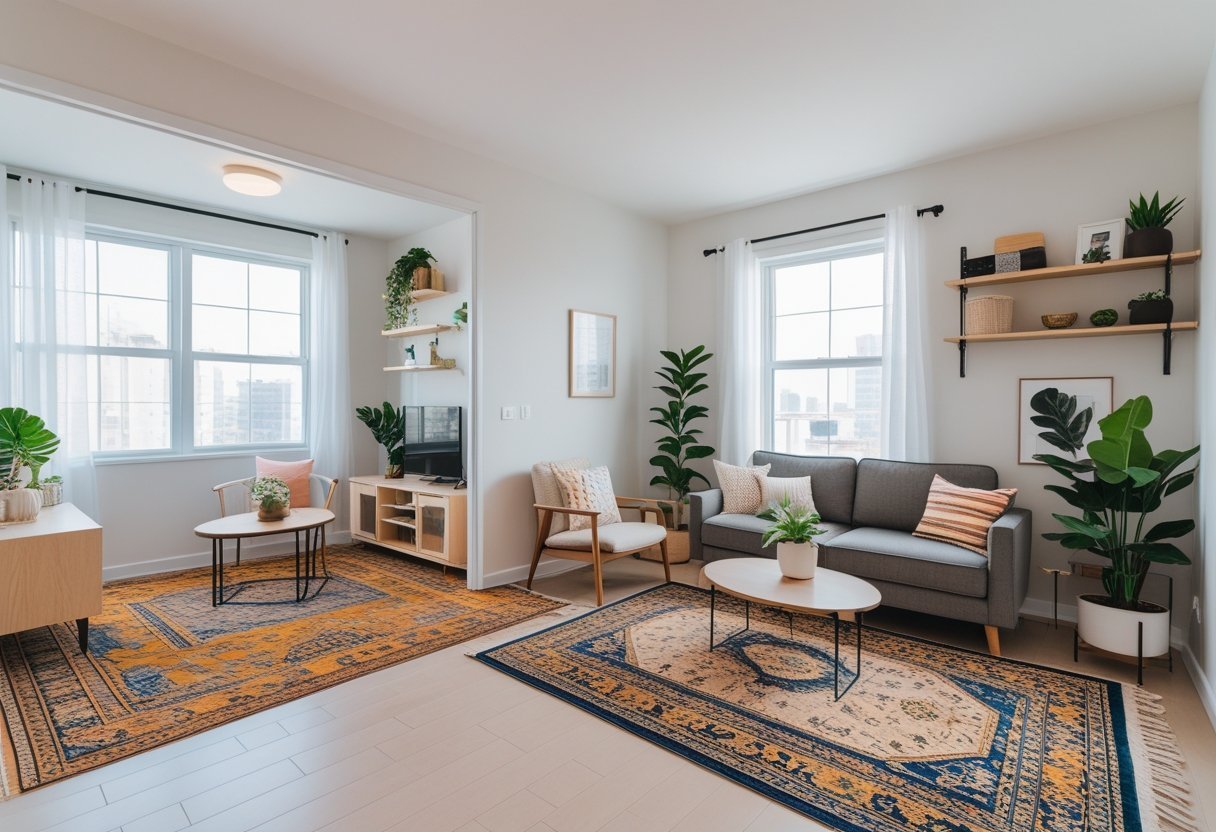
Area rugs help separate different parts of a small living room. They create clear boundaries between a seating area and other zones like dining or workspace.
Rugs anchor furniture, making each zone feel purposeful and organized. Choosing the right size ensures all furniture fits comfortably on the rug.
This simple tool adds warmth and structure without physical barriers. It helps make a small apartment feel more spacious and functional.
7) Select furniture with exposed legs for a more open feel
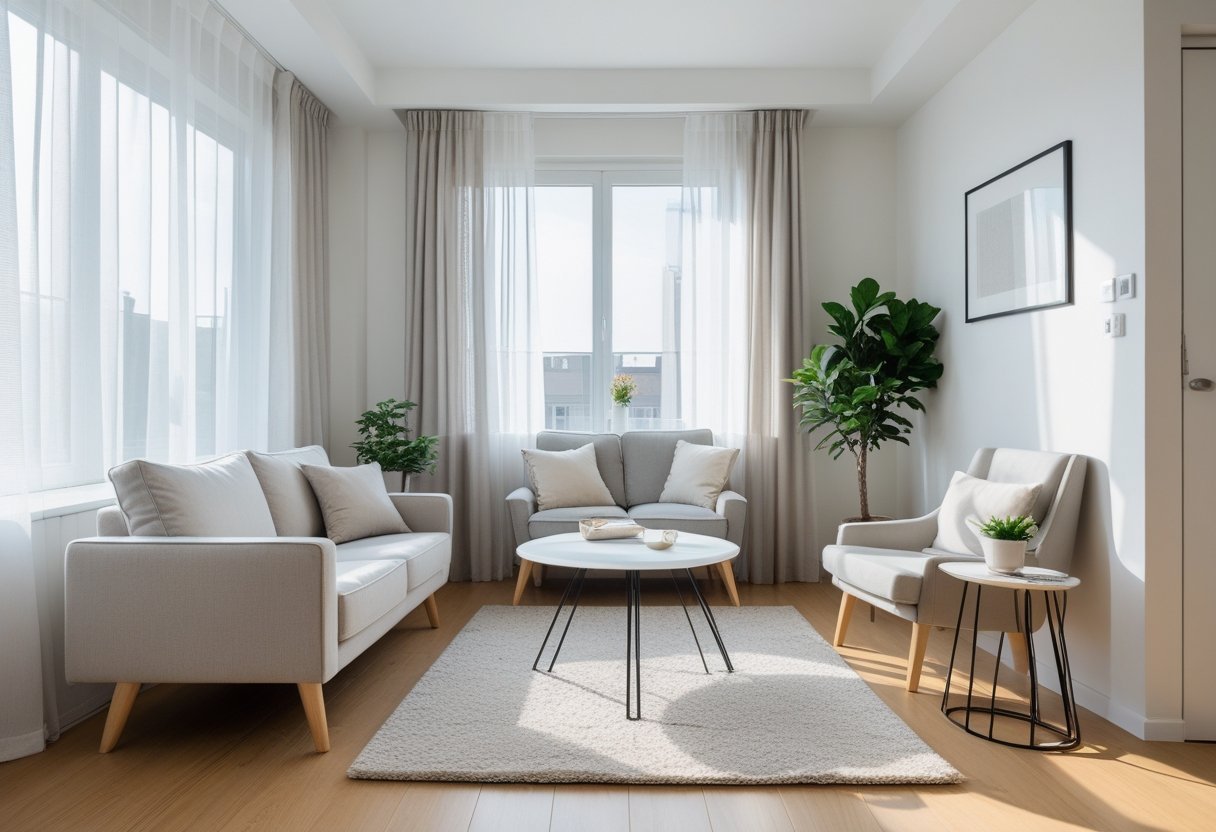
Choosing furniture with exposed legs helps make a small living room look less crowded. This style allows light and air to flow underneath, creating a sense of openness.
Sofas, chairs, and tables with slim legs take up less visual space. They make the room feel lighter and more spacious without sacrificing function or comfort.
8) Utilize vertical space with tall bookcases or cabinets
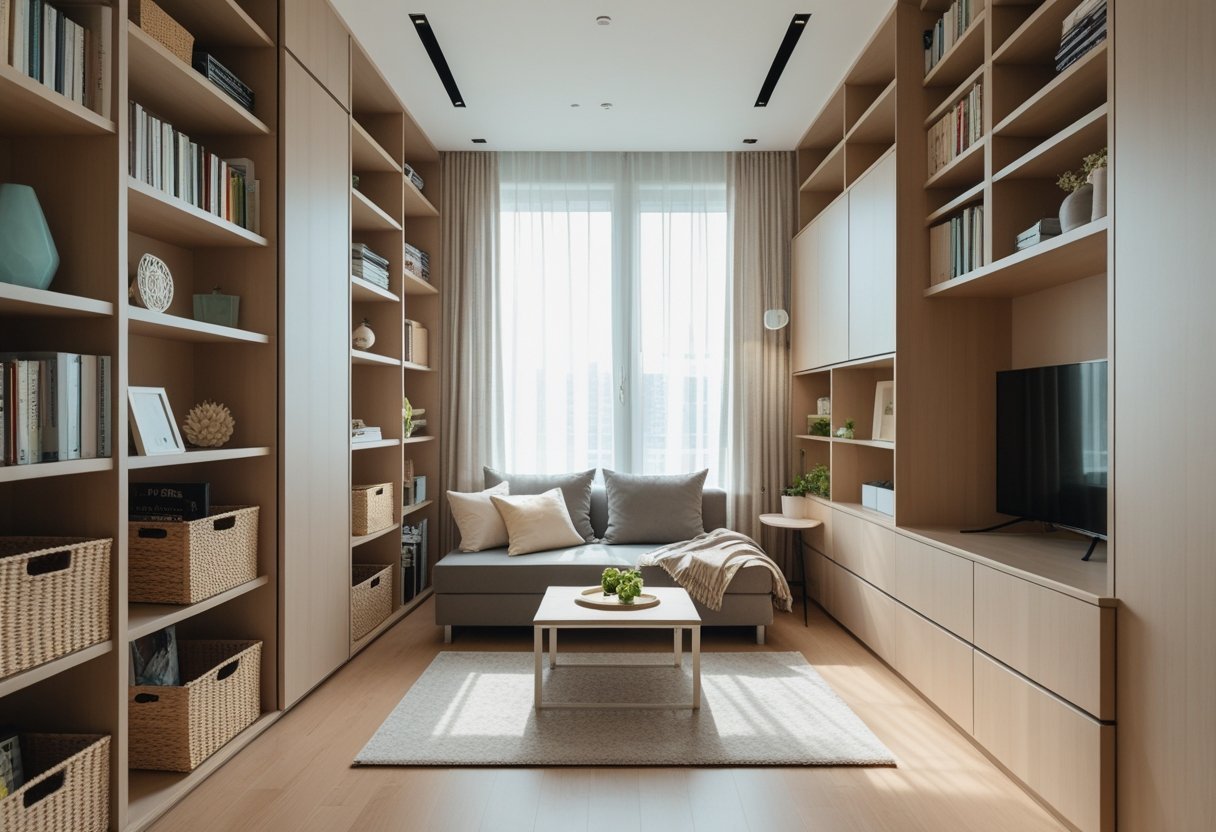
Tall bookcases or cabinets help save floor space in small living rooms. They offer plenty of storage without taking up much room, making the space feel less cluttered.
These pieces can store books, decor, or everyday items neatly. Placing them against walls uses vertical space well and keeps the room organized.
Using tall furniture draws the eye upward, which can make the room feel more open. It is a simple way to add function and style without crowding the space.
9) Arrange seating in a circular or semi-circular layout for better flow
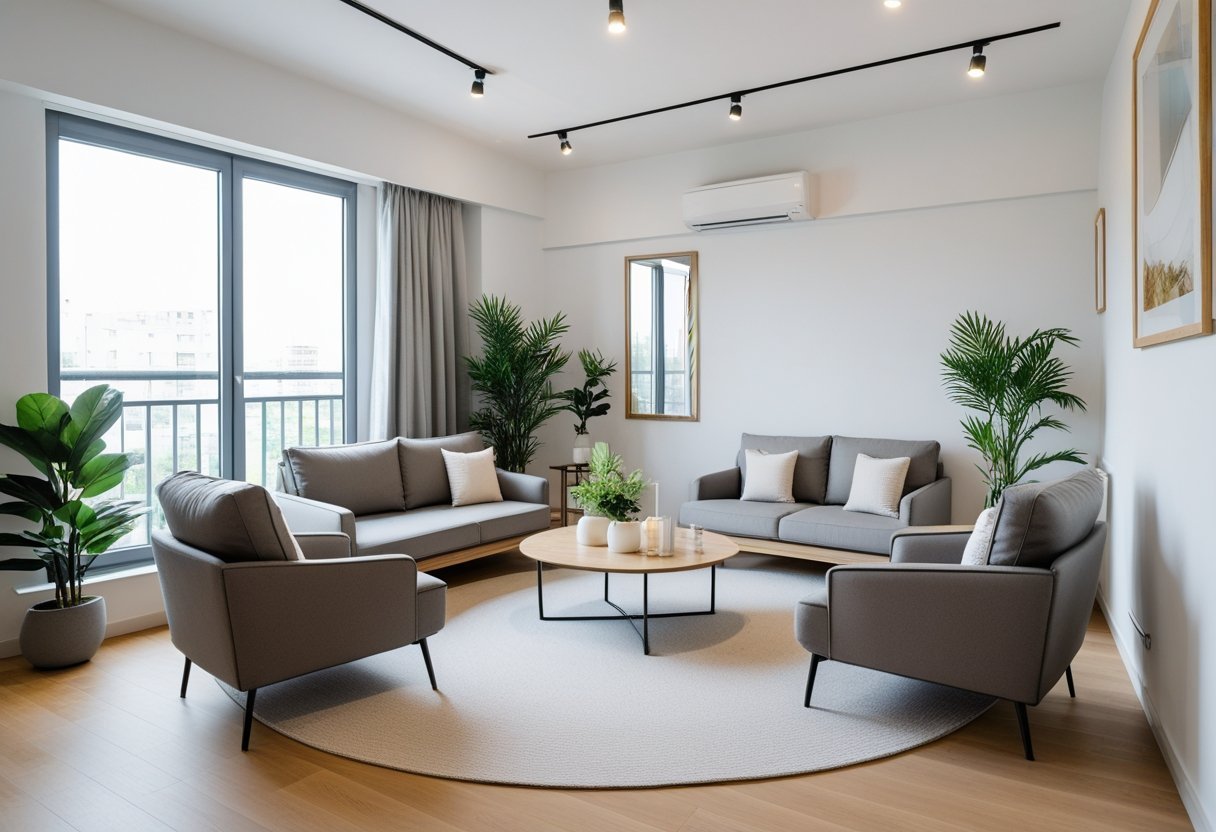
This layout helps create an open and inviting space. It allows everyone to face each other, making conversation easier.
By placing a sofa and chairs around a central table, the room feels balanced.
Circular or semi-circular seating also improves movement, reducing obstacles in small apartments.
It works well with small living rooms because it maximizes seating without crowding the space.
10) Mix textures like soft cushions and sleek metal accents for depth
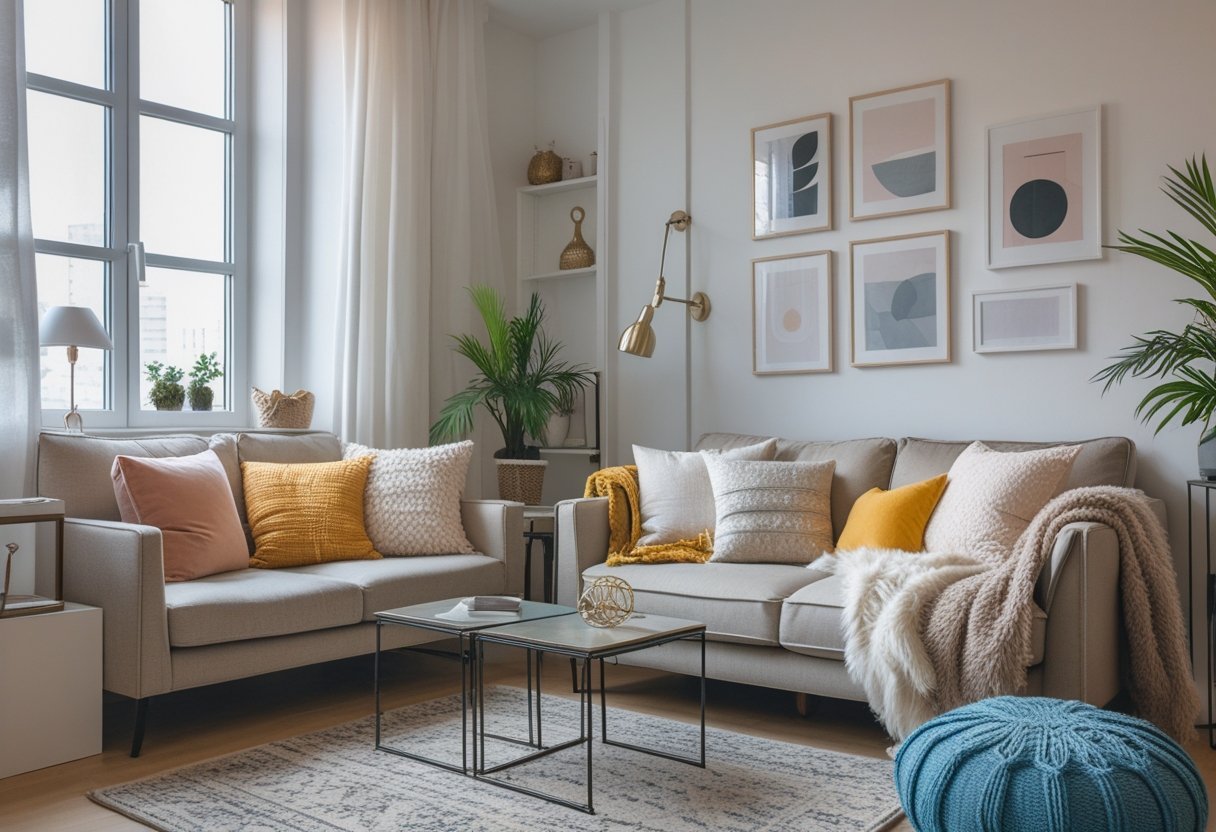
Mixing soft cushions with sleek metal accents adds visual interest to a small living room. The contrast between plush fabrics and smooth metal creates a balanced look.
Using different textures helps define areas without crowding the space. Cushions bring comfort, while metal pieces add a modern touch.
This combination makes the room feel layered and stylish. It works well on furniture, lighting, and decorative objects.
11) Add foldable or nesting tables for flexible surface options
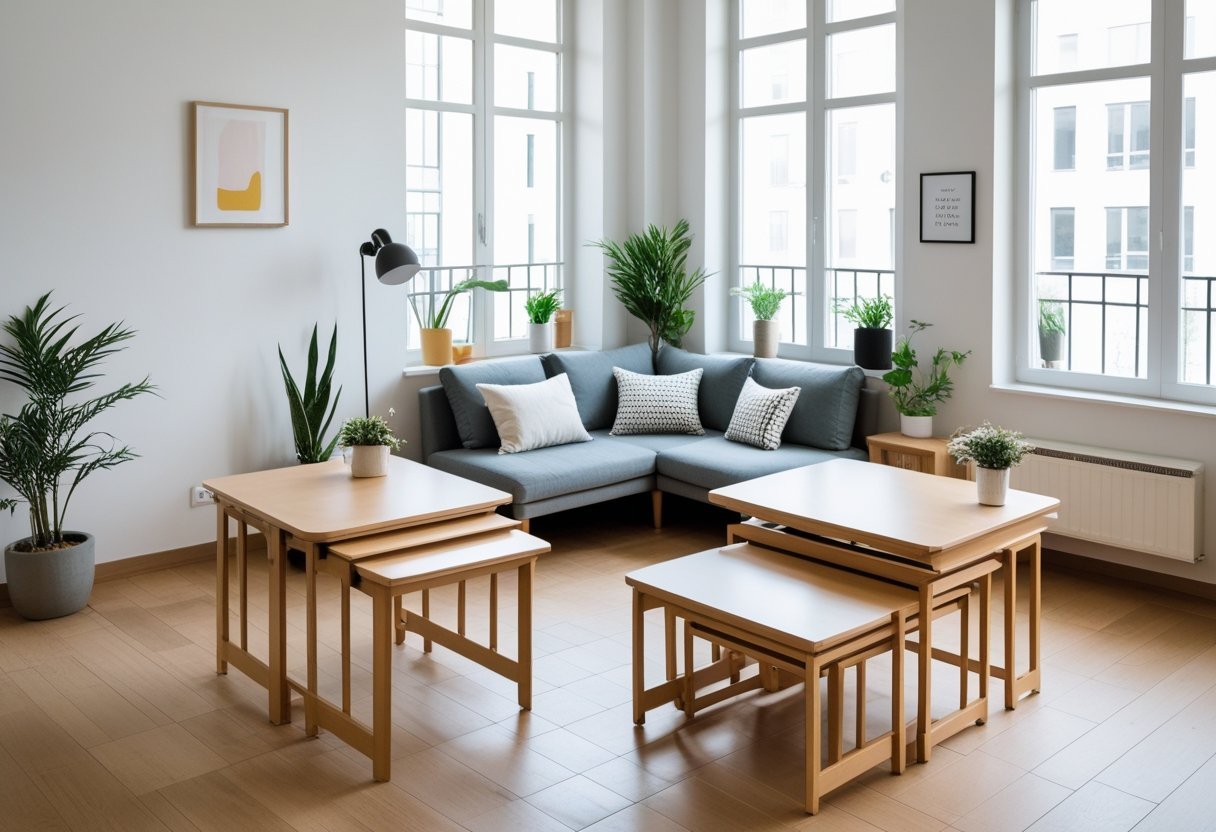
Foldable and nesting tables offer extra surface space without taking up much room. They can be easily moved or stored when not in use.
Nesting tables stack together to save space and can be separated for different uses. Foldable tables often include storage or compact designs that fit small areas well.
These tables work well in living rooms that need adaptable furniture. They add function without crowding the space.
12) Place plants strategically to bring life without overcrowding
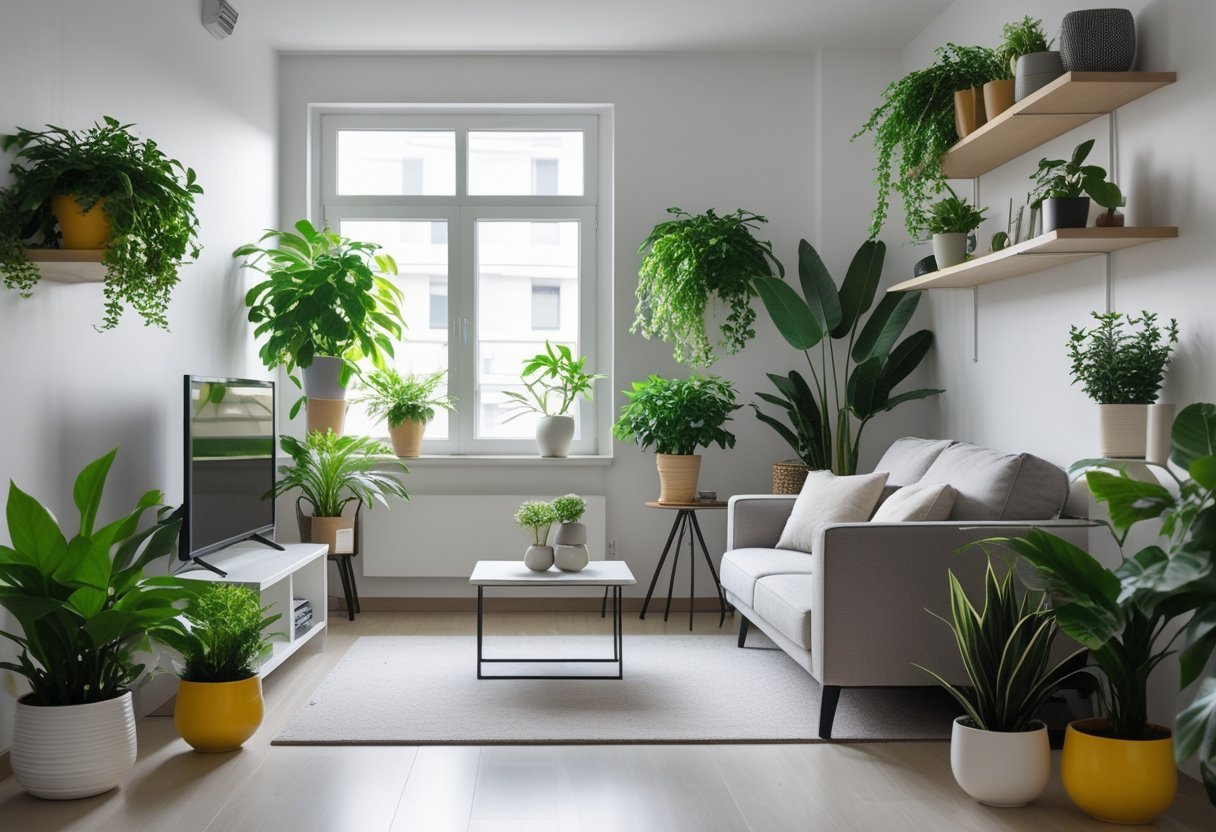
He can use plants to add freshness and color to a small living room. Choosing spots like corners or shelves keeps plants visible but not in the way. Hanging plants or vertical gardens save floor space and add height.
She should mix different plant shapes and sizes for variety. Keeping plants spaced out avoids clutter and keeps the room feeling open. Proper placement helps bring nature indoors while maintaining a clean look.
Maximizing Space Efficiency
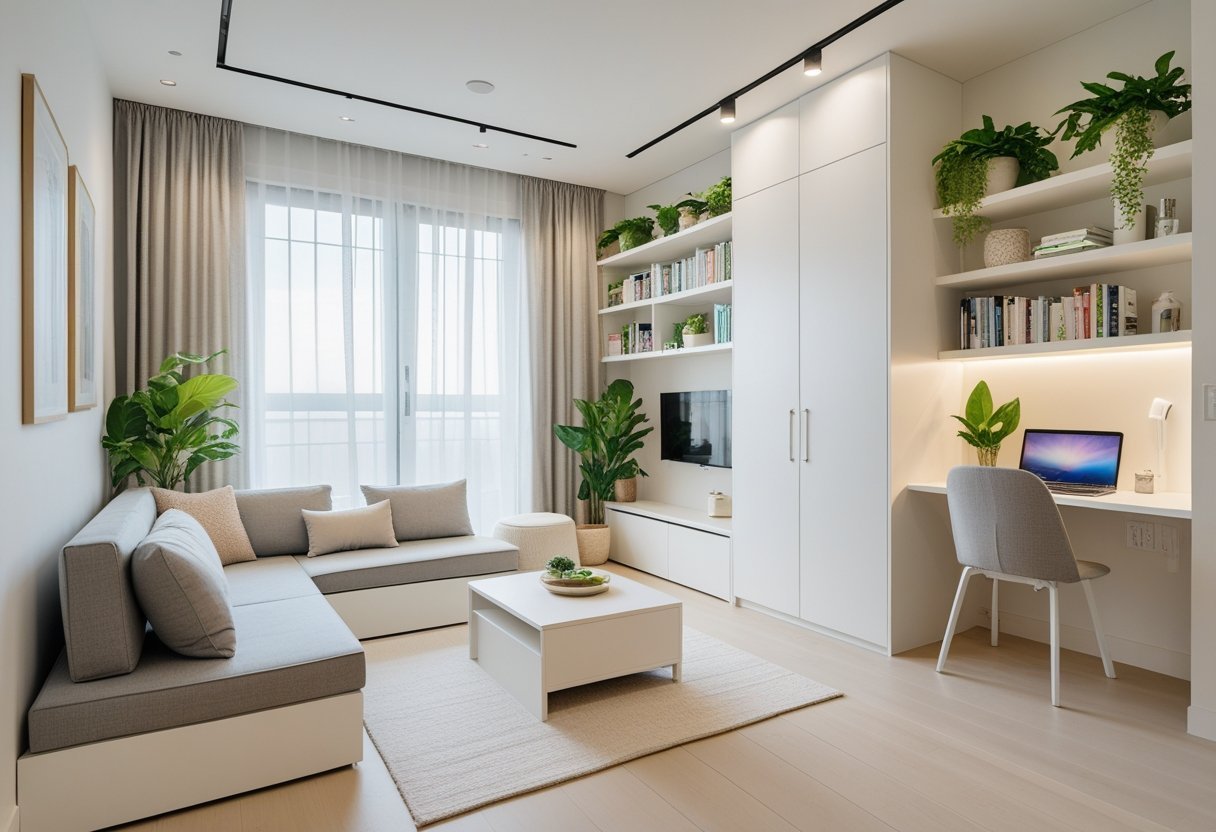
Small living rooms in apartments require thoughtful use of every inch. Using an efficient layout and placing furniture carefully can open the room and keep it functional.
Clever Layout Planning
Planning the layout means prioritizing walkways and key activities. Open floor plans avoid overcrowding and make the room easier to navigate.
Position seating near windows or light sources to enhance brightness and keep the space airy. Avoid placing large furniture pieces in the center where they block movement.
Create defined zones for different uses, such as a small reading nook or entertainment spot. Using rugs or lighting can help mark these areas without adding physical barriers.
Vertical space should also be included in the layout. Wall shelves and tall storage units free up floor space and keep items organized.
Strategic Furniture Placement
Choosing the right size furniture is key. Compact sofas, nesting tables, and slim chairs take up less space without sacrificing comfort.
Multipurpose furniture, like a storage ottoman or sofa bed, adds function without crowdedness. These pieces help reduce clutter as they serve two or more roles.
Place furniture along walls to open central space. Floating furniture away from walls is possible if pieces are small and not bulky, but usually it reduces usable area.
Avoid bulky items near doorways or main paths. Clear routes improve flow and make the room feel bigger.
Using corner space for shelves or seating utilizes often wasted areas and keeps the layout efficient.
Enhancing Visual Appeal
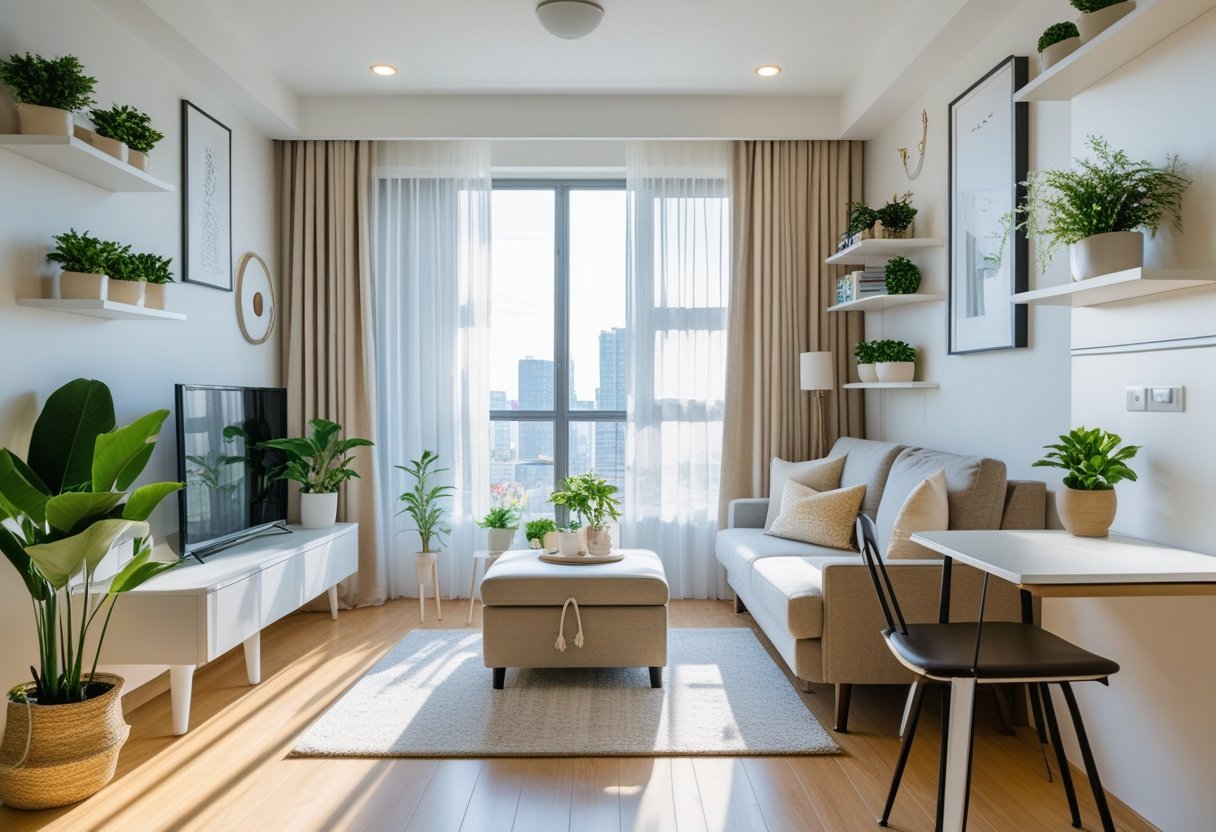
Using smart design choices can make a small living room look more open and inviting. This includes choosing the right color schemes and using mirrors and lighting to create a brighter and larger feel.
Color Schemes That Open Up a Room
Choosing the right colors can make a small living room feel bigger. Light colors like soft whites, light grays, and pale blues reflect more light. This reflection adds brightness, making walls seem farther apart.
Neutral tones work well with pops of color. For example, a mainly white room with colorful pillows or artwork adds interest without crowding the space.
Using the same color family on walls, furniture, and decor helps create flow. Avoid dark, heavy colors, which can make the room feel cramped.
Effective Use of Mirrors and Lighting
Mirrors add depth by reflecting light and views. Placing a mirror opposite a window doubles natural light and opens the room visually. Large mirrors or several smaller ones grouped together work well.
Lighting should have layers. Use ceiling lights for overall brightness, floor or table lamps for cozy spots, and accent lighting to highlight art or corners.
Warm white bulbs help keep the room inviting. Avoid harsh, cold light, which can make a space feel sterile and smaller. Bright, well-placed lighting combined with mirrors improves both function and style.