Many people face challenges when working with a small kitchen. Limited space can make cooking and storage feel cramped, but with the right ideas, even the tiniest kitchens can become efficient and comfortable.

This article shares 12 practical design tricks that help maximize space without sacrificing style or function. These tips focus on making the most of every inch to create a kitchen that works well for daily needs.
1) Use open shelving to create visual openness and easy access
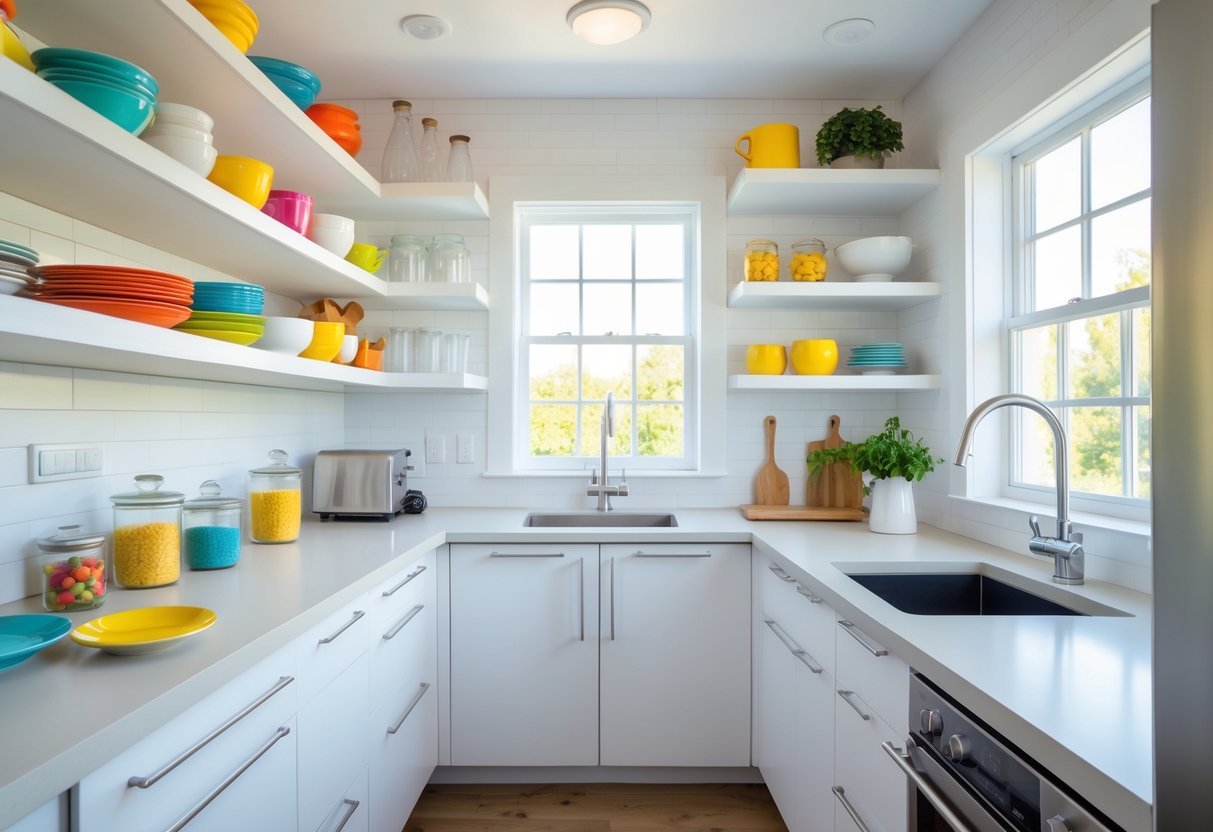
Open shelving helps make a tiny kitchen feel larger by removing bulky cabinet doors. It creates a sense of openness that lets light flow and spreads out the visual space. This design choice reduces clutter and gives the kitchen a lighter, airier look.
It also offers practical benefits. Shelves let people grab everyday items quickly without opening cupboards. This convenience saves time when cooking or cleaning.
Open shelves encourage thoughtful organization. Since items are visible, users tend to keep things neat and display attractive dishes or containers. This adds a personal touch while keeping everything within reach.
Choosing the right style matters. Sleek, simple shelves in neutral colors fit modern kitchens well. Rustic or wood shelves can add warmth and character. Either way, open shelving supports both function and style in small kitchens.
2) Install pull-out pantry racks for better organization
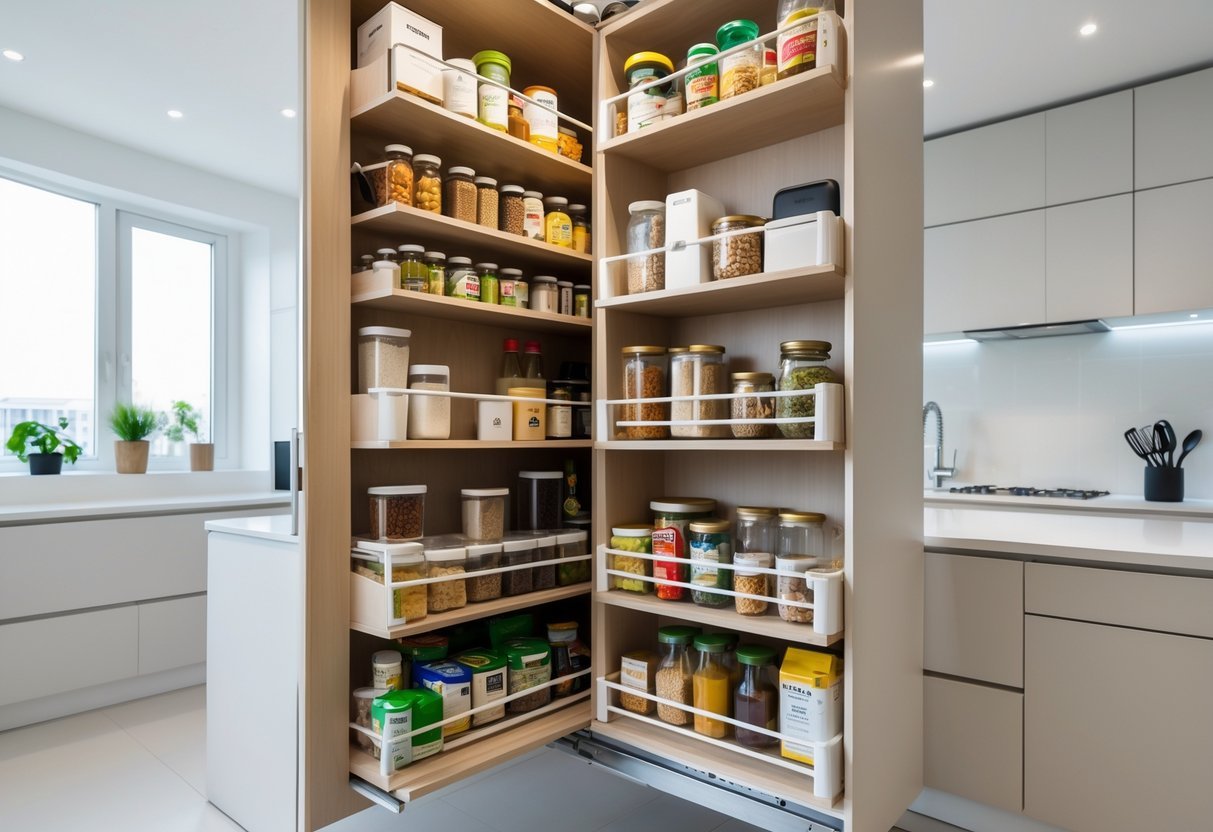
Pull-out pantry racks are an effective way to use narrow or deep spaces in a kitchen. They slide out smoothly, giving easy access to items stored at the back. This helps keep everything visible and prevents clutter.
These racks make it simple to organize cans, spices, and other small containers. Because they use vertical space well, they fit into tight spots that might otherwise go unused. This can add extra storage without taking up more floor or countertop area.
Installing pull-out racks also saves time when cooking. Instead of searching through crowded shelves, everything needed is just one pull away. They suit both small and large kitchens, making them a flexible storage option.
Some models come with adjustable shelves to hold different sized items. Door-mounted racks or narrow vertical pull-outs can maximize every inch of cabinet space. This approach supports better kitchen efficiency and reduces mess.
3) Incorporate vertical storage with tall cabinets or wall-mounted hooks
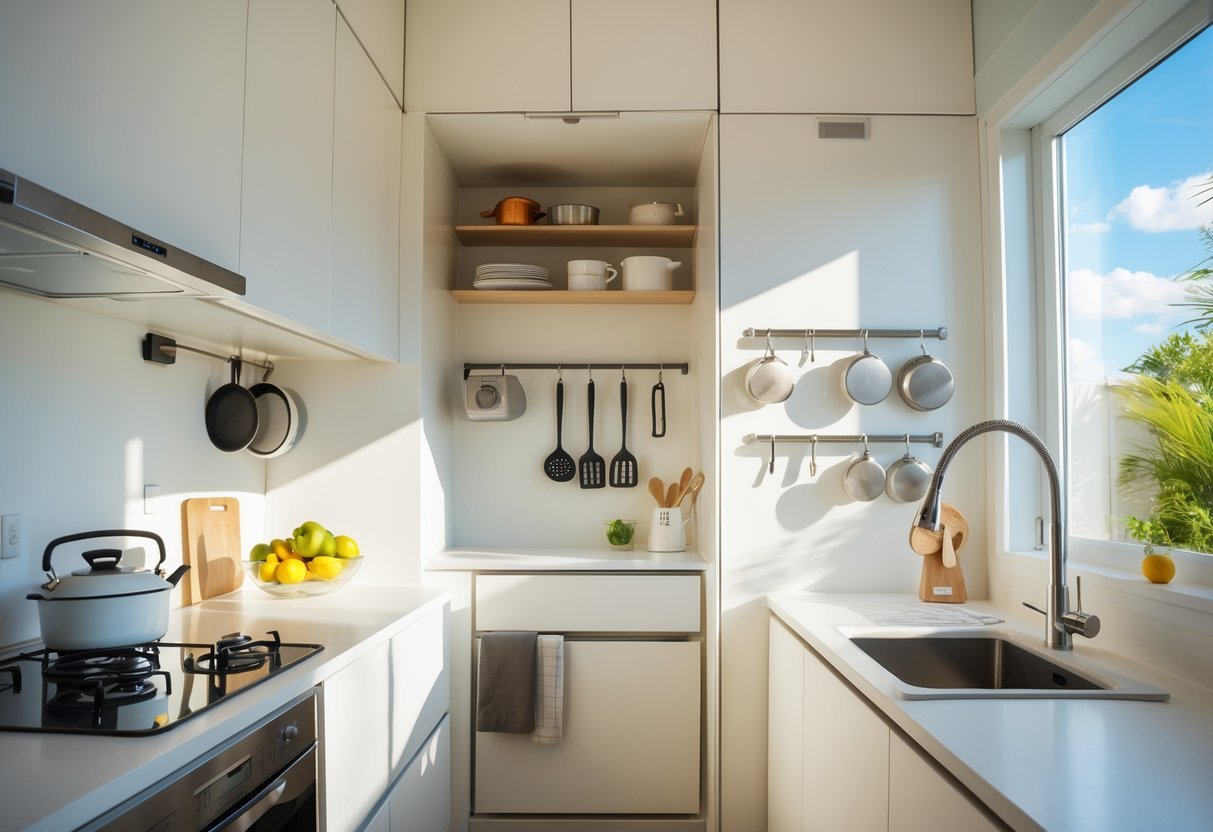
Tall cabinets are a great way to use unused vertical space in a small kitchen. They provide ample storage from floor to ceiling without taking up much floor area. This helps keep countertops clear and makes the kitchen feel less cluttered.
Wall-mounted hooks add another layer of storage by using empty wall space. They are useful for hanging pots, pans, utensils, or even mugs. This keeps frequently used items within reach and frees up cabinet space for other things.
Combining tall cabinets with hooks maximizes storage options. It allows different items to have designated spots, which improves organization. It also makes the kitchen look tidier because everything has its place.
Both solutions are easy to customize. Hooks can be placed anywhere on the wall, while cabinets can be designed to fit the kitchen’s height and style. Using vertical storage like this is a practical step to make the most of a tiny kitchen’s space.
4) Opt for a fold-down or extendable countertop for extra prep space.

Fold-down or extendable countertops are practical options for small kitchens. They provide additional work areas when needed and can be folded away to save space after use. This makes them ideal for kitchens with limited room.
These countertops often come in durable materials like stainless steel or bamboo. They blend well with different kitchen styles while offering extra surface area for meal prep or small tasks.
The design also supports flexibility. The countertop can serve various purposes, such as extra prep space, a small breakfast nook, or a spot for quick meals. This versatility helps make the most of every inch in a tiny kitchen.
Installing a fold-down countertop is often simple and budget-friendly. It is an effective way to increase workspace without major remodeling or structural changes. This solution suits anyone wanting to improve kitchen function in a compact area.
5) Utilize multi-functional furniture such as a kitchen island with storage.
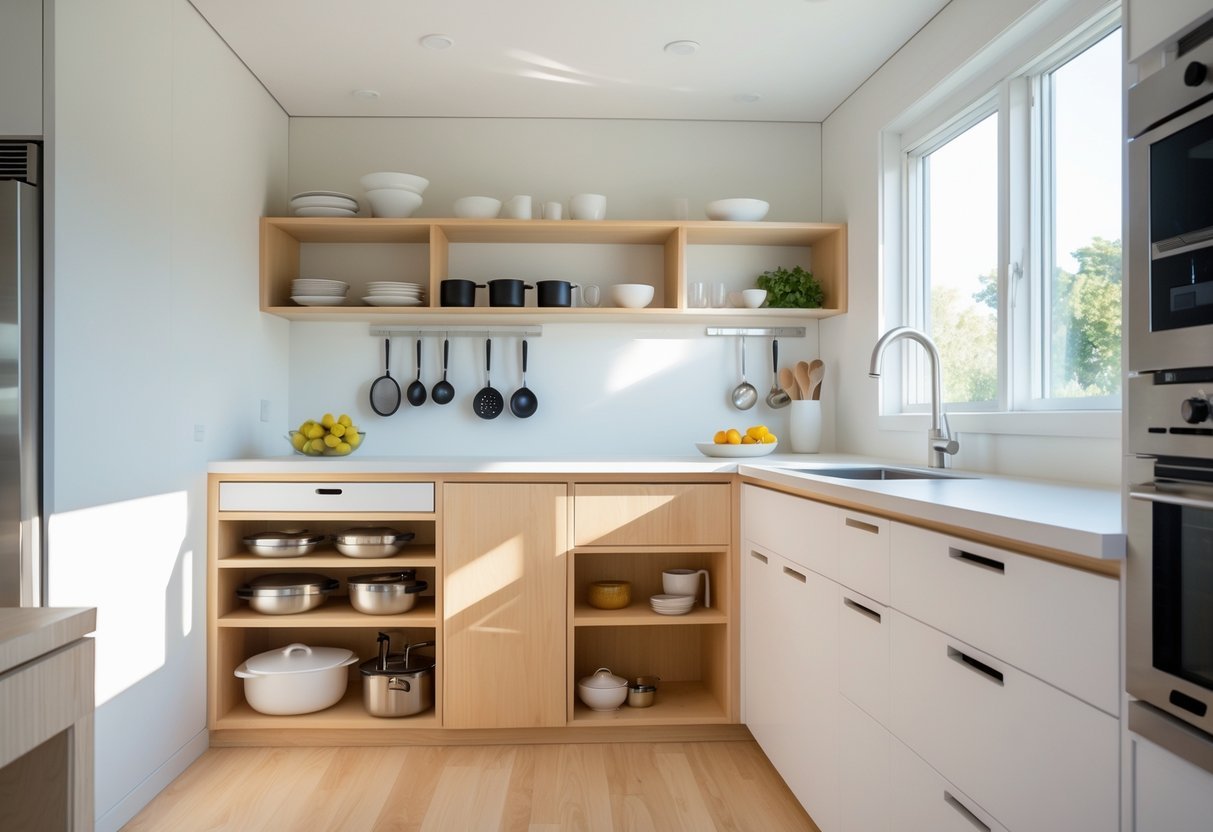
Multi-functional furniture is a key strategy for saving space in tiny kitchens. A kitchen island that includes built-in storage can provide extra counter space and help keep the area organized. This allows for more room to prepare food while reducing clutter.
Such islands often serve several purposes at once. They can act as a workspace, storage unit, and even a seating area for quick meals or socializing. This makes the kitchen more practical and easier to use.
Choosing pieces that fit well within the kitchen’s layout is important. Islands with shelves, drawers, or cabinets take advantage of vertical space, which is often underused in small kitchens. This adds storage without taking up much floor space.
Overall, multi-functional furniture like a kitchen island is an efficient way to maximize utility. It helps balance storage, preparation, and social needs in one compact piece.
6) Choose slim, space-saving appliances designed for small kitchens
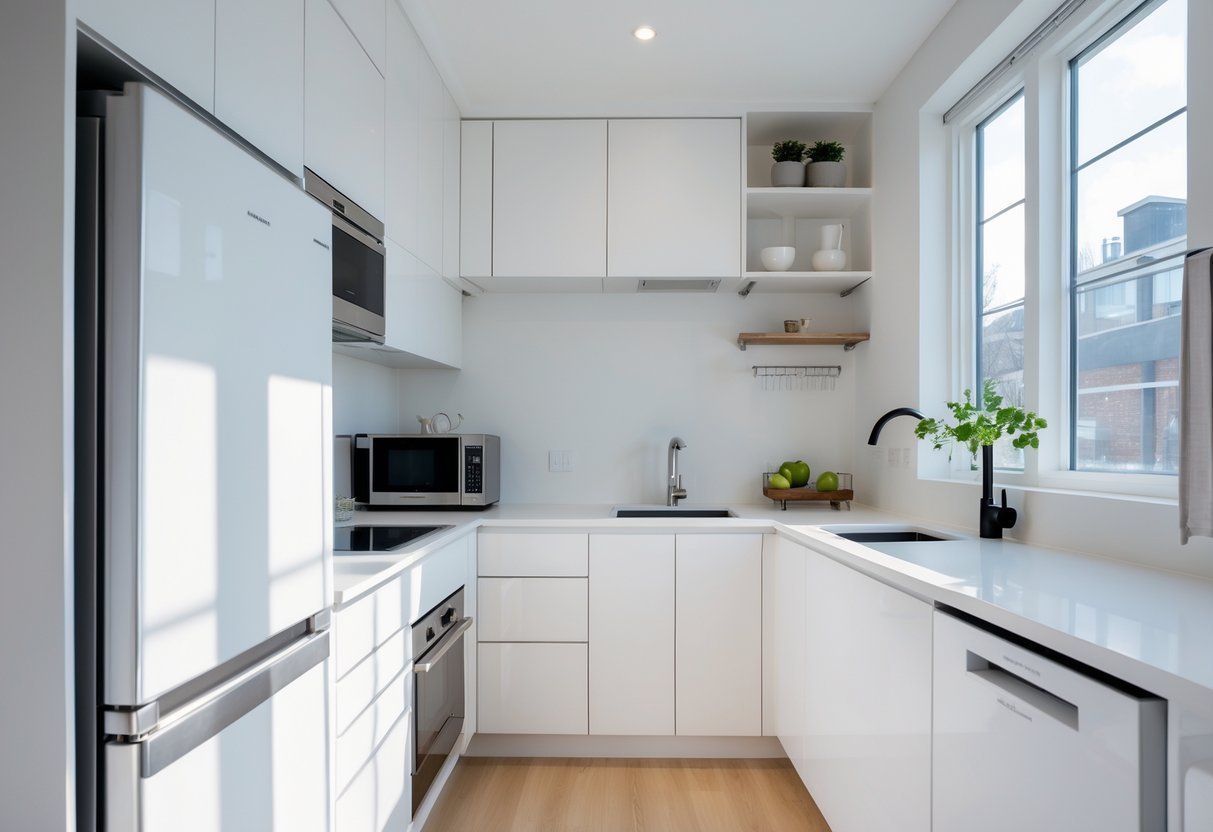
Using slim and compact appliances helps keep counters clear in a tiny kitchen. These appliances take up less space but still perform the same tasks as larger models. This allows more room for prep work and storage.
Many appliances now come in smaller sizes made specifically for small kitchens or apartments. For example, mini air fryers, narrow coffee makers, and compact rice cookers fit easily on limited countertop space. Their designs focus on saving space without losing function.
Choosing appliances under 5 inches in width can make a big difference. It helps prevent clutter and allows multiple devices to be used without overcrowding the area. Small appliances also often have multiple functions, reducing the need for extra gadgets.
It is important to prioritize both size and usability. Space-saving appliances should be easy to clean and maintain. This approach helps create a kitchen that feels open and organized, even in a tight space.
7) Install under-cabinet lighting to brighten work areas without clutter
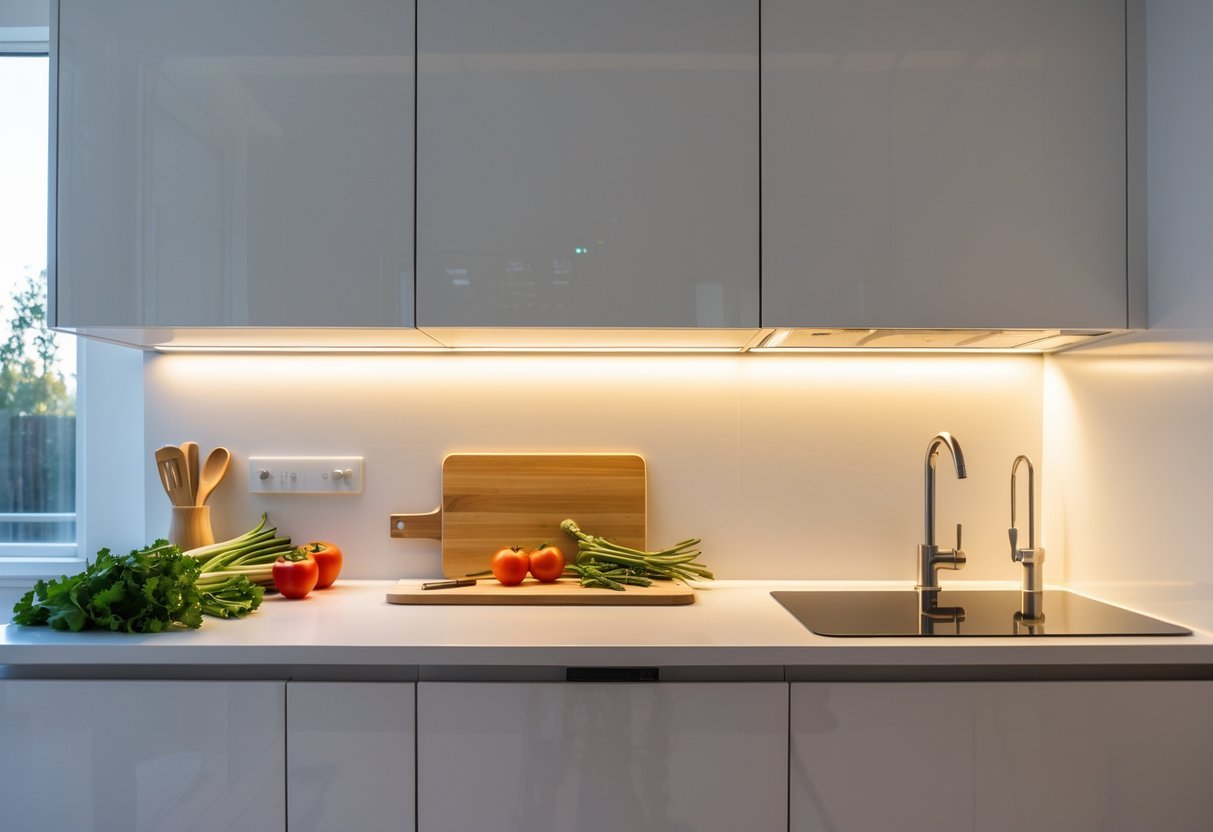
Under-cabinet lighting is a smart way to add brightness where it is most needed. It lights up countertops and workspaces without taking up extra room. This helps keep the kitchen feeling open and organized.
LED strips or puck lights are popular choices because they are thin and easy to install. They provide clear, focused light that improves visibility while cooking or preparing food. This type of lighting reduces shadows often caused by overhead fixtures.
Hardwired or plug-in options allow some flexibility depending on the kitchen setup. Hardwired lights offer a clean look without visible cords. Plug-in versions are simpler to install and can be moved if needed.
Adding under-cabinet lighting also creates a modern feel. It highlights backsplashes and surfaces, making the space look brighter and more inviting. This small change can boost both the function and style of a tiny kitchen.
8) Use light, reflective colors on walls and cabinetry to enhance brightness.
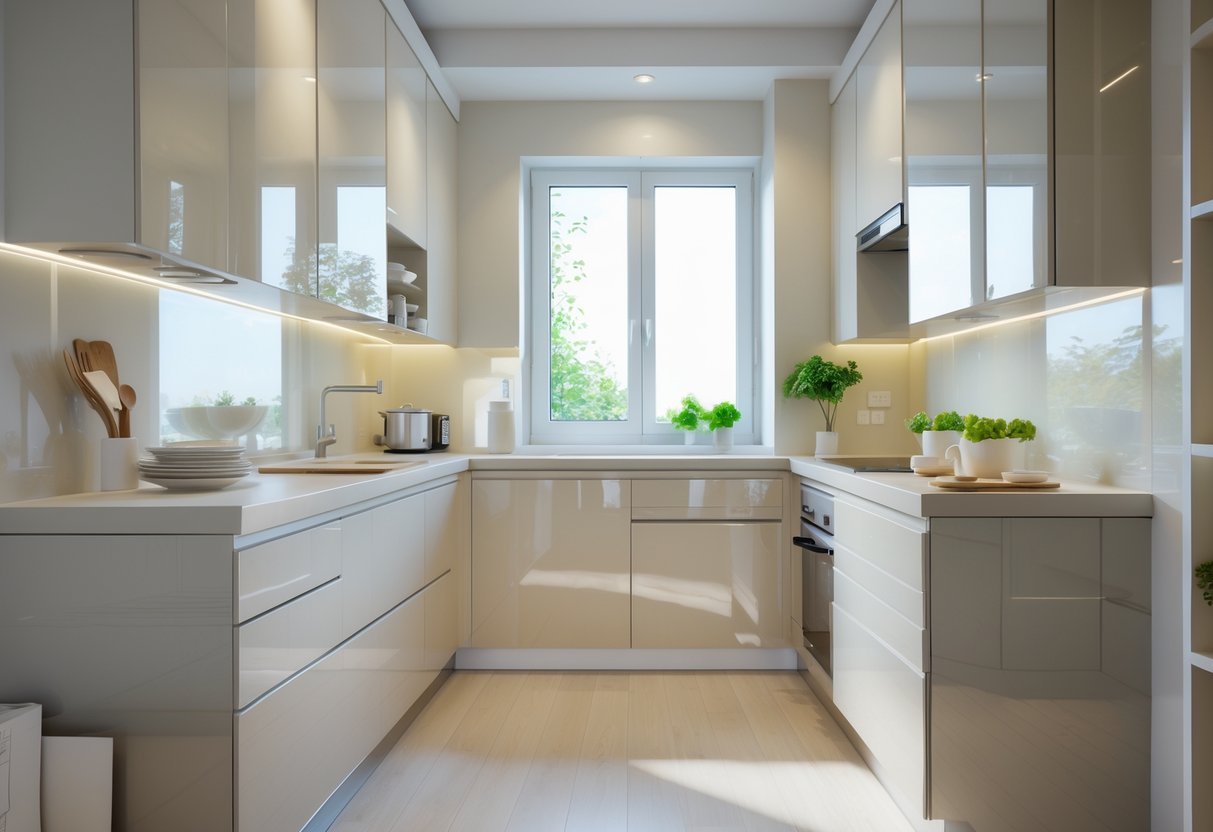
Using light colors on walls and cabinets helps make a small kitchen feel more open and bright. Shades like white, soft pastels, or light grays reflect more natural and artificial light. This reflection can visually expand the space without physically changing its size.
Reflective finishes such as gloss or semi-gloss on cabinets and walls bounce light around the room. This adds depth and makes the kitchen appear less cramped. Matte finishes absorb light, so they are less effective in small spaces.
Choosing paints with a high Light Reflectance Value (LRV) will boost brightness. Walls and ceilings with these paints increase the light flow, making the kitchen feel airy. Pairing light colors with reflective surfaces like glass cabinet doors can create a clean, modern look while improving visibility.
Overall, focusing on light and reflective colors is a simple yet effective way to maximize brightness. It helps even kitchens with limited natural light appear fresh and spacious.
9) Mount magnetic knife strips to free up drawer space.
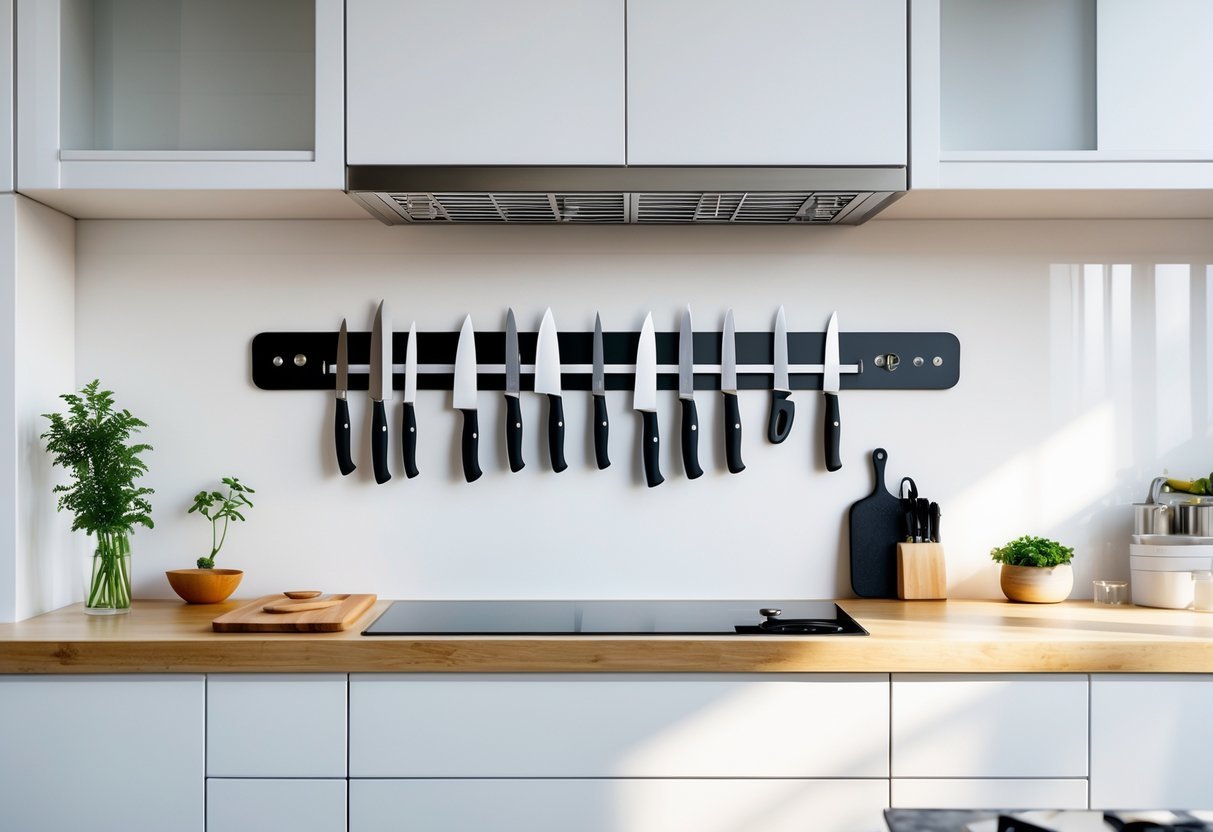
Magnetic knife strips offer a simple way to clear clutter from kitchen drawers. By mounting knives on a wall or under a cabinet, they keep the blades visible and easy to reach. This also prevents knives from banging together, which can dull the edges.
These strips typically use strong magnets to hold knives securely in place. They come in different lengths and materials, such as stainless steel or wood. Many models include mounting hardware or adhesive options, making installation quick and flexible.
Using a magnetic strip frees up drawer space for other utensils and tools. It helps kitchens stay organized, especially when counter or drawer space is limited. The strips also make it easier to maintain a clean work area without sacrificing access to essential knives.
10) Incorporate drawer dividers and organizers to maximize drawer space.
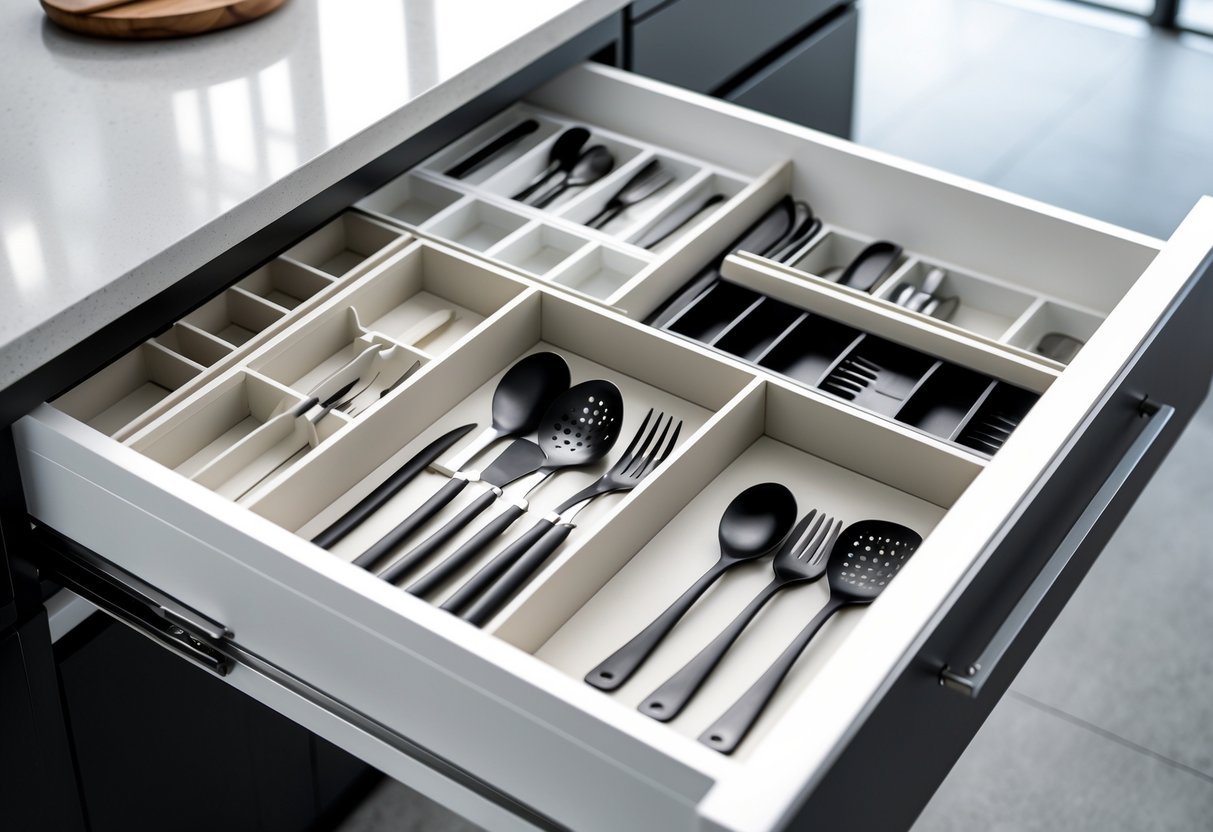
Drawer dividers and organizers help keep kitchen drawers neat and functional. They separate items, making it easier to find utensils, tools, and other kitchen items quickly.
Using adjustable dividers allows for customization based on what needs to be stored. This flexibility helps fit different sized items without wasting space. Stackable organizers are useful for deep drawers, as they create extra layers for more storage.
Organizers can also help store items vertically, which saves surface area inside the drawer. This approach works well for lids, cutting boards, or baking sheets. Labeling sections within drawers adds extra order and helps maintain tidiness over time.
Overall, installing drawer dividers and organizers is a simple way to increase storage efficiency. It helps reduce clutter and keeps the kitchen running smoothly.
11) Add a narrow rolling cart for flexible countertop extension and storage
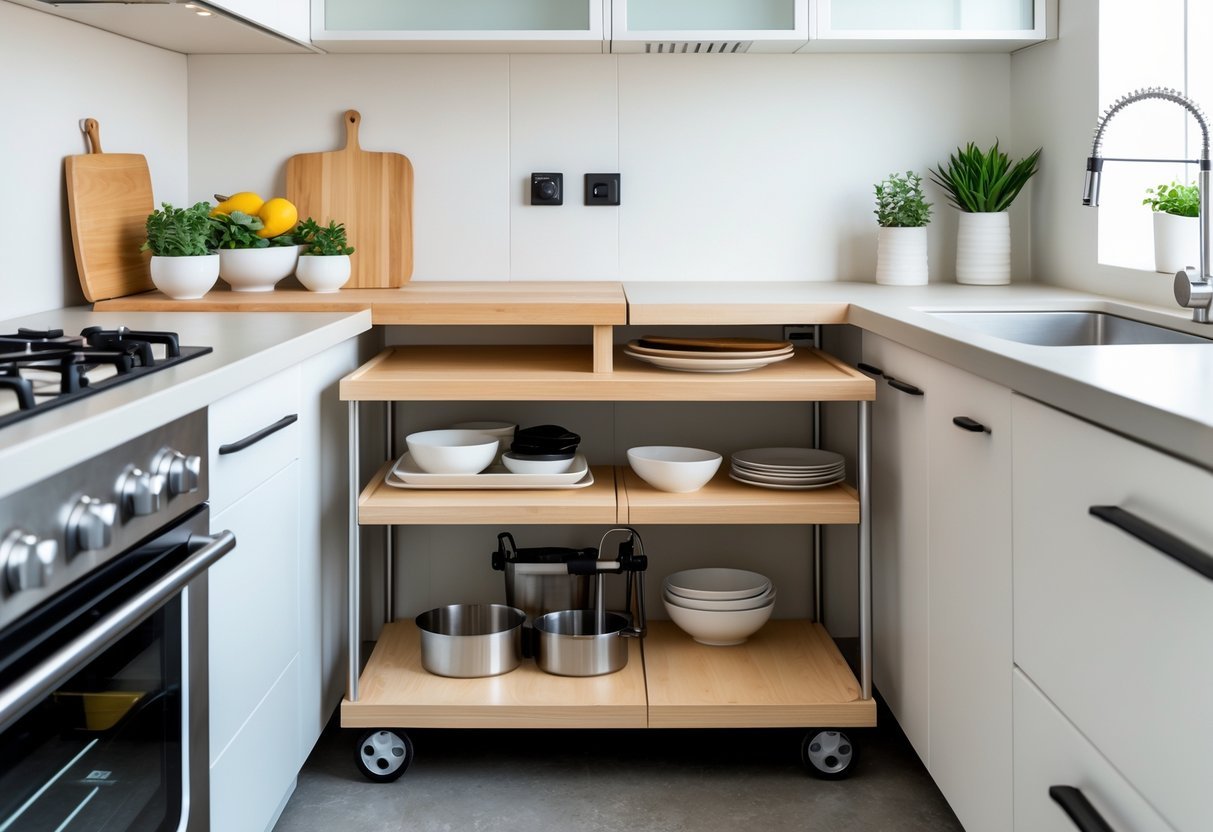
A narrow rolling cart is a smart addition to a tiny kitchen. It fits into small gaps, like between cabinets or appliances. This saves space while adding extra storage and work surface.
The cart can be moved easily thanks to its wheels. This helps when more countertop area is needed for cooking or prep work. Some carts even lock in place, so they stay steady when used.
Besides extending the counter, these carts often have shelves or drawers. They hold pots, utensils, or small appliances, helping reduce clutter. Choosing the right size and design makes the cart a practical tool for busy kitchens.
12) Replace upper cabinets on one wall with glass-front cabinets or open shelves
Replacing upper cabinets with glass-front cabinets or open shelves can make a small kitchen feel more open. Glass-front cabinets allow light to pass through, which helps the space seem larger and less crowded.
Open shelves create a minimalist look and offer easy access to everyday items. They also let homeowners display dishes and kitchenware, adding a personal touch without bulk.
This change reduces some hidden storage, so it works best when paired with efficient lower cabinets or a pantry. Using one wall for this design keeps the kitchen organized while improving visual space.
Both options bring in light and create an airy feeling. They give a clean and modern style that fits many small kitchens.
It is important to keep shelves tidy because everything is visible. Proper organization helps maintain a neat appearance.
Fundamental Space-Saving Principles
Maximizing space in a tiny kitchen starts with a clear plan for how the kitchen will be used and organized. It is important to design around how tasks flow during cooking and to find the right balance between storing items and keeping them within easy reach.
Understanding Kitchen Workflow
A key factor in saving space is arranging the kitchen to support efficient movement. The classic kitchen work triangle—linking the sink, stove, and refrigerator—helps minimize unnecessary walking. This saves time and reduces clutter by keeping the most-used areas close together.
Placing prep space between these three points makes the workflow smoother. It’s also helpful to group related tools and ingredients near where they’ll be used, such as keeping knives and cutting boards close to the prep area. This means less scrambling and more room for movement in a tight kitchen.
Balancing Storage and Accessibility
Effective storage goes beyond fitting everything in—it must also allow easy access. Shelves and cabinets that reach the ceiling use vertical space without wasting room. Pull-out drawers and organizers help keep items visible and easy to grab, which avoids digging through clutter.
However, it’s important to keep daily-use items on lower shelves or counters to avoid constant stretching. Bulkier or rarely used tools can be stored higher or out of the way. Prioritizing where items live by how often they’re needed maintains a tidy and functional kitchen despite limited space.
Integrating Design Aesthetics
A tiny kitchen should feel open and inviting while still showing style. Proper color choices, materials, and lighting can create the right atmosphere and make the space appear larger and more functional.
Selecting Colors and Materials
Light colors like white, soft gray, or pastels reflect light and open up a small kitchen. Matte or satin finishes reduce glare, helping the space feel calm rather than harsh. Using consistent colors on cabinets, walls, and countertops avoids visual clutter.
Materials that are smooth and reflective, such as glass or polished tiles, can add depth. Wood tones bring warmth but should be used sparingly to avoid making the space feel heavy. Cabinets with flat fronts and minimal hardware maintain a clean, streamlined look.
Choosing durable, easy-to-clean surfaces also helps keep the kitchen looking neat. A simple, balanced palette with one or two accent colors works best in tiny kitchens.
Lighting Techniques for Small Spaces
Natural light is ideal but not always possible. Bright, cool LED lights add clarity without warmth that can shrink a room. Under-cabinet lighting illuminates work areas and cuts shadows.
Layered lighting creates depth: a mix of ceiling lights, task lights over counters, and accent lighting inside glass cabinets or shelves. Mirrors or glossy backsplashes can help bounce light around the space.
Avoid bulky light fixtures that take up visual room. Instead, opt for recessed or slim-profile lighting to maintain headroom and openness. Proper lighting highlights design features and makes the kitchen safer and more pleasant to use.