A living room TV wall can shape the entire look and feel of a space. It plays an important role, combining the practical needs of entertainment with the style of the room. Many people find that a well-designed TV wall can make their living area feel more organized and polished.
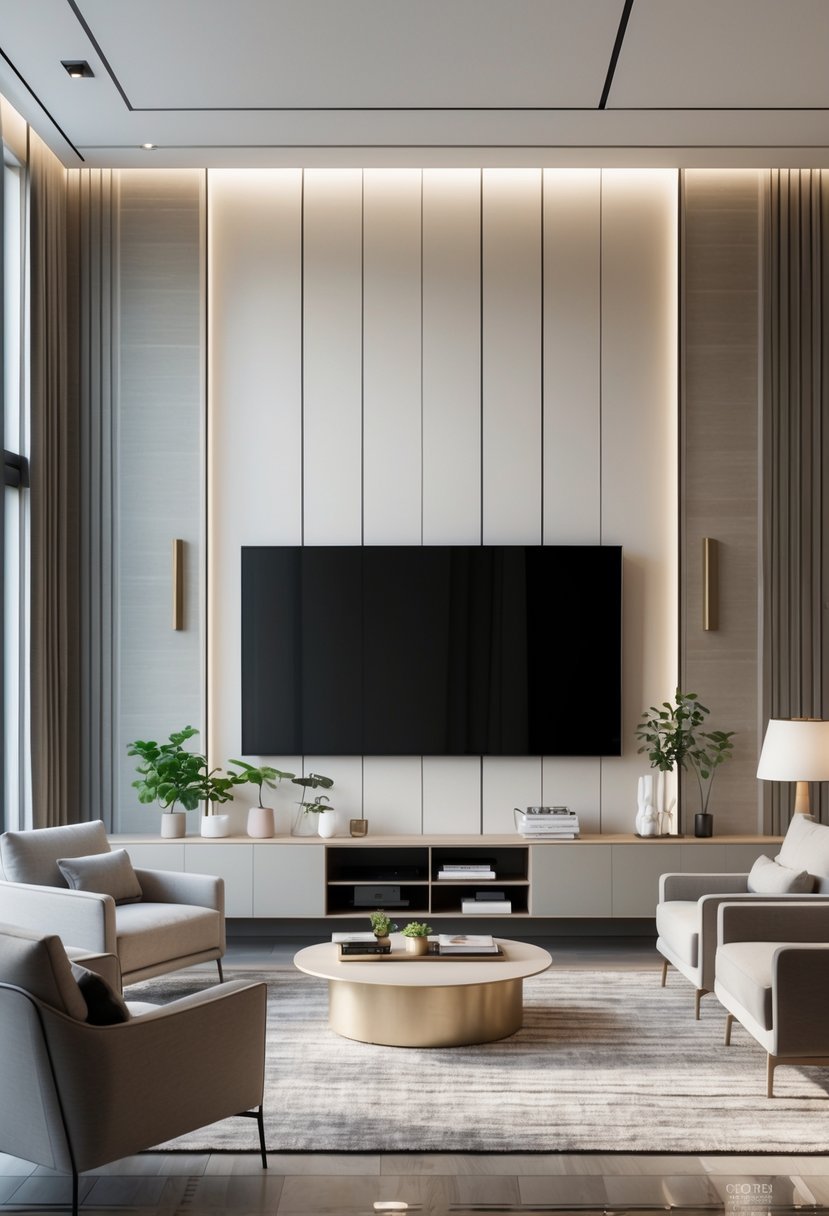
This article offers 12 ideas to help create a TV wall that is both functional and visually appealing. These ideas can suit different tastes and room sizes, making it easier to find a setup that fits the specific needs and style of any home.
1) Wall-to-wall string shelving unit with cabinetry below
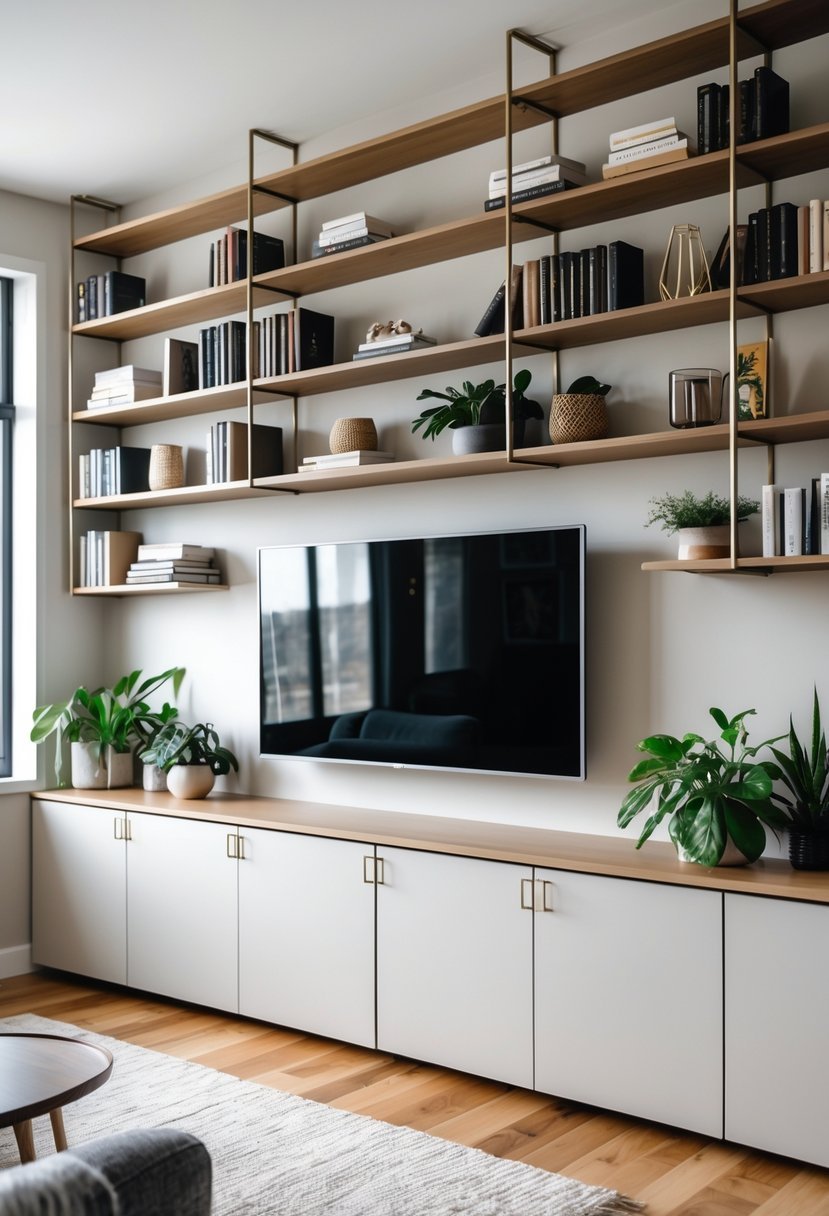
A wall-to-wall string shelving unit offers a practical way to organize a living room TV wall. The upper shelves provide ample space for books, decor, or personal items. This keeps the area above the TV neat and visually interesting.
Below the shelving, cabinetry adds essential storage. It helps hide items that don’t need to be on display. This combination balances open and closed storage effectively.
The modular nature of string shelving units allows for flexibility. The shelves can be arranged to fit the wall’s size and the user’s needs. The cabinetry below often features clean lines that match the modern look of the shelves.
This setup creates a dedicated spot for the TV while optimizing storage. It simplifies tidying the living room by keeping clutter out of sight. The design works well in various room sizes and styles due to its adaptability.
2) Fireplace TV wall balanced with built-in shelves
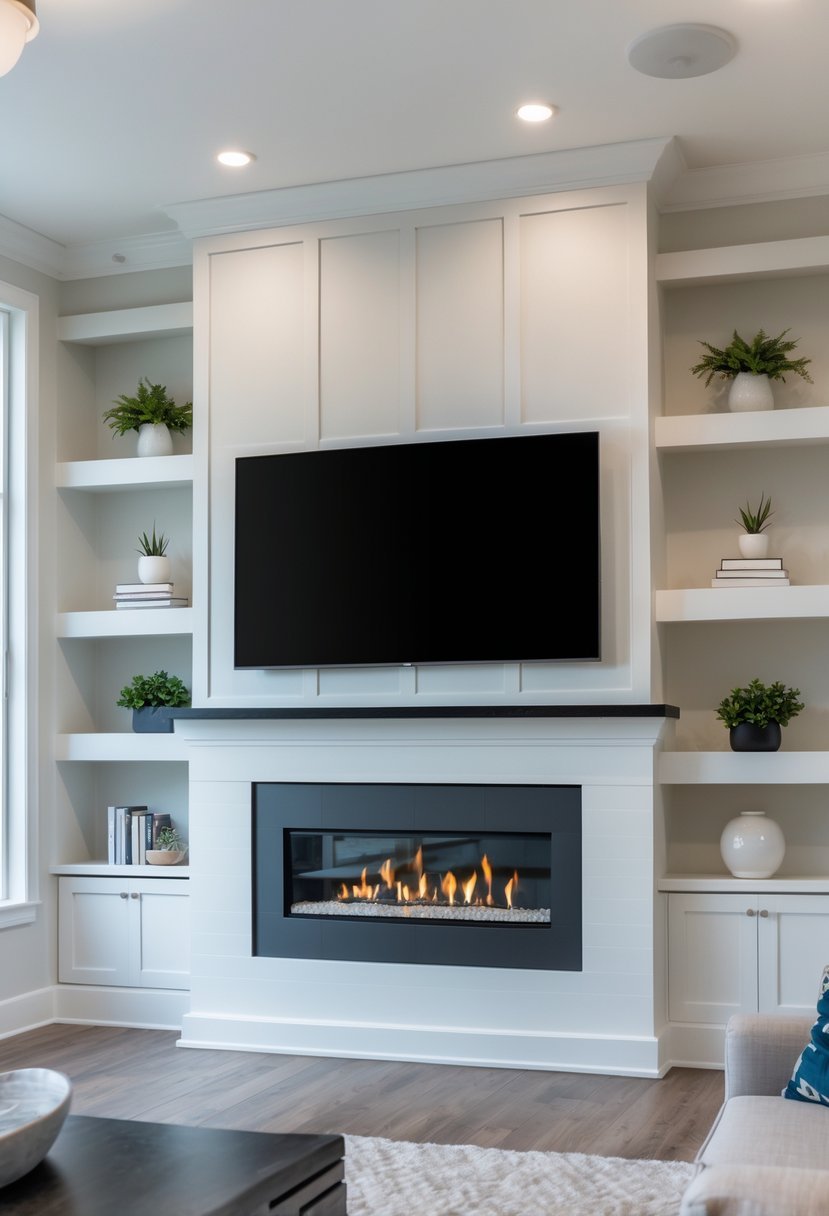
A fireplace TV wall with built-in shelves creates a balanced and organized look. The shelves frame both sides of the fireplace and TV, making the wall the clear focal point of the room.
Built-in shelves provide storage and display space for books, plants, and decor. This helps keep the living room tidy while adding visual interest.
Using symmetrical shelves on each side of the fireplace and TV helps maintain harmony in the design. It prevents the wall from feeling crowded or uneven.
Materials like wood or painted MDF can match the room’s style. Dark or light finishes work depending on the desired mood.
This setup is ideal for families who want both functionality and style. It also allows for personalization in how the shelves are arranged.
By integrating the TV and fireplace into the same wall with built-ins, the space feels cohesive. It also maximizes wall usage without clutter.
3) Chunky wood mantel matching ceiling beams
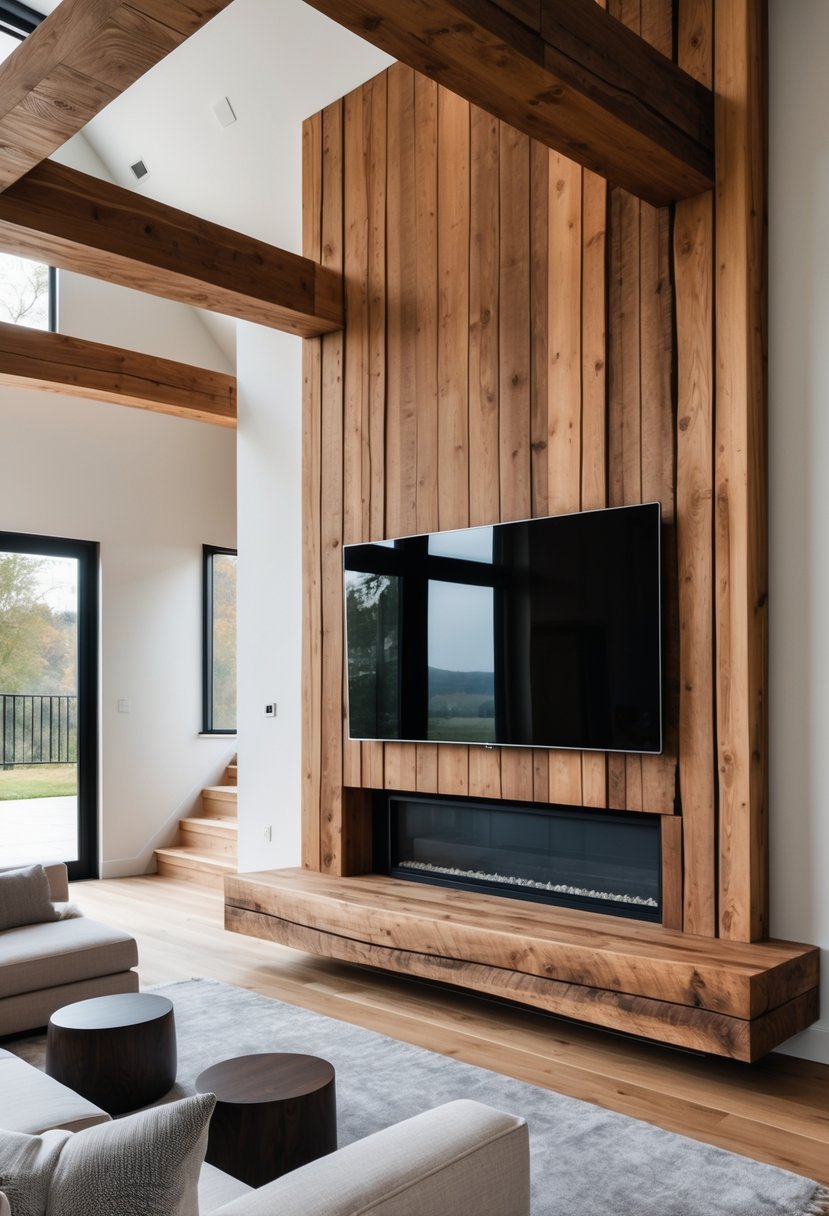
A chunky wood mantel that matches the ceiling beams brings balance to a living room TV wall. This design choice creates a unified look by using similar wood tones and textures.
The mantel can serve as a strong, eye-catching feature. It adds warmth and a natural feel to the space without competing with the TV.
Pairing the mantel with matching ceiling beams helps tie the room together visually. The repeated wood elements create harmony and make the setup feel intentional.
Shelves or built-ins on either side of the mantel can add function and style. They can hold plants, photos, or simple décor to keep the wall interesting when the TV is off.
This style is common in modern farmhouse designs. It blends rustic charm with a clean, comfortable look that many find appealing.
4) Gallery wall surround incorporating art around TV
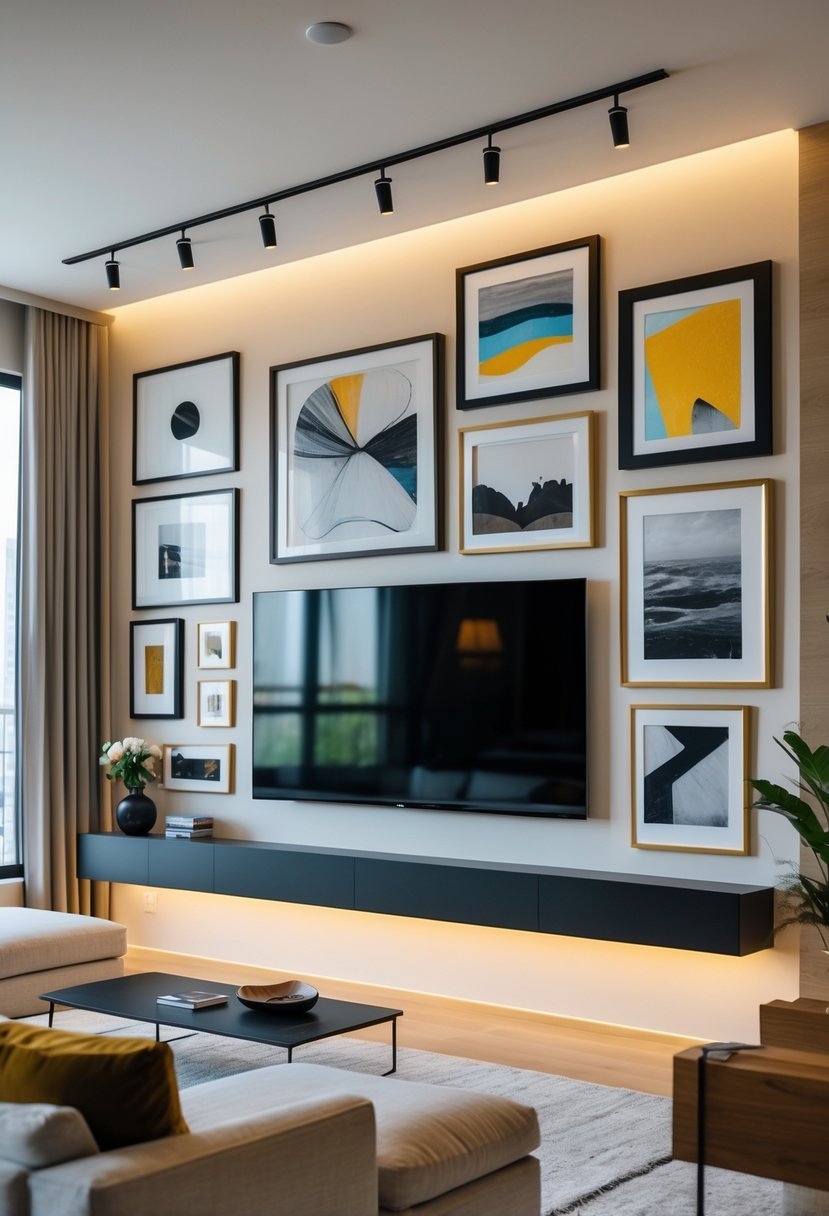
A gallery wall surround uses artwork to frame the TV, making the screen blend with the rest of the room. It turns the TV into one part of a larger display instead of a standalone feature.
This style includes mixing different types of art like paintings, photos, and decorative objects. Arranging frames in various sizes and styles helps balance the TV with the wall’s overall design.
The goal is to create a seamless look that adds character and depth. By carefully placing art around the TV, the space feels more intentional and visually interesting.
Using matching or coordinating frames can help unify the gallery. It also keeps the focus balanced without drawing too much attention solely to the TV.
This approach works well with sleek TVs, especially those designed to look like artwork themselves. It makes the TV feel like part of the decor, not just technology.
5) Floating shelves for minimalist modern look
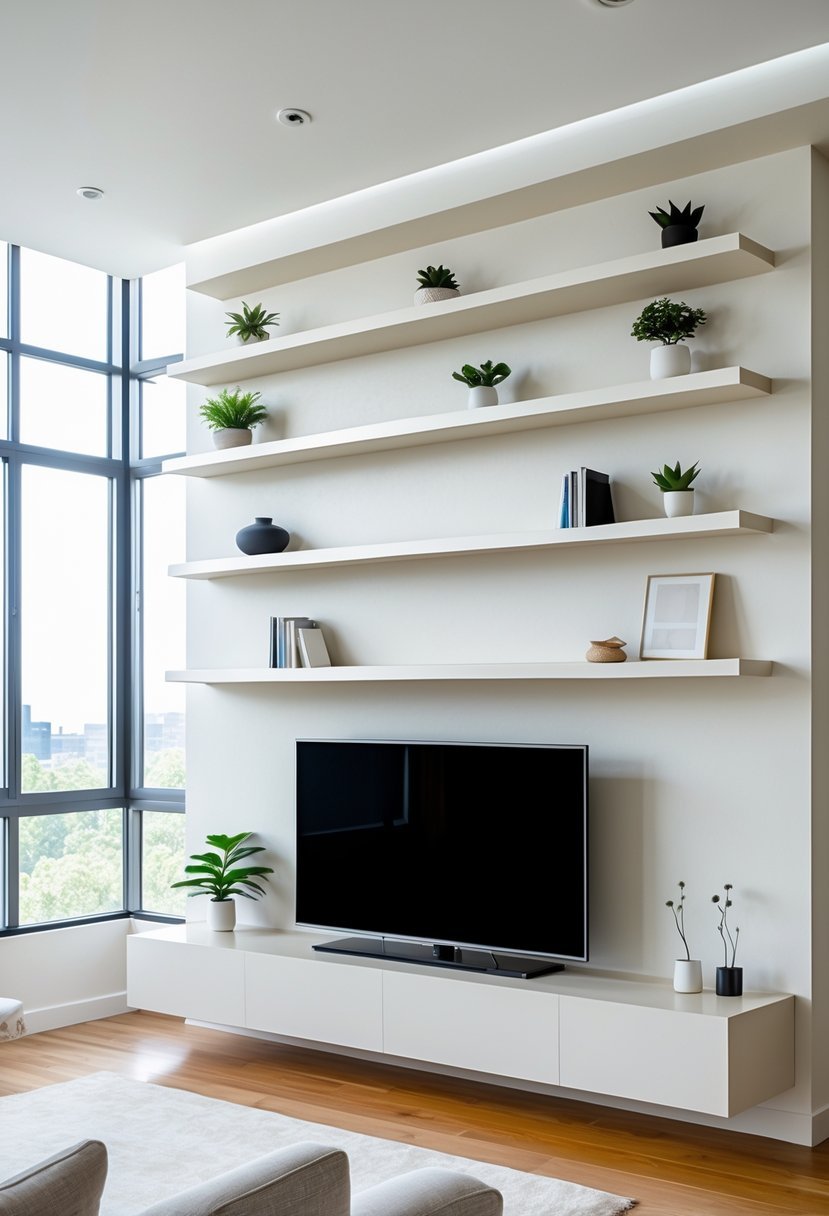
Floating shelves offer a clean and simple way to enhance a TV wall. They create a modern feel by keeping the space open and uncluttered. The design draws attention to the TV while adding subtle storage or display areas.
Spacing between shelves is important to maintain a minimalist style. Shelves should have enough room to avoid looking crowded. This helps keep the wall airy and balanced.
Using neutral colors or natural wood tones supports the minimalist look. The shelves blend with the wall and decor, making the TV the main focus.
Floating shelves also save floor space because they are mounted directly on the wall. This makes the room feel bigger and less busy.
Minimalist floating shelves work well for storing small electronics, decor, or books. Their simple design keeps items organized without overwhelming the room.
6) Built-in shelving flanking TV for storage and symmetry
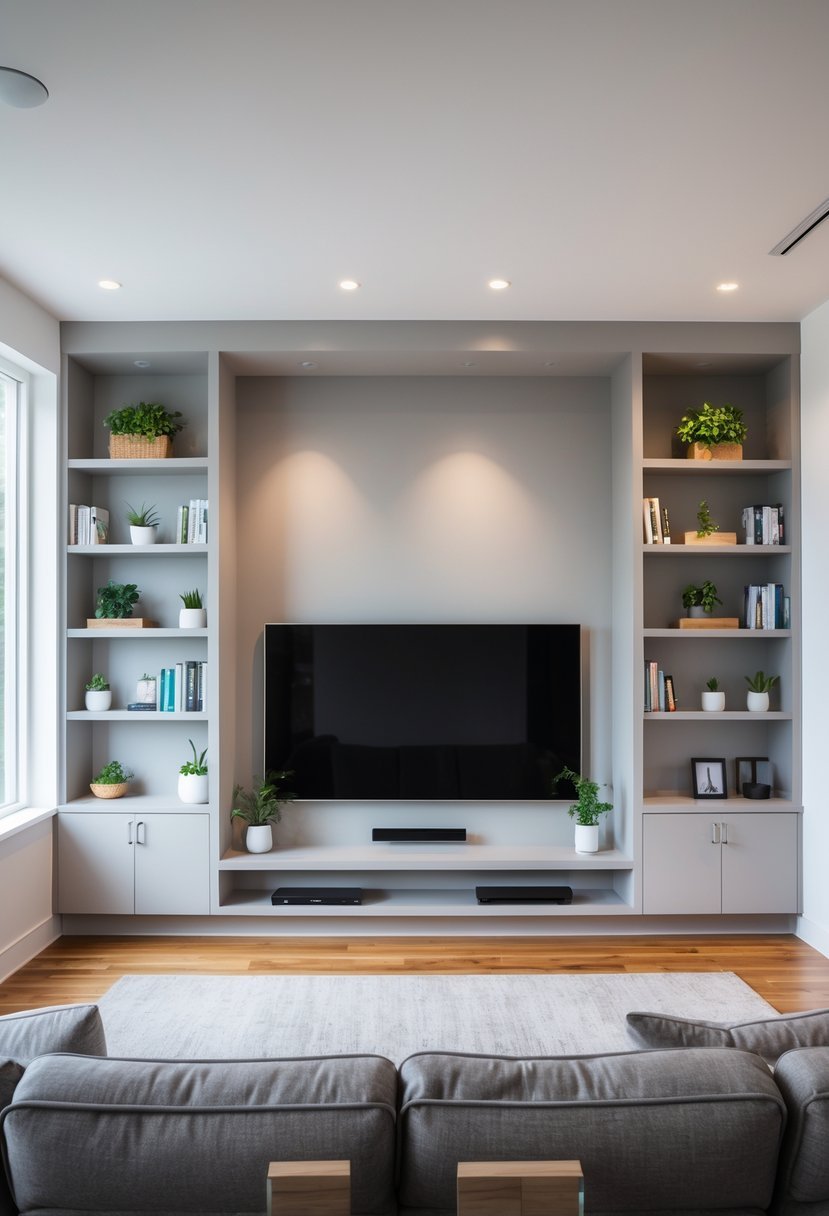
Built-in shelves placed on either side of a TV create balance and symmetry in the living room. This design frames the television, making it a clear focal point without overpowering the space. Shelves provide handy storage for books, decor, or media devices.
This setup keeps the area organized and clean. It reduces clutter by offering dedicated spots for items that might otherwise crowd the room. The shelves can match the style of the TV wall, whether modern, rustic, or traditional.
Lighting can be added above or within the shelves to highlight both the TV and the stored items. This creates depth in the room and adds a warm, inviting feel. Built-ins also maximize storage without taking up extra floor space.
Overall, this design helps make the living room both functional and visually appealing. It works well in many room sizes and styles. It offers a solid solution for those seeking storage and style in one feature.
7) Recessed wall niche for flush TV mount
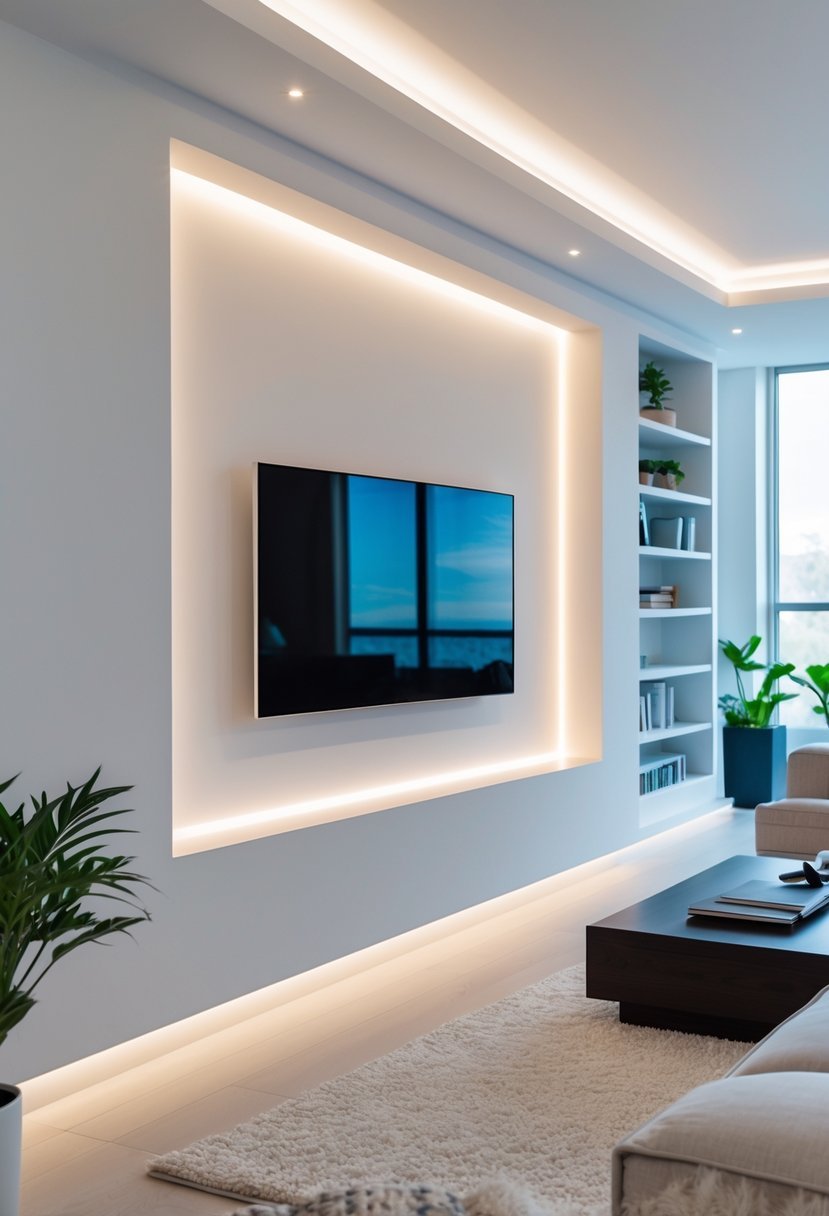
A recessed wall niche is a space cut into the wall to hold a TV. This allows the TV to sit flush with the wall, creating a clean and modern look. The TV does not stick out, which saves room and reduces clutter.
This setup often hides wires and cables inside the wall. It gives the living room a neater appearance without visible cords hanging down. It can also make the TV blend better with the room’s decor.
Building a recessed niche requires removing part of the wall. The depth must fit the TV and any mounting hardware. Some niches include space for extra devices, like a soundbar or streaming box.
Recessed niches can be customized to match the style of the room. Adding shelves or trim around the niche creates a polished finish. It is a practical and stylish option for those who want a low-profile TV display.
8) Rustic reclaimed wood accent wall behind TV
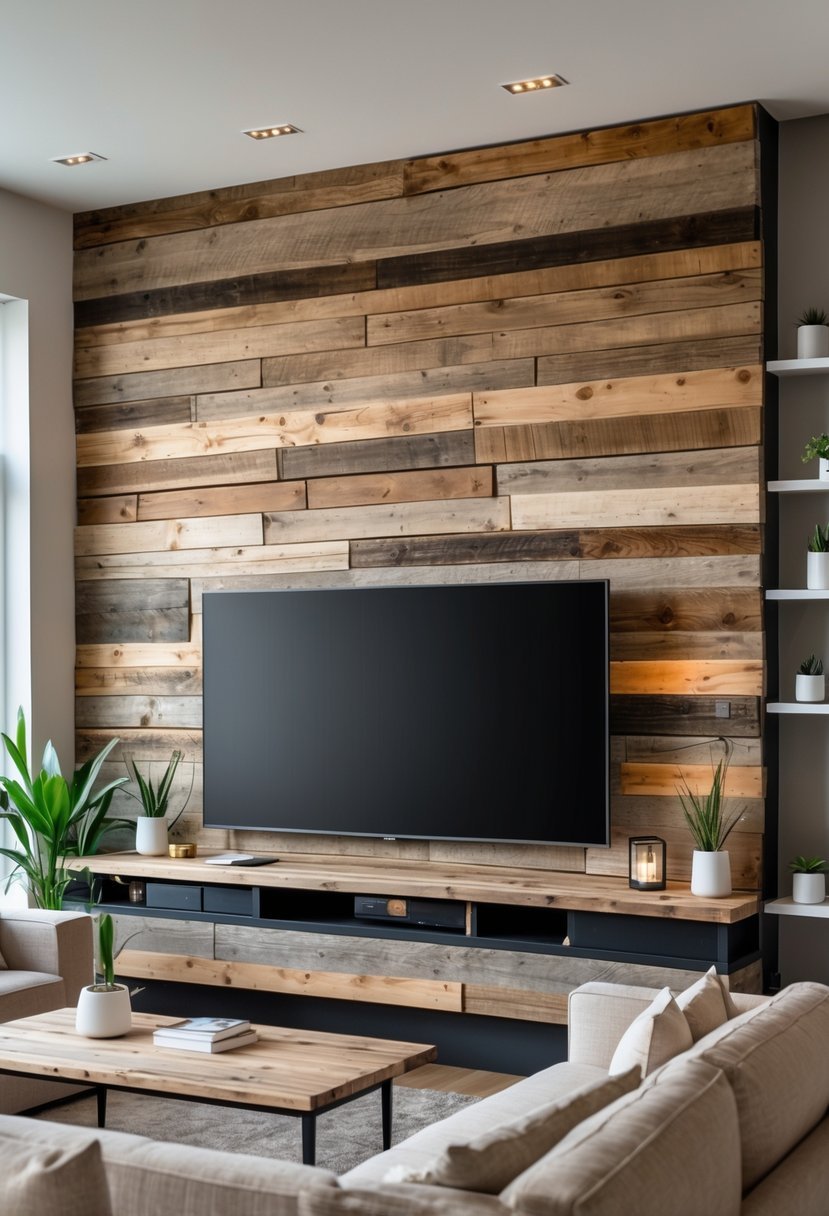
A rustic reclaimed wood accent wall adds a natural and warm feel to the living room. Using reclaimed wood means the materials have history and character. This gives the wall a unique texture that you cannot get with new wood.
The wood often shows signs of wear, like knots and grain patterns, which create a cozy and inviting atmosphere. It works well with various styles, especially farmhouse and rustic designs.
Placing reclaimed wood behind the TV draws attention to that part of the room. It also helps soften the look of modern electronics. The mix of old wood and new technology creates an interesting contrast.
Reclaimed wood can come from pallets, barns, or old furniture. Using these materials is eco-friendly because it recycles wood that might otherwise be discarded.
To keep the space balanced, the wood is often paired with warm lighting or simple furniture. This keeps the focus on the wall without making the room feel too busy.
9) Integrated lighting to highlight TV and décor
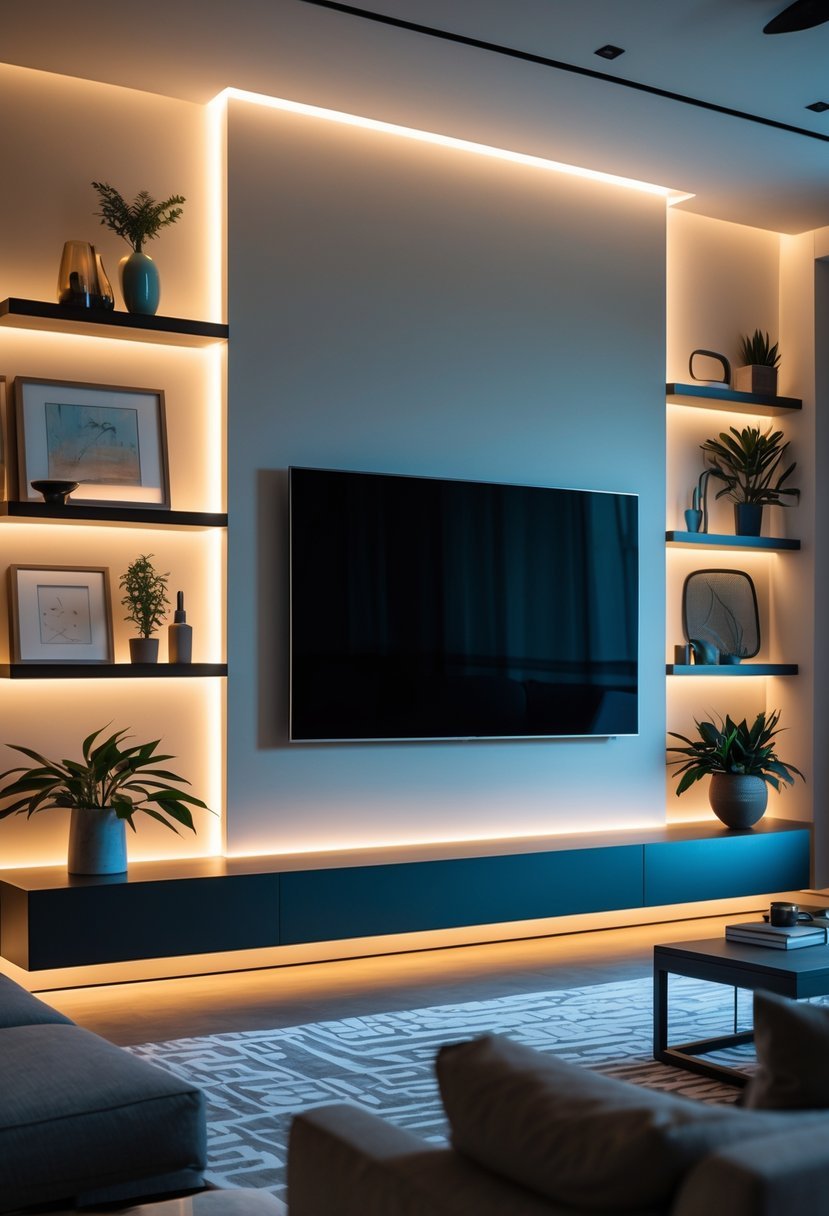
Integrated lighting can add both function and style to a living room TV wall. It helps to draw attention to the TV and any surrounding decorative elements.
LED strip lights placed behind or above the TV create a soft glow that reduces eye strain while watching. These lights also add a modern touch without cluttering the space.
Lighting built into shelves or cabinetry highlights art pieces, books, or plants. This brings focus to the décor and makes the area feel warm and inviting.
Using a mix of overhead and accent lighting allows for different moods. The lighting can be bright for activities or dimmed for relaxing evenings.
Integrated lighting also helps hide wires and speakers by keeping the design clean and sleek. This makes the whole setup look more organized and refined.
Overall, well-planned lighting improves the look of the TV wall while enhancing the viewing experience. It blends technology with décor in a balanced way.
10) Two-story open space design with mounted TV
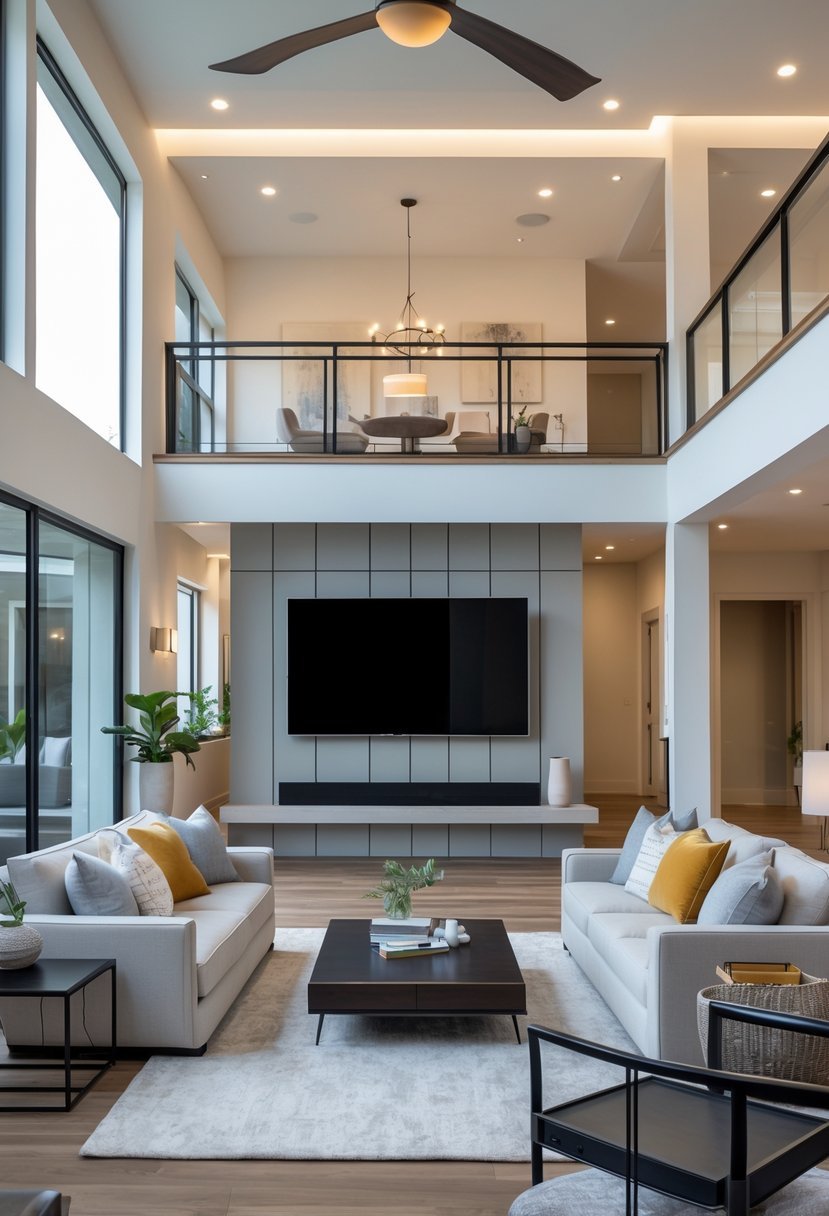
A two-story open space with a mounted TV offers a dramatic and modern look. The tall walls create a large area that can make the room feel spacious and airy. Mounting the TV helps keep the floor clear and focuses attention on the screen.
In such spaces, choosing the right height for the TV is important. It should be placed where it is easy to see from main seating areas without straining the neck. Wall mounts that allow tilting or swiveling are often useful in these settings.
Decor around the TV should be simple and balanced to avoid overwhelming the open walls. A clean, minimal style with some art or shelving can add interest without cluttering the space. Lighting can also help highlight the TV wall, making it a focal point while keeping the room cozy.
Furniture arrangement matters too. Seating is usually grouped to face the TV while taking advantage of the open space. This design works well for families and entertaining guests, blending style with comfort.
11) Mixed materials wall panels combining wood and metal
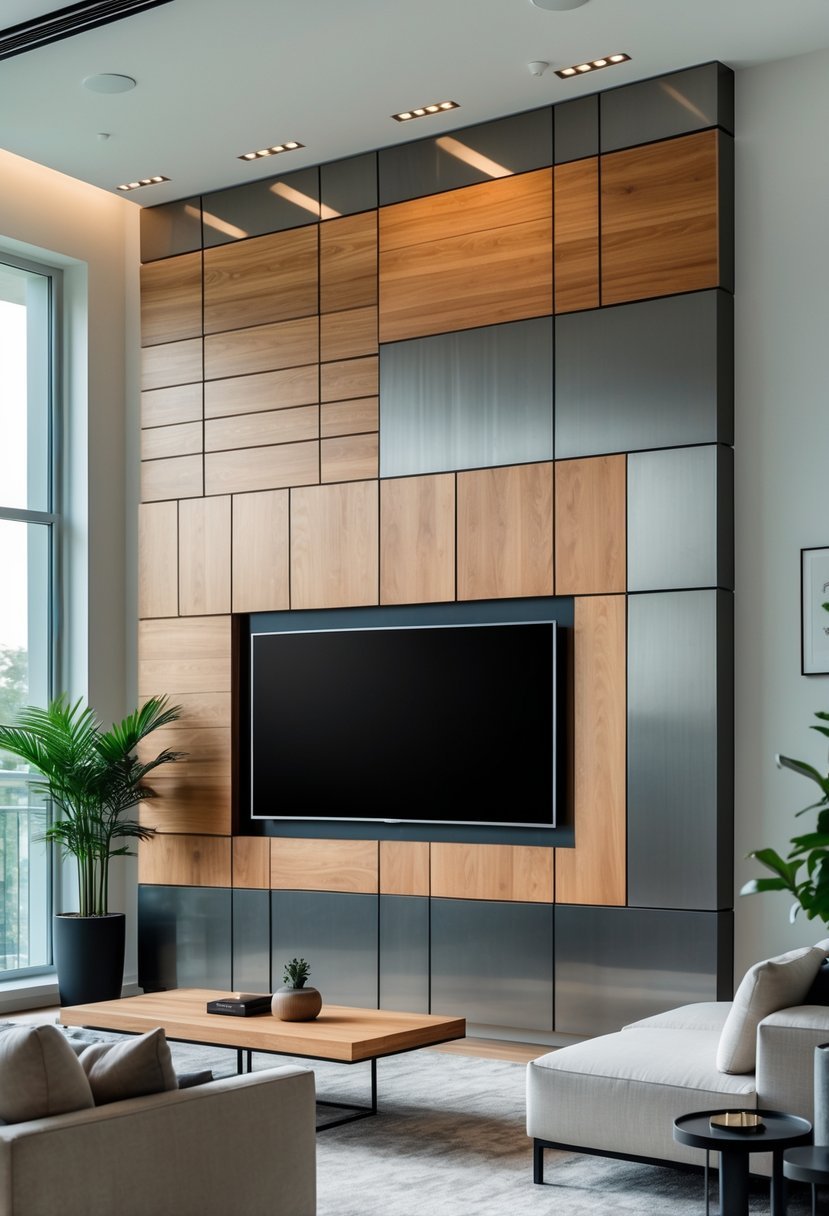
Mixed materials like wood and metal create a balanced look for a TV wall. Wood adds warmth and texture, while metal brings a sleek, modern edge. Together, they give the space both rustic charm and industrial style.
This combination adds depth and dimension to the living room. The contrast between the natural grain of wood and the smooth surface of metal makes the wall visually interesting. It also helps break up large spaces without feeling plain.
Using wood and metal panels can improve the wall’s durability. Metal resists scratches and dents, while wood offers natural sound absorption. This makes the wall both functional and stylish.
Lighting can enhance the mixed materials look. Integrated lights highlight the texture of the wood and the shine of the metal. It draws attention to the TV wall as a key feature in the room.
This style works well with modern and rustic interiors. It suits various color schemes and can fit small or large living rooms. Mixing wood and metal panels lets designers create unique and practical TV walls.
12) Hidden storage behind sliding panels on TV wall
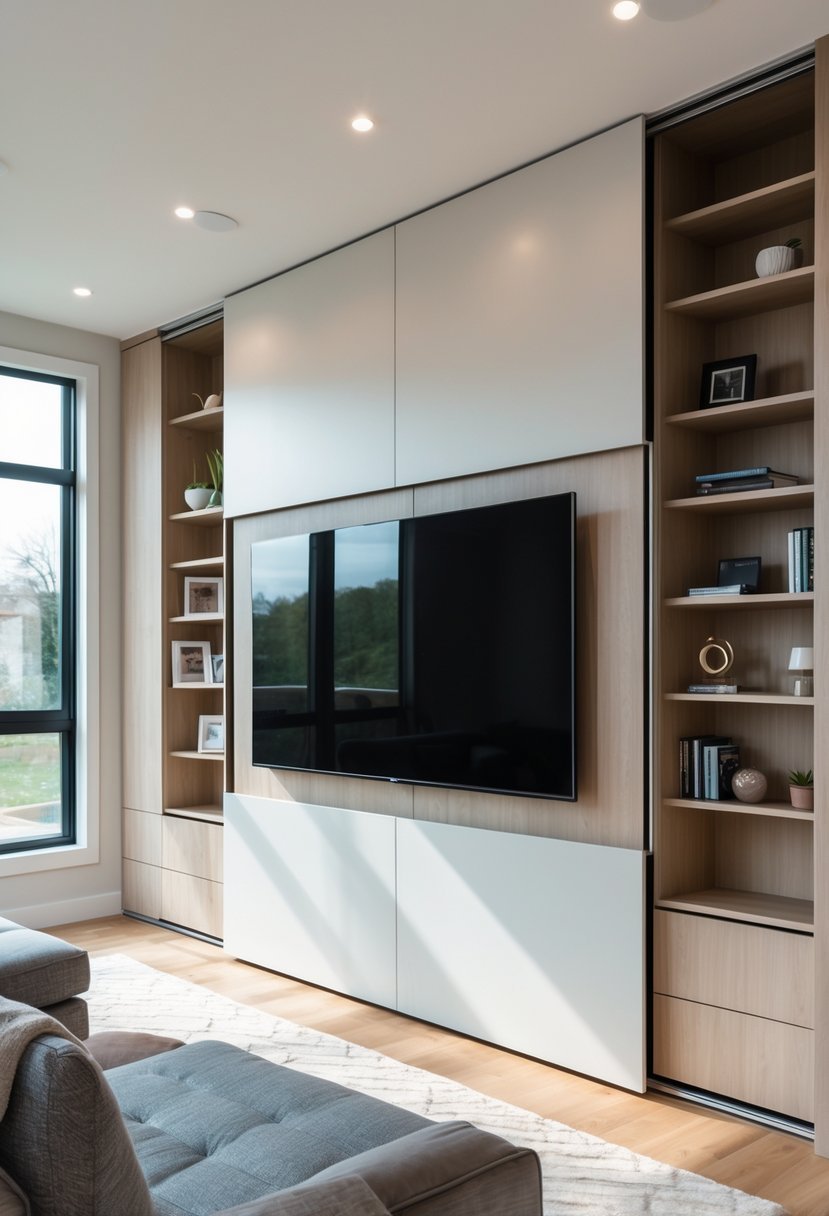
Sliding panels on a TV wall create a simple way to hide the screen when not in use. These panels can slide open to reveal the TV and close to keep it out of sight. This design helps maintain a clean and tidy living room.
Behind the sliding panels, there is often hidden storage space. This area can be used to store electronics, cables, or small decorative items. It helps reduce clutter and keeps the TV wall looking organized.
The sliding mechanism is smooth and easy to operate. It can fit well in both small and large living rooms. This type of hidden storage blends function and style, giving the room a modern and practical look.
Sliding panels can be made from wood, glass, or other materials to match the room’s decor. Their simple design allows the TV to disappear without needing extra furniture. They are a smart choice for anyone wanting to keep their living room neat and stylish.
Design Principles for 12 Living Room TV Walls
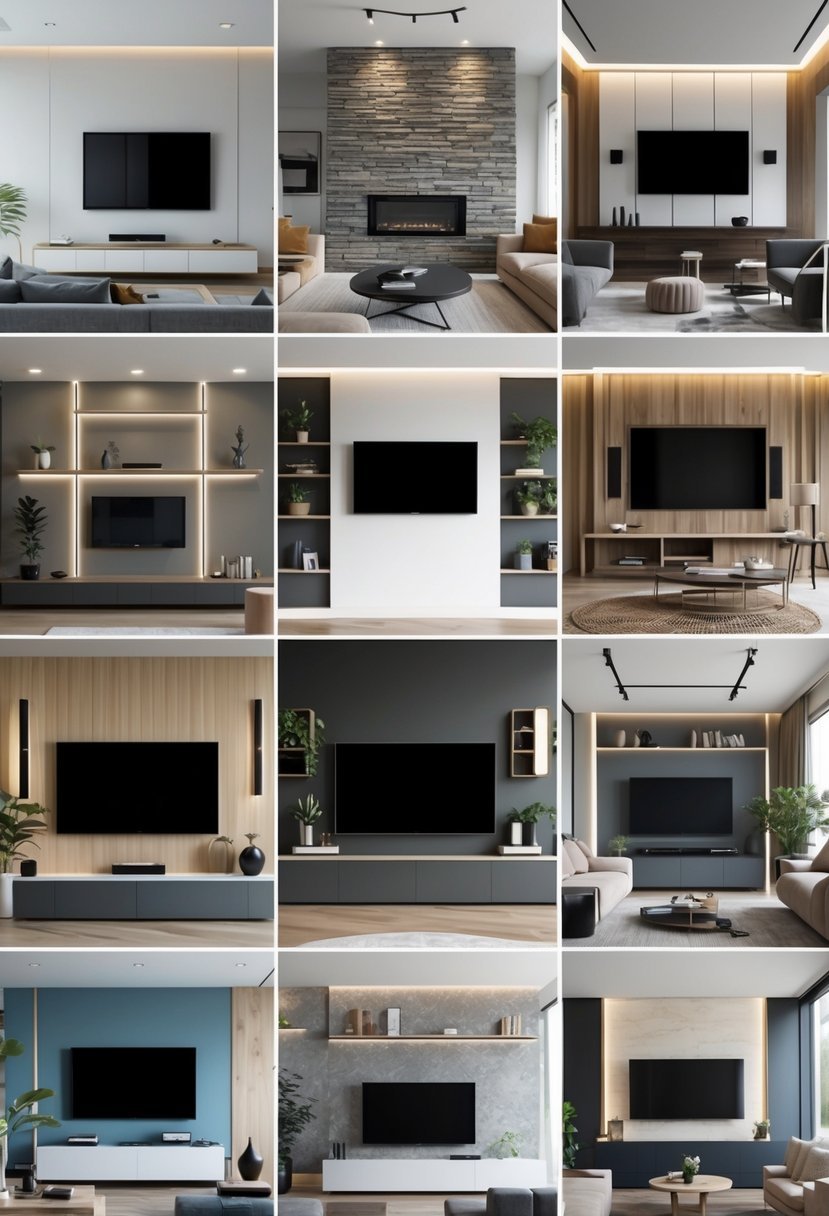
Creating a well-designed TV wall requires careful thought about materials and the balance between style and function. Both aspects shape how the space feels and works daily while supporting the room’s overall design.
Choosing the Right Materials
The choice of materials affects durability, style, and ease of maintenance. For sleek, modern TV walls, smooth materials like wood veneer, glass, or metal work well. These materials give a clean, polished look.
Natural materials such as stone or textured wood add warmth and depth to the wall. They suit rustic or cozy living rooms by creating a more inviting atmosphere.
Matte finishes reduce glare on the TV screen, which improves viewing. Glossy surfaces can reflect light, distracting viewers. Using materials with sound-absorbing qualities can also help improve the room’s acoustics.
Balancing Function and Aesthetics
The TV wall must serve its primary purpose while fitting the room’s style. Managing cable visibility is key. Built-in shelving or hidden compartments keep wires out of sight, creating a tidy appearance.
Furniture placement should support comfortable viewing angles. The TV height and distance from seating impact comfort and eye strain.
Functionality includes storage for devices, remotes, and decor items. Combining open shelves with closed cabinets offers flexibility. Lighting adds both ambiance and practicality; adjustable accent lights around the TV can reduce eye strain and highlight design elements.
Integrating Technology with 12 Living Room TV Walls
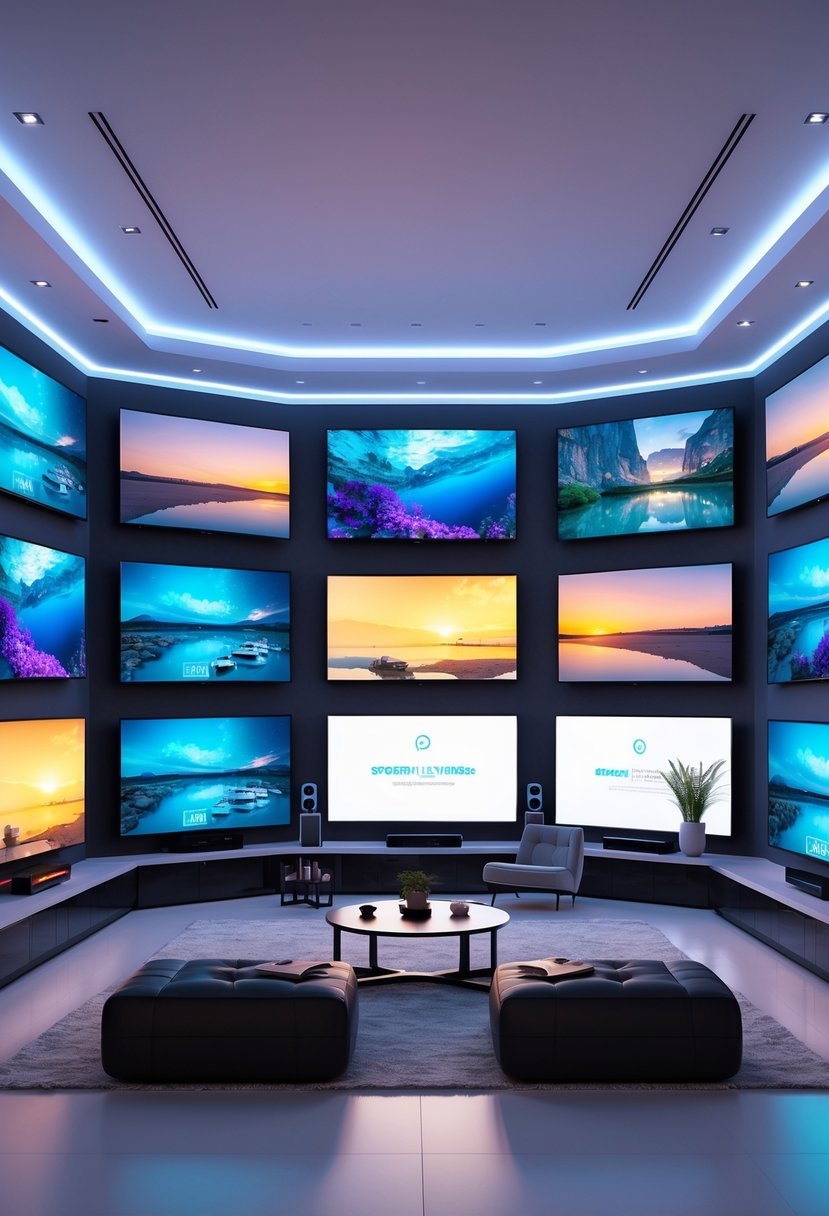
Technology plays a key role in enhancing the look and function of living room TV walls. Proper cable management keeps the area tidy, while smart lighting adds both style and convenience. Together, these elements create a seamless and enjoyable viewing space.
Optimizing Cable Management
Managing cables is crucial to maintain a clean and organized TV wall. Using cable channels or raceways hides wires along the wall surface. For a neater look, in-wall cable management kits allow cords to run behind drywall safely.
Wireless devices can reduce the number of cables needed. Power strips with smart outlets help control devices remotely and save energy.
Labeling cables and grouping them with ties prevents tangling. Keeping cables off the floor also protects them from damage. This simple organization improves both safety and appearance.
Smart Lighting Solutions
Smart lighting adds ambiance and practical benefits to the TV wall. LED strip lights behind the TV reduce eye strain by balancing room brightness. These lights can often change color with a remote or phone app to fit the mood.
Dimmable smart bulbs in nearby fixtures allow precise light control for different activities. Some systems link with voice assistants, enabling hands-free adjustments.
Accent lighting on shelves or around the TV adds depth and highlights décor. Integrating lighting with the overall smart home system offers convenience and energy efficiency.