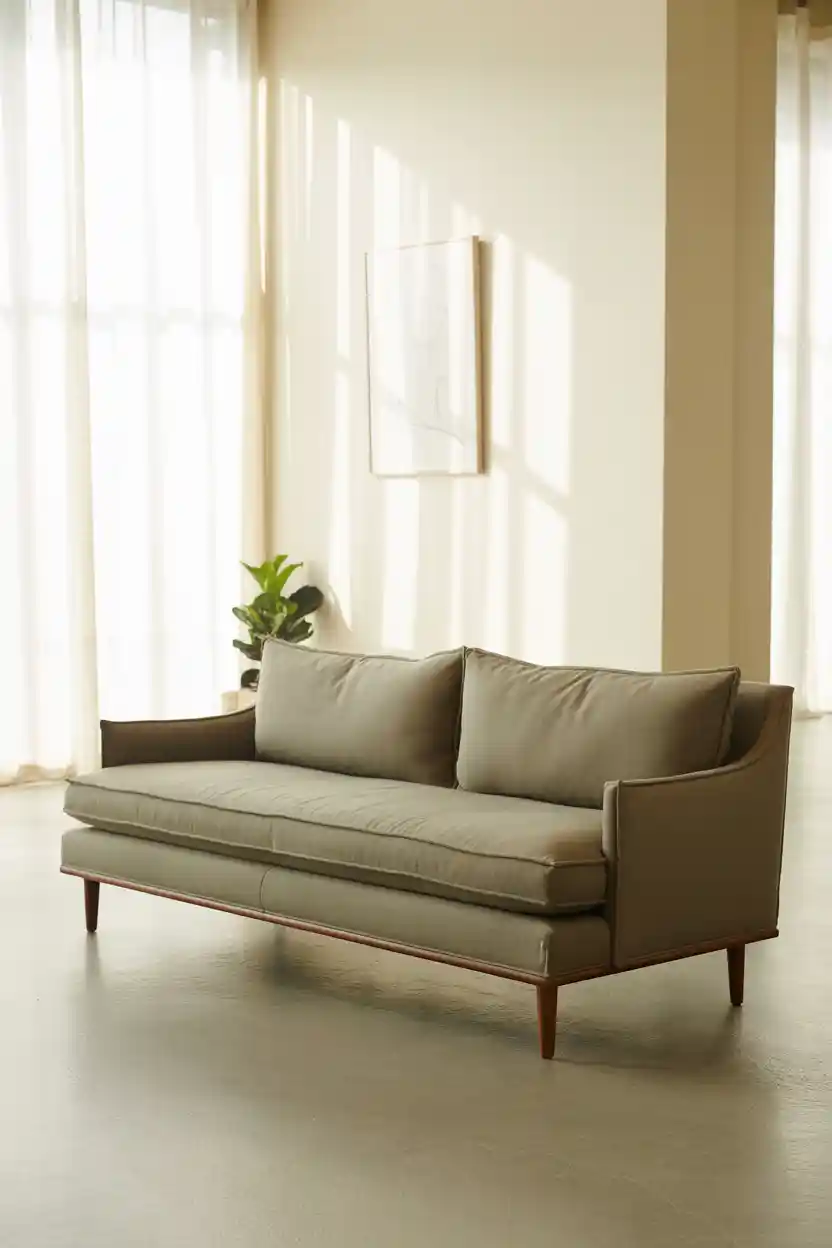
Modern living room design focuses on creating spaces that balance style and function. It often features clean lines, simple furniture, and thoughtful layouts that suit everyday life. These designs help make the living room comfortable without sacrificing a polished look.
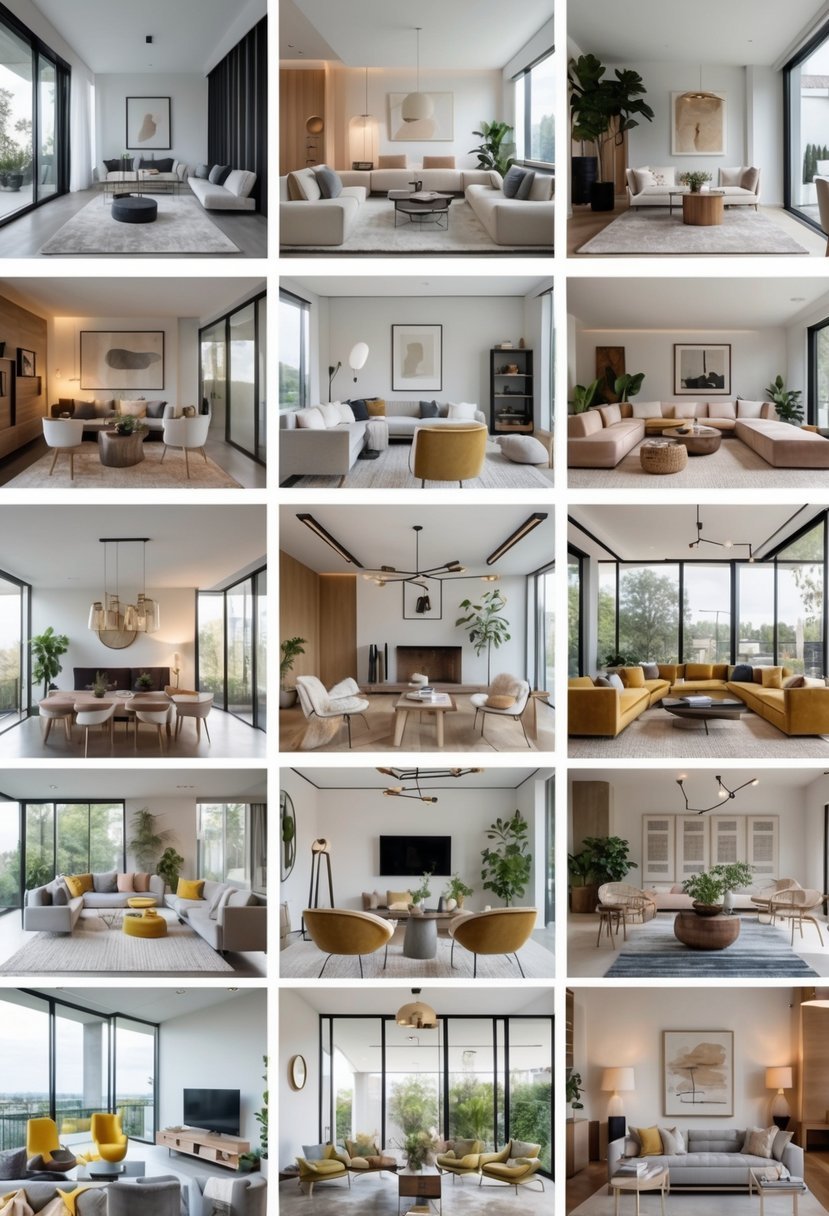
The key to modern living room interiors is achieving a sleek, inviting space that feels both current and timeless. This approach uses natural light, neutral colors, and a mix of textures to keep the room fresh and appealing. It welcomes people to relax while reflecting modern tastes and needs.
1) Incorporate slim, streamlined sofas for sleek seating
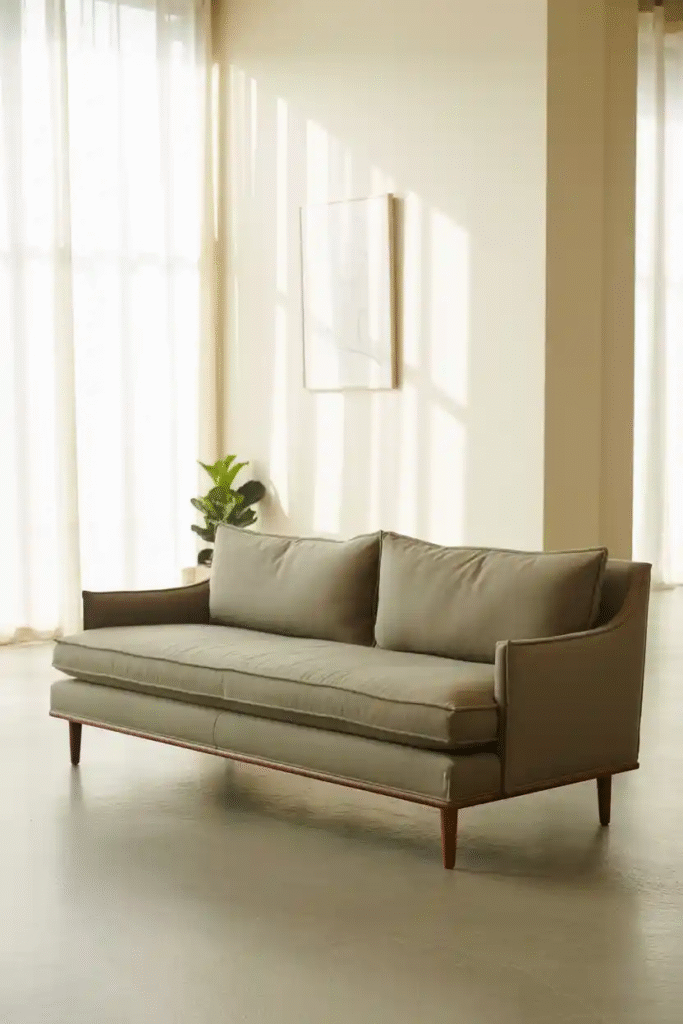
Slim, streamlined sofas fit well in modern living rooms by saving space while maintaining style. Their clean lines and minimal design create an open, airy feel in the room.
These sofas often lack bulky arms and heavy cushions, making the space look less crowded. They work especially well in small rooms or minimalist interiors where simplicity is key.
The sleek look highlights function without losing comfort, offering practical seating that complements modern decor.
2) Use abstract artwork to add visual interest
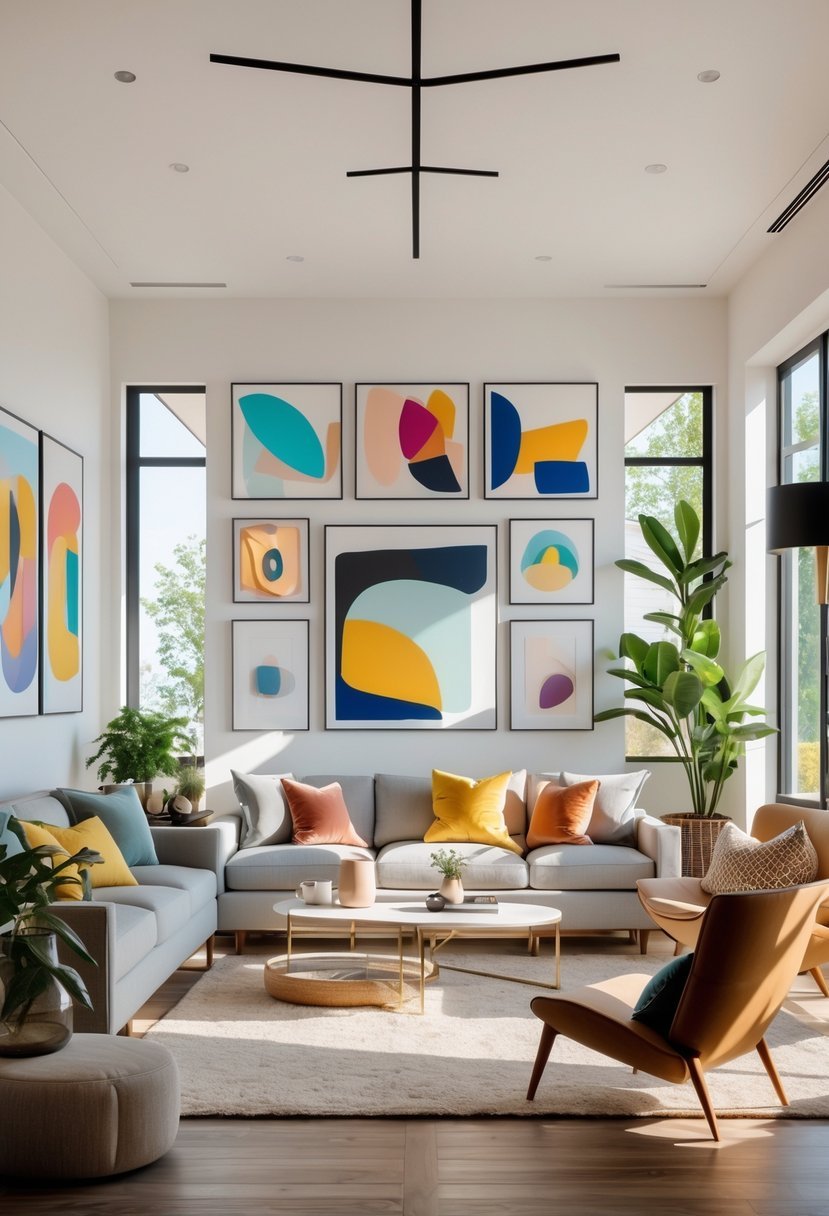
Abstract artwork brings color, shape, and texture into a living room. It works well with both simple and detailed décor styles.
A large abstract painting or a set of panels can become the room’s focal point. It adds depth without overwhelming the space.
Abstract pieces reflect personal taste. They create a sophisticated look while keeping the room modern and engaging.
3) Opt for natural materials like wood and stone accents
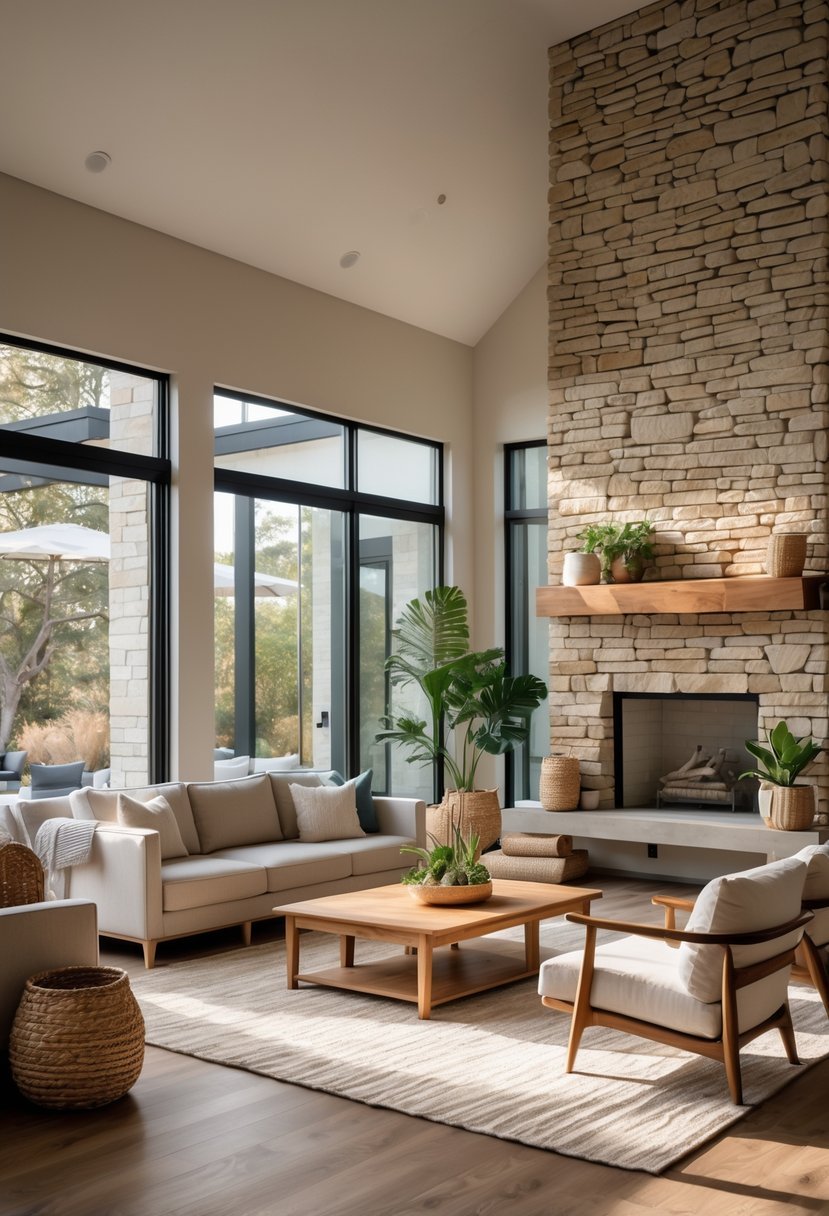
Using natural materials like wood and stone adds texture and warmth to a modern living room. These elements create a grounded, calm atmosphere without feeling cold or heavy.
Wood furniture or stone accents often become focal points that blend well with neutral colors. They give the room a timeless and organic look while keeping it sleek and simple.
4) Choose functional layouts that maximize space
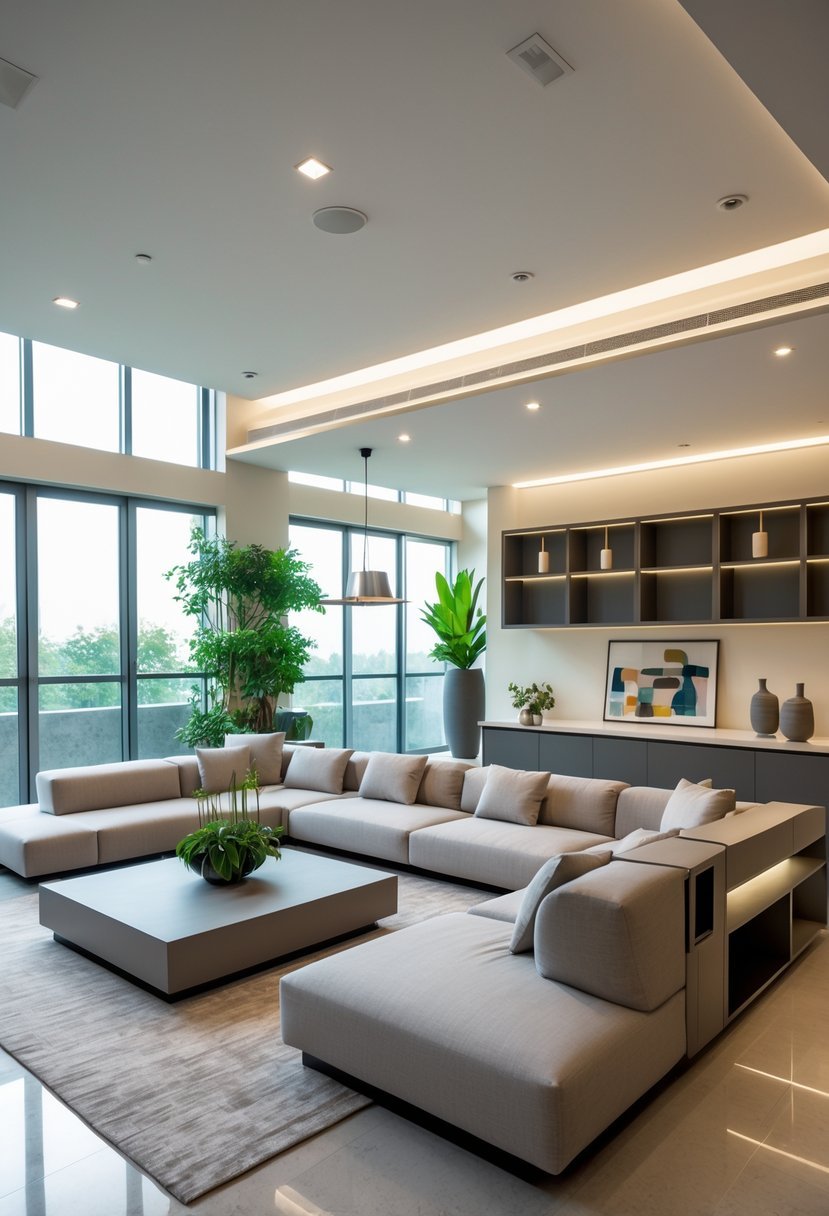
Functional layouts help use every inch of a living room well. Arranging furniture to create clear pathways improves movement and comfort.
Choosing multi-purpose pieces adds flexibility while keeping the space open. Proper layout makes the room feel bigger and more organized.
Maximizing space means balancing style with usefulness. Thoughtful planning ensures the living room works for daily activities and gatherings.
5) Integrate minimalist decor to maintain clean lines
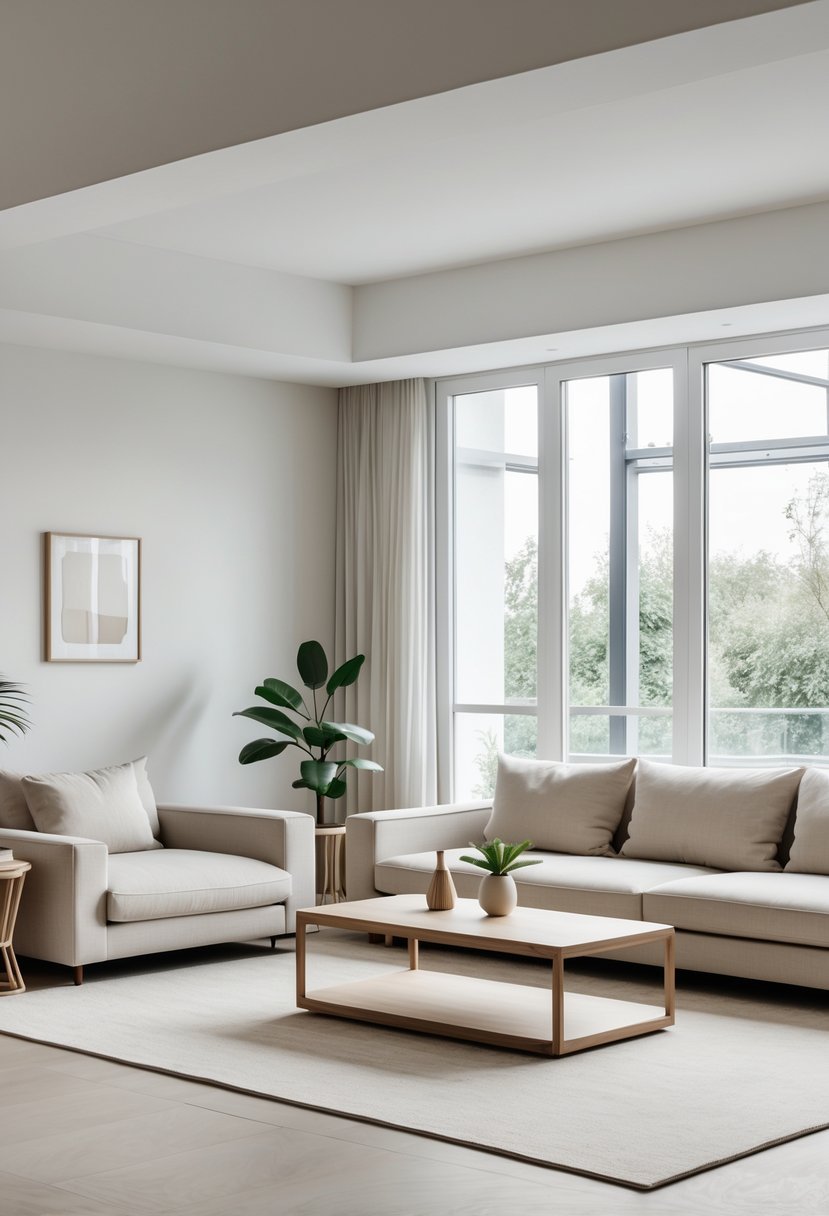
Minimalist decor focuses on simplicity and function. It uses few, carefully chosen pieces to avoid clutter.
He or she should pick furniture with clean, straight lines. Neutral colors like white, gray, or beige keep the space calm.
Removing unnecessary items helps maintain an open look. Textures from natural materials, like wood, add subtle interest without overwhelming the room.
6) Add indoor plants for natural texture and color
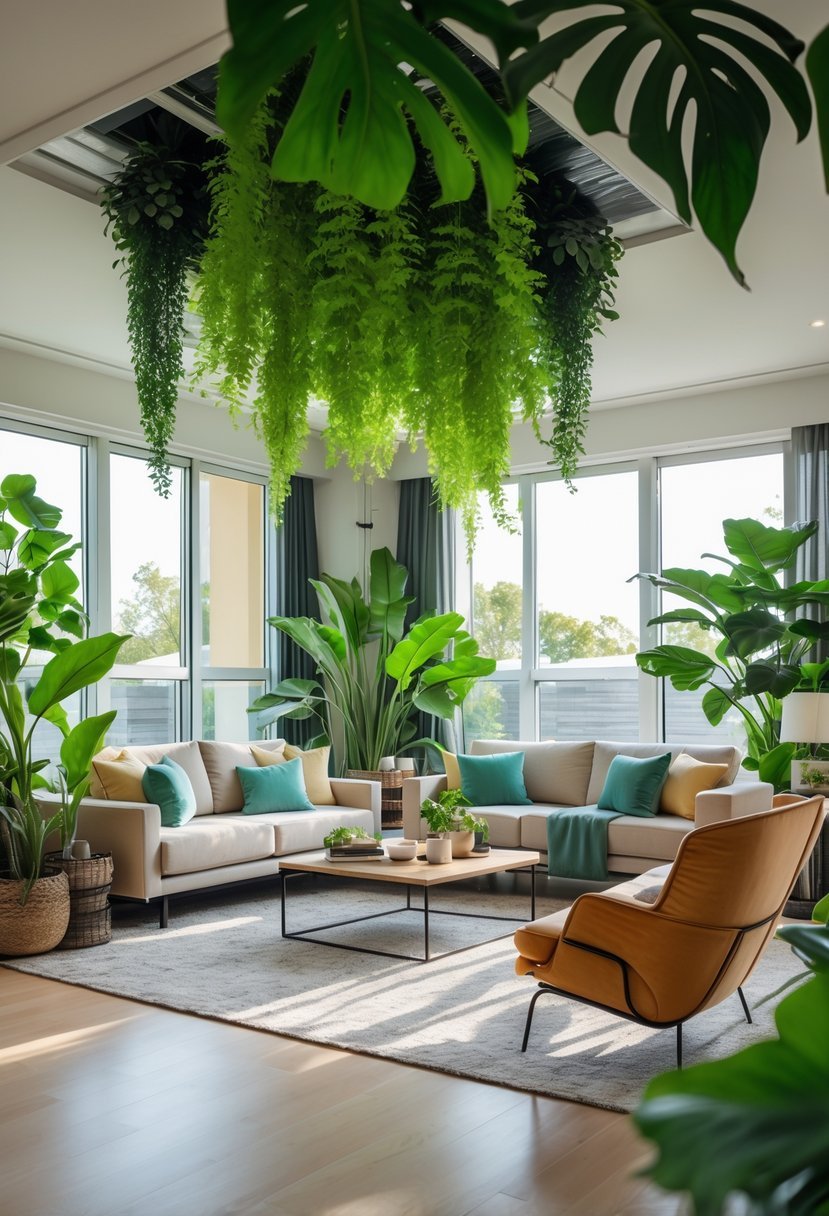
Indoor plants bring natural texture and fresh color to any living room. They create a sense of calm and soften hard edges in modern spaces.
Mixing tall and trailing plants adds depth. Placing plants in different types of pots can also add visual interest.
Plants like bamboo or palms work well to divide open spaces without blocking light. They improve air quality while enhancing the decor.
7) Select neutral color palettes with occasional bold accents
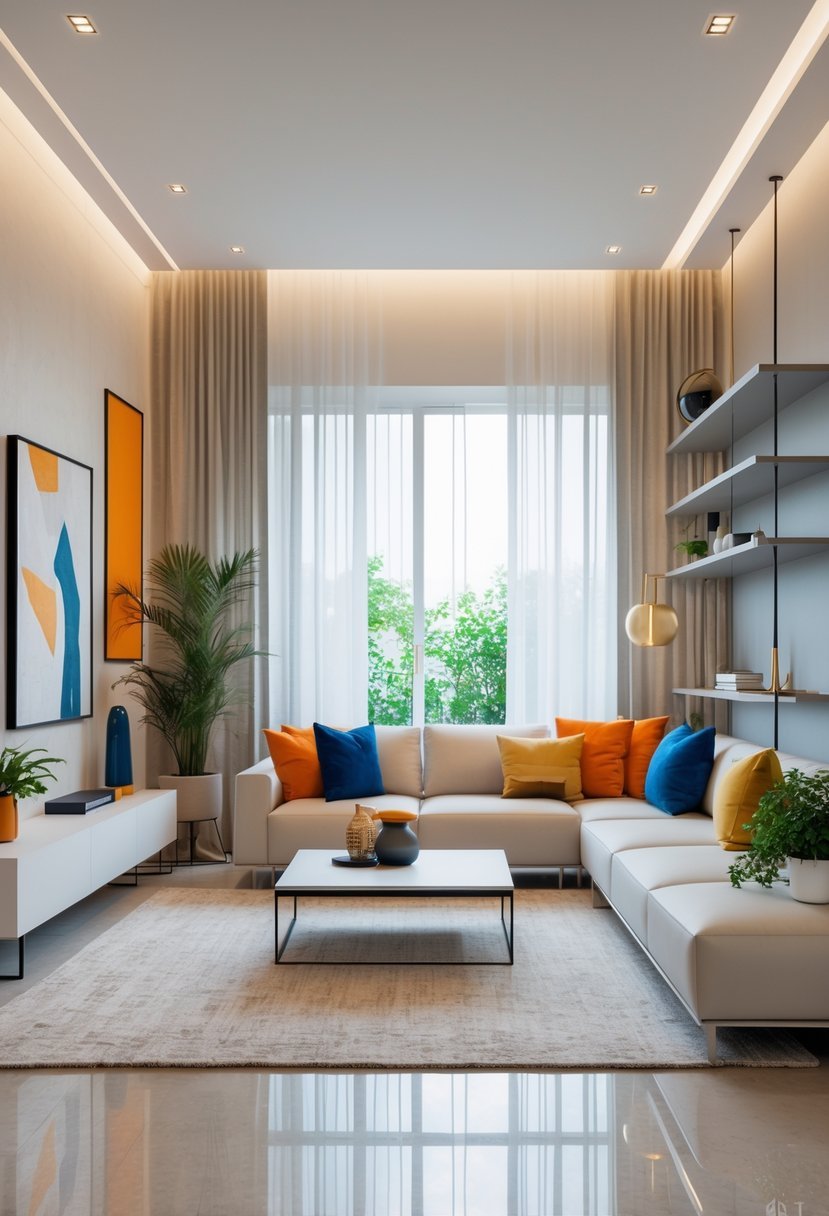
A neutral color palette creates a calm and timeless base in a living room. Shades like white, gray, beige, and brown help make the space feel open and versatile.
Adding bold accents in small doses, such as colorful pillows or a bright chair, brings energy without overwhelming the room. This mix balances simplicity with interest.
Bold colors can also highlight key pieces or architectural details. This approach keeps the overall look modern while allowing for easy updates.
8) Use built-in storage to reduce clutter
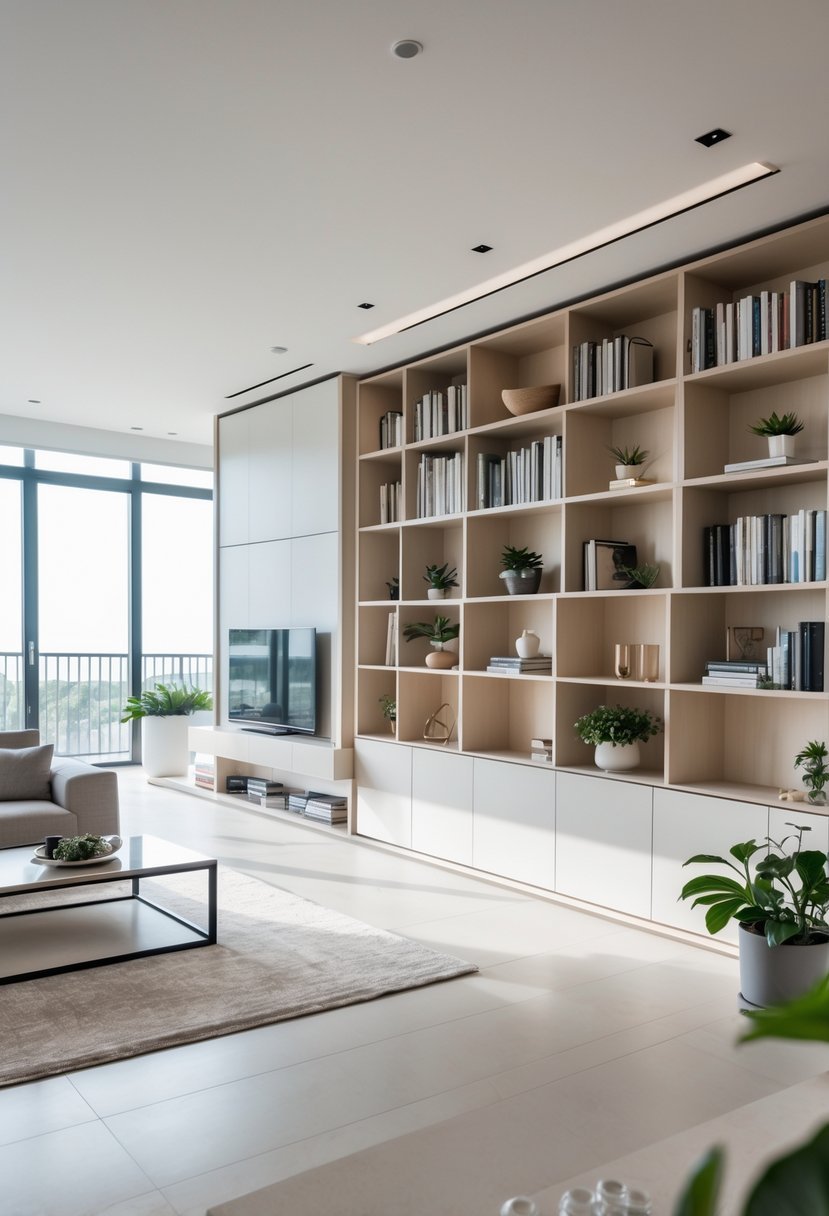
Built-in storage helps keep the living room tidy by offering hidden spots for items. It uses walls and unused spaces efficiently without taking up extra floor area.
These storage solutions can be shelves, cabinets, or drawers designed to match the room’s style. They hold books, decor, and everyday items while keeping surfaces clear.
By customizing built-ins to fit specific needs, homeowners can create a neat, organized space that feels open and comfortable.
9) Incorporate open shelving for display and practicality
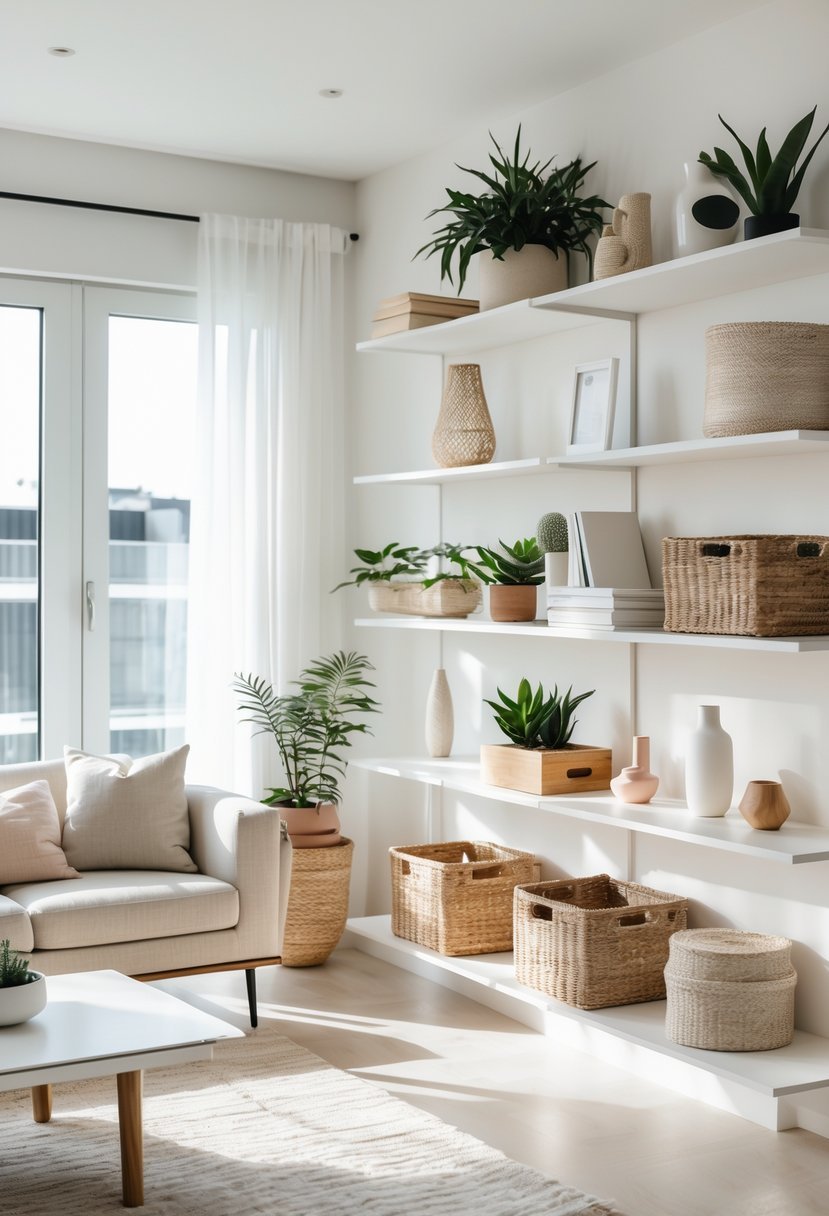
Open shelving adds both style and function to a living room. It allows items to be showcased, making the space feel personalized.
These shelves can hold books, plants, or decor, creating an organized yet inviting look.
Open shelves work well in modern designs by keeping the room airy and clutter-free. They also maximize wall space without using floor area.
10) Choose lighting fixtures with modern geometric shapes
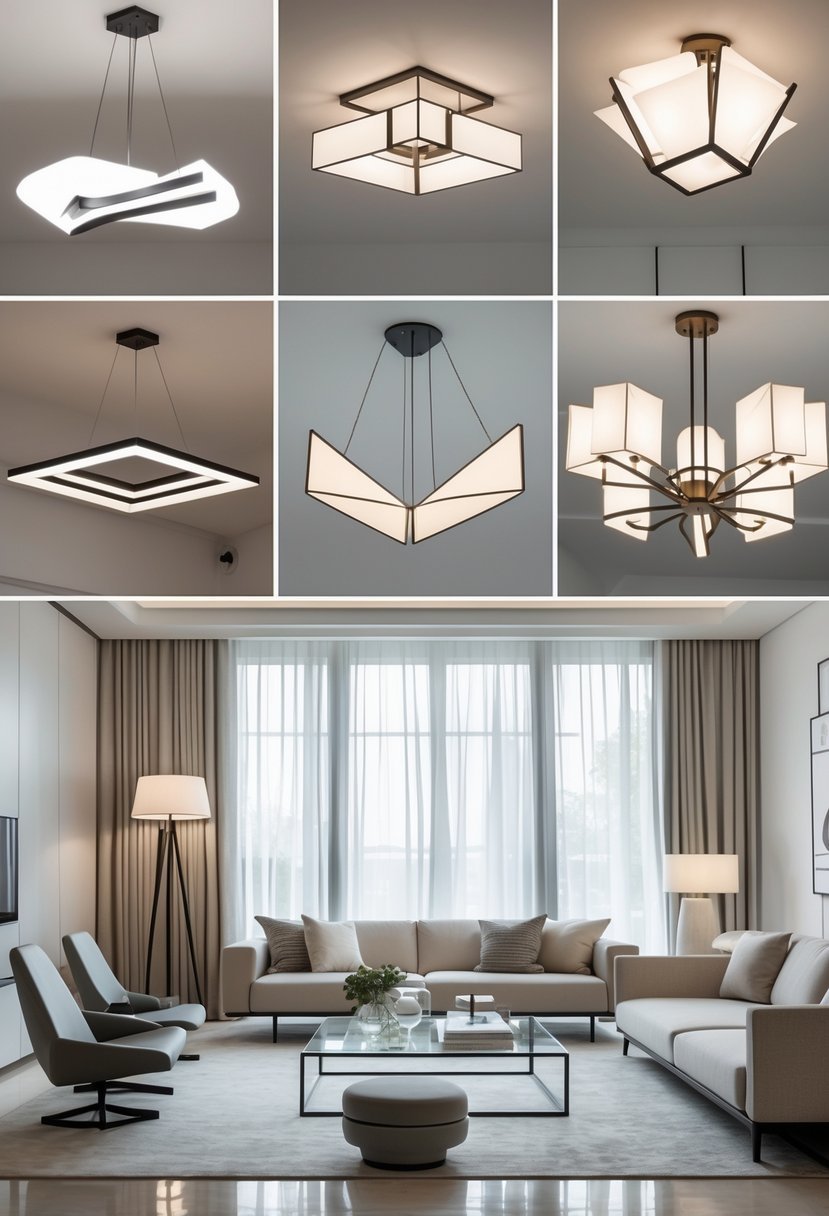
Lighting fixtures with geometric shapes add a clean and modern look to a living room. They bring balance and structure without being too complex.
Shapes like triangles, circles, and hexagons work well in different finishes such as matte black, gold, or brass. These designs often act as a subtle statement, enhancing the room’s style.
Using geometric lights helps create a clear, organized feel while providing functional illumination.
11) Combine metal and glass furniture pieces
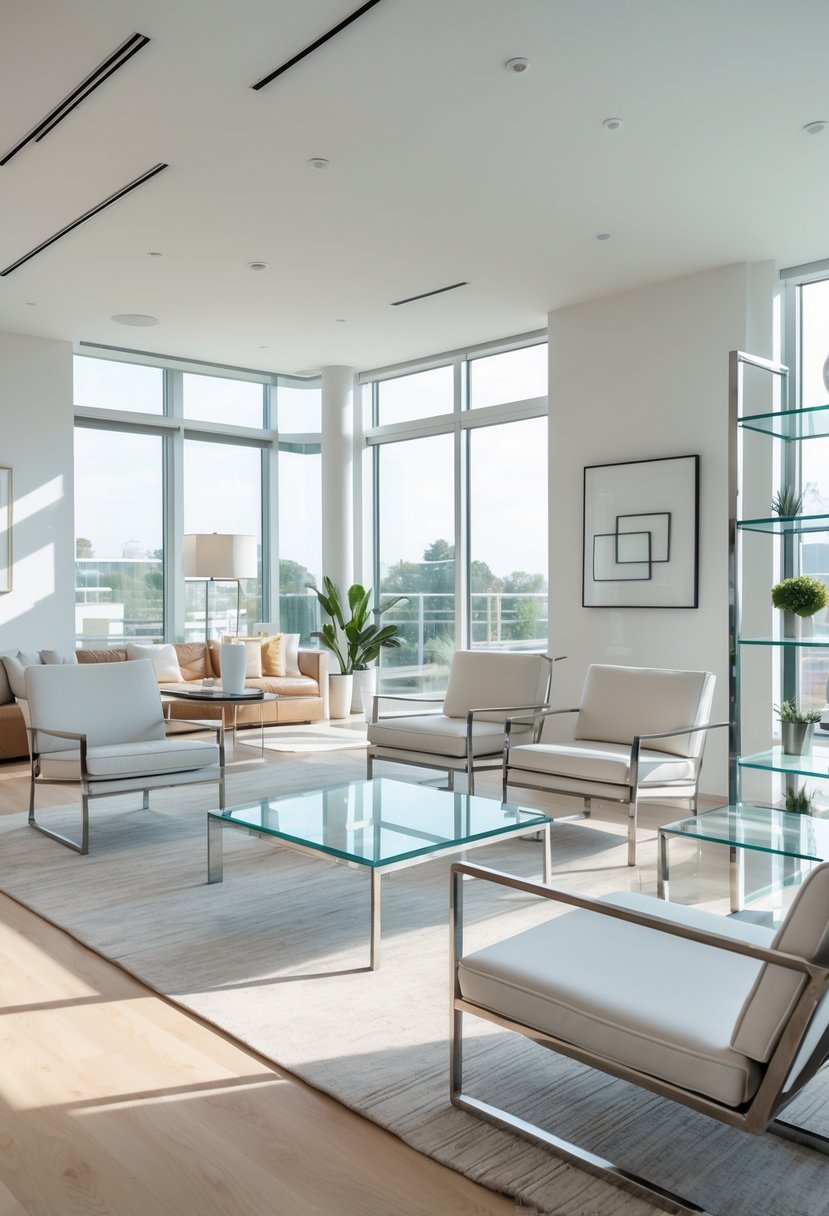
Combining metal and glass furniture creates a sleek, modern look. Glass tops paired with metal frames add lightness and structure to a room.
This mix works well in tables, cabinets, or shelves. It balances transparency with solid lines, making spaces feel open yet strong.
Using metal and glass together offers both style and function. It suits many design styles, from industrial to contemporary.
12) Incorporate midcentury modern design elements
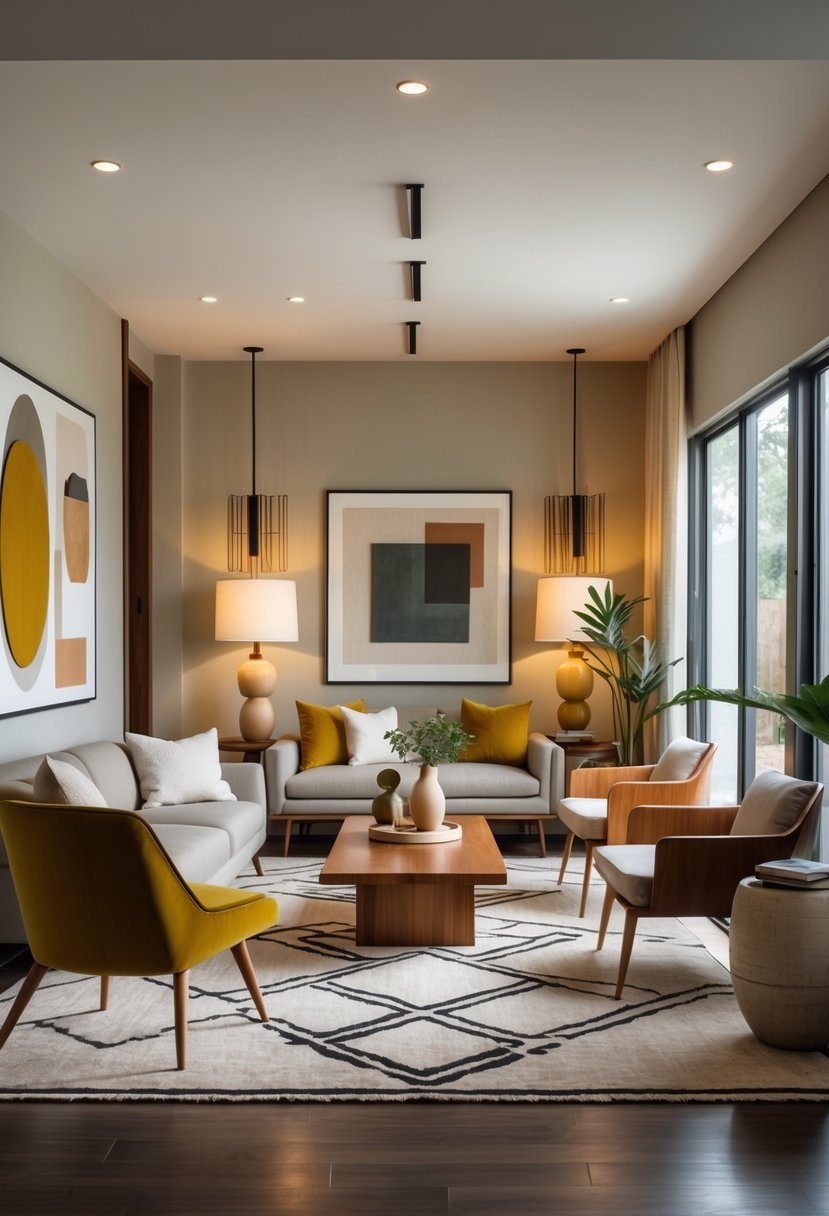
Midcentury modern design focuses on clean lines and simple shapes. It uses natural materials like wood and leather to add warmth to the space.
Symmetry and geometric patterns are common and create visual balance. This style mixes function with form, making rooms both stylish and practical.
Adding iconic furniture pieces and subtle vintage touches can update a modern living room with timeless appeal. It fits well with other design styles for a personalized look.
Core Principles of Modern Living Room Design
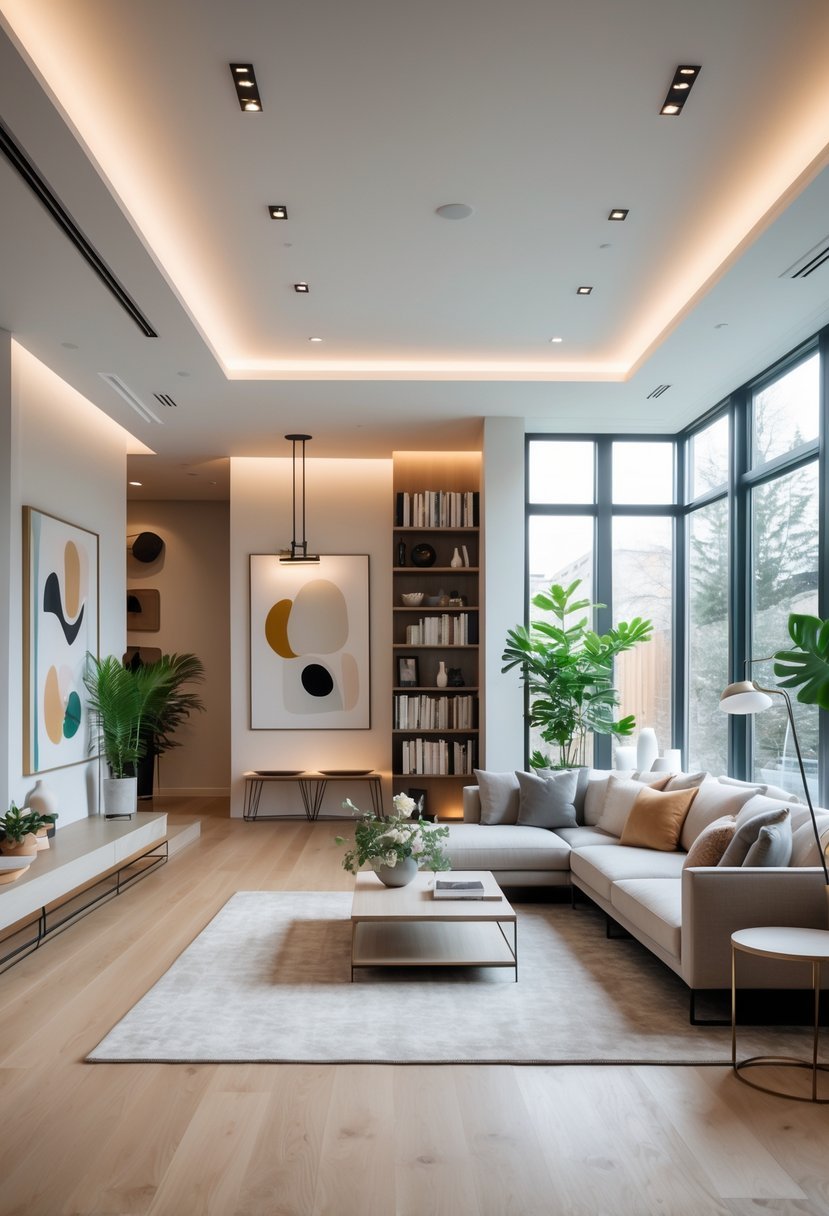
Modern living room design centers on simplicity, purpose, and style. Clean lines are paired with practical choices, while color and furniture create a balanced and inviting space. Each design element works together to make the room both attractive and livable.
Balancing Minimalism and Comfort
Modern design values minimalism, but comfort is just as important. The space should feel open and clutter-free without being cold or uninviting. Achieving this balance means selecting only essential pieces and ensuring they provide ease and coziness.
Textures like soft fabrics, rugs, and cushions add warmth to sleek surfaces like glass or metal. Comfortable seating with clean shapes invites relaxation. A few well-placed objects can personalize the space, avoiding overcrowding but keeping it lively.
Color Palettes That Define Modern Interiors
Modern living rooms often use neutral bases such as whites, grays, and beiges. These colors create a calm backdrop that highlights shapes and textures in the room. Pops of bold or saturated colors add interest without overwhelming.
Accent colors appear in pillows, artwork, or small furniture. This method keeps the look fresh while remaining simple. Choosing natural tones drawn from earth or stone can also enhance the feeling of warmth and connection to nature.
Incorporating Functional Furniture
Furniture in modern living rooms is chosen for practicality as much as style. Pieces often have clean lines and serve multiple purposes, like storage ottomans or modular sofas that adjust to different needs.
Furniture layout focuses on clear pathways and easy movement. The goal is to keep the room useful for daily activities, whether relaxing, entertaining, or working. Materials like wood, metal, and glass combine durability with a modern look.
Enhancing Ambiance With Lighting and Decor
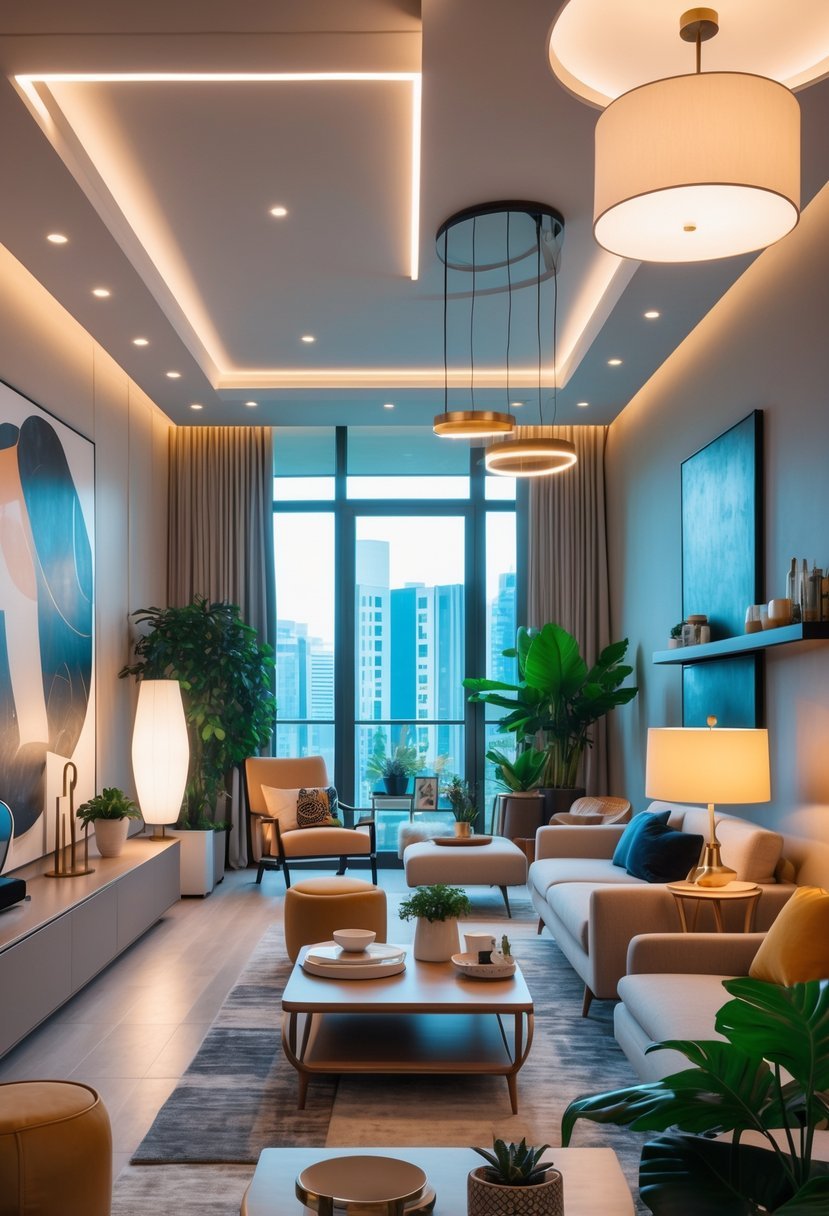
Lighting and decor are key to setting the right mood in a modern living room. Combining natural light, bold lighting fixtures, and carefully chosen art creates a balanced, inviting space.
Strategic Use of Natural Light
Natural light helps make a living room feel open and fresh. Positioning furniture near windows maximizes this effect. Sheer curtains allow sunlight to soften the room without glare.
Mirrors placed across from windows reflect light, brightening darker corners. Using light-colored walls and floors can also amplify natural brightness.
Controlling natural light with blinds or shades is important for afternoons when sun can become too strong. Properly managing daylight reduces the need for artificial lighting and enhances the room’s natural warmth.
Statement Lighting Fixtures
Modern living rooms benefit from lighting fixtures that do more than just illuminate. Fixtures like chandeliers or sculptural pendants serve as focal points and add style.
Fixtures with clean lines and sleek finishes fit well in contemporary spaces. Warm LED bulbs or glass shades produce inviting glows without harshness.
Layering lighting is useful—combine ambient lighting (like ceiling fixtures) with task lighting (table or floor lamps) and accent lighting (wall sconces) to create depth and flexibility. This variety supports different moods and activities.
Art and Decor Choices for Modern Appeal
Artwork and decor define personal style and enhance a room’s character. Large, minimalist paintings or geometric prints complement modern aesthetics.
Sculptural pieces made from metal or wood add texture and focus. Keeping decor uncluttered helps maintain a clean, modern look.
Using a limited color palette with bold accent pieces can unify the design. Green plants also introduce natural elements that soften hard lines without disrupting the modern theme.