Modern living rooms focus on creating spaces that are both stylish and comfortable. They often blend clean lines with practical layouts to suit daily life and social gatherings. These rooms are designed to fit a variety of tastes while maintaining a sense of simplicity and function.
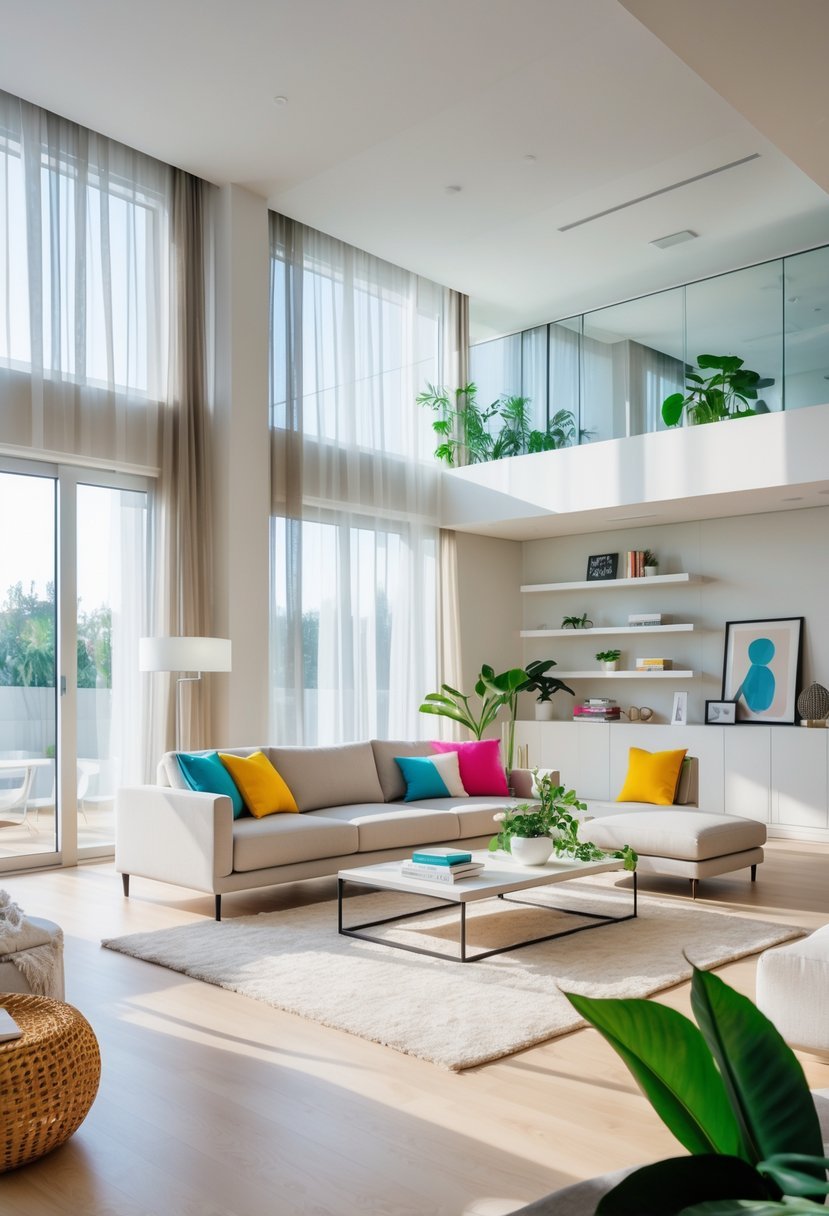
The key to a modern living room is balancing style with comfort to make the space inviting and usable. This approach allows homeowners to enjoy a room that works for relaxing, entertaining, or even working, all while reflecting their personal taste.
1) Incorporate sleek, low-profile furniture with clean lines
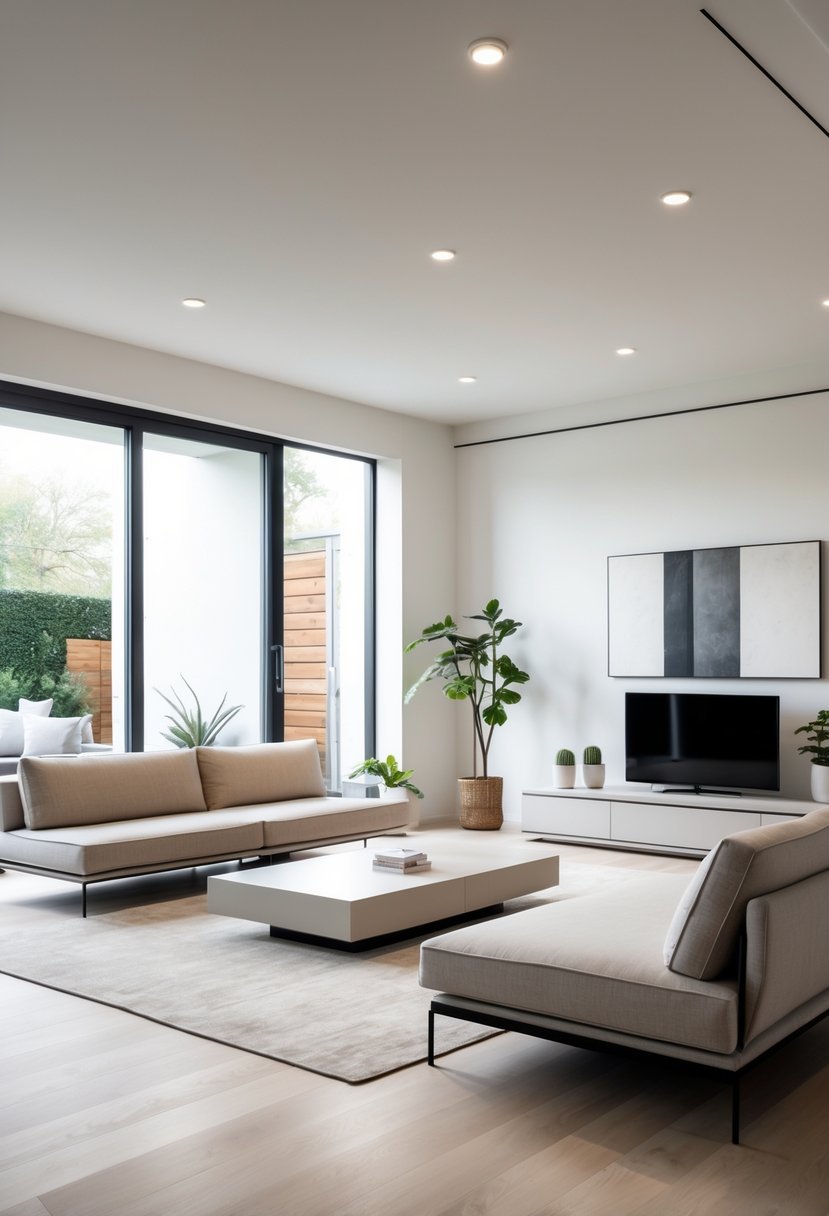
He or she can choose furniture that has a simple, low-profile design. Clean lines and minimal shapes help keep the room feeling open and uncluttered.
Thin legs and smooth surfaces add to the modern look. Pieces like slim sofas or armchairs work well to create a neat and spacious feel.
This type of furniture blends function with style. It supports a calm, organized space without extra decoration.
2) Use neutral color palettes with accent colors for balance
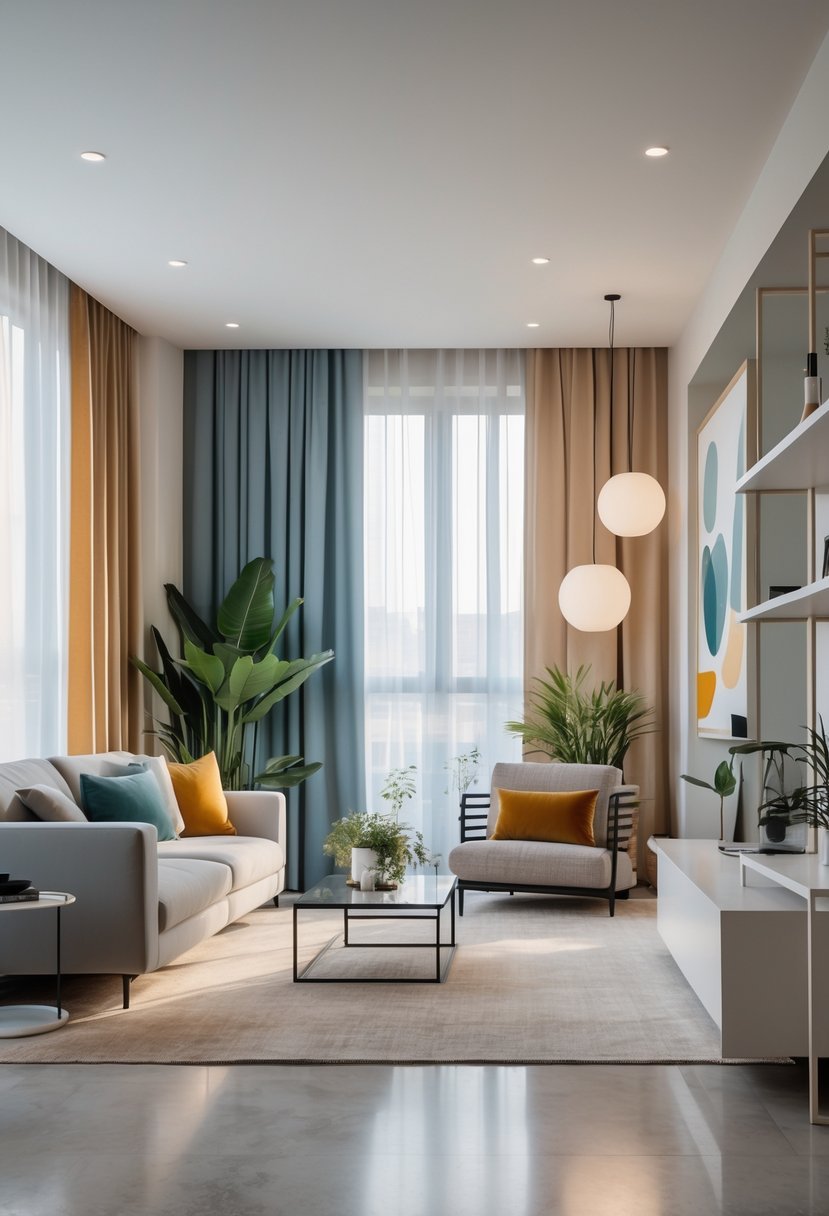
Neutral colors like beige, gray, and brown create a calm and timeless base for living rooms. They help make spaces feel open and inviting without overwhelming the eyes.
Adding accent colors brings life and interest to the room. Small pops of bold or soft colors can personalize the space and prevent it from feeling dull.
Using the 60-30-10 rule helps keep balance: 60% neutral, 30% secondary colors, and 10% accent shades. This approach makes the room look well put together and stylish.
3) Add natural materials like wood and stone for texture
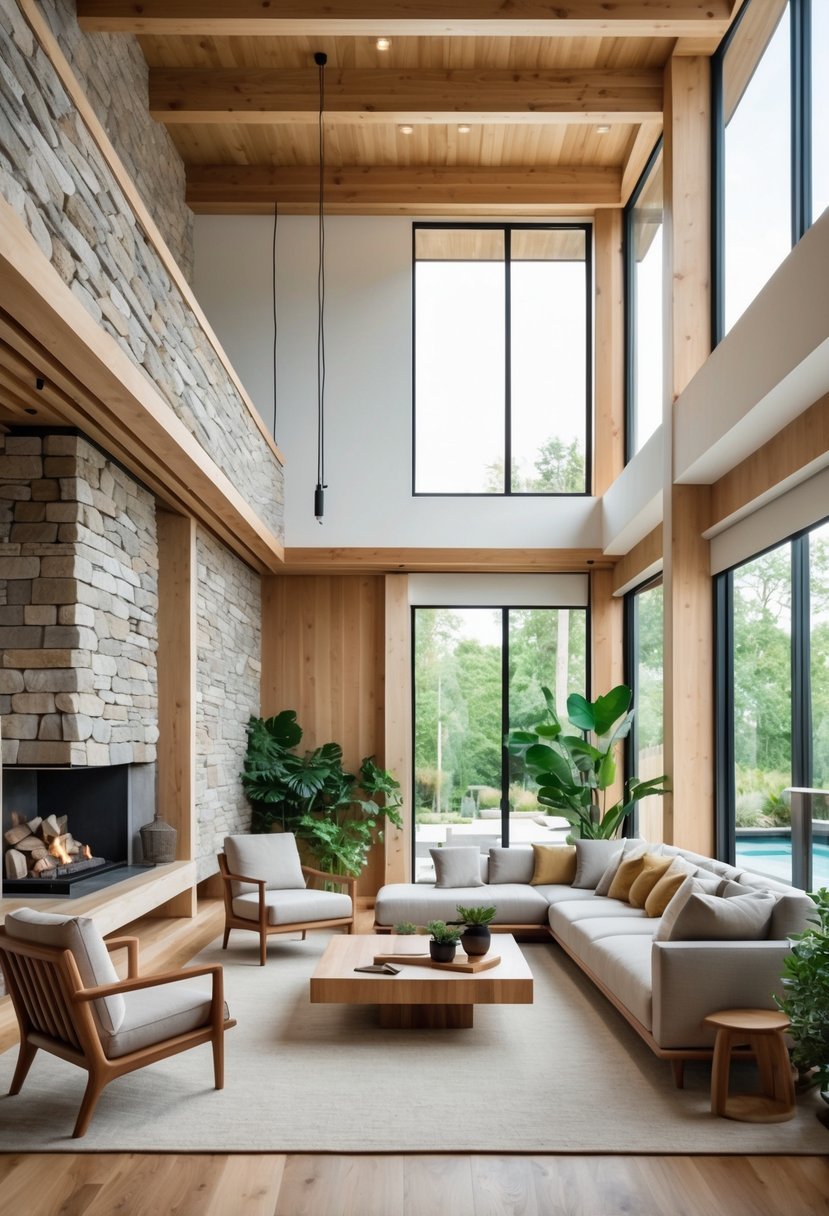
Natural materials such as wood and stone bring texture and depth to a living room. Wood adds warmth and a sense of comfort through its grain and color variations. Stone offers a solid, grounded feel while creating visual interest on walls or furniture.
Using these materials helps balance modern designs by softening clean lines. They work well in feature walls, coffee tables, or shelving. Combining wood and stone creates a natural, inviting space without overwhelming the room.
4) Choose multifunctional furniture for space efficiency
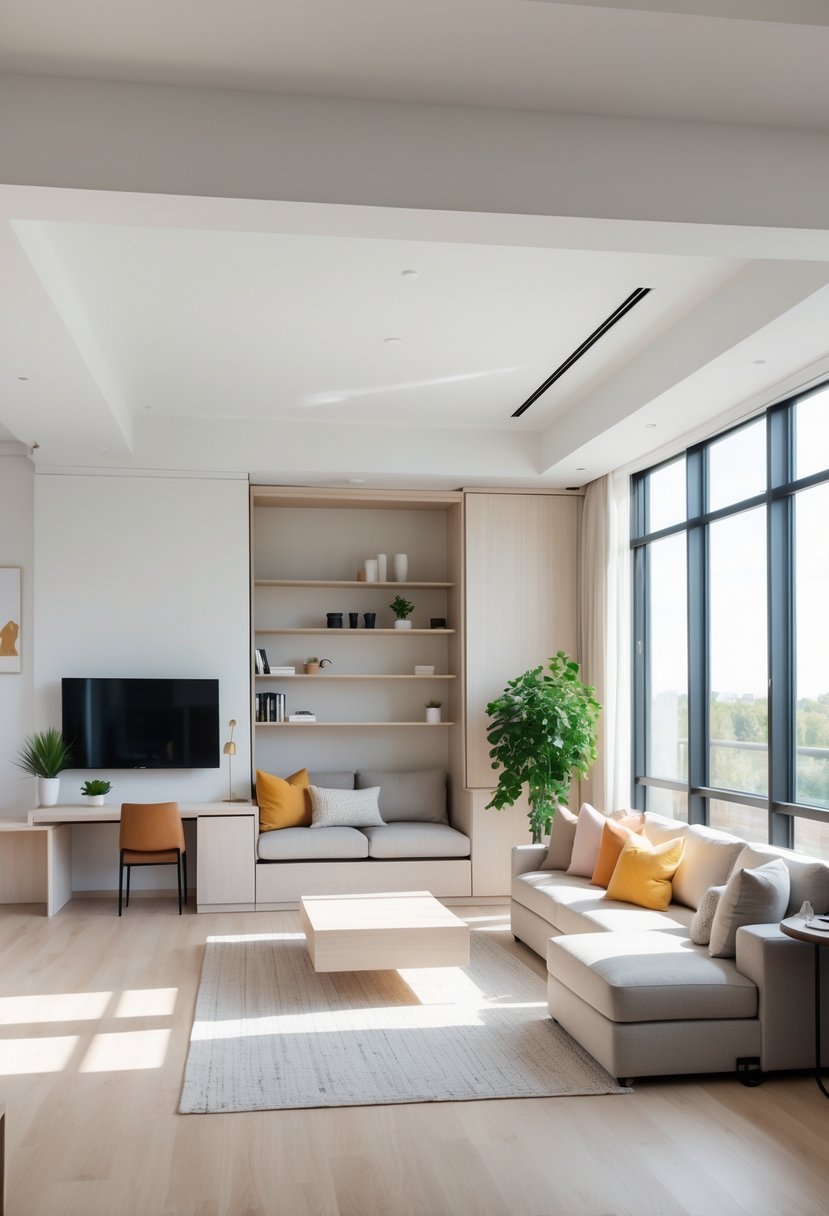
Multifunctional furniture helps make the most of limited space. Pieces like storage beds, extendable tables, and convertible sofas serve more than one purpose.
This type of furniture is useful in small living rooms where every inch counts. It combines style with practicality without making the room feel crowded.
By choosing smart furniture, one can maximize functionality while keeping the space organized and comfortable.
5) Integrate large windows or mirrors to enhance natural light
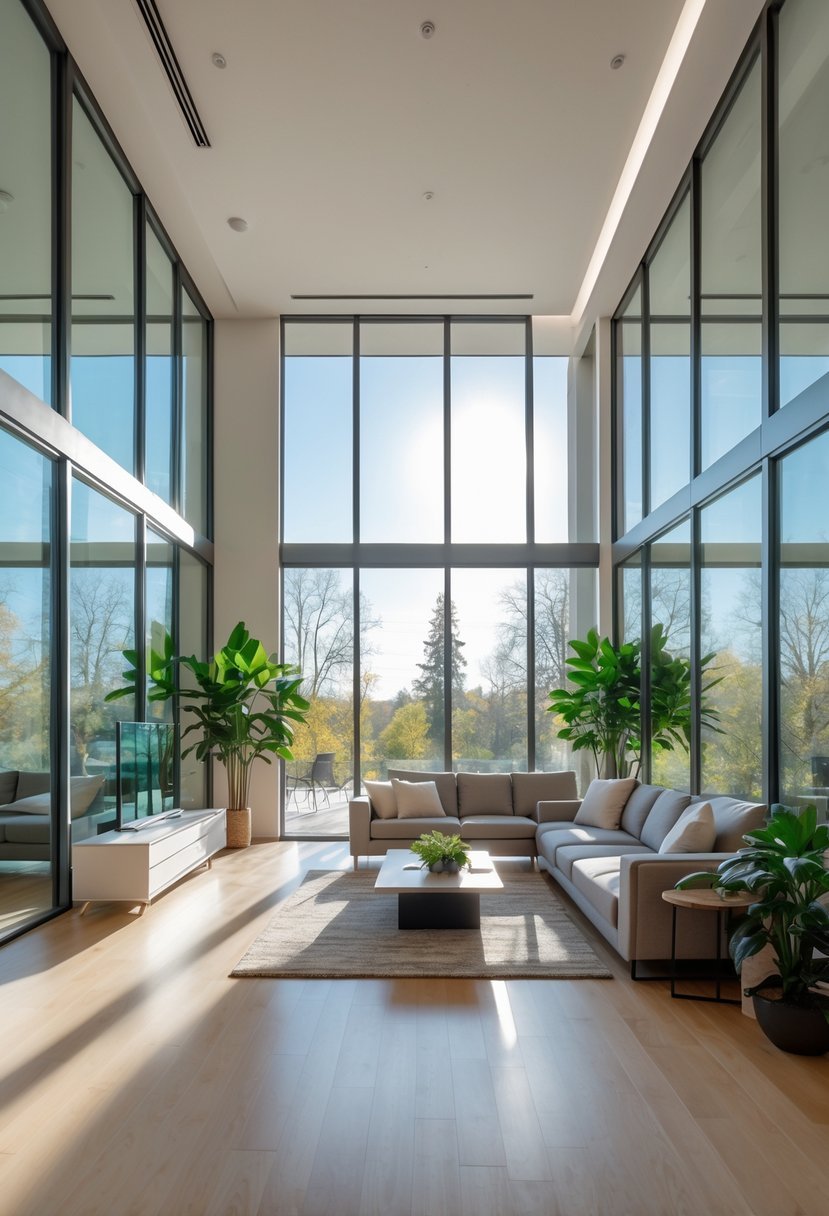
Large windows bring in more natural light, making a living room feel open and bright. They also provide a view of the outdoors, which can add to the room’s atmosphere.
Mirrors can help reflect light around the room. Placing them opposite windows boosts brightness, especially in darker spaces.
Using both windows and mirrors together creates a balanced, well-lit room without relying heavily on artificial lighting.
6) Opt for minimalistic décor to maintain uncluttered spaces
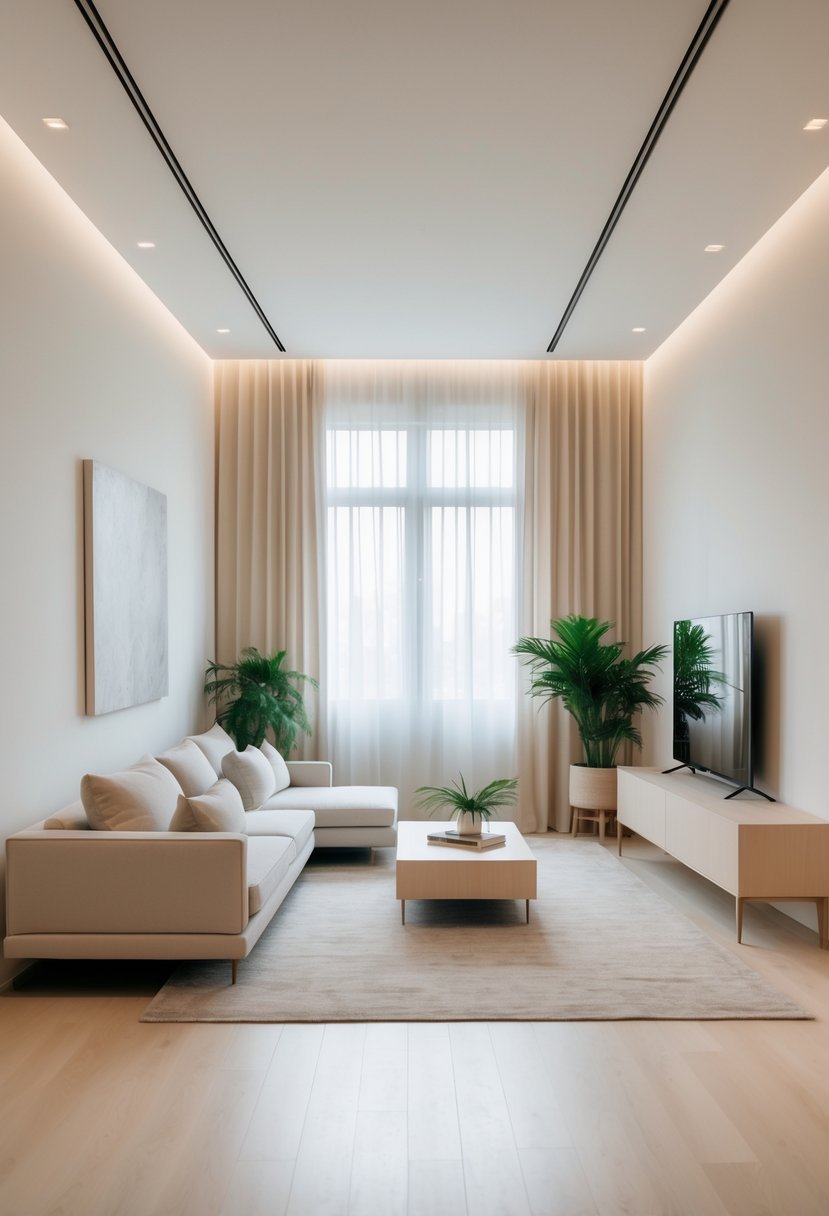
Minimalistic décor helps keep living rooms tidy and organized. It focuses on simple furniture and fewer decorative items. This creates open, calm spaces that feel larger and more inviting.
Choosing quality pieces over many items ensures the room looks thoughtful, not crowded. Neutral colors and clean lines support a peaceful environment without distractions.
7) Include statement lighting fixtures such as pendant lamps
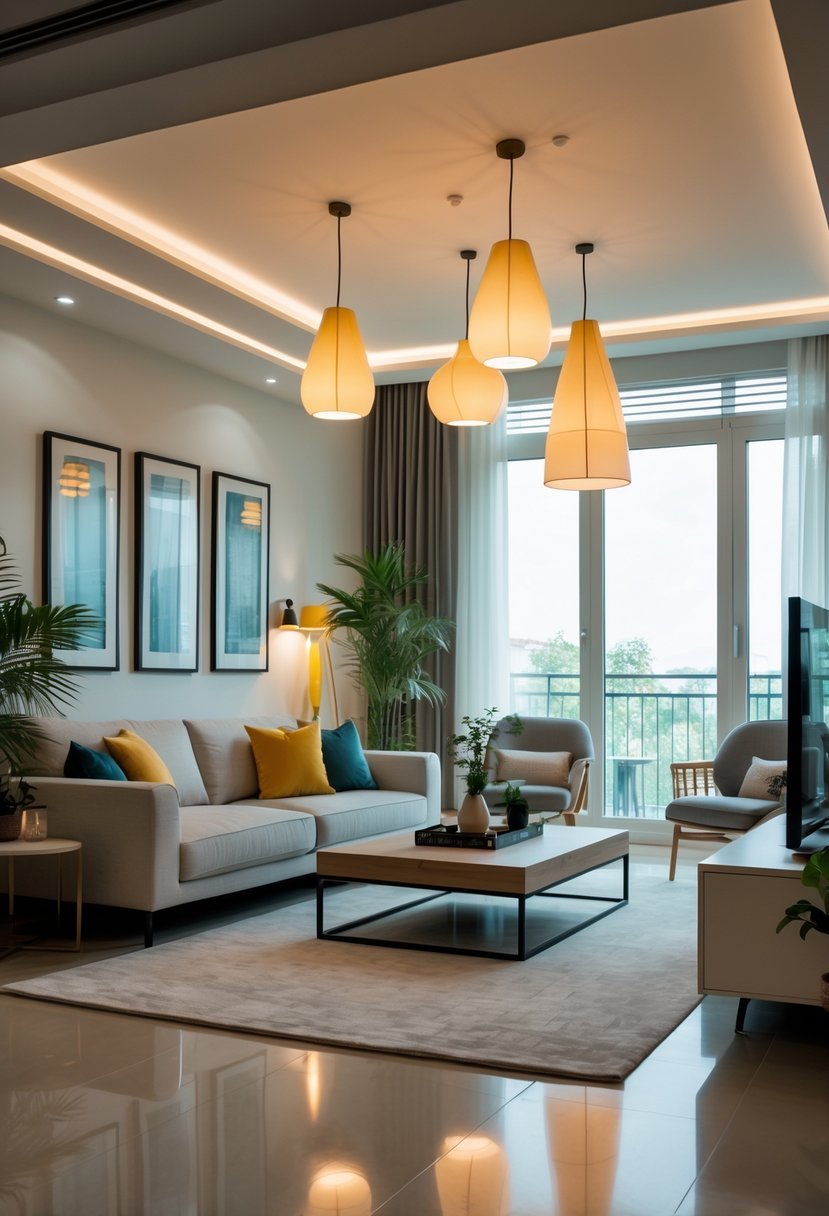
Statement lighting, like pendant lamps, can change the look of a living room. These fixtures give the room a clear focal point.
Pendant lamps often hang over key areas, such as coffee tables or seating spots. They add both style and useful light.
Choosing a bold or unique design helps express personality. This type of lighting can bring both elegance and modern flair to the space.
8) Use built-in storage solutions to keep the room tidy
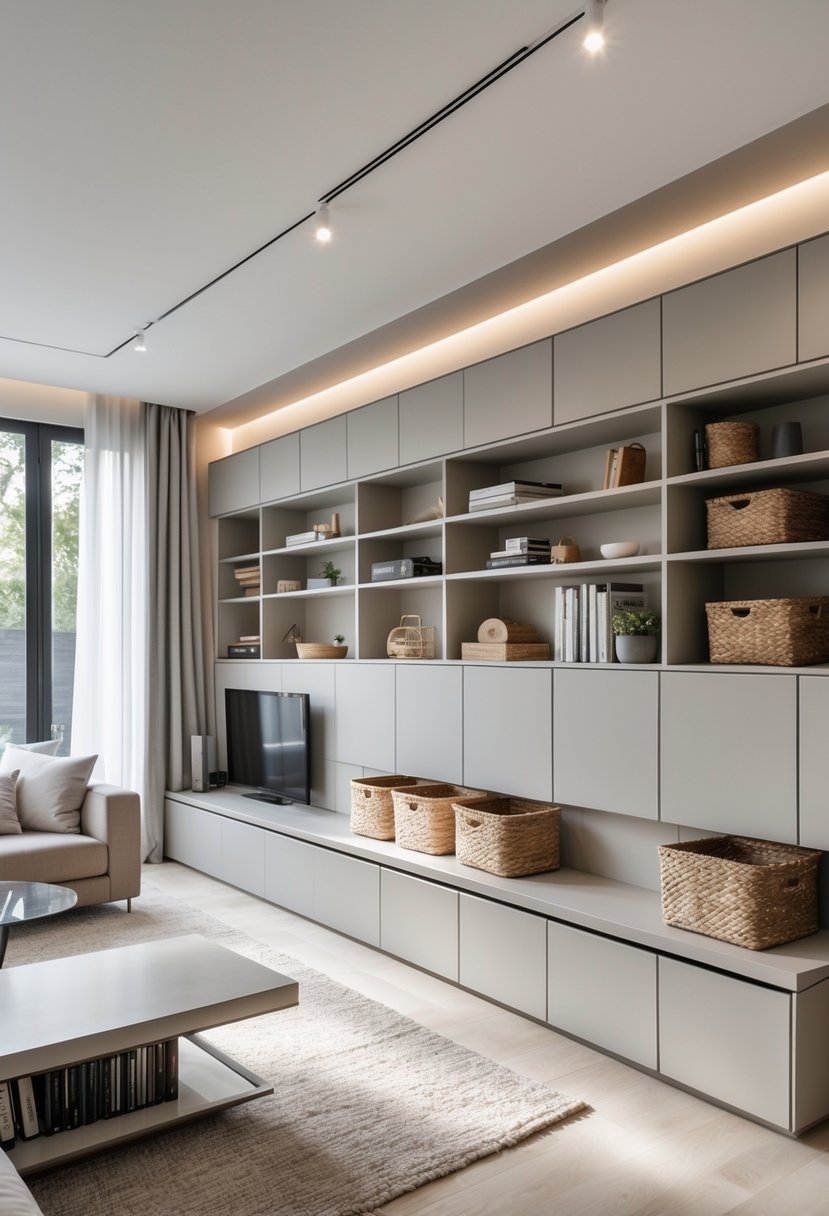
Built-in storage helps save space by using areas like walls or under stairs. It offers a neat place to store items without adding extra furniture.
These solutions can include shelves, cabinets, or drawers that blend with the room’s design. They keep clutter out of sight while maintaining a clean, organized look.
Using built-in storage makes the living room more functional and easier to keep tidy. It suits various needs and styles, making it a practical choice.
9) Combine matte and glossy finishes for visual interest
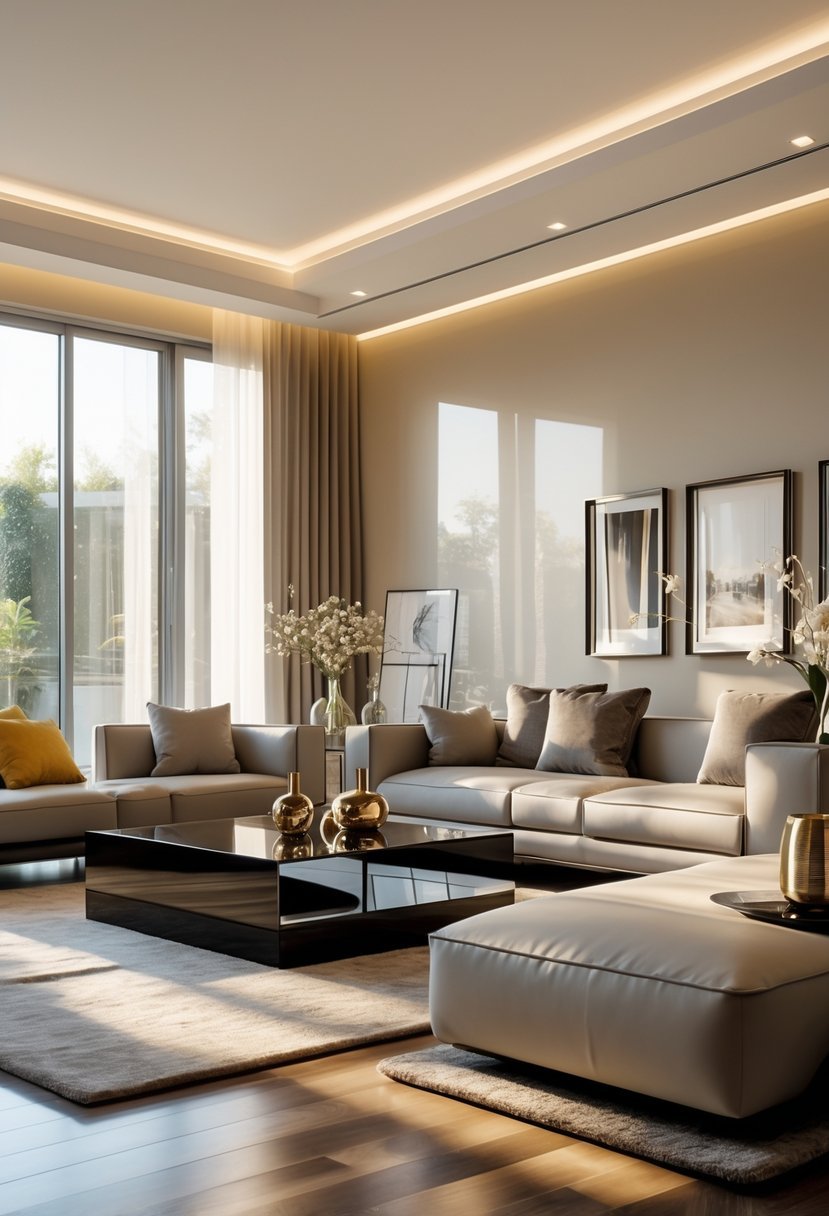
Mixing matte and glossy finishes adds depth to a living room. Glossy surfaces reflect light, while matte finishes absorb it, creating a balanced look.
He or she can use a glossy coffee table with a matte sofa for contrast. Combining these finishes on walls, furniture, and decor keeps the space visually engaging without overwhelming it.
This approach helps highlight key features while maintaining a cohesive design. It is a simple way to add texture and style to modern living rooms.
10) Incorporate soft textiles like area rugs and throw pillows
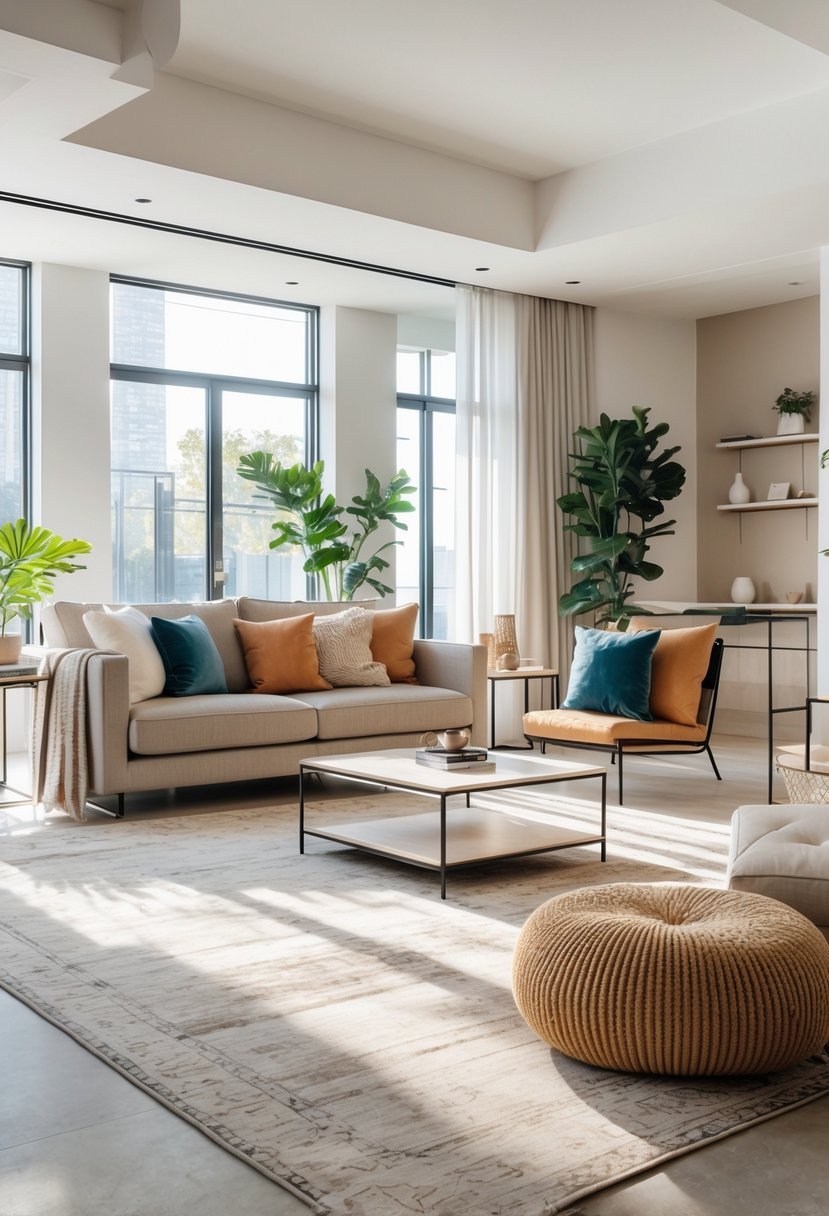
Soft textiles add comfort and style to a modern living room. Area rugs help define the seating area and bring warmth to the floor.
Throw pillows introduce color and texture, making the space feel more inviting. Mixing different fabrics, like velvet or knits, creates visual interest.
Using textiles thoughtfully can balance the room’s look while providing a cozy atmosphere. They are simple additions that improve both function and design.
Key Elements Of Modern Living Room Design
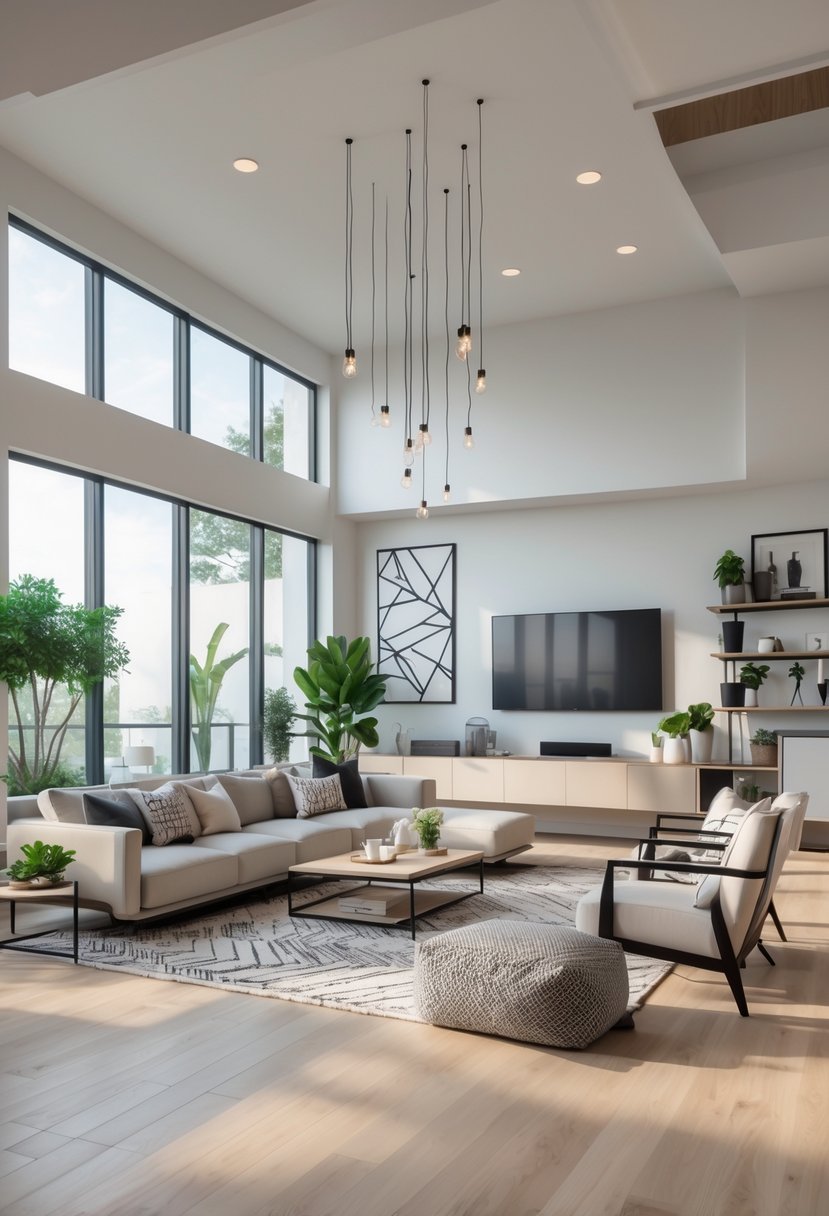
Modern living rooms focus on simplicity and function while keeping a stylish edge. Clean lines, smart use of color and materials, good lighting, and thoughtful furniture placement are essential to creating a balanced and inviting space.
Color Palettes And Materials
A modern living room usually sticks to a neutral base like white, gray, or beige. These colors create a calm backdrop and make the space feel open. Bold colors are used as accents through pillows, rugs, or walls, adding interest without clutter.
Materials play a big role too. Natural wood, metal, glass, and stone are common. Combining smooth surfaces with textured fabrics provides contrast and depth. Using durable and easy-to-clean materials helps keep the room practical and stylish.
Lighting Strategies
Lighting in a modern living room must be both functional and decorative. Layered lighting is important: overhead lights, table lamps, and accent lights work together to create different moods.
Natural light is highly valued. Large windows or glass doors maximize sunlight during the day, making the space feel brighter and bigger.
LED lights with adjustable brightness offer flexibility. For accent lighting, spotlights or wall sconces highlight artwork or architectural features, adding visual interest without overlighting.
Furniture Layouts For Open Spaces
Open layouts define modern living rooms by promoting flow and usability. Furniture is arranged to create clear pathways and avoid overcrowding.
Low-profile sofas and modular pieces help maintain an open feel. Grouping seating around a focal point, like a fireplace or TV, encourages social interaction.
Multi-functional furniture that offers storage or converts for different uses suits modern needs. Keeping furniture minimal with clean lines supports the overall uncluttered look.
Incorporating Technology And Sustainability
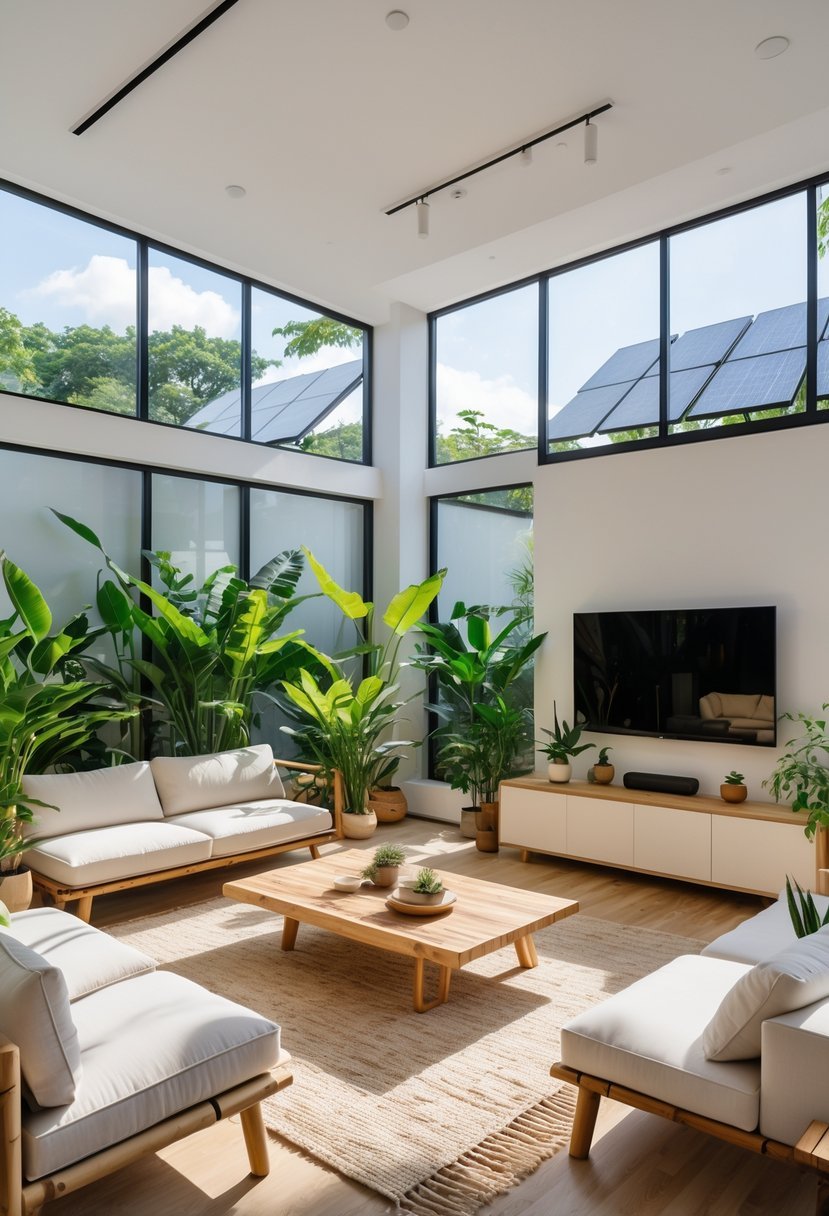
Modern living rooms benefit from blending technology with sustainable design. Using smart devices can lower energy use and improve comfort. Choosing eco-friendly materials helps reduce environmental impact without sacrificing style.
Smart Home Features
Smart home devices improve energy efficiency and convenience in the living room. Examples include smart thermostats that adjust temperature based on occupancy. This avoids wasting energy when the room is empty.
LED lighting systems with smart controls allow users to set schedules or dim lights remotely. This reduces electricity use and extends bulb life. Voice-activated assistants can control devices and integrate with entertainment systems for hands-free operation.
Smart plugs and sensors can monitor energy consumption, helping identify and reduce waste. These technologies combine style with function, making living rooms more sustainable and user-friendly.
Eco-Friendly Materials And Solutions
Choosing eco-friendly materials is key to sustainable living room design. Furniture made from reclaimed wood supports recycling and adds unique character. Natural textiles like organic cotton, bamboo, and recycled polyester are durable and non-toxic.
Using non-toxic paints and finishes improves indoor air quality. Energy-efficient windows and insulation reduce heating and cooling needs. Incorporating plants or natural elements can improve air quality and bring a calming effect.
Energy-efficient appliances and fixtures, like low-energy fans or smart blinds, further cut energy use. These solutions create a healthier environment and reduce the living room’s overall carbon footprint.