Indoor plants have become a popular way to enhance home decor. They add color, texture, and a natural touch to indoor spaces. Many people use plants to create a fresh and calming atmosphere inside their homes.
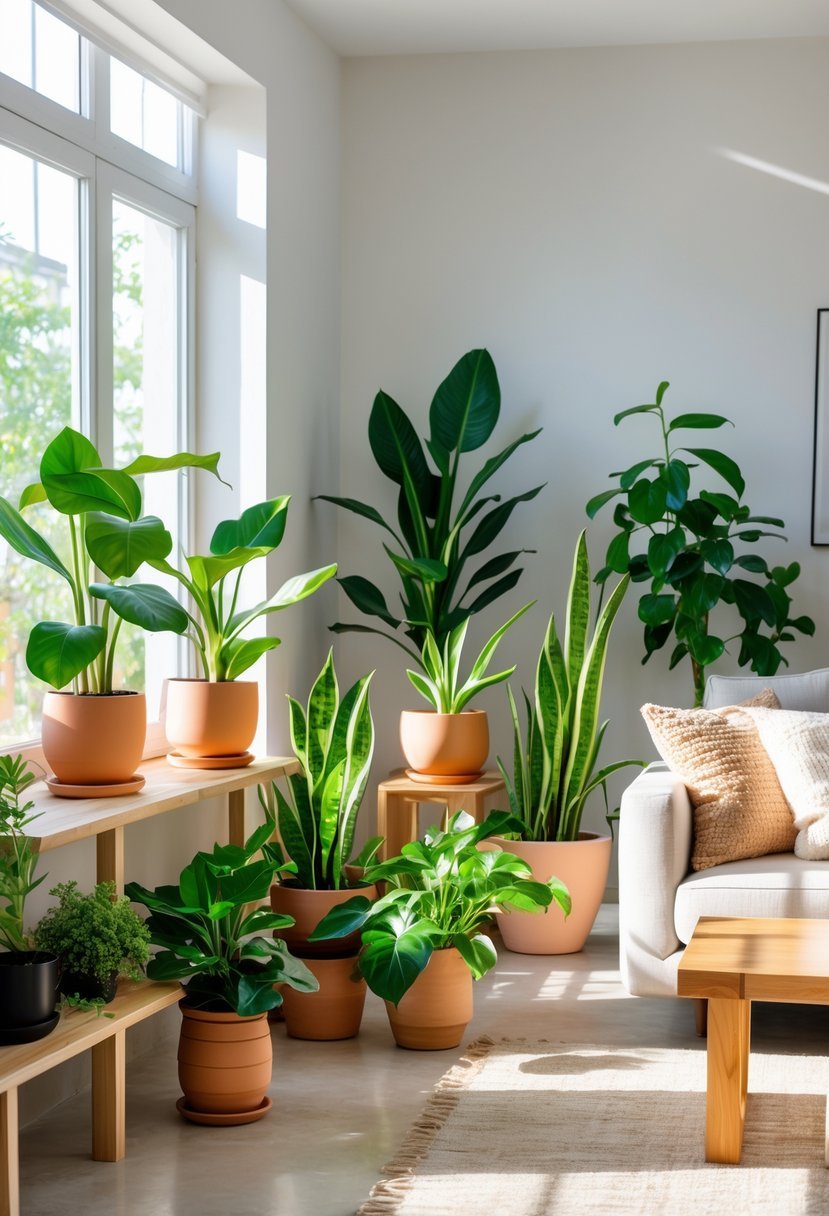
Indoor plant decor not only improves the look of a room but also helps improve air quality and mood. This makes plants both a stylish and practical addition to any space. People can use a variety of plants to fit different rooms and decorating styles.
1) Create a living wall with pothos and ferns
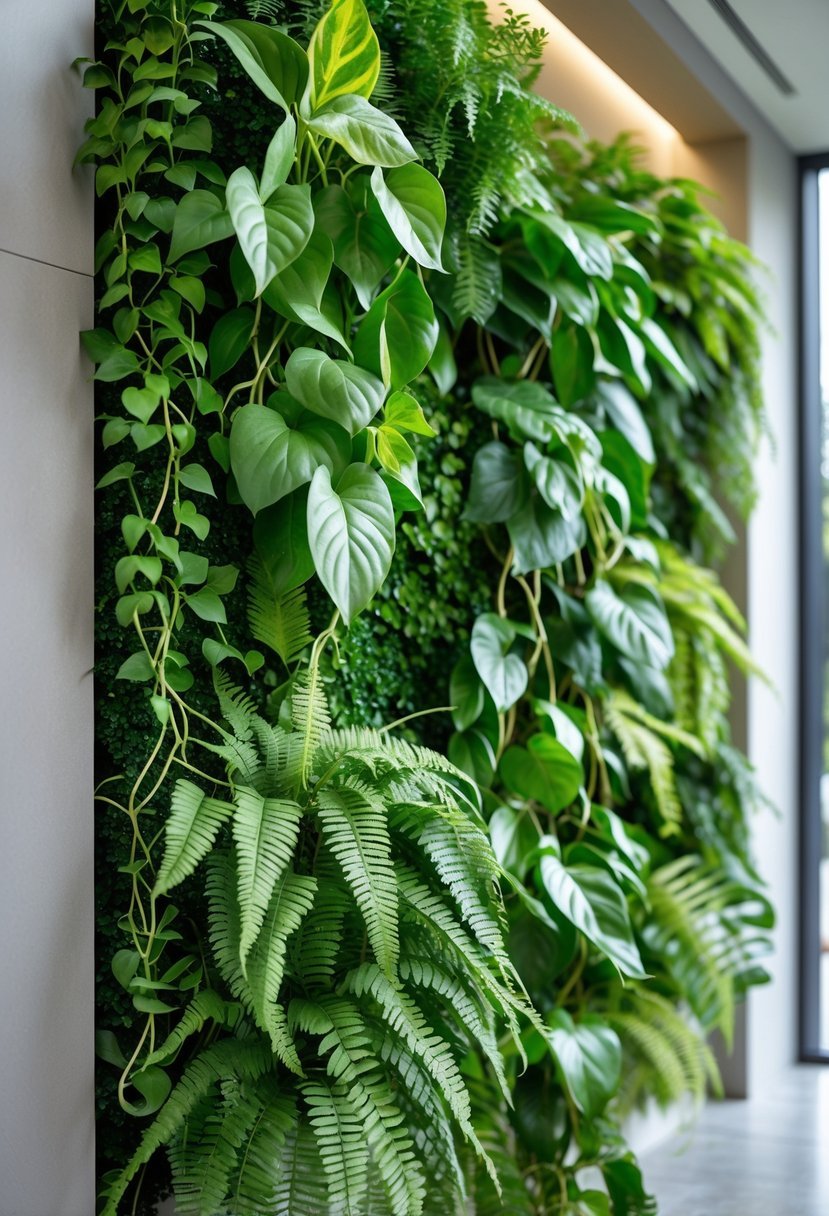
A living wall combines pothos and ferns for a natural, green display. Pothos vines trail down, adding movement and depth. Ferns bring soft, textured leaves that contrast well with pothos.
This setup works well on lightweight frames or wooden shelves. It uses vertical space to bring nature indoors without taking up floor area. Regular watering and indirect light help keep the plants healthy.
2) Use floating shelves to display small succulents
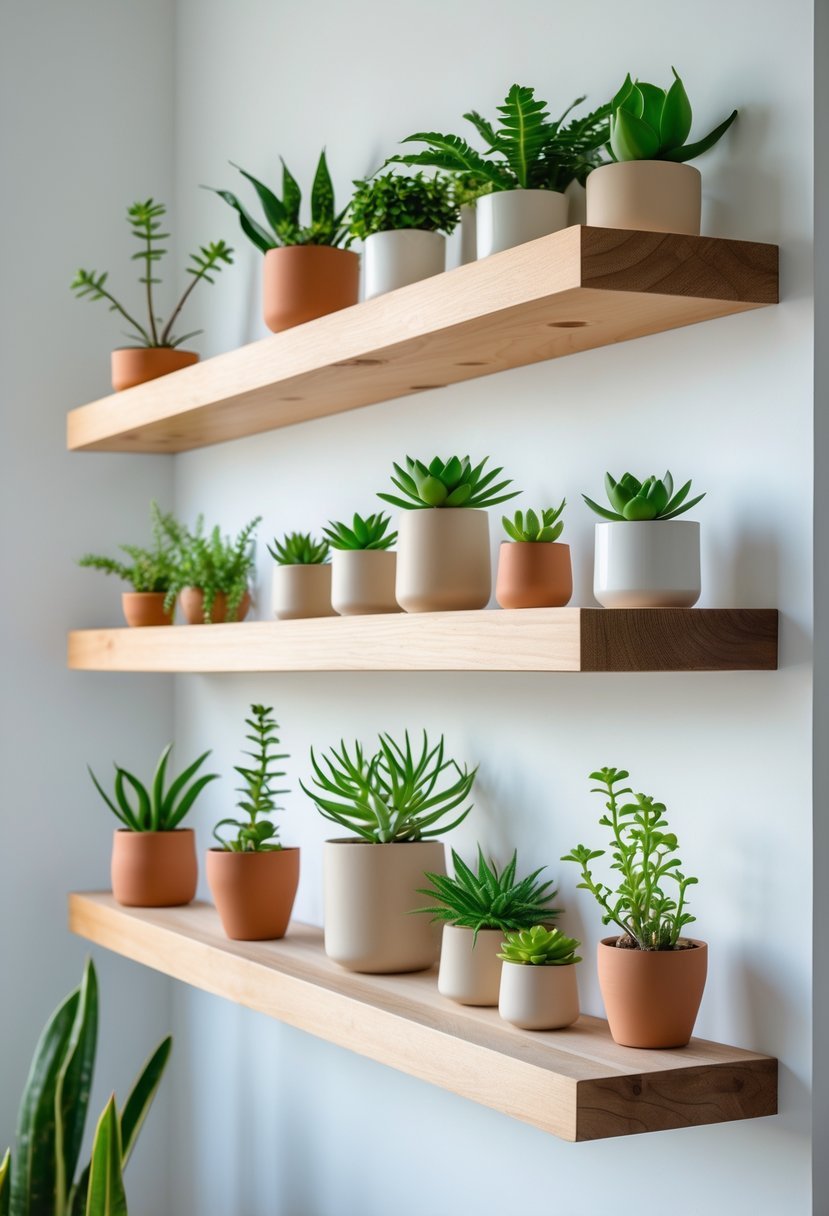
Floating shelves are a great way to show off small succulents without taking up floor space. They can be placed at different heights to create a layered look.
Succulents need plenty of light, so putting these shelves near a window works well. Using simple pots keeps the display clean and modern.
Arranging different succulent shapes and colors adds visual interest. Floating shelves help make small plants a stylish part of indoor decor.
3) Place a large fiddle leaf fig as a living room focal point
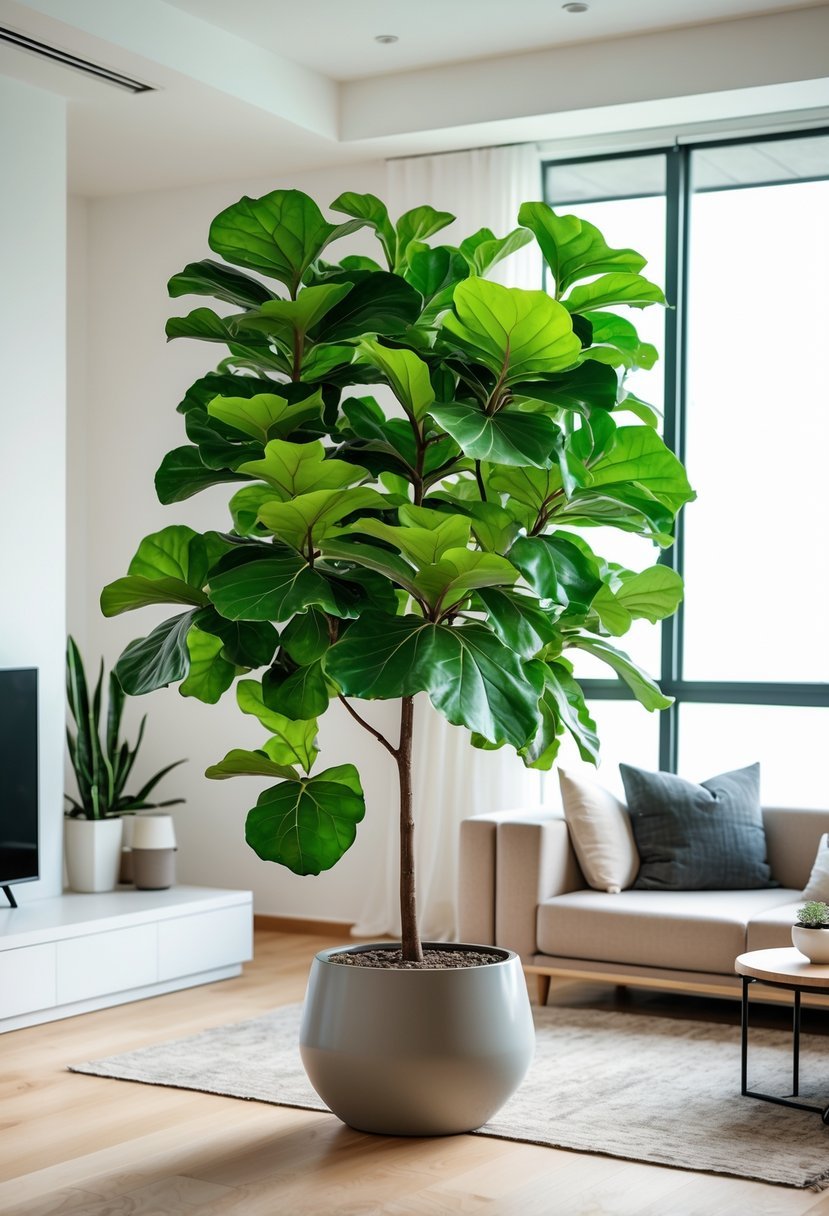
A large fiddle leaf fig works well as a strong focal point in a living room. Its tall shape and wide, glossy leaves add natural texture and height to the space.
Placing it in a bright corner with indirect light helps the plant grow healthy. The rich green color contrasts nicely with neutral furniture, creating visual interest.
This plant complements both simple and sophisticated décor styles, making it a versatile choice for many living rooms.
4) Arrange mixed-texture plants in woven baskets
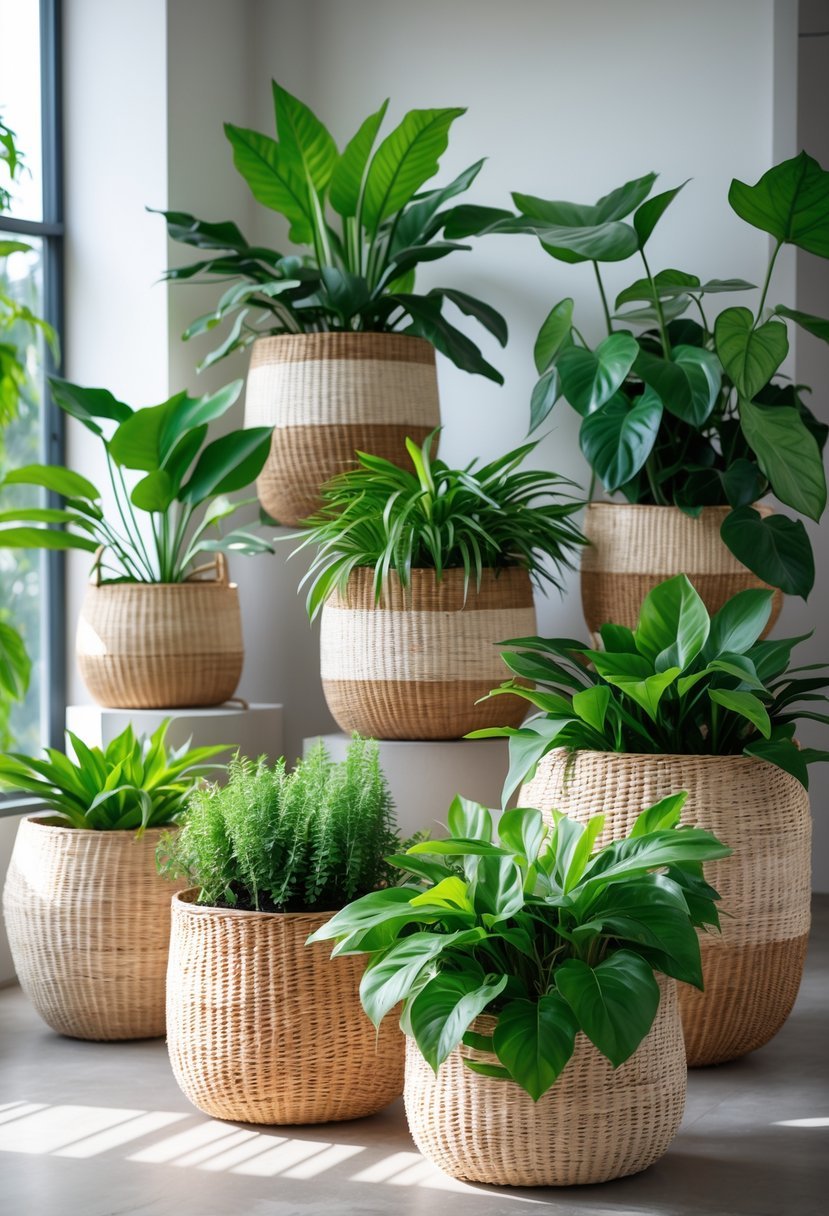
Using woven baskets as containers adds natural texture to indoor plant displays. They pair well with plants that have different leaf shapes and sizes.
Mixing smooth, spiky, and soft foliage creates visual interest. The basket’s texture contrasts nicely with the plants’ leaves.
This setup works well on shelves, tables, or corners. It adds warmth and a simple, stylish look without taking much space.
5) Combine trailing vines like string of pearls on ladder shelves
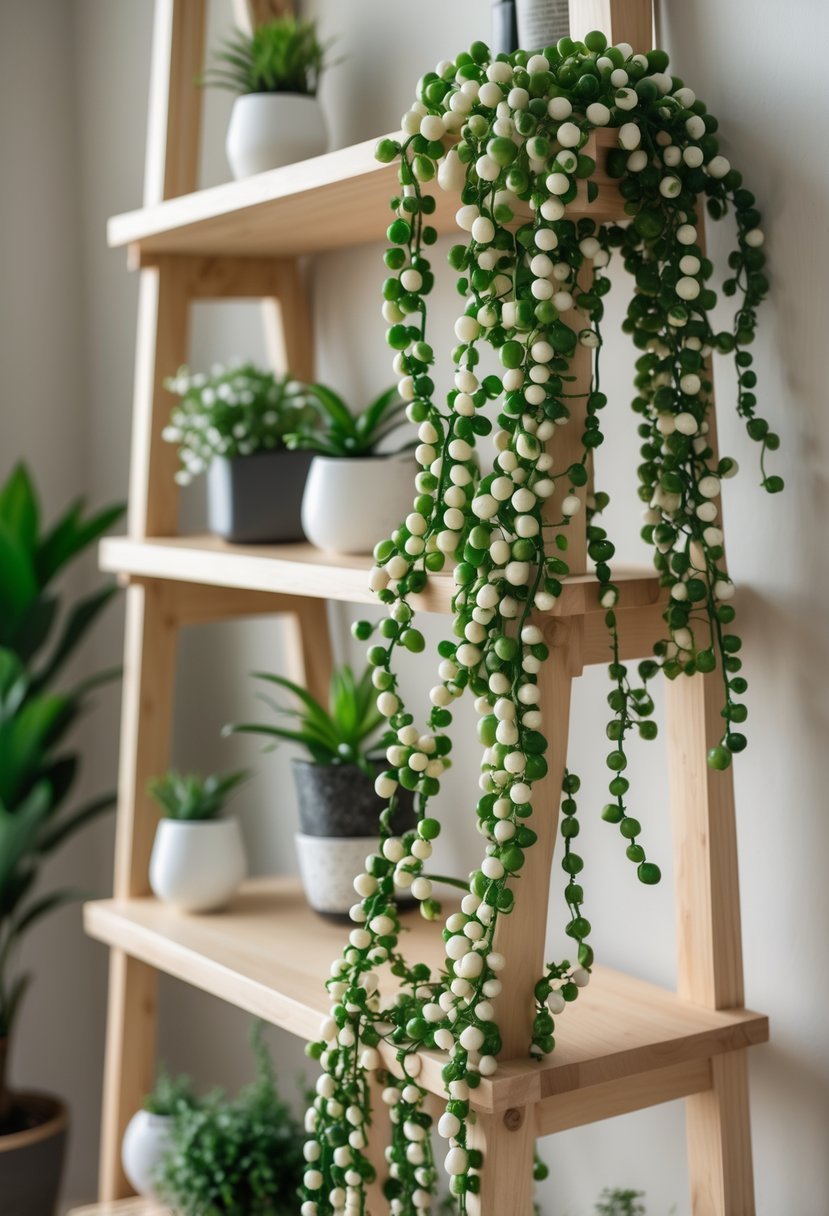
Ladder shelves provide a great way to display trailing plants. They allow vines like string of pearls to cascade down naturally. This creates a soft, flowing look that adds depth to a room.
People often place multiple plants on different steps. This helps create a layered effect with varying heights. It also maximizes vertical space, making the display more eye-catching.
Trailing vines thrive when placed in bright, indirect light. Ladder shelves near windows work well for this. The combination of plants and structure brings life to any indoor space.
6) Design a tropical corner with bird of paradise and bamboo accents
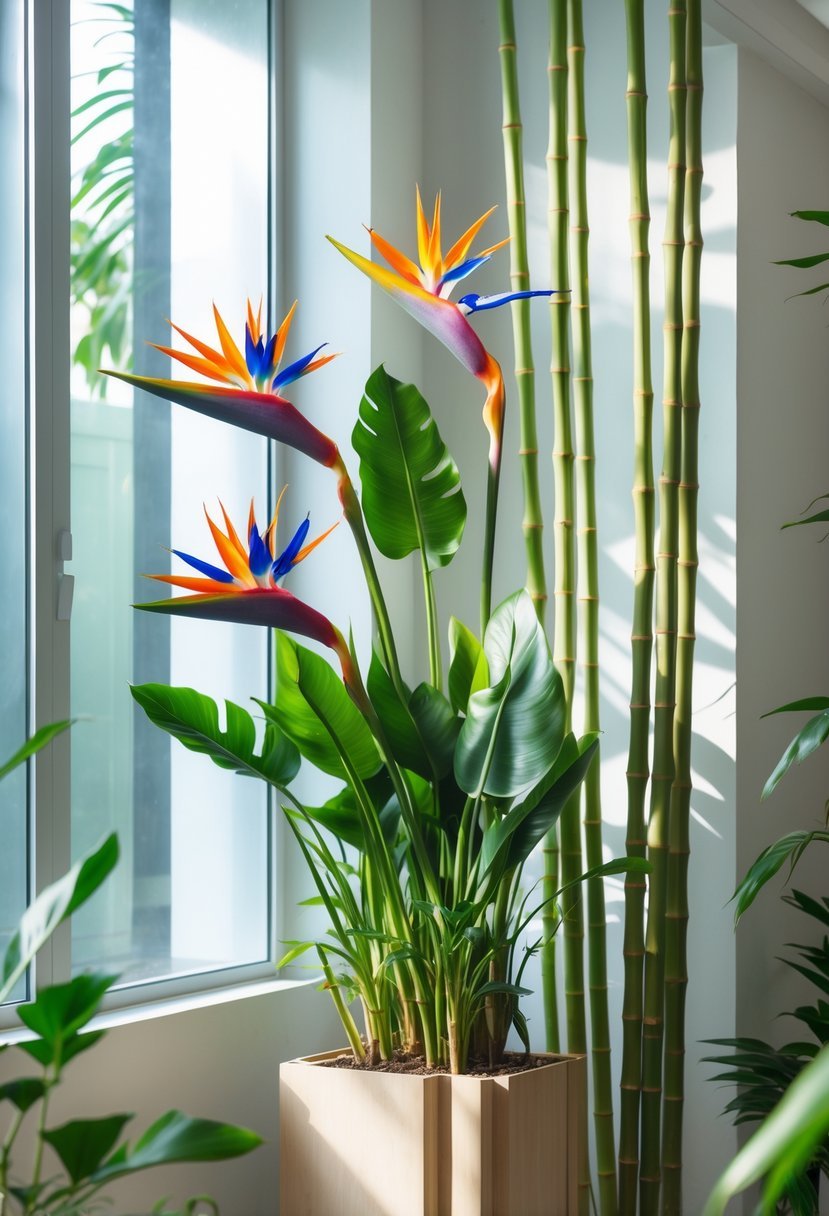
A tropical corner using bird of paradise plants adds a bold, colorful touch to any room. Their large, striking leaves create a strong focal point.
Pairing these with slender bamboo stalks brings height and texture to the space. Bamboo’s vertical lines contrast well with the broad leaves of the bird of paradise.
Using large pots helps anchor the corner, making it feel intentional and balanced. Adding a few natural elements like wood or stone can complete the tropical look without clutter.
7) Incorporate air plants in vertical frames for dynamic art
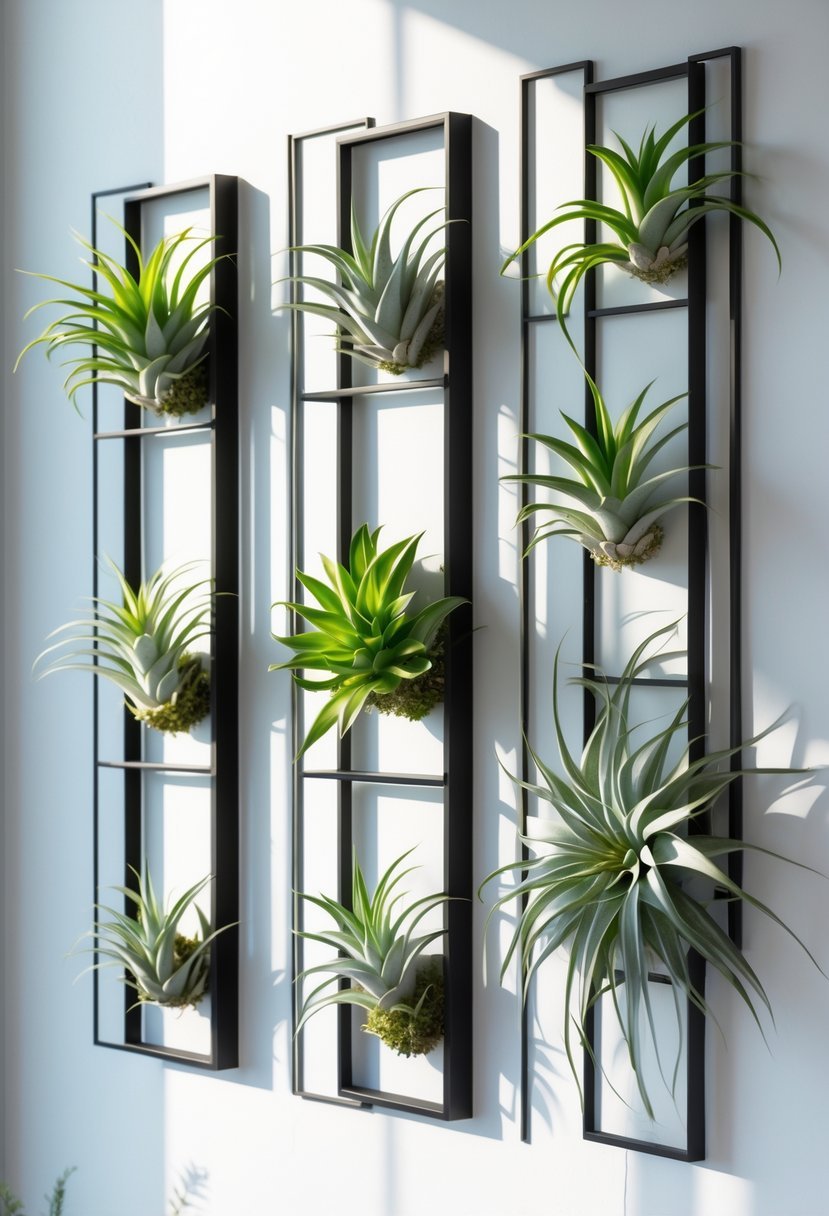
Air plants work well in vertical frames that hang on walls. These frames can be made from wood, metal, or wire grids.
They allow for a three-dimensional display, turning simple walls into living art.
The plants need good air circulation, so frames often have open sections.
Adding natural materials like moss or driftwood can create more depth and interest. This style combines decoration with low maintenance.
8) Use citrus trees in kitchen spaces for freshness and fragrance
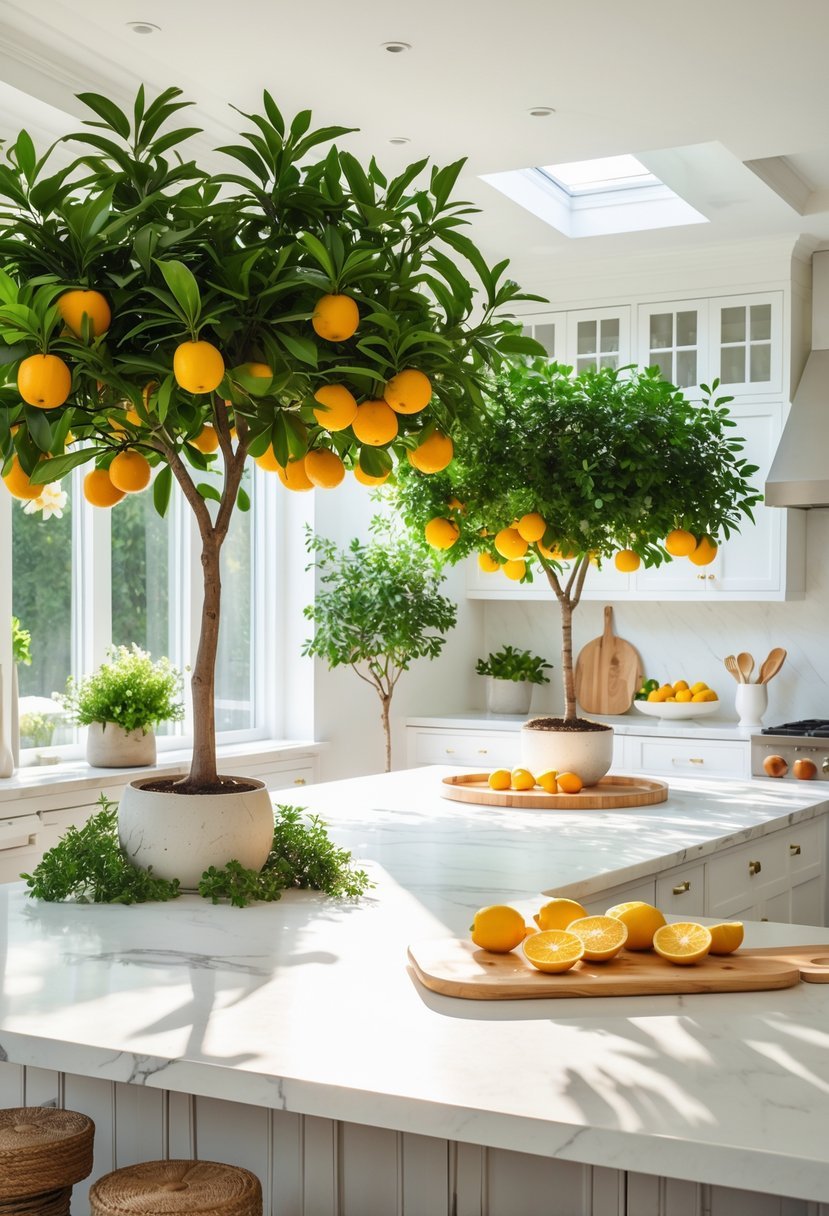
Citrus trees fit well in kitchens because they stay compact and bring fresh fruit close at hand. They add greenery and a natural scent that can brighten the space.
Their blossoms produce a light, pleasant fragrance that improves the kitchen atmosphere. Small varieties like Meyer lemon or kumquats work best on windowsills or counters.
Besides their smell, citrus trees provide fresh lemons, limes, or oranges year-round. This makes them both decorative and useful for cooking or drinks.
9) Mix tall indoor trees with low succulents in corner groupings
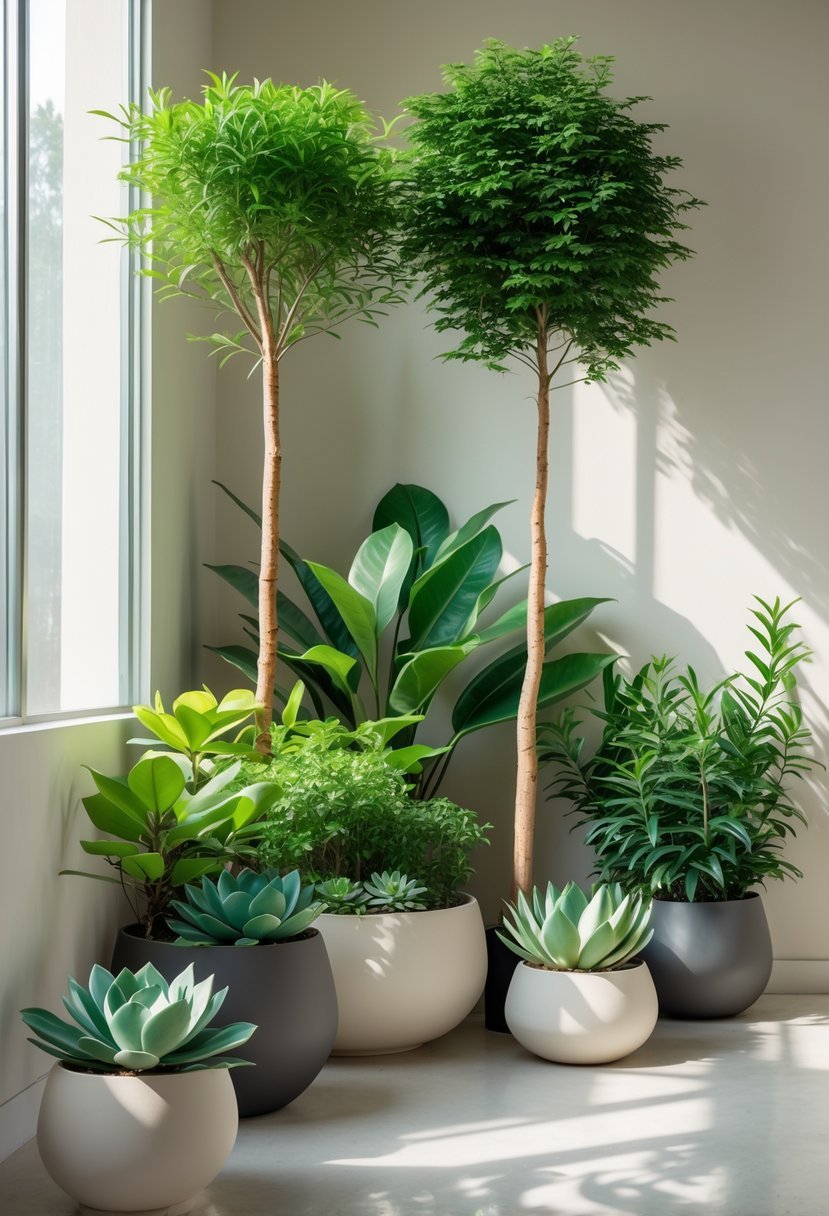
Combining tall indoor trees with low succulents creates a balanced look in corners. The height of the trees adds structure, while the succulents fill the space close to the floor.
This mix uses different plant heights and textures to add depth and interest. It also helps use corner space efficiently without overcrowding.
Choosing plants with similar light and water needs makes care easier. This way, the grouping stays healthy and looks good over time.
10) Add mini cacti clusters on coffee tables
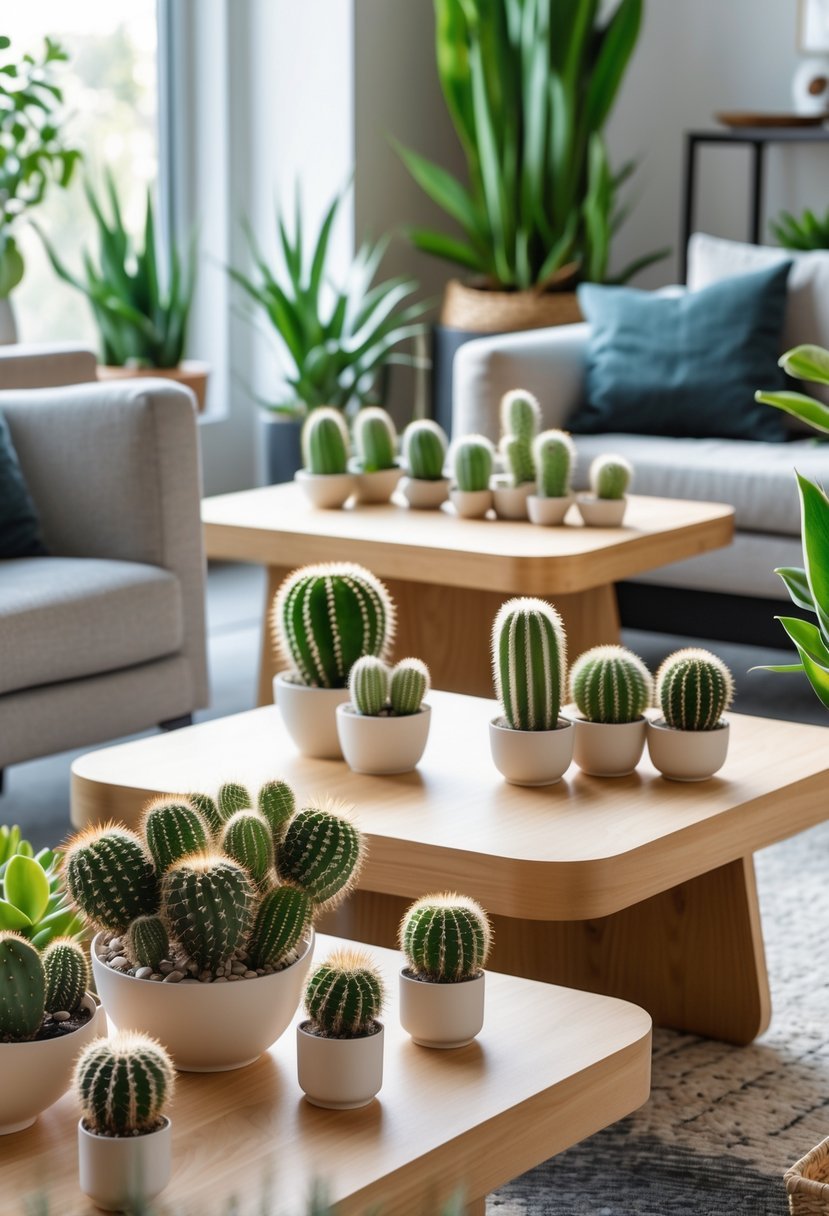
Mini cacti clusters work well as simple, natural centerpieces on coffee tables. Their small size fits perfectly without taking up too much space.
Grouping several mini cacti in different shapes and pots adds texture and visual interest. Decorative pebbles or sand can enhance the look.
These plants need little care, making them an easy way to bring greenery indoors. They also add a subtle, organic touch to room decor without overwhelming it.
Design Principles for Indoor Plants Decor
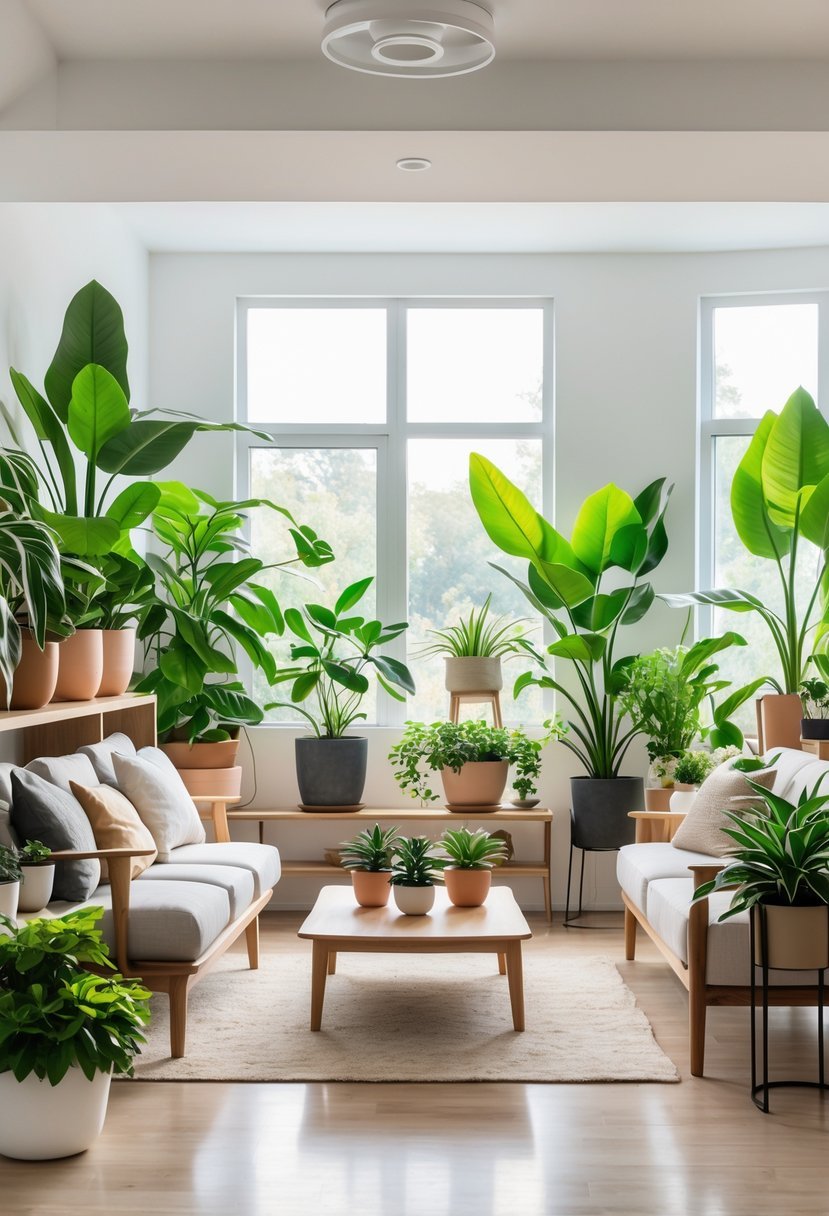
Good plant decor depends on how well color, texture, and space are managed. These elements guide how plants fit into a room’s style, how much they stand out, and how naturally they enhance the environment.
Balancing Color and Texture
Color affects the mood of a room and how plants blend with existing decor. Combining different shades of green with plants that have variegated or colorful leaves adds visual interest. For example, pairing a dark green fern with a light green pothos can create depth.
Texture adds dimension. Mixing smooth-leafed plants like snake plants with fuzzy or spiky plants like succulents prevents monotony. It’s important to avoid too much similarity, which can make the display look flat.
Using a color and texture chart helps keep choices balanced:
| Color Tone | Plant Example | Texture Type |
|---|---|---|
| Dark Green | Fern | Soft, feathery |
| Light Green | Pothos | Smooth, glossy |
| Variegated | Calathea | Patterned leaf |
| Reddish Hues | Croton | Rough, waxy |
Using Vertical Space Effectively
Vertical space allows adding plants without crowding surfaces. Tall plants like fiddle leaf figs or palms can act as natural room dividers or corner accents.
Wall-mounted planters and hanging baskets are good for small rooms. These save floor space and bring greenery to eye level or above. Shelves with staggered plant arrangements give a layered look.
It’s key to balance height with stability. Heavy plants should be on low, sturdy surfaces. Lightweight plants can hang freely, but their placement must allow enough light and airflow.
Using vertical space properly can turn bare walls or corners into lively green features.
Maintaining Healthy Indoor Plants
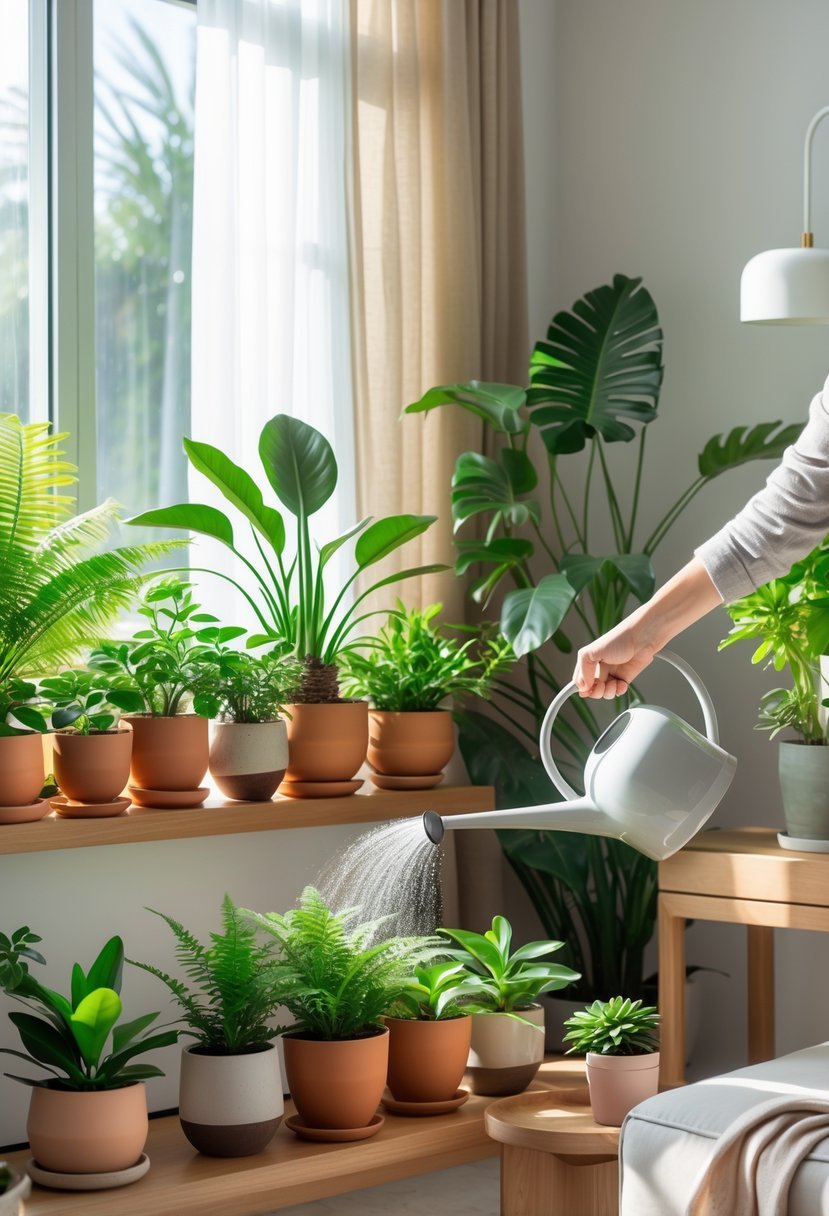
Proper care involves controlling light, humidity, and following routines that support long-term health. This helps plants grow well and keeps their leaves vibrant and strong.
Managing Light and Humidity
Indoor plants have different light needs. Some require bright, indirect light while others thrive in low light. It is important to place plants where they get the right amount of light without direct sun that can burn their leaves.
Humidity levels also affect plant health. Many indoor plants prefer humidity between 40-60%. To increase humidity, one can use a humidifier, place plants close together, or put a tray with water and pebbles under pots. Regular misting helps in dry air but should be done carefully to avoid mold on leaves.
Long-Term Care Tips
Regular watering is essential but varies by plant type. Overwatering can cause root rot while underwatering leads to wilting. Checking soil moisture before watering helps maintain balance.
Repotting every 1-2 years gives plants room to grow and fresh soil. Pruning dead or yellow leaves prevents disease and keeps plants looking neat.
Feeding plants with balanced fertilizer during the growing season supports strong growth. It is best to follow instructions on the fertilizer label to avoid overfeeding.
Frequently Asked Questions
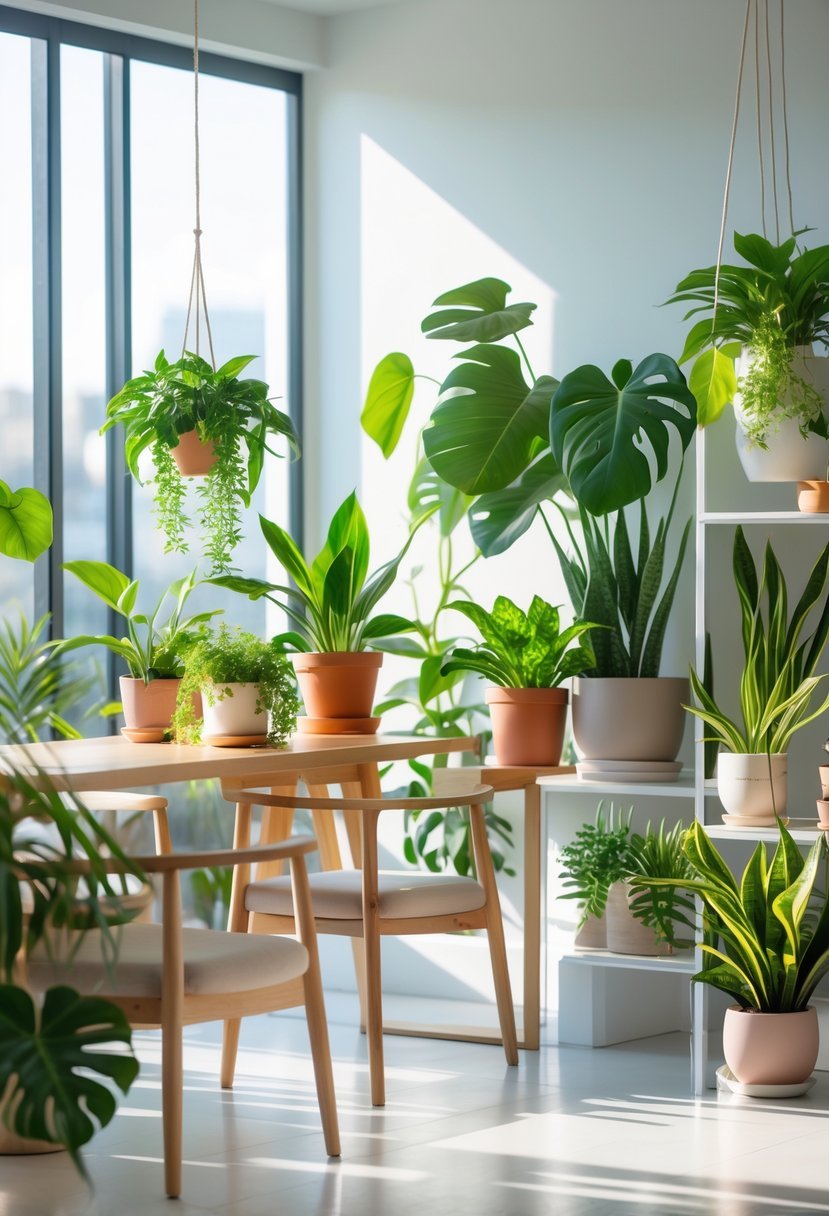
Indoor plant decor can range from simple accents to bold statements. Choosing the right plants, knowing how to place them, and understanding their benefits are key elements for creating an attractive and healthy indoor space.
What are the best low-maintenance indoor plants for decorating?
Low-maintenance plants like pothos, snake plants, and ZZ plants are popular for home decor. These plants tolerate low light and irregular watering, making them ideal for beginners or busy people.
How can I incorporate large plants into my living room decor?
Large plants, such as the fiddle leaf fig, work well as focal points in living rooms. Placing them in woven baskets or stylish pots near windows enhances their look and complements the room’s design.
Which indoor plants are known for improving air quality?
Plants like spider plants, peace lilies, and snake plants help filter harmful pollutants such as formaldehyde and benzene. Including these in home decor can improve air quality and create a fresher environment.
What are some creative ideas for indoor plant decoration in living rooms?
Creating a living wall with pothos and ferns adds visual interest. Floating shelves filled with small succulents or ladder shelves decorated with trailing vines like string of pearls provide unique and stylish displays.
Where can I find a reliable selection of indoor plants for home decor?
Reliable selections of indoor plants are available at local nurseries, garden centers, and specialized online stores. Choosing sources with good plant care information ensures healthier, longer-lasting greenery.
What are some tips for arranging indoor plants in a small space?
In small spaces, using vertical areas like floating shelves maximizes greenery without clutter. Grouping plants with mixed textures in baskets saves space and adds depth, while trailing plants can soften edges on ladders or shelves.