Living in a small space can present challenges when it comes to designing your living room. Making the most of limited square footage requires thoughtful planning and smart choices.
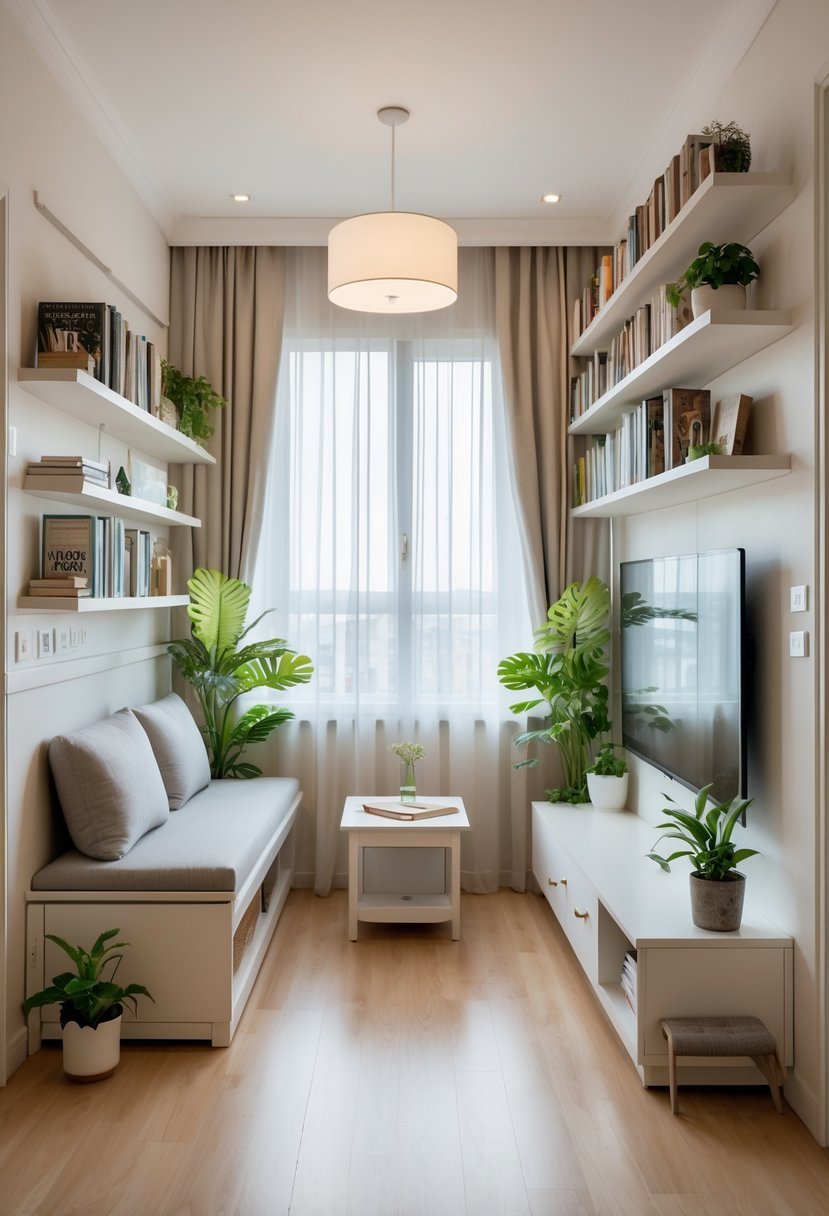
This article offers 15 practical ideas to help you maximize every inch of your small living room without sacrificing style or comfort. These strategies focus on optimizing layout, furniture, and storage to create a space that feels open and functional.
1) Use multifunctional furniture like storage ottomans and fold-out sofas
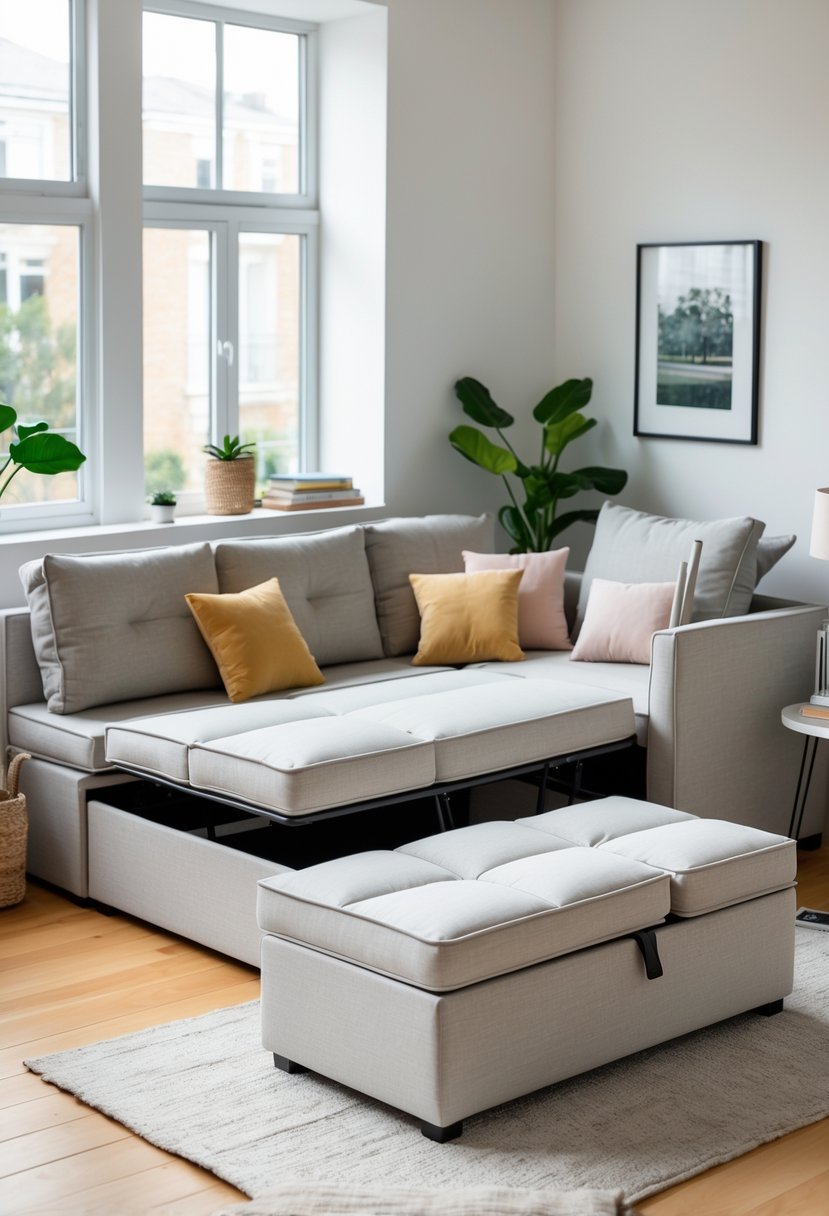
You can save space by choosing furniture that serves multiple purposes. Storage ottomans provide seating and hidden compartments for clutter. Fold-out sofas offer comfortable seating by day and a bed by night, making your small living room more versatile.
2) Incorporate built-in shelves and wall-mounted storage
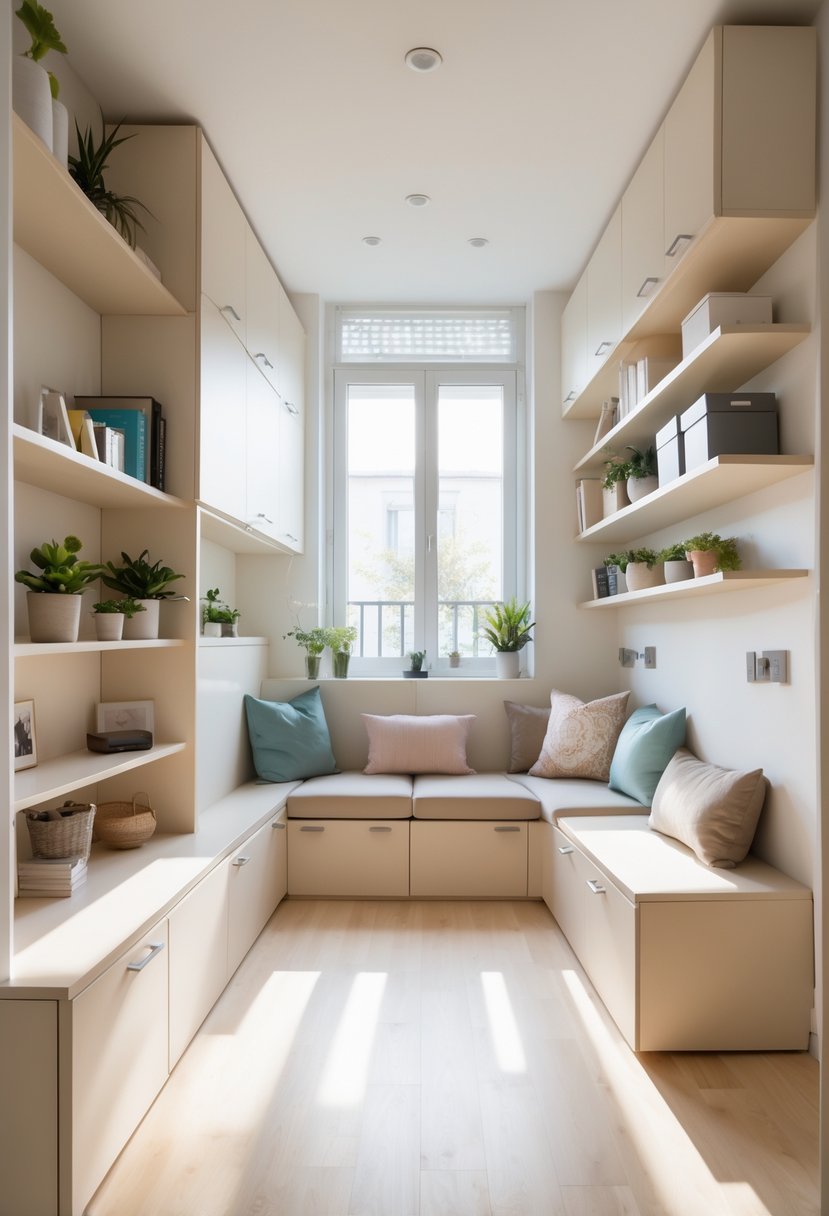
You can save floor space by using built-in shelves that fit into your walls. They provide storage without crowding the room. Wall-mounted storage keeps items organized and within reach, reducing clutter.
Built-ins also create a clean, streamlined look. Customize them to fit your needs—books, decor, or electronics. This approach maximizes your living room’s functionality while maintaining an open feel.
3) Choose light, neutral color palettes to create openness
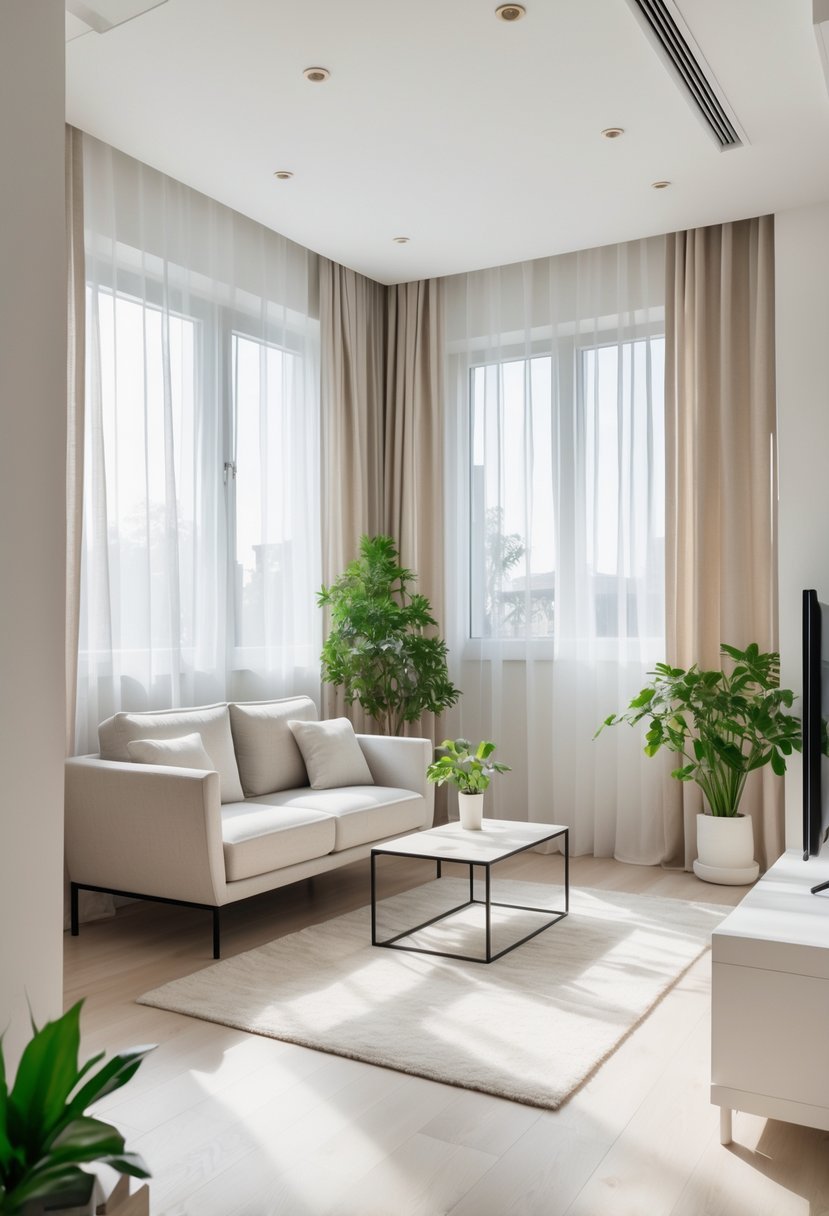
Using light, neutral colors like soft whites, beiges, and grays can make your small living room feel more open. These shades reflect natural light, enhancing brightness and giving a sense of space.
Neutral tones also provide a versatile backdrop. This lets you add texture or subtle accents without overwhelming the room.
4) Utilize mirrors strategically to reflect light and expand space
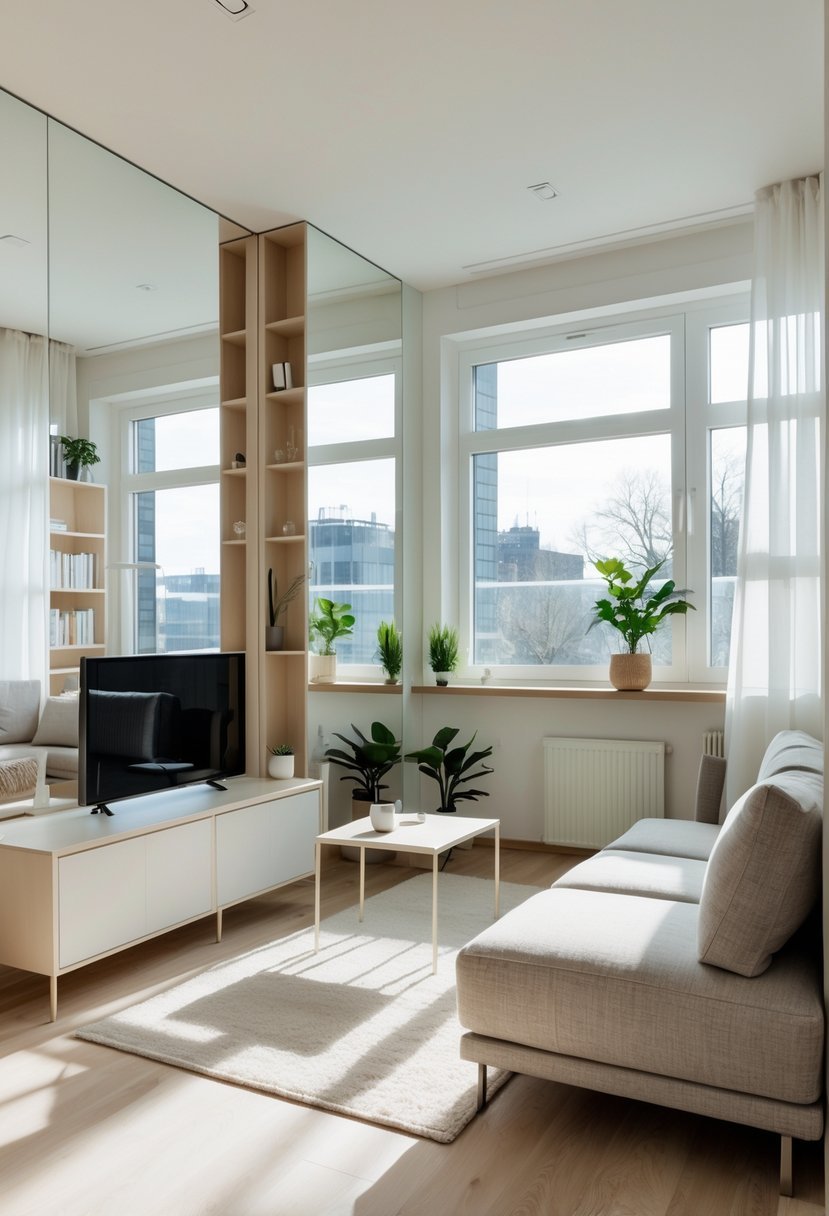
Place large mirrors across from windows to bounce natural light around the room. This instantly brightens your living space.
Using frameless or oversized mirrors can create a sense of openness. Position mirrors near lamps to distribute artificial light evenly.
Choose different mirror shapes to add visual interest while enhancing depth. Frames can also contribute to your room’s character.
5) Arrange furniture to create distinct zones without clutter
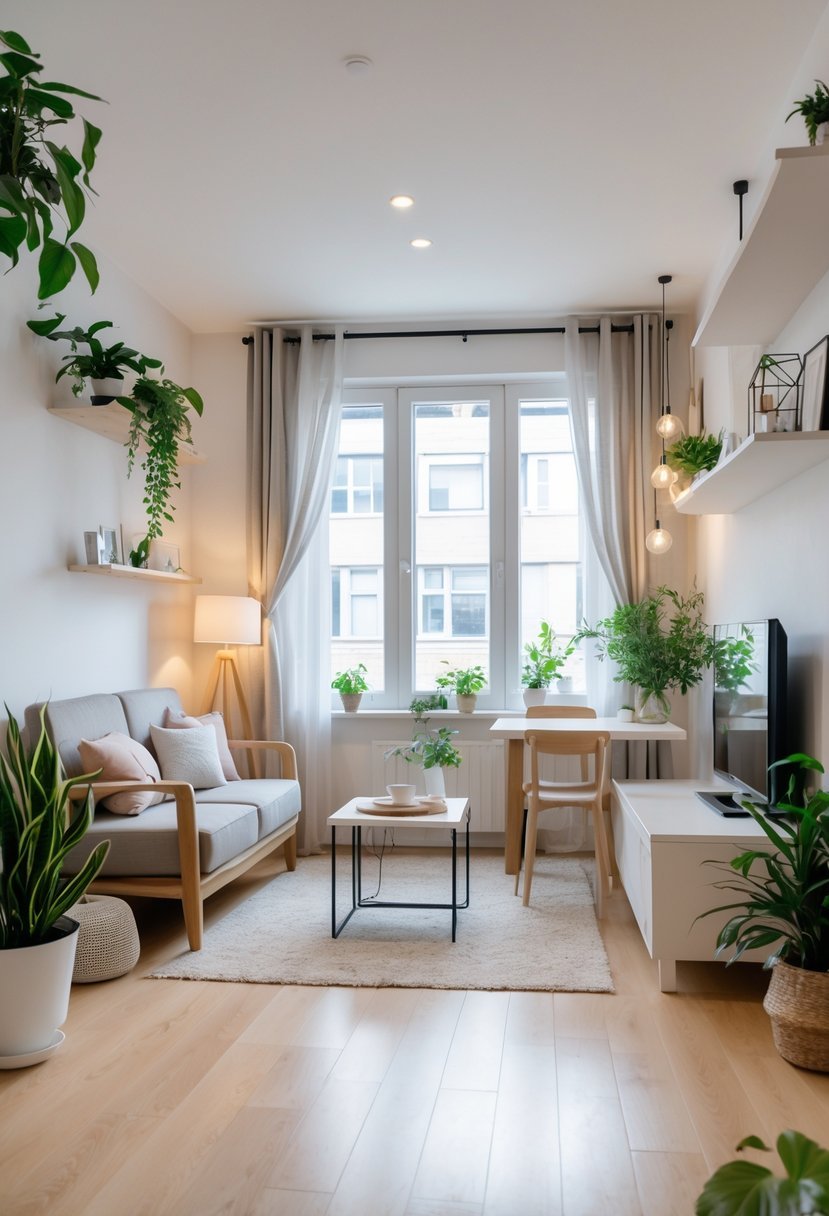
You can define areas by floating furniture instead of pushing everything against walls. This helps separate functions like seating and work. Use narrow tables behind sofas to add utility without crowding your space. Clear pathways maintain flow, keeping the room organized and open.
6) Opt for slim-profile furniture to save floor space
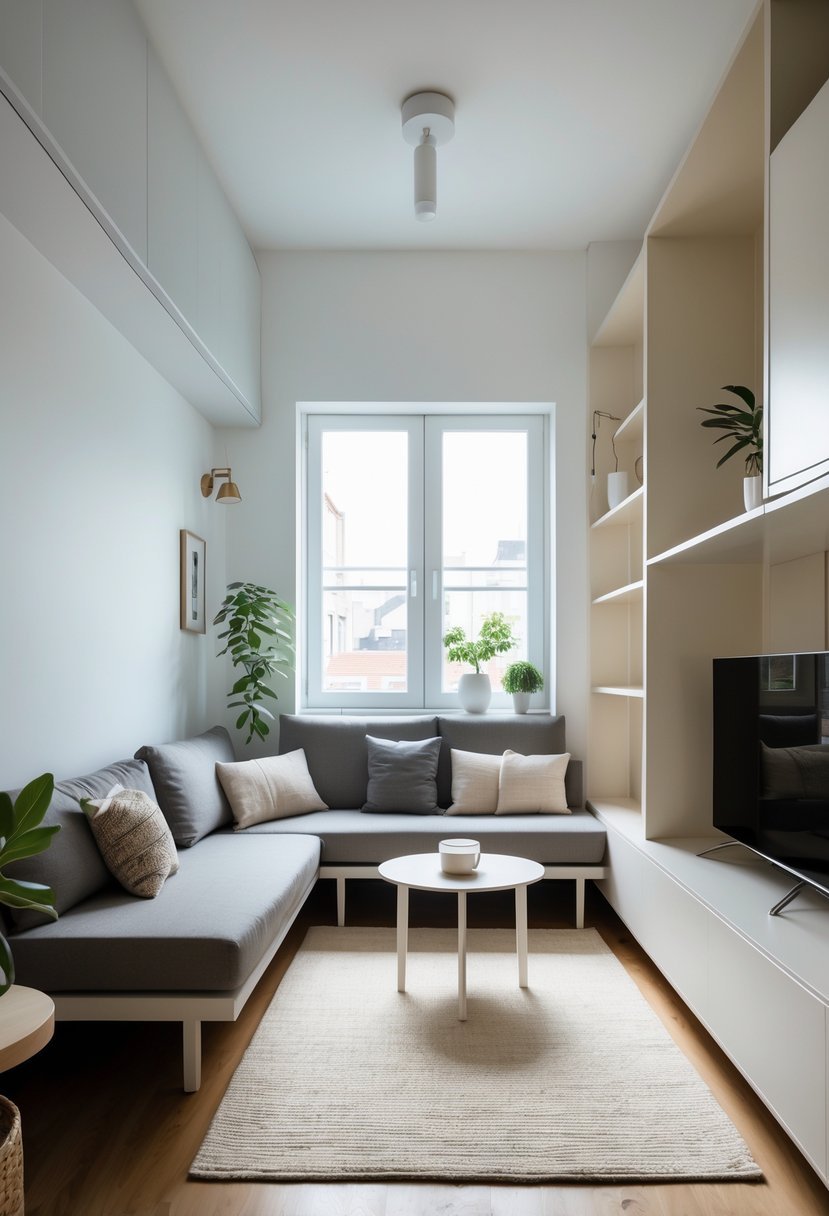
Choose furniture with slim legs and low backs to keep your room feeling open. These pieces take up less visual space, making your living area appear larger.
Slim-profile furniture also leaves more floor and wall space visible, helping reduce clutter. This approach keeps your layout flexible and functional.
7) Integrate vertical storage solutions to maximize height
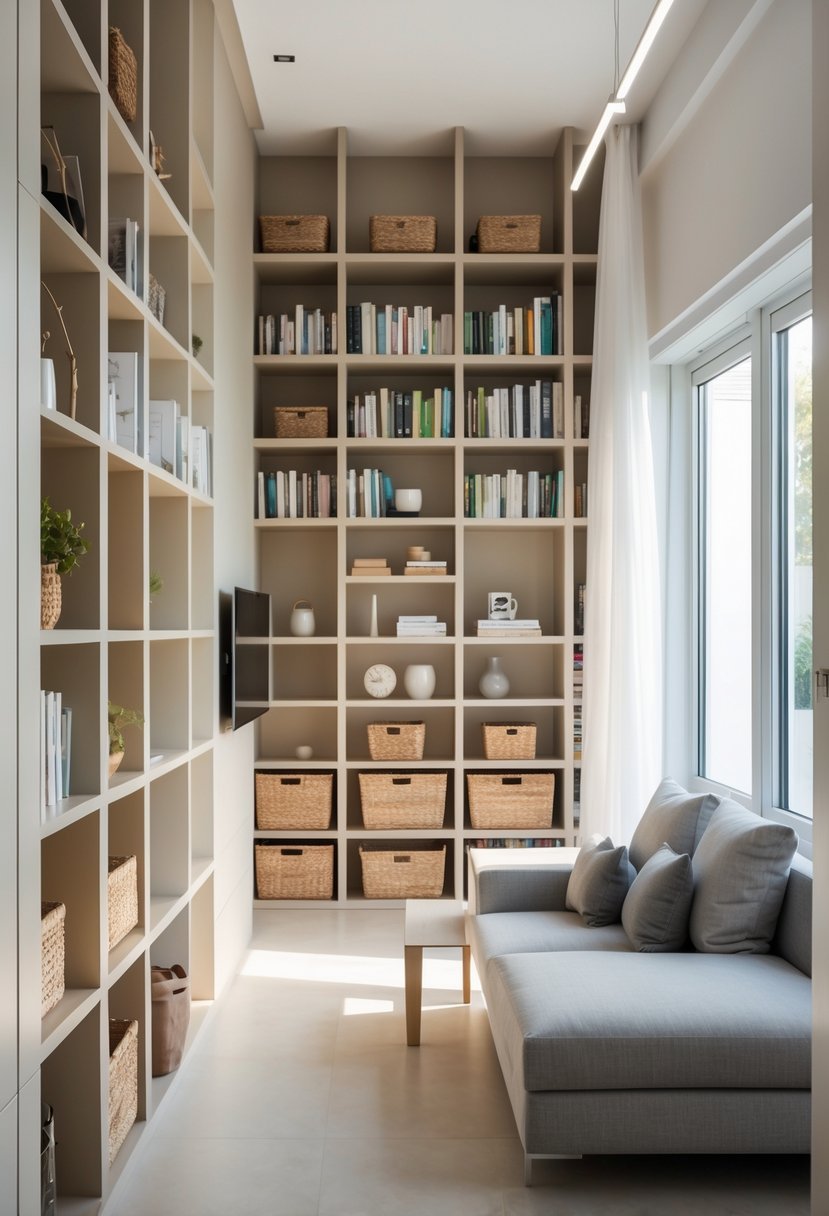
You can free up floor space by using vertical storage options like tall shelves or wall-mounted units. These solutions help keep your living room organized without making it feel cramped.
Installing pegboards or narrow bookshelves makes use of empty wall space. This approach keeps frequently used items accessible and tidy.
8) Create a cozy corner using a compact corner lounge or reading nook
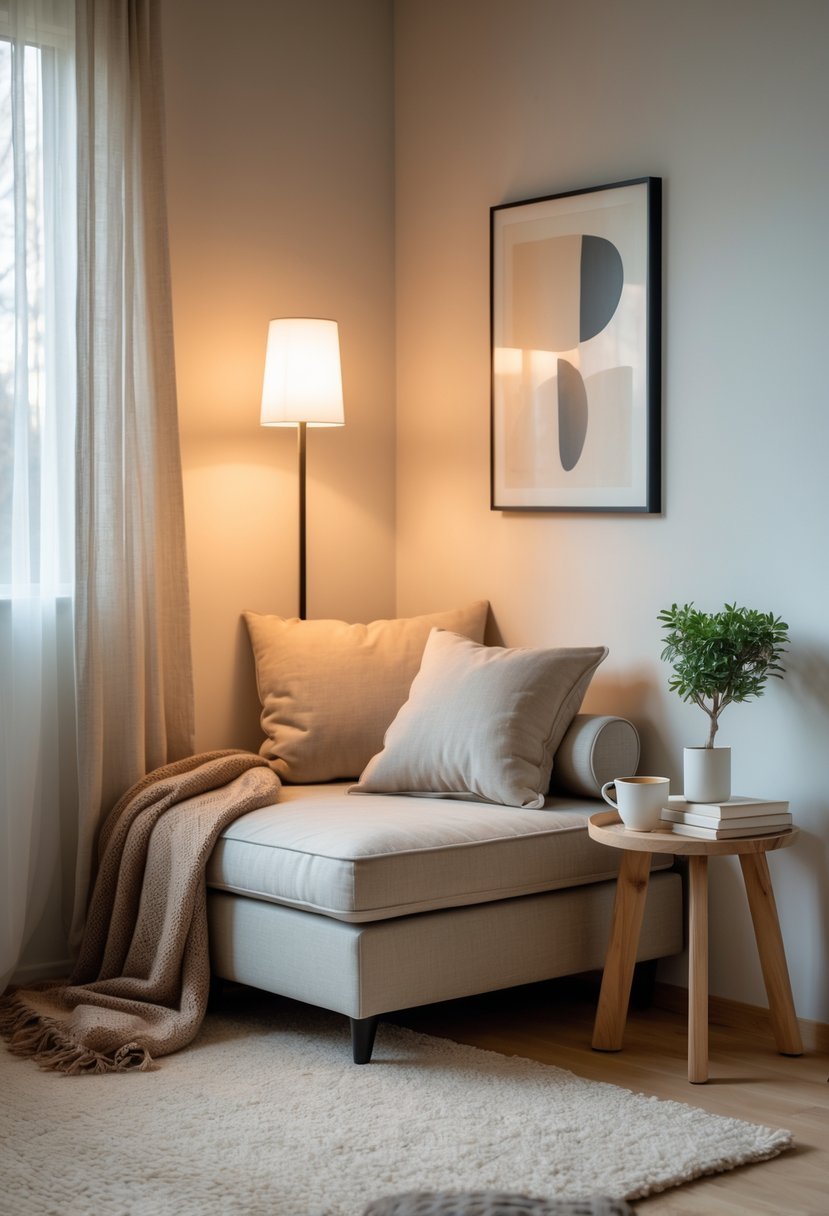
You can transform unused corners into inviting reading nooks with a compact armchair or cushioned bench. Add a small side table for essentials and a floor lamp for focused lighting. This setup maximizes space while offering a private, comfortable retreat within your living room.
9) Use translucent or glass furniture to reduce visual bulk
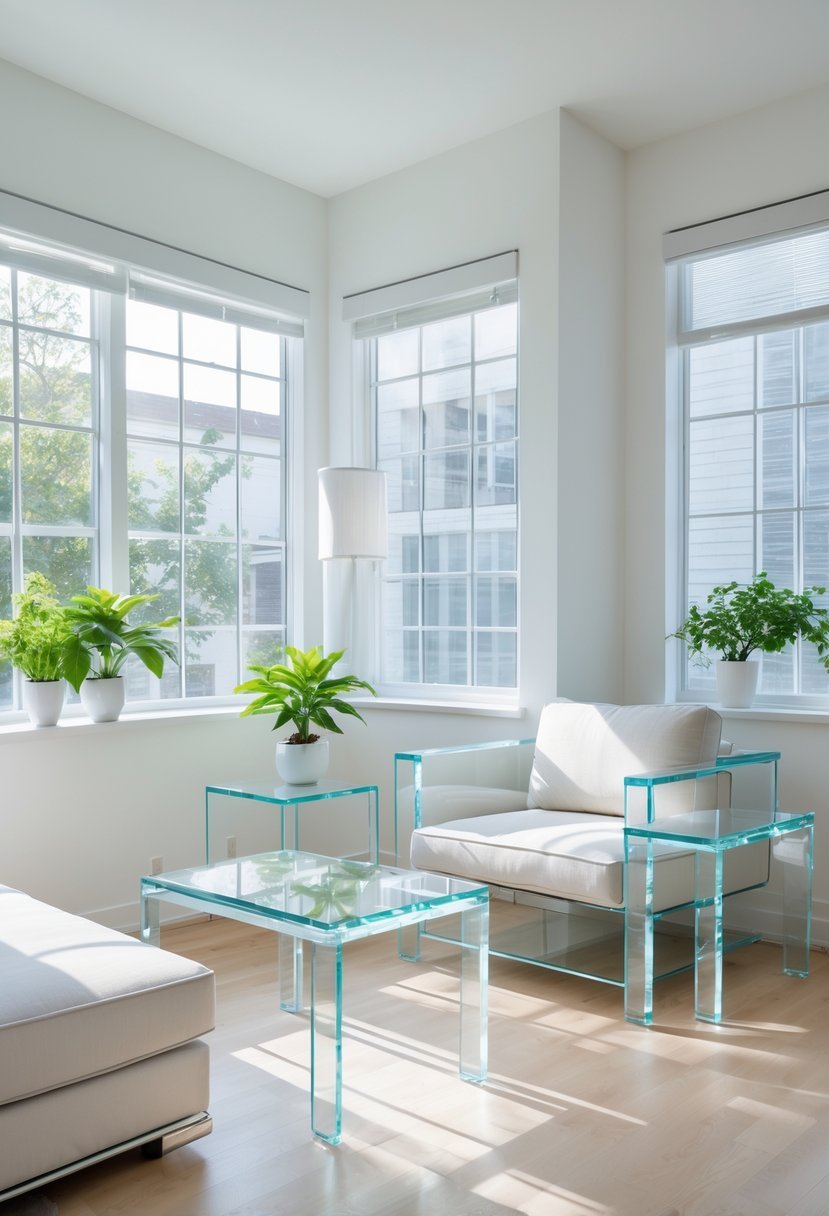
You can create an open feel by choosing translucent or glass furniture. These materials let light pass through, making your space seem less crowded.
Clear tables and chairs take up less visual space, which helps your living room appear larger without adding clutter.
10) Employ layered lighting: overhead, task, and accent lights
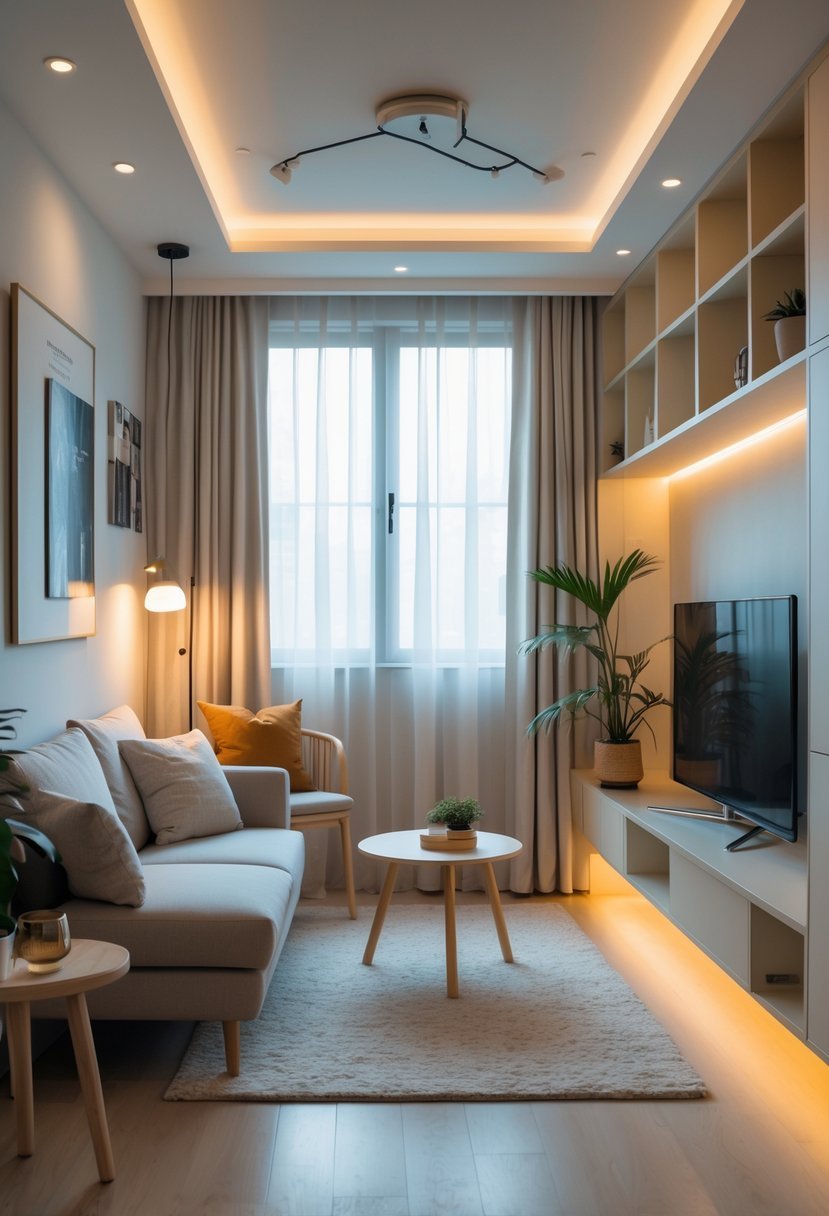
You should combine overhead, task, and accent lighting to brighten your small living room effectively. Overhead lights provide general illumination, while task lights help with specific activities like reading. Accent lighting adds depth and highlights key features in your space.
11) Keep window treatments minimal to enhance natural light
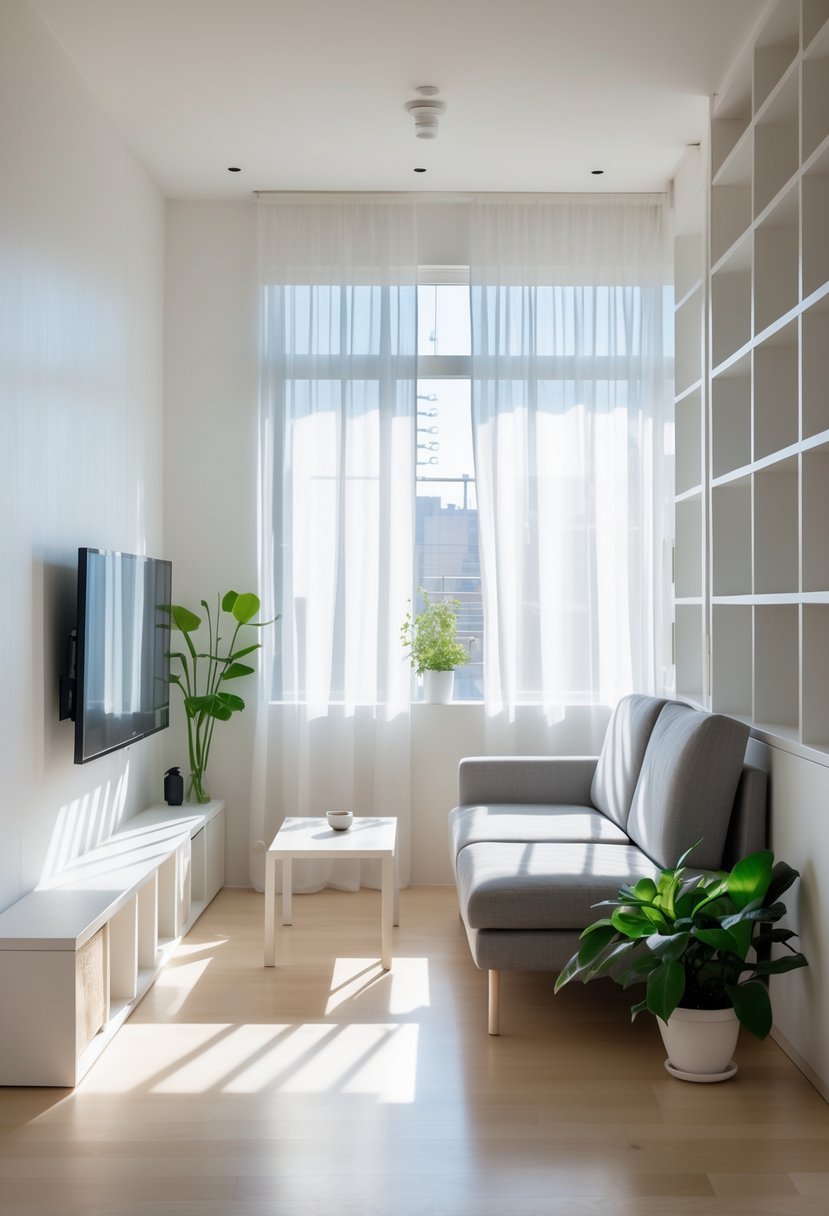
You should choose simple window treatments like sheer curtains or light-filtering shades. These allow ample natural light while maintaining privacy.
Minimal designs prevent your room from feeling cramped. Natural light expands the space visually and improves the overall atmosphere.
12) Select rugs that define areas without overwhelming the room
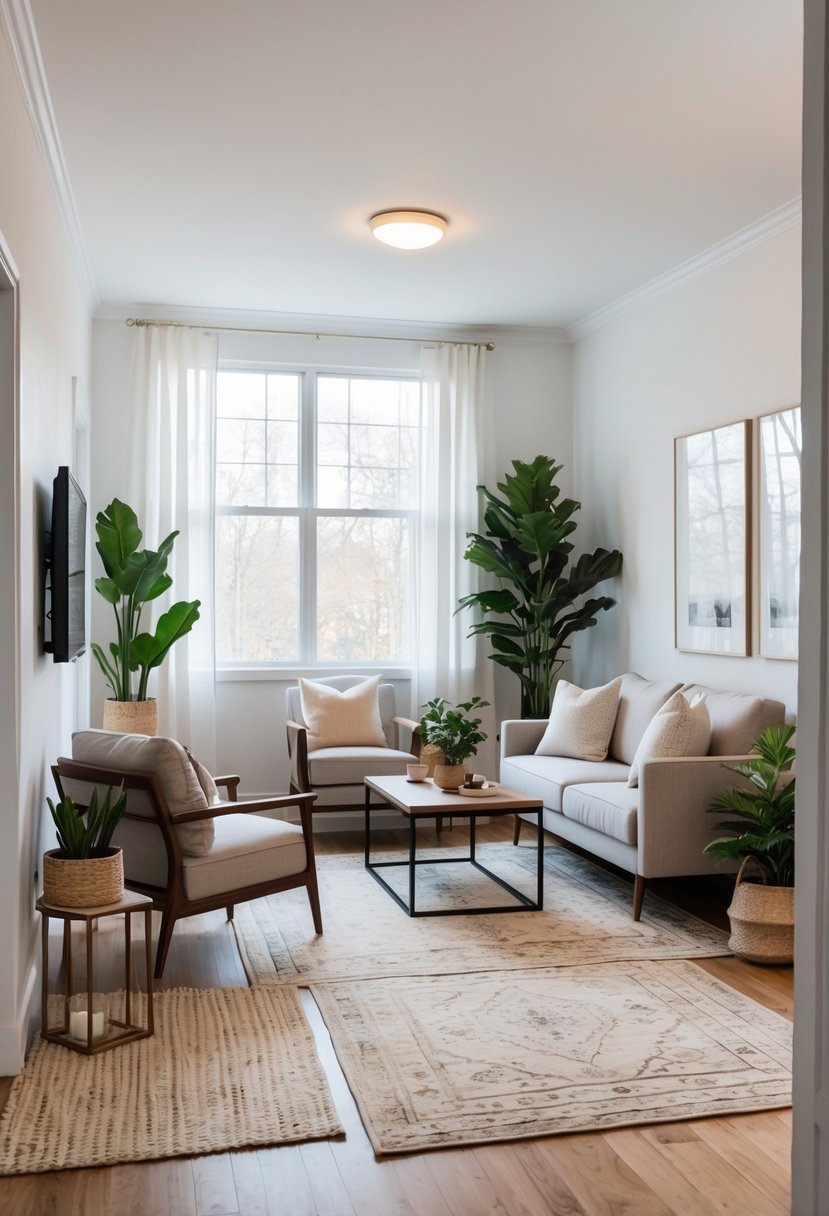
You should choose rugs that create clear zones in your living room without making it feel crowded. Opt for light colors and simple patterns to keep the space open.
Large rectangular rugs work well to anchor seating areas. Avoid high-pile or shag rugs, as they add bulk and can overwhelm small rooms.
13) Use nesting tables for flexible surface options
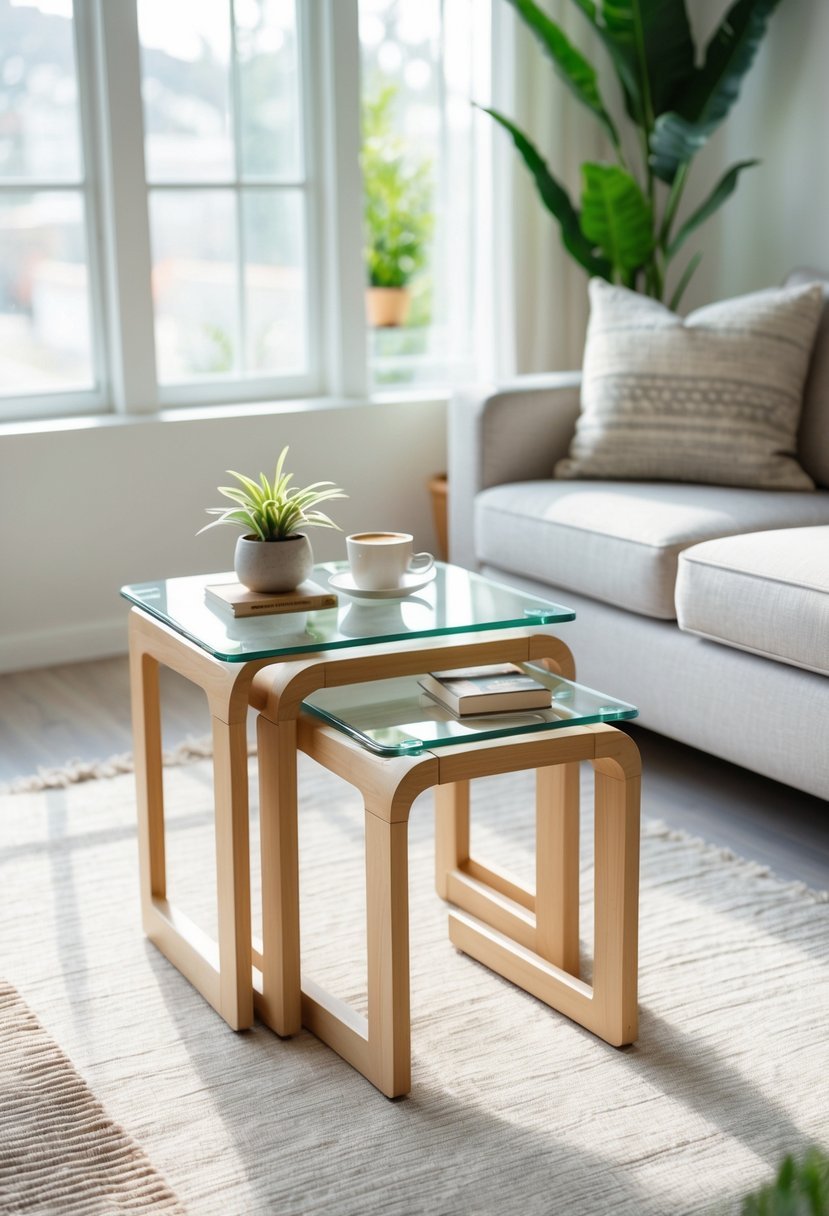
You can easily adjust nesting tables to fit your space and needs. They stack when not in use, saving room and reducing clutter.
When guests arrive, separate the tables to provide additional surfaces. Their lightweight design makes moving them simple.
14) Declutter regularly and use hidden storage compartments
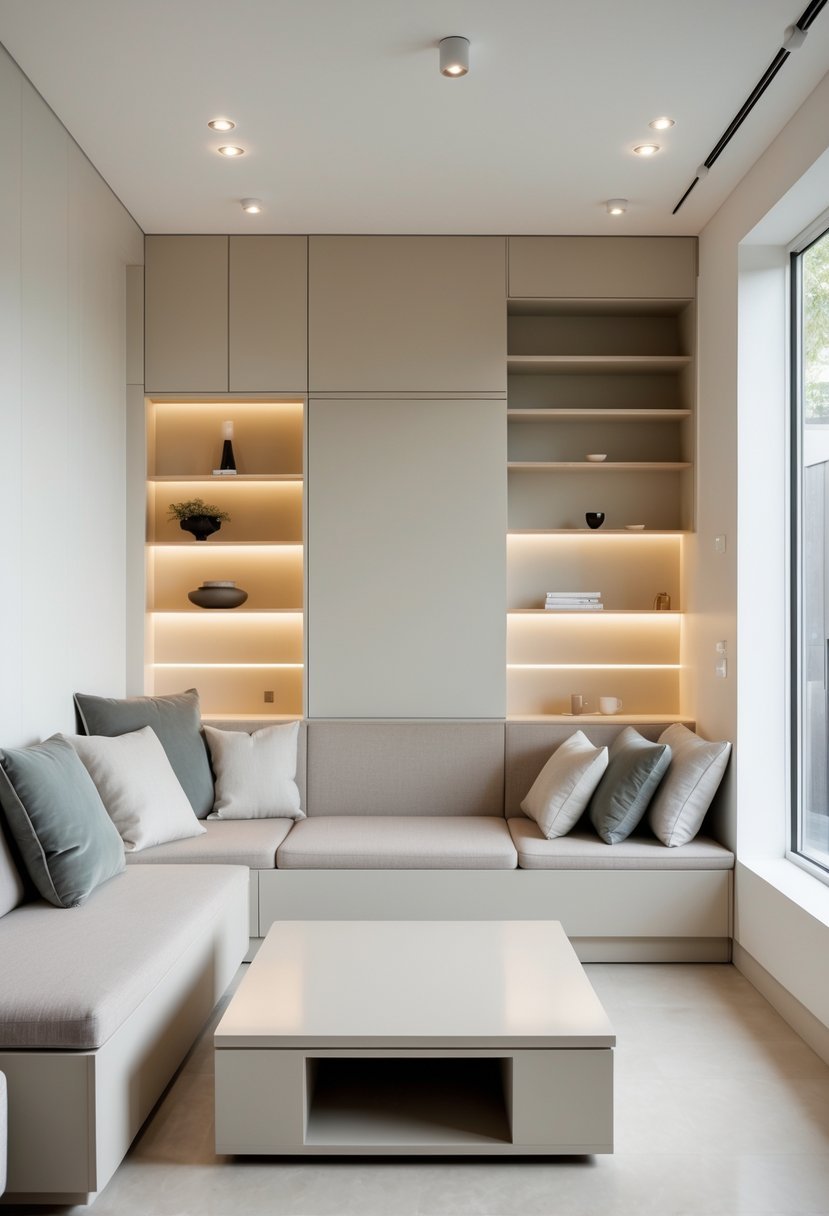
You should declutter your living room frequently to keep the space functional and pleasant. Regular tidying helps you avoid unnecessary buildup and creates room for essential items.
Incorporate hidden storage compartments like sofas with secret spaces or coffee tables with lift-up tops. These solutions maintain tidy surfaces and optimize every inch of your living area.
15) Incorporate floating desks or fold-down tables for workspace
You can save space by adding floating desks or fold-down tables in your living room. These options attach to the wall, freeing floor area and creating a clean, organized look.
They are ideal for work or hobbies without sacrificing room for other furniture. Choose designs with built-in storage to keep essentials within reach.
Understanding Small Living Room Challenges
Small living rooms bring specific difficulties that affect both design and daily use. You need to address physical space constraints and be aware of how limited space can influence your mood and comfort.
Common Spatial Limitations
One of the biggest challenges you face is the lack of floor space. This limits your furniture options and restricts traffic flow. Without careful planning, the room can quickly feel tight and cluttered.
Storage is often insufficient, making it hard to keep the area tidy. You may find yourself juggling between multifunctional furniture and clever organization techniques to maximize usable space.
Lighting can also be an issue. Small rooms may have limited windows or poor natural light, which can make the space seem even smaller. You’ll want to use strategic lighting choices to enhance openness.
Psychological Impact of Constrained Spaces
Living in a small space can create a sense of confinement. When rooms are crowded or poorly arranged, you might feel stressed or overwhelmed.
Your perception of the room’s size affects how comfortable you feel. Clutter and dark corners worsen the feeling of being boxed in, while an open layout and bright colors can improve your mood.
Design choices that emphasize openness, like minimalist decor and clear pathways, help reduce feelings of restriction. You can also use mirrors or light-reflective surfaces to trick the eye into perceiving more space.
Being mindful of these psychological effects is key to making your living room a place where you feel relaxed despite its size.
Design Principles for Maximizing Space
To make the most of your small living room, focus on selecting appropriately sized furniture, making use of all available vertical areas, and carefully choosing light and color schemes. These elements work together to increase both functionality and the perception of space.
Optimizing Furniture Scale and Placement
Choose furniture that fits the scale of your room rather than overpowering it. Opt for pieces with slim profiles or exposed legs to create a feeling of openness. Consider multi-functional furniture such as ottomans with hidden storage or nesting tables that can be tucked away when not in use.
Arrange your seating to maximize flow and interaction, avoiding large sectional sofas that crowd the space. Position furniture away from walls if possible, allowing for easy movement and creating the illusion of a larger area. Use rugs to define zones clearly without cluttering the floor plan.
Leveraging Vertical Space
Use walls for more than just decoration. Install shelves or floating storage units to keep floors clear and increase capacity. Tall bookcases or vertical cabinets draw the eye upward, making the room feel taller.
Hang curtains close to the ceiling and let them fall to the floor to elongate the room visually. Use wall-mounted lighting instead of floor lamps to save floor space. Hooks and pegboards can keep small items organized and off horizontal surfaces.
Balancing Light and Color
Light colors on walls and ceilings reflect more light, opening up the room visually. Whites, soft pastels, and light neutrals are effective choices. Avoid heavy, dark hues that can overwhelm a small space.
Maximize natural light by avoiding bulky window treatments and arranging mirrors opposite windows to bounce light around the room. Use layered lighting—ceiling lights, task lamps, and accent lights—to create depth and prevent shadows that make rooms feel smaller.